Values and Character Formation
मूल्य और चरित्र का निर्माण
Friends are exploring how to instill certain values (e.g., honesty, empathy, independence) in their children. They share their own upbringing experiences and debate the most effective ways to model and teach these principles.
दोस्त इस बात पर चर्चा कर रहे हैं कि अपने बच्चों में ईमानदारी, सहानुभूति और आत्मनिर्भरता जैसे मूल्य कैसे विकसित किए जाएँ। वे अपने बचपन के अनुभव साझा करते हैं और इन सिद्धांतों को अपने व्यवहार से दिखाने और सिखाने के सबसे असरदार तरीकों पर विचार करते हैं।
संवाद10
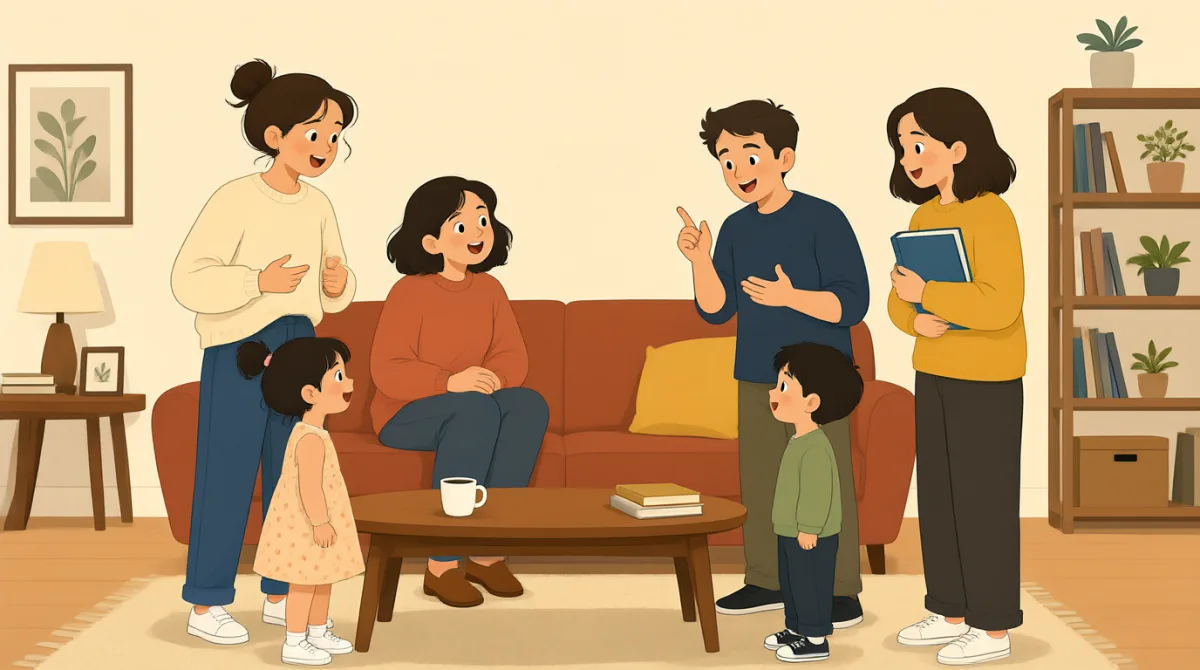

Hey Jack, I've been thinking a lot about how we instill certain values in our kids, like honesty and empathy. It feels like such a core part of parenting.
अरे जैक, मैं इस बारे में बहुत सोच रही हूँ कि हम अपने बच्चों में ईमानदारी और सहानुभूति जैसे मूल्य कैसे विकसित करें। मुझे लगता है कि बच्चों की परवरिश का यह बहुत अहम हिस्सा है।

Me too, Mia. Especially with all the external influences they encounter. I remember my parents always emphasized integrity, which was mainly through leading by example.
मैं भी, मिया। खासकर उन तमाम बाहरी प्रभावों को देखते हुए जिनका उन्हें सामना करना पड़ता है। मुझे याद है, मेरे माता-पिता हमेशा ईमानदारी और नैतिकता पर ज़ोर देते थे, और ज़्यादातर वे खुद मिसाल बनकर ऐसा करते थे।
Right, modeling behavior is key. But what about when they're really young? How do you explicitly teach something like empathy beyond just saying, 'Be kind'?
बिलकुल, अपने व्यवहार से मिसाल पेश करना ज़रूरी है। लेकिन जब बच्चे बहुत छोटे हों, तब क्या? सिर्फ़ ‘दयालु बनो’ कहने से आगे बढ़कर सहानुभूति जैसी चीज़ उन्हें साफ़ तौर पर कैसे सिखाते हो?
That's the tricky part. For empathy, I try to encourage perspective-taking. Like, if a sibling is upset, we ask, 'How do you think they're feeling right now?' and talk about it.
यही तो मुश्किल हिस्सा है। सहानुभूति सिखाने के लिए मैं उन्हें दूसरे के नज़रिए से सोचने के लिए प्रोत्साहित करता हूँ। जैसे, अगर कोई भाई या बहन परेशान हो, तो हम पूछते हैं, ‘तुम्हें क्या लगता है, अभी उन्हें कैसा लग रहा होगा?’ फिर इस बारे में बात करते हैं।
Oh, that's a good one. My parents were very big on independence, which I'm grateful for, but sometimes I wonder if I should be more hands-on with teaching specific values.
अच्छा, यह तो बढ़िया तरीका है। मेरे माता-पिता आत्मनिर्भरता को बहुत अहमियत देते थे, और मैं इसके लिए उनकी शुक्रगुज़ार हूँ। लेकिन कभी-कभी सोचती हूँ कि क्या मुझे खास मूल्यों को सिखाने में ज़्यादा सक्रिय भूमिका निभानी चाहिए।
It's a tough balance. My dad believed in letting us figure things out, which fostered independence, but there were times I wished for more direct guidance on ethical dilemmas.
इसका सही संतुलन बनाना मुश्किल है। मेरे पापा का मानना था कि हमें चीज़ें खुद समझने देनी चाहिए। इससे आत्मनिर्भरता बढ़ी, लेकिन कई बार नैतिक उलझनों में मुझे लगता था कि काश कोई सीधे-सीधे मेरी राह दिखाता।
Exactly! And how do we ensure they truly internalize these values, not just parrot them back to us? Especially with something like honesty, where the consequences can be immediate for them.
बिलकुल! और हम यह कैसे पक्का करें कि बच्चे इन मूल्यों को सचमुच अपना लें, न कि बस हमारी कही बातें दोहराएँ? खासकर ईमानदारी जैसी बात में, जहाँ उन्हें तुरंत नतीजे भुगतने पड़ सकते हैं।
I think consistency is vital. And talking through scenarios, like what happens if you're not honest, and connecting it to how it impacts others. It's an ongoing conversation, really.
मुझे लगता है कि लगातार एक जैसा व्यवहार करना बहुत ज़रूरी है। और अलग-अलग हालात पर बात करना भी—जैसे, अगर तुम सच नहीं बोलोगे तो क्या होगा, और इसका दूसरों पर क्या असर पड़ेगा। सच कहूँ तो यह बातचीत लगातार चलती रहती है।
True. It's not a one-time lesson. Maybe it's less about strict teaching and more about creating a consistent environment where these values are seen, discussed, and lived.
सही कहा। यह कोई एक बार का सबक नहीं है। शायद सख्ती से सिखाने से ज़्यादा ज़रूरी है ऐसा माहौल बनाना, जहाँ बच्चे इन मूल्यों को देख सकें, उन पर बात कर सकें और उन्हें रोज़मर्रा की ज़िंदगी में अपना सकें।
Couldn't agree more. It's a continuous process of modeling, reflecting, and guiding. We're all just doing our best, trying to give them a solid foundation.
मैं इससे ज़्यादा सहमत नहीं हो सकता। यह लगातार मिसाल पेश करने, सोच-विचार करने और राह दिखाने की प्रक्रिया है। हम सब बस अपनी तरफ़ से पूरी कोशिश कर रहे हैं, ताकि बच्चों को एक मज़बूत नींव दे सकें।
शब्दावली8
- instillमन में बैठाना
To gradually put an idea or value into someone's mind, especially in children. Use it when talking about teaching important life lessons, like 'Parents instill good habits in their kids.'
किसी विचार या मूल्य को धीरे-धीरे किसी के मन में बिठाना, खासकर बच्चों के मन में। ज़िंदगी के अहम सबक सिखाने की बात करते समय इसका इस्तेमाल करें, जैसे 'Parents instill good habits in their kids.' (माता-पिता अपने बच्चों में अच्छी आदतें डालते हैं।)
- empathyसहानुभूति
The ability to understand and share the feelings of others. It's a key value in parenting; say 'Teaching empathy helps children be kinder to friends.'
दूसरों की भावनाओं को समझने और उनसे जुड़ाव महसूस करने की क्षमता। बच्चों की परवरिश में यह एक अहम मूल्य है; कहें 'Teaching empathy helps children be kinder to friends.' (सहानुभूति सिखाने से बच्चे अपने दोस्तों के प्रति ज़्यादा दयालु बनते हैं।)
- integrityईमानदारी और नैतिकता
Honesty and strong moral principles. Often used in discussions about character; for example, 'She has great integrity because she always tells the truth.'
सच बोलना और मज़बूत नैतिक सिद्धांतों पर चलना। चरित्र की बात करते समय इसका अक्सर इस्तेमाल होता है; उदाहरण के लिए, 'She has great integrity because she always tells the truth.' (उसका चरित्र बहुत अच्छा है क्योंकि वह हमेशा सच बोलती है।)
- modelingमिसाल पेश करना
Showing behavior for others to copy, especially parents with children. In parenting talks, 'Modeling good behavior is more effective than just telling kids what to do.'
ऐसा व्यवहार करके दिखाना जिसे दूसरे अपना सकें, खासकर माता-पिता का बच्चों के सामने। बच्चों की परवरिश की चर्चा में 'Modeling good behavior is more effective than just telling kids what to do.' (अच्छा व्यवहार करके दिखाना, बच्चों को सिर्फ़ यह बताने से ज़्यादा असरदार है कि उन्हें क्या करना चाहिए।)
- perspective-takingदूसरे के नज़रिए से सोचना
Trying to see things from another person's point of view. Useful for building empathy; 'Encourage perspective-taking by asking how others feel.'
किसी बात को दूसरे व्यक्ति के नज़रिए से देखने की कोशिश करना। सहानुभूति विकसित करने में यह मददगार है; कहें 'Encourage perspective-taking by asking how others feel.' (दूसरों को कैसा लग रहा है, यह पूछकर उन्हें दूसरे के नज़रिए से सोचने के लिए प्रोत्साहित करें।)
- internalizeआत्मसात करना
To make an idea or value part of your own beliefs, not just remember it. In education, 'Children need to internalize values like honesty to live by them.'
किसी विचार या मूल्य को सिर्फ़ याद रखने के बजाय अपने विश्वासों का हिस्सा बना लेना। शिक्षा के संदर्भ में, 'Children need to internalize values like honesty to live by them.' (बच्चों को ईमानदारी जैसे मूल्यों को आत्मसात करना चाहिए, ताकि वे उन पर चल सकें।)
- consistencyनिरंतरता
Being steady and reliable in actions or rules. Important in parenting; 'Consistency in discipline helps kids feel secure.'
व्यवहार या नियमों में स्थिर और भरोसेमंद बने रहना। बच्चों की परवरिश में यह ज़रूरी है; 'Consistency in discipline helps kids feel secure.' (अनुशासन में निरंतरता से बच्चों को सुरक्षित महसूस होता है।)
- vitalबहुत ज़रूरी
Extremely important or necessary. Use in serious discussions; 'Consistency is vital for teaching values effectively.'
बेहद अहम या आवश्यक। गंभीर चर्चा में इसका इस्तेमाल करें; 'Consistency is vital for teaching values effectively.' (मूल्यों को असरदार ढंग से सिखाने के लिए निरंतरता बहुत ज़रूरी है।)
मुख्य वाक्य8
- 1
I've been thinking a lot about how we instill certain values in our kids.
मैं इस बारे में बहुत सोच रही हूँ कि हम अपने बच्चों में कुछ मूल्य कैसे विकसित करें।
This sentence uses present perfect continuous ('I've been thinking') to show ongoing thoughts. It's useful for starting conversations about personal reflections, especially in parenting or life topics. Practice it to express what you've been considering lately.
इस वाक्य में present perfect continuous ('I've been thinking') का इस्तेमाल लगातार चल रहे विचार को दिखाने के लिए हुआ है। निजी विचार साझा करते हुए बातचीत शुरू करने में यह उपयोगी है, खासकर बच्चों की परवरिश या जीवन से जुड़े विषयों पर। हाल ही में आप किस बात पर विचार कर रहे हैं, यह बताने के लिए इसका अभ्यास करें।
- 2
Leading by example.
मिसाल पेश करके सिखाना।
A common phrase meaning to show behavior through actions rather than words. It's an idiom for parenting advice. Use it when discussing how to teach values, like 'Parents should lead by example to build trust.'
यह आम मुहावरा कहता है कि शब्दों के बजाय अपने कामों से व्यवहार दिखाएँ। बच्चों की परवरिश की सलाह में इसका इस्तेमाल होता है। मूल्यों को सिखाने की बात करते हुए कहें, 'Parents should lead by example to build trust.' (भरोसा कायम करने के लिए माता-पिता को खुद मिसाल पेश करनी चाहिए।)
- 3
That's the tricky part.
यही तो मुश्किल हिस्सा है।
This expresses that something is difficult or challenging. 'Tricky' is informal for complicated situations. Great for casual talks about problems; it shows agreement and adds to the discussion naturally.
यह बताने के लिए कहा जाता है कि कोई बात कठिन या चुनौतीपूर्ण है। 'Tricky' अनौपचारिक शब्द है, जिसका मतलब है मुश्किल या पेचीदा। समस्याओं पर अनौपचारिक बातचीत में यह उपयोगी है; इससे आप सहमति जताते हुए बात को स्वाभाविक ढंग से आगे बढ़ा सकते हैं।
- 4
How do you think they're feeling right now?
तुम्हें क्या लगता है, अभी उन्हें कैसा लग रहा होगा?
A question using 'how do you think' to encourage empathy and perspective-taking. The present continuous ('they're feeling') describes current emotions. Use this in conversations to help others understand feelings, especially with children.
इस सवाल में 'how do you think' का इस्तेमाल सहानुभूति और दूसरे के नज़रिए से सोचने के लिए प्रोत्साहित करने हेतु किया गया है। present continuous ('they're feeling') से इस समय की भावनाओं का पता चलता है। लोगों, खासकर बच्चों को दूसरों की भावनाएँ समझाने के लिए बातचीत में इसका इस्तेमाल करें।
- 5
It's a tough balance.
इसका सही संतुलन बनाना मुश्किल है।
'Tough balance' is an idiom for finding the right middle ground between extremes. Useful in debates about choices, like work-life or parenting styles. It acknowledges difficulty while keeping the talk positive.
'Tough balance' एक मुहावरा है, जिसका मतलब है दो अतियों के बीच सही रास्ता ढूँढ़ना। काम और जीवन के संतुलन या बच्चों की परवरिश के तरीकों जैसे विकल्पों पर चर्चा में यह उपयोगी है। इससे कठिनाई स्वीकार करते हुए बातचीत का लहजा सकारात्मक बना रहता है।
- 6
We need to ensure they truly internalize these values.
हमें यह पक्का करना होगा कि वे इन मूल्यों को सचमुच आत्मसात करें।
Uses 'ensure' (to make certain) and 'truly' for emphasis. The structure shows purpose with 'to' infinitive. Practical for discussing deep learning; say it when talking about making sure ideas stick, not just surface knowledge.
इस वाक्य में 'ensure' (पक्का करना) और ज़ोर देने के लिए 'truly' का इस्तेमाल हुआ है। 'to' infinitive यहाँ उद्देश्य बताता है। गहरी सीख की बात करते समय यह उपयोगी है; यह बताने के लिए कहें कि आप चाहते हैं कि बातें सिर्फ़ सतही तौर पर याद न रहें, बल्कि सचमुच मन में बैठें।
- 7
Consistency is vital.
निरंतरता बहुत ज़रूरी है।
A simple subject-verb-complement sentence stating importance. 'Vital' means essential. Use this short form to emphasize key points in advice-giving, like in parenting or habit-building talks.
यह एक सरल subject-verb-complement वाक्य है, जो किसी बात की अहमियत बताता है। 'Vital' का मतलब है बेहद ज़रूरी। सलाह देते समय, जैसे बच्चों की परवरिश या आदतें बनाने की चर्चा में, अहम बात पर ज़ोर देने के लिए इस छोटे वाक्य का इस्तेमाल करें।
- 8
Couldn't agree more.
मैं इससे ज़्यादा सहमत नहीं हो सकता।
An idiomatic way to strongly agree with someone. It's informal and polite for conversations. Perfect for responding in discussions to show support, making dialogues smoother and friendlier.
किसी से पूरी तरह सहमत होने का यह एक मुहावरेदार तरीका है। बातचीत में यह अनौपचारिक और विनम्र है। चर्चा के दौरान समर्थन जताने के लिए इसका इस्तेमाल करें; इससे बातचीत सहज और दोस्ताना बनती है।