Responding to Outside Advice
回應外界建議
Parents are reflecting on advice received from other family members or friends regarding their parenting choices. They discuss whether to adopt, adapt, or politely reject these external viewpoints.
父母們正在反思從其他家人或朋友那裡得到的關於他們育兒選擇的建議。他們討論是採納、調整還是禮貌地拒絕這些外部觀點。
對話8
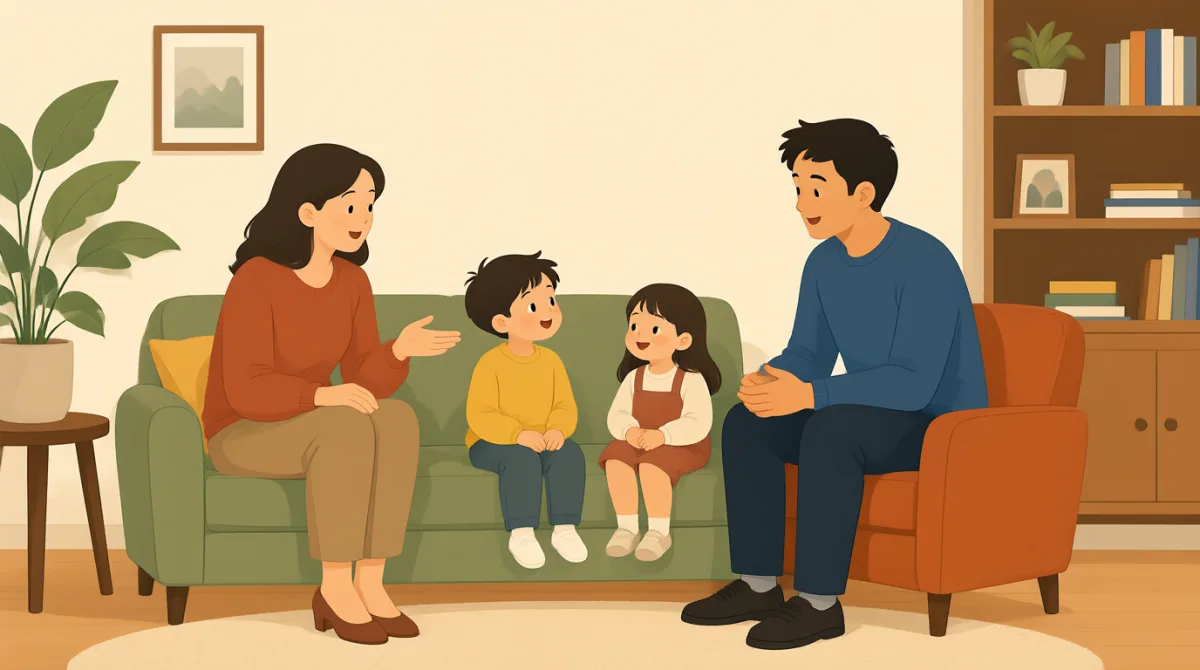

You know, my mom was here earlier and she was suggesting we really need to be stricter with James about his screen time. She said, 'Back in my day, we didn't have all this technology.'
你知道嗎,我媽媽剛才在這裡,她建議我們對詹姆斯的螢幕時間要更嚴格些。她說,‘在我那個年代,可沒有這些科技產品。’

Ah, yes, the classic 'back in my day' argument. I heard something similar from my uncle about letting him figure things out on his own more, rather than being so hands-on with his homework.
啊,是的,經典的‘在我那個年代’論點。我叔叔也說了類似的話,關於讓詹姆斯多自己解決問題,而不是我們在他作業上太親力親為。
It's tough, isn't it? On one hand, you want to respect their experience, but on the other, things have changed so much. How do we even begin to decide what to take on board and what to politely brush off?
這很難,是吧?一方面,你想尊重他們的經驗,但另一方面,事情變化太大了。我們該如何決定採納什麼,又該如何禮貌地拒絕什麼呢?
Exactly. I think for the screen time, a strict ban isn't realistic, but maybe we could re-evaluate our current limits. It's a valid concern, even if the delivery was a bit old-school.
沒錯。我覺得對於螢幕時間,嚴格禁止是不現實的,但也許我們可以重新評估我們目前的限制。這是一個合理的擔憂,即使表達方式有點老套。
That's a fair point. And with your uncle's advice, I get where he's coming from. We do tend to hover a bit with the homework, don't we? Maybe we could give him more space to struggle and learn.
這說得有道理。至於你叔叔的建議,我明白他的意思。我們確實有點在作業上過度干預,不是嗎?也許我們可以給他更多空間去摸索和學習。
We definitely could. Ultimately, we know James best, and we need to find what works for our family, not just what worked for previous generations.
我們當然可以。歸根結底,我們最瞭解詹姆斯,我們需要找到適合我們家庭的方法,而不僅僅是適合上一代的方法。
True. So, for the screen time, we'll tell my mom we're considering her feedback and re-evaluating, without promising anything specific. And for your uncle, we can say we're working on fostering more independence.
沒錯。所以,關於螢幕時間,我們會告訴我媽媽我們在考慮她的反饋並重新評估,但不做任何具體承諾。至於你叔叔,我們可以說我們正在努力培養更多的獨立性。
Perfect. It's about finding that balance of being open to advice while staying true to our own parenting philosophy. It's an ongoing negotiation.
完美。這關乎在聽取建議的同時,忠於我們自己的育兒理念,找到這種平衡。這是一個持續的協商過程。
詞彙9
- stricter更嚴格的
The comparative form of 'strict,' meaning more severe or firm in rules, often used when talking about discipline like limiting screen time for children.
'strict' 的比較級,意思是規則更嚴厲或更堅定,常用於談論管教,比如限制孩子使用電子螢幕的時間。
- screen time螢幕時間
The amount of time spent using electronic devices like phones or TVs; a common term in parenting discussions about balancing technology use.
指使用手機、電視等電子裝置的時長;這是育兒討論中常見的說法,用來談如何平衡科技產品的使用。
- back in my day我那個年代
An idiomatic expression older people use to compare the past to the present, often implying things were better or different before, like in advice about technology.
年長者常用的習語,用來比較過去和現在,通常暗示以前的情況更好或有所不同,比如在談論科技時給出建議。
- hands-on親力親為的
Describes being actively involved in something, like helping with homework directly; useful for contrasting with letting kids learn independently.
形容積極參與某件事,比如親自輔導孩子做作業;這個詞可以用來對比讓孩子獨立學習的做法。
- take on board認真考慮並採納
An idiom meaning to consider or accept advice seriously; practical for politely responding to suggestions in conversations about parenting or decisions.
一個習語,意思是認真考慮或接受某條建議;在育兒或做決定時回應他人的建議,這個說法很實用。
- brush off婉拒;不予理會
To dismiss or ignore something lightly, often politely; helpful in discussing how to handle unwanted advice without offending others.
指輕描淡寫地拒絕或忽略某件事,通常會盡量保持禮貌;談到如何處理不想接受的建議而又不冒犯別人時,這個表達很有用。
- re-evaluate重新評估
To assess or review something again to decide if changes are needed; commonly used in reflective talks about family rules or habits.
重新審視某件事,判斷是否需要做出改變;常用於反思家庭規則或習慣。
- hover過度關注;過度干預
In parenting, it means to watch or interfere too closely, like standing over a child while they do homework; describes over-involvement.
在育兒語境中,指盯得太緊或干預過多,比如孩子做作業時一直站在旁邊;用來形容過度參與。
- parenting philosophy育兒理念
A set of beliefs or principles about how to raise children, including discipline and values; key term for deeper discussions on child-rearing approaches.
關於如何養育孩子的一套信念或原則,包括管教方式和價值觀;這是深入討論育兒方法時的重要說法。
關鍵句8
- 1
You know, my mom was here earlier and she was suggesting we really need to be stricter with James about his screen time.
你知道嗎,我媽媽剛才來過,她建議我們對詹姆斯的螢幕時間真的應該管得更嚴一些。
This sentence introduces shared advice using 'you know' for casual conversation and 'suggesting' to report indirect speech; useful for starting talks about family input on parenting rules.
這句話用 'you know' 開啟輕鬆的交談,並用 'suggesting' 轉述他人的建議;當你想聊聊家人對育兒規則的看法時,可以這樣開頭。
- 2
Ah, yes, the classic 'back in my day' argument.
啊,是啊,經典的“我那個年代”論調。
A response acknowledging a common phrase with 'ah, yes' for agreement and 'classic' to show it's a typical, often humorous complaint; great for lightening discussions about generational differences.
用 'ah, yes' 表示認同,再用 'classic' 表明這是常見、往往有些好笑的抱怨;聊到代際差異時,這樣說能讓氣氛輕鬆一些。
- 3
It's tough, isn't it? On one hand, you want to respect their experience, but on the other, things have changed so much.
這很難,不是嗎?一方面,你想尊重他們的經驗;但另一方面,情況已經發生了很大變化。
Uses a tag question 'isn't it?' to seek agreement and the structure 'on one hand... on the other' to show contrast; ideal for expressing balanced views in sensitive topics like advice from elders.
這裡用反意疑問句 'isn't it?' 徵求對方認同,並用 'on one hand... on the other' 表達對比;討論長輩的建議等敏感話題時,這種結構有助於表達平衡的看法。
- 4
How do we even begin to decide what to take on board and what to politely brush off?
我們到底該怎麼判斷哪些建議要認真考慮並採納,哪些又該禮貌地婉拒呢?
A rhetorical question with 'how do we even' to express difficulty, plus idioms 'take on board' and 'brush off'; practical for debating how to handle external opinions in relationships.
這是一個用 'how do we even' 表達為難的反問句,還用了習語 'take on board' 和 'brush off';討論如何應對他人的意見時,這些表達很實用。
- 5
I think for the screen time, a strict ban isn't realistic, but maybe we could re-evaluate our current limits.
我覺得,完全禁止螢幕時間不現實,但也許我們可以重新評估一下現在的限制。
Employs 'I think' for opinions, contrasts with 'but,' and suggests action with 'maybe we could'; useful for proposing compromises in family decision-making.
用 'I think' 表達個人看法,透過 'but' 轉折,並用 'maybe we could' 提出建議;在家庭決策中商量折中方案時,這種說法很有用。
- 6
We do tend to hover a bit with the homework, don't we?
我們確實常常有點過度干預他的作業,不是嗎?
Includes 'tend to' for habits and a tag question 'don't we?' for confirmation; helps in self-reflective talks about parenting behaviors.
這裡用 'tend to' 描述一種習慣,再用反意疑問句 'don't we?' 尋求對方確認;反思自己的育兒方式時,這種表達很合適。
- 7
Ultimately, we know James best, and we need to find what works for our family.
歸根結底,我們最瞭解詹姆斯,也需要找到適合我們家庭的辦法。
Starts with 'ultimately' for conclusion, uses 'we know... best' to assert confidence; key for emphasizing personal judgment in advice situations.
句首用 'ultimately' 總結觀點,並用 'we know... best' 表達對自身判斷的信心;面對他人的建議時,這句話能強調自己的判斷。
- 8
It's about finding that balance of being open to advice while staying true to our own parenting philosophy.
關鍵是找到平衡:既對建議保持開放,也堅持我們自己的育兒理念。
Explains a concept with 'it's about' and gerunds 'being open... staying true'; valuable for summarizing ongoing challenges in parenting discussions.
這句話用 'it's about' 來說明關鍵所在,並透過 'being open... staying true' 兩個動名詞短語表達需要兼顧的方面;總結育兒討論中持續面臨的難題時,這句話很有用。