Influence of Grandparents' Philosophy
दादा-दादी की परवरिश संबंधी सोच का प्रभाव
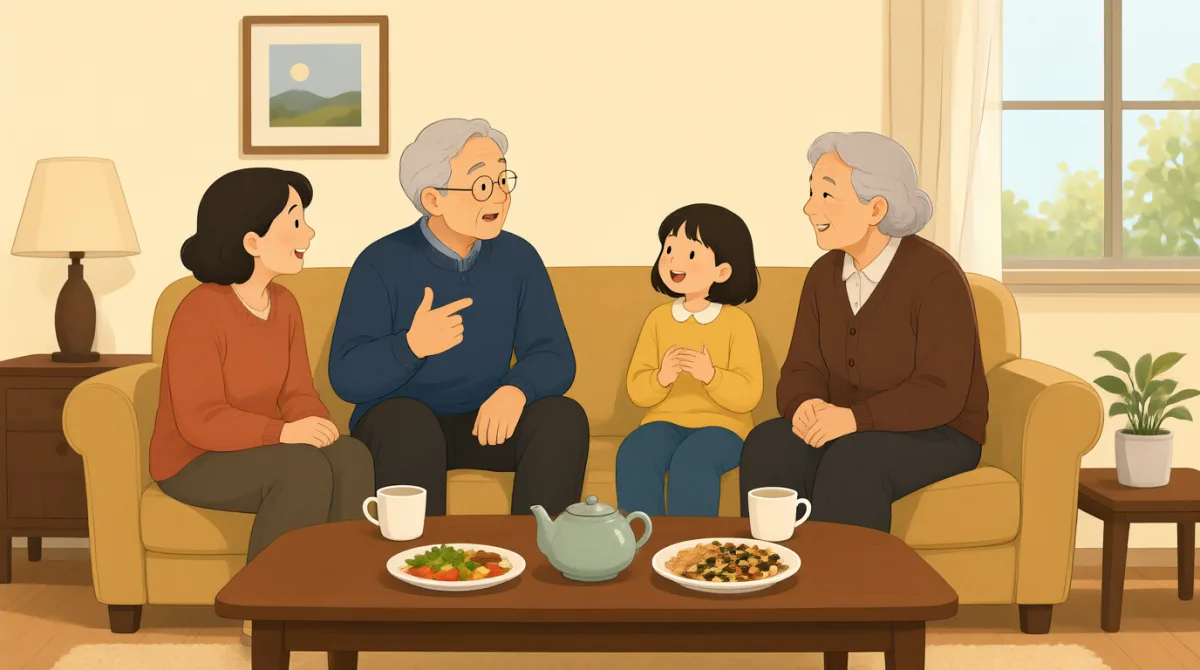
A family discusses the impact of grandparents' traditional child-rearing philosophies, which might conflict with the parents' more modern approaches, particularly regarding diet, screen time, or bedtime routines.
एक परिवार इस बात पर चर्चा करता है कि बच्चों की परवरिश को लेकर दादा-दादी की पारंपरिक सोच का क्या असर पड़ता है। यह सोच माता-पिता के आधुनिक तरीकों से टकरा सकती है, खासकर खान-पान, स्क्रीन पर बिताए समय और सोने की दिनचर्या को लेकर।
संवाद9

Hey Jack, can we talk about something that's been on my mind regarding the kids and your parents?
अरे जैक, क्या हम बच्चों और तुम्हारे माता-पिता को लेकर एक बात कर सकते हैं? यह बात कुछ समय से मेरे मन में है।

Sure, what's up? Is it about their screen time again? I know they let them watch a bit more TV than we usually do.
ज़रूर, क्या बात है? फिर से उनके स्क्रीन टाइम को लेकर है? मुझे पता है कि वे बच्चों को आम तौर पर हमारी इजाज़त से थोड़ा ज़्यादा टीवी देखने देते हैं।
That, and the diet, and the bedtime routines. I appreciate them watching the kids, but their philosophy is just so different from ours. It's almost like a constant battle to re-establish our rules when they come home.
वही, और खान-पान और सोने की दिनचर्या भी। मैं बच्चों को संभालने के लिए उनकी आभारी हूँ, लेकिन बच्चों की परवरिश को लेकर उनकी सोच हमसे बहुत अलग है। जब बच्चे घर लौटते हैं, तो हमारे नियम फिर से मनवाना मानो रोज़ की जंग बन जाता है।
I understand what you mean. They grew up in a different era, and their way of doing things is very traditional. They probably see it as being loving and generous, letting them have treats and stay up late.
मैं समझ रहा हूँ कि तुम क्या कह रही हो। वे एक अलग दौर में बड़े हुए हैं और उनका तरीका बहुत पारंपरिक है। शायद उन्हें लगता है कि बच्चों को मनपसंद चीज़ें खाने देना और देर तक जागने देना प्यार और उदारता दिखाने का तरीका है।
I know, and I don't want to make them feel unappreciated. But when it comes to healthy eating or consistent sleep schedules, it really messes with our efforts. Like yesterday, Lily wouldn't eat her vegetables after a weekend at their place because she was used to just juice and cookies.
मैं जानती हूँ, और मैं नहीं चाहती कि उन्हें लगे कि हम उनकी कद्र नहीं करते। लेकिन जब स्वस्थ खाने या सोने-जागने का नियमित समय बनाए रखने की बात आती है, तो इससे हमारी कोशिशों पर सचमुच पानी फिर जाता है। जैसे कल ही, उनके यहाँ पूरा सप्ताहांत बिताने के बाद लिली ने सब्ज़ियाँ खाने से मना कर दिया, क्योंकि उसे सिर्फ़ जूस और कुकीज़ की आदत हो गई थी।
That's a valid point. We need to find a way to bridge that gap without causing offense. Maybe we can suggest a 'grandparent's guide' with some general guidelines for when the kids are over? Not strict rules, but gentle reminders.
तुम्हारी बात वाजिब है। हमें बिना किसी को बुरा लगाए इस दूरी को पाटने का तरीका ढूँढ़ना होगा। शायद हम बच्चों के उनके यहाँ रहने पर ध्यान रखने के लिए दादा-दादी के लिए एक छोटी-सी मार्गदर्शिका सुझा सकते हैं? सख़्त नियम नहीं, बस प्यार से याद दिलाने वाली बातें।
That could work. A 'guide' sounds less like a 'rulebook.' We could frame it around what helps the kids transition back to their routine smoothly, emphasizing their well-being. What do you think about bringing it up during our next family dinner?
यह काम कर सकता है। ‘मार्गदर्शिका’ सुनने में ‘नियमों की किताब’ जितनी सख़्त नहीं लगती। हम इसे इस तरह पेश कर सकते हैं कि इससे बच्चों को अपनी दिनचर्या में आसानी से लौटने में मदद मिलेगी और उनकी भलाई पर ज़ोर रहेगा। तुम्हारा क्या ख़याल है, अगली पारिवारिक दावत में यह बात उठाएँ?
That sounds like a good plan. I'll talk to my mom first and soften the ground a bit, so it doesn't come out of nowhere. We need to be on the same page about this.
यह अच्छा तरीका लगता है। मैं पहले अपनी माँ से बात करूँगा और उन्हें थोड़ा तैयार कर दूँगा, ताकि यह बात अचानक न आ जाए। इस मामले में हमें एकमत होना होगा।
Perfect. I really appreciate you taking the lead on this, Jack. It’s important for the kids, and for us, to have consistency.
बहुत बढ़िया। जैक, इस मामले में पहल करने के लिए मैं सचमुच तुम्हारी आभारी हूँ। बच्चों के लिए और हमारे लिए भी, नियमों और दिनचर्या में एकरूपता होना ज़रूरी है।
शब्दावली10
- philosophyसोच
A set of beliefs or ideas about how to do something, like raising children. In this dialogue, it refers to different ways of parenting.
किसी काम को करने के तरीके से जुड़े विचारों या मान्यताओं के समूह को यह कहते हैं। इस बातचीत में इसका मतलब बच्चों की परवरिश के अलग-अलग तरीकों से है।
- screen timeस्क्रीन पर बिताया समय
The amount of time spent using electronic devices like TV or phones. It's a common concern in modern parenting to limit it for kids' health.
टीवी या फ़ोन जैसे इलेक्ट्रॉनिक उपकरणों का इस्तेमाल करने में बिताया गया समय। बच्चों की सेहत के लिए इस समय को सीमित रखना आधुनिक परवरिश में चिंता का एक आम विषय है।
- dietखान-पान
The food and drink a person usually eats. Here, it means healthy eating habits for children, like eating vegetables instead of junk food.
कोई व्यक्ति आम तौर पर जो खाना और पेय लेता है। यहाँ इसका मतलब बच्चों की सेहतमंद खाने की आदतों से है, जैसे जंक फ़ूड की जगह सब्ज़ियाँ खाना।
- bedtime routinesसोने की दिनचर्या
Regular habits before going to sleep, such as brushing teeth or reading a book. These help children have consistent sleep schedules.
सोने से पहले की नियमित आदतें, जैसे दाँत साफ़ करना या किताब पढ़ना। इनसे बच्चों के सोने-जागने का समय नियमित रहता है।
- traditionalपारंपरिक
Following old customs or ways of doing things, often from past generations. Grandparents in the dialogue use traditional methods like allowing more treats.
पुराने रीति-रिवाज़ों या तरीकों का पालन करने वाला, जो अक्सर पिछली पीढ़ियों से चले आ रहे हों। बातचीत में दादा-दादी ज़्यादा मनपसंद चीज़ें खाने देने जैसे पारंपरिक तरीके अपनाते हैं।
- treatsमनपसंद चीज़ें
Special foods like candy or cookies given as a reward or indulgence. Parents worry about too many treats affecting children's health.
टॉफ़ी या कुकीज़ जैसी खास खाने की चीज़ें, जो इनाम या लाड़-प्यार के तौर पर दी जाती हैं। माता-पिता को चिंता है कि ऐसी चीज़ें ज़्यादा खाने से बच्चों की सेहत पर असर पड़ सकता है।
- valid pointवाजिब बात
A good or reasonable argument. Jack uses it to agree with Mia's concern about the grandparents' influence.
ऐसी दलील जो सही या उचित हो। जैक इस बात से सहमत होते हुए यह कहता है कि दादा-दादी का बच्चों पर पड़ने वाला असर लेकर मिया की चिंता जायज़ है।
- bridge that gapदूरी पाटना
To reduce differences or conflicts between two sides. Here, it means finding a way to make grandparents and parents agree on child-rearing.
दो पक्षों के बीच के मतभेद या टकराव कम करना। यहाँ इसका मतलब बच्चों की परवरिश को लेकर दादा-दादी और माता-पिता के बीच सहमति का रास्ता ढूँढ़ना है।
- guidelinesदिशा-निर्देश
General suggestions or rules to follow, not strict laws. The couple suggests a 'grandparent's guide' for childcare.
पालन करने के लिए दिए गए सामान्य सुझाव या नियम, जो सख़्त क़ानून नहीं होते। यह जोड़ा बच्चों की देखभाल के लिए दादा-दादी हेतु एक ‘मार्गदर्शिका’ सुझाता है।
- consistencyएकरूपता
Keeping things the same over time, like rules for kids. It's important for children's routines and family harmony.
समय के साथ चीज़ों को एक जैसा बनाए रखना, जैसे बच्चों के लिए तय नियम। बच्चों की दिनचर्या और परिवार में तालमेल बनाए रखने के लिए यह ज़रूरी है।
मुख्य वाक्य9
- 1
Hey Jack, can we talk about something that's been on my mind regarding the kids and your parents?
अरे जैक, क्या हम बच्चों और तुम्हारे माता-पिता को लेकर एक बात कर सकते हैं? यह बात कुछ समय से मेरे मन में है।
This is a polite way to start a sensitive conversation. 'On my mind' means something you're thinking about a lot. Use it to introduce topics gently in family discussions. The structure is a question with 'can we' for permission.
यह किसी संवेदनशील बातचीत की शुरुआत करने का विनम्र तरीका है। 'on my mind' का मतलब है कि कोई बात आपके दिमाग़ में बार-बार आ रही है। परिवार में किसी विषय को धीरे से उठाने के लिए इसका इस्तेमाल करें। 'can we' के साथ सवाल पूछकर अनुमति माँगी जाती है।
- 2
I appreciate them watching the kids, but their philosophy is just so different from ours.
मैं बच्चों को संभालने के लिए उनकी आभारी हूँ, लेकिन बच्चों की परवरिश को लेकर उनकी सोच हमसे बहुत अलग है।
This sentence shows contrast with 'but' after expressing thanks. 'Appreciate' means to be grateful for. It's useful for balancing positive and negative points in disagreements about family matters.
इस वाक्य में आभार जताने के बाद 'but' लगाकर अंतर दिखाया गया है। 'Appreciate' का मतलब है किसी के लिए आभारी होना। परिवार से जुड़े मतभेदों में अच्छी और बुरी बातों को संतुलित ढंग से रखने के लिए यह उपयोगी है।
- 3
It's almost like a constant battle to re-establish our rules when they come home.
जब बच्चे घर लौटते हैं, तो हमारे नियम फिर से मनवाना मानो रोज़ की जंग बन जाता है।
'Almost like' compares a situation to something else for emphasis. 'Constant battle' is an idiom for ongoing struggle. Use this to describe repeated challenges in parenting or routines.
'Almost like' ज़ोर देने के लिए किसी स्थिति की तुलना किसी और चीज़ से करता है। 'Constant battle' का मतलब है लगातार चलने वाला संघर्ष। बच्चों की परवरिश या दिनचर्या से जुड़ी बार-बार आने वाली मुश्किलों के बारे में बताने के लिए इसका इस्तेमाल करें।
- 4
They probably see it as being loving and generous, letting them have treats and stay up late.
शायद उन्हें लगता है कि बच्चों को मनपसंद चीज़ें खाने देना और देर तक जागने देना प्यार और उदारता दिखाने का तरीका है।
This uses 'probably' to guess someone's thoughts. 'See it as' means to view something in a certain way. It's helpful for explaining others' perspectives in cultural or generational differences.
'Probably' का इस्तेमाल किसी के विचारों का अंदाज़ा लगाने के लिए होता है। 'See it as' का मतलब है किसी चीज़ को एक खास नज़रिए से देखना। सांस्कृतिक या पीढ़ियों के बीच के अंतर में दूसरों का नज़रिया समझाने के लिए यह काम आता है।
- 5
That messes with our efforts.
इससे हमारी कोशिशों पर पानी फिर जाता है।
'Messes with' is informal for disrupts or ruins. Short and casual, it's useful in everyday talk about how actions affect plans, like in parenting conflicts. Present tense shows ongoing impact.
'Messes with' अनौपचारिक ढंग से 'बाधा डालना' या 'बिगाड़ना' बताता है। रोज़मर्रा की बातचीत में यह छोटा और सहज वाक्यांश योजनाओं पर किसी बात के असर का ज़िक्र करने के लिए उपयोगी है, जैसे बच्चों की परवरिश को लेकर मतभेद। वर्तमान काल बताता है कि असर लगातार पड़ रहा है।
- 6
We need to find a way to bridge that gap without causing offense.
हमें बिना किसी को बुरा लगाए इस दूरी को पाटने का तरीका ढूँढ़ना होगा।
'Bridge that gap' is an idiom for connecting differences. 'Without causing offense' means avoiding upsetting someone. Use this in negotiations to suggest solutions sensitively.
'Bridge that gap' मतभेदों को जोड़ने या कम करने के लिए इस्तेमाल होने वाला मुहावरा है। 'Without causing offense' का मतलब है किसी को नाराज़ किए बिना। किसी बातचीत में संवेदनशीलता से समाधान सुझाने के लिए इसका इस्तेमाल करें।
- 7
That could work. A 'guide' sounds less like a 'rulebook.'
यह काम कर सकता है। ‘मार्गदर्शिका’ सुनने में ‘नियमों की किताब’ जितनी सख़्त नहीं लगती।
This compares two words for tone: 'guide' is softer than 'rulebook.' 'Sounds like' expresses opinion on how something seems. Useful for discussing alternatives in family compromises.
यहाँ लहजे के अंतर के लिए दो शब्दों की तुलना की गई है: 'guide', 'rulebook' से नरम लगता है। 'Sounds like' किसी चीज़ के सुनाई देने या लगने के बारे में राय बताता है। परिवार के बीच समझौते के लिए दूसरे विकल्पों पर बात करते समय यह उपयोगी है।
- 8
I'll talk to my mom first and soften the ground a bit, so it doesn't come out of nowhere.
मैं पहले अपनी माँ से बात करूँगा और उन्हें थोड़ा तैयार कर दूँगा, ताकि यह बात अचानक न आ जाए।
'Soften the ground' is an idiom for preparing someone gently. 'Come out of nowhere' means suddenly without warning. It's a practical phrase for planning conversations to avoid surprises.
'Soften the ground' किसी को धीरे से बात के लिए तैयार करने का मुहावरा है। 'Come out of nowhere' का मतलब है बिना चेतावनी के अचानक सामने आ जाना। किसी बातचीत की योजना बनाते समय और लोगों को चौंकाने से बचने के लिए ये वाक्यांश काम आते हैं।
- 9
It’s important for the kids, and for us, to have consistency.
बच्चों के लिए और हमारे लिए भी, नियमों और दिनचर्या में एकरूपता होना ज़रूरी है।
This uses a cleft sentence 'It’s important... to' to emphasize why something matters. 'Consistency' refers to uniformity. Great for explaining benefits in parenting or teamwork discussions.
इस वाक्य में 'It’s important... to' की रचना का इस्तेमाल करके बताया गया है कि कोई बात क्यों मायने रखती है। 'Consistency' का मतलब है एकरूपता। बच्चों की परवरिश या मिल-जुलकर काम करने के फ़ायदों को समझाने के लिए यह उपयोगी है।