Meeting New Classmates
नए सहपाठियों से मिलना
Students introduce themselves to each other on the first day of class or during a group activity, sharing their names, where they're from, and perhaps a hobby.
कक्षा के पहले दिन या समूह गतिविधि के दौरान छात्र एक-दूसरे को अपना नाम, वे कहाँ से हैं और शायद अपना कोई शौक बताते हुए अपना परिचय देते हैं।
संवाद7
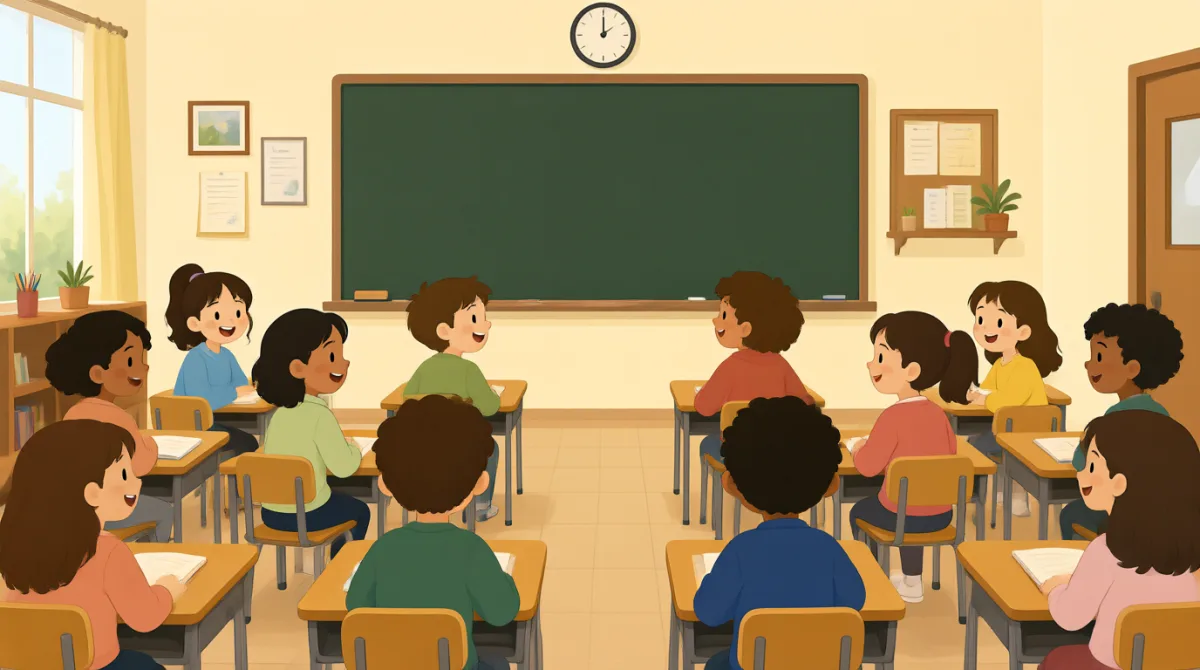

Hi everyone, I think we should all introduce ourselves since we'll be working together this semester. I'll go first. My name is Leo.
हाय, सब लोग! मुझे लगता है कि हमें अपना परिचय देना चाहिए, क्योंकि इस सेमेस्टर हम सब साथ काम करेंगे। मैं पहले शुरू करता हूँ। मेरा नाम लियो है।

Sounds good, Leo! I'm Emma. Nice to meet you all.
अच्छा है, लियो! मैं एमा हूँ। आप सब से मिलकर अच्छा लगा।
Nice to meet you too, Emma. I'm from Seattle, Washington. And in my free time, I really enjoy hiking.
मुझे भी तुमसे मिलकर अच्छा लगा, एमा। मैं वॉशिंगटन के सिएटल से हूँ। खाली समय में मुझे पैदल घूमना बहुत पसंद है।
Oh, hiking is great! I'm from Boston, Massachusetts. And I'm a big fan of drawing and painting.
ओह, पैदल घूमना बहुत बढ़िया है! मैं मैसाचुसेट्स के बोस्टन से हूँ। मुझे चित्रकारी और पेंटिंग का बहुत शौक है।

Hi, I'm Jack. I'm from Chicago, Illinois. My hobby is playing the guitar.
हाय, मैं जैक हूँ। मैं इलिनॉय के शिकागो से हूँ। मेरा शौक गिटार बजाना है।

It's nice to meet everyone. My name is Mia, and I'm originally from Vancouver, Canada. I love playing ultimate frisbee.
आप सब से मिलकर अच्छा लगा। मेरा नाम मिया है और मैं मूल रूप से कनाडा के वैंकूवर से हूँ। मुझे अल्टीमेट फ्रिस्बी खेलना बहुत पसंद है।
It sounds like we have a good mix of interests here! Looking forward to working with you all.
लगता है कि यहाँ हम सबकी रुचियाँ अलग-अलग हैं, जो बढ़िया है! आप सबके साथ काम करने का इंतज़ार है।
शब्दावली7
- introduceपरिचय देना
To introduce means to present yourself or someone else to others for the first time, often by saying your name or basic information. It's useful when meeting new people.
“introduce” का मतलब है पहली बार दूसरों से अपना या किसी और का परिचय कराना, अक्सर नाम या कुछ बुनियादी जानकारी बताकर। नए लोगों से मिलते समय यह शब्द काम आता है।
- semesterसेमेस्टर
A semester is one of the two main periods of time into which the school or university year is divided, usually lasting about four to six months. Use it when talking about school schedules.
“semester” स्कूल या विश्वविद्यालय के शैक्षणिक वर्ष के दो मुख्य हिस्सों में से एक होता है। आम तौर पर यह लगभग चार से छह महीने का होता है। स्कूल के समय-सारणी की बात करते समय इस शब्द का इस्तेमाल करें।
- hobbyशौक
A hobby is an activity you do for pleasure in your free time, not for money or work. It's common to share hobbies during introductions to find common interests.
“hobby” ऐसी गतिविधि है जिसे आप खाली समय में आनंद के लिए करते हैं, न कि पैसे कमाने या काम के लिए। परिचय देते समय अपने शौक बताना आम है—इससे पता चलता है कि आपकी और दूसरों की रुचियाँ मिलती हैं या नहीं।
- enjoyआनंद लेना
To enjoy means to get pleasure or happiness from doing something. Use it to talk about activities you like, such as 'I enjoy reading books.'
“enjoy” का मतलब है किसी काम को करने से खुशी या आनंद महसूस करना। अपनी पसंद की गतिविधियों के बारे में बताने के लिए इसका इस्तेमाल करें, जैसे “I enjoy reading books.” (मुझे किताबें पढ़ने में आनंद आता है।)
- fanप्रशंसक
A fan means someone who likes or admires something a lot, like a sport or activity. Say 'I'm a big fan of music' to show strong interest.
“fan” वह व्यक्ति होता है जिसे कोई चीज़, जैसे खेल या गतिविधि, बहुत पसंद हो या जिसकी वह प्रशंसा करता हो। किसी चीज़ में अपनी गहरी रुचि जताने के लिए कहें: “I'm a big fan of music.” (मुझे संगीत बहुत पसंद है।)
- originallyमूल रूप से
Originally means from the beginning or in the first place, often used for where you were born or grew up. It's helpful for explaining your background.
“originally” का मतलब है शुरू में या असल में। इसका इस्तेमाल अक्सर यह बताने के लिए होता है कि आपका जन्म कहाँ हुआ या आप कहाँ पले-बढ़े। अपनी पृष्ठभूमि के बारे में बताने में यह शब्द उपयोगी है।
- looking forward toबेकरार होना
Looking forward to means being excited about something that will happen in the future. Use it to express positive anticipation, like 'I'm looking forward to the party.'
“looking forward to” का मतलब है भविष्य में होने वाली किसी चीज़ को लेकर उत्साहित होना। अच्छी उम्मीद या उत्सुकता जताने के लिए इसका इस्तेमाल करें, जैसे “I'm looking forward to the party.” (मैं पार्टी का बेसब्री से इंतज़ार कर रहा हूँ।)
मुख्य वाक्य7
- 1
Hi everyone, I think we should all introduce ourselves since we'll be working together this semester.
हाय, सब लोग! मुझे लगता है कि हमें अपना परिचय देना चाहिए, क्योंकि इस सेमेस्टर हम सब साथ काम करेंगे।
This sentence suggests starting introductions in a group setting. 'Since' explains the reason, and 'we'll be working together' uses future continuous tense for planned actions. Useful for starting conversations in class or teams.
यह वाक्य समूह में परिचय शुरू करने का सुझाव देता है। “Since” यहाँ वजह बताता है, और “we'll be working together” भविष्य में साथ काम करने की योजना बताने के लिए भविष्य निरंतर काल का इस्तेमाल करता है। कक्षा या टीम में बातचीत शुरू करने के लिए यह वाक्य उपयोगी है।
- 2
My name is Leo.
मेरा नाम लियो है।
This is a basic way to state your name during self-introductions. It's simple present tense and very common in formal or informal meetings. Always polite and direct.
अपना परिचय देते समय नाम बताने का यह एक आसान तरीका है। यह साधारण वर्तमान काल में है और औपचारिक या अनौपचारिक, दोनों तरह की मुलाकातों में बहुत आम है। यह हमेशा विनम्र और सीधा लगता है।
- 3
Nice to meet you all.
आप सब से मिलकर अच्छा लगा।
A standard greeting when meeting people for the first time. 'All' includes everyone in the group. Use it to show friendliness right after sharing your name.
पहली बार लोगों से मिलने पर यह एक आम अभिवादन है। “All” का मतलब है कि आप समूह के हर व्यक्ति से बात कर रहे हैं। अपना नाम बताने के तुरंत बाद अपनापन दिखाने के लिए इसका इस्तेमाल करें।
- 4
I'm from Seattle, Washington.
मैं वॉशिंगटन के सिएटल से हूँ।
This shares your origin or hometown. 'I'm from' is a common phrase for location. Include city and state/country for clarity, especially in English-speaking countries.
इस वाक्य से आप बताते हैं कि आप कहाँ के हैं या आपका गृहनगर कहाँ है। जगह बताने के लिए “I'm from” एक आम वाक्यांश है। खासकर अंग्रेज़ी बोलने वाले देशों में, बात स्पष्ट करने के लिए शहर और राज्य या देश का नाम भी बताएँ।
- 5
In my free time, I really enjoy hiking.
खाली समय में मुझे पैदल घूमना बहुत पसंद है।
This describes a hobby. 'In my free time' sets the context for leisure activities, and 'really enjoy' adds emphasis. Great for talking about personal interests.
इस वाक्य में आप अपना शौक बताते हैं। “In my free time” से पता चलता है कि आप खाली समय में की जाने वाली गतिविधियों की बात कर रहे हैं, और “really enjoy” आपकी पसंद पर ज़ोर देता है। अपनी रुचियों के बारे में बात करने का यह बढ़िया तरीका है।
- 6
My hobby is playing the guitar.
मेरा शौक गिटार बजाना है।
A straightforward way to state a hobby. The structure 'My [noun] is [verb-ing]' is simple and versatile for sharing what you like to do.
अपना शौक बताने का यह एक सीधा-सादा तरीका है। “My [noun] is [verb-ing]” का ढाँचा आसान है और आप इसे अपनी पसंद की गतिविधि बताने के लिए कई तरह से इस्तेमाल कर सकते हैं।
- 7
It sounds like we have a good mix of interests here!
लगता है कि यहाँ हम सबकी रुचियाँ अलग-अलग हैं, जो बढ़िया है!
This comments positively on the group's variety. 'It sounds like' means 'it seems that,' and it's useful to wrap up introductions by noting shared or different hobbies.
इस वाक्य से आप समूह की अलग-अलग रुचियों के बारे में सकारात्मक टिप्पणी करते हैं। “It sounds like” का मतलब है “ऐसा लगता है कि”। परिचय के अंत में समूह के लोगों के मिलते-जुलते या अलग शौकों का ज़िक्र करने के लिए यह उपयोगी है।