Discussing Neighborhood Issues
पड़ोस की समस्याओं पर चर्चा
You encounter a neighbor and start discussing a common neighborhood issue, such as noisy pets, parking problems, or a new community project.
आपकी मुलाक़ात एक पड़ोसी से होती है और आप पड़ोस की किसी आम समस्या पर बात करने लगते हैं, जैसे पालतू जानवरों का शोर, पार्किंग की दिक्कत या कोई नई सामुदायिक परियोजना।
संवाद8
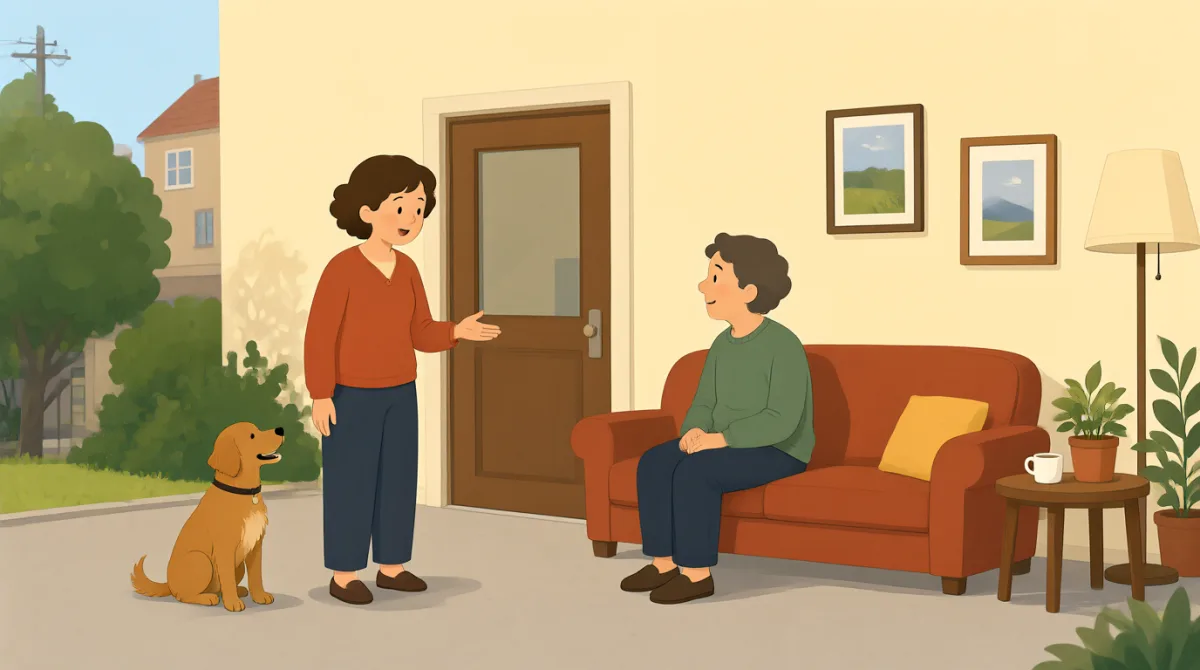

Hey Mia! Good to see you. How are things on your end of the street?
अरे मिया! तुमसे मिलकर अच्छा लगा। सड़क के तुम्हारे हिस्से में सब कैसा चल रहा है?

Hi Jack! Everything's mostly good, but I'm a bit concerned about the parking situation lately. It seems to be getting worse, especially on weekends.
हाय जैक! ज़्यादातर सब ठीक है, लेकिन इन दिनों पार्किंग की स्थिति को लेकर थोड़ी चिंता हो रही है। लगता है कि यह और खराब होती जा रही है, खासकर सप्ताहांत में।
Tell me about it! I almost had to park three blocks away last Saturday. It's a real headache. Plus, the construction on Elm Street isn't helping at all.
अरे, मुझे तो बताओ ही मत! पिछले शनिवार को तो मुझे लगभग तीन ब्लॉक दूर गाड़ी खड़ी करनी पड़ती। सच में बड़ी सिरदर्दी है। ऊपर से, एल्म स्ट्रीट पर चल रहा निर्माण काम भी कोई मदद नहीं कर रहा।
Exactly! I was thinking of bringing it up at the next neighborhood association meeting. Maybe we could suggest some sort of permit parking or designated visitor spots.
बिल्कुल! मैं सोच रही थी कि अगली पड़ोस संघ की बैठक में यह मुद्दा उठाऊँ। शायद हम परमिट वाली पार्किंग या आगंतुकों के लिए तय जगहों का सुझाव दे सकते हैं।
That's a great idea, Mia. I'd definitely support that. It’s affecting everyone. Do you know when the next meeting is?
यह तो बहुत अच्छा विचार है, मिया। मैं इसका पक्का समर्थन करूँगा। इसका असर सब पर पड़ रहा है। क्या तुम्हें पता है अगली बैठक कब है?
I think it's the second Tuesday of next month, so October 10th. I'll double-check the flyer. We really need to find a solution before it gets completely out of hand.
मुझे लगता है कि अगले महीने के दूसरे मंगलवार को है, यानी 10 अक्टूबर को। मैं पर्चा फिर से जाँच लूँगी। हमें सचमुच इसका हल निकालना होगा, इससे पहले कि मामला पूरी तरह हाथ से निकल जाए।
Agreed. Well, thanks for bringing it up. Maybe we can walk over together?
सही कहा। अच्छा, यह बात उठाने के लिए शुक्रिया। क्या हम साथ चलकर वहाँ जा सकते हैं?
Sounds like a plan, Jack! See you then. Take care!
ठीक है, ऐसा ही करते हैं, जैक! फिर मिलते हैं। अपना ख्याल रखना!
शब्दावली8
- concernedचिंतित
Feeling worried or interested about something, often a problem. Use it like: 'I'm concerned about the noise.' It's common in casual talks about issues.
इसका मतलब है किसी बात को लेकर चिंता होना या उसकी परवाह करना, खासकर जब कोई समस्या हो। इसका इस्तेमाल ऐसे करें: 'I'm concerned about the noise.' (मुझे शोर को लेकर चिंता है।) समस्याओं पर अनौपचारिक बातचीत में यह आम है।
- headacheसिरदर्दी
An idiom for a troublesome problem that causes annoyance. Not literal pain. Example: 'This traffic is a headache.' Useful for expressing frustration in daily life.
यह मुहावरा ऐसी परेशान करने वाली समस्या के लिए है जो झुंझलाहट पैदा करे। इसका मतलब सचमुच का दर्द नहीं है। उदाहरण: 'This traffic is a headache.' (यह ट्रैफ़िक बड़ी सिरदर्दी है।) रोज़मर्रा की झुंझलाहट जताने के लिए उपयोगी है।
- constructionनिर्माण कार्य
The process of building or repairing structures like roads or buildings. In neighborhoods, it often causes disruptions. Say: 'The construction is delaying us.'
सड़कों या इमारतों जैसी चीज़ों को बनाने या उनकी मरम्मत करने की प्रक्रिया। पड़ोस में इससे अक्सर रोज़मर्रा के कामों में बाधा आती है। कहें: 'The construction is delaying us.' (निर्माण कार्य की वजह से हमें देर हो रही है।)
- associationसंघ
A group of people organized for a shared purpose, like a neighborhood association for community matters. Use: 'Join the neighborhood association.'
किसी साझा उद्देश्य के लिए बनाया गया लोगों का समूह, जैसे सामुदायिक मामलों के लिए पड़ोस संघ। इसका इस्तेमाल करें: 'Join the neighborhood association.' (पड़ोस संघ में शामिल हों।)
- permitपरमिट
An official document giving permission, like a parking permit. Common in rules: 'You need a permit to park here.' Practical for discussing regulations.
अनुमति देने वाला आधिकारिक दस्तावेज़, जैसे पार्किंग परमिट। नियमों में यह शब्द आम है: 'You need a permit to park here.' (यहाँ गाड़ी खड़ी करने के लिए आपको परमिट चाहिए।) नियमों पर चर्चा में उपयोगी है।
- designatedतय किया हुआ
Assigned or set aside for a specific use, like designated parking spots. Example: 'Use the designated area.' Helps in clear instructions.
किसी खास इस्तेमाल के लिए निर्धारित या अलग रखा हुआ, जैसे तय की गई पार्किंग की जगहें। उदाहरण: 'Use the designated area.' (निर्धारित जगह का इस्तेमाल करें।) निर्देशों को साफ़-साफ़ बताने में मददगार है।
- double-checkदोबारा जाँच करना
To verify information again to make sure it's correct. Polite way to show caution: 'I'll double-check the time.' Useful in planning.
यह पक्का करने के लिए जानकारी को फिर से जाँचना कि वह सही है। सावधानी जताने का एक सहज तरीका: 'I'll double-check the time.' (मैं समय दोबारा जाँच लूँगा/लूँगी।) योजना बनाते समय उपयोगी है।
- out of handकाबू से बाहर हो जाना
Idiom meaning a situation has become uncontrollable. Use: 'The party got out of hand.' Good for describing escalating problems.
इस मुहावरे का मतलब है कि स्थिति पर काबू नहीं रहा। इसका इस्तेमाल करें: 'The party got out of hand.' (पार्टी काबू से बाहर हो गई।) बढ़ती हुई समस्याओं का वर्णन करने के लिए उपयोगी है।
मुख्य वाक्य8
- 1
Tell me about it!
Tell me about it! (अरे, मुझे तो बताओ ही मत!)
An idiomatic expression to strongly agree with someone's complaint. It's casual and shows empathy. Use it when sharing frustrations, like about traffic. No special grammar; it's a fixed phrase.
यह किसी की शिकायत से ज़ोरदार सहमति जताने वाला मुहावरा है। यह अनौपचारिक है और सामने वाले की परेशानी को समझने का भाव दिखाता है। ट्रैफ़िक जैसी बातों से अपनी झुंझलाहट साझा करते समय इसका इस्तेमाल करें। इसका कोई खास व्याकरणिक नियम नहीं है; यह एक तय वाक्यांश है।
- 2
It's a real headache.
It's a real headache. (यह सचमुच बड़ी सिरदर्दी है।)
Means something is a big problem or annoyance. 'Real' emphasizes it. Useful for everyday complaints. Simple present tense for ongoing issues.
इसका मतलब है कि कोई चीज़ बड़ी समस्या या परेशानी है। 'Real' (सचमुच) बात पर ज़ोर देता है। रोज़मर्रा की शिकायतों में यह उपयोगी है। लगातार बनी हुई समस्याओं के लिए वर्तमान काल का इस्तेमाल हुआ है।
- 3
I was thinking of bringing it up at the next meeting.
I was thinking of bringing it up at the next meeting. (मैं सोच रही थी कि अगली बैठक में यह मुद्दा उठाऊँ।)
Suggests mentioning a topic in a discussion. 'Bring up' means to introduce. Past continuous for thoughts; useful for proposing ideas politely in groups.
यह चर्चा में किसी विषय का ज़िक्र करने का सुझाव देता है। 'Bring up' का मतलब है किसी विषय को चर्चा में लाना। विचार बताते समय भूतकाल में जारी क्रिया का रूप आता है; समूह में विनम्रता से सुझाव देने के लिए यह उपयोगी है।
- 4
That's a great idea.
That's a great idea. (यह तो बहुत अच्छा विचार है।)
A positive response to a suggestion, showing approval. Simple and versatile for conversations. Use to encourage others; basic structure with 'that is'.
यह किसी सुझाव को पसंद करते हुए सकारात्मक जवाब देने का तरीका है। बातचीत में इसका इस्तेमाल आसानी से कई स्थितियों में किया जा सकता है। दूसरों का हौसला बढ़ाने के लिए कहें; इसकी बुनियादी बनावट 'that is' पर आधारित है।
- 5
I'd definitely support that.
I'd definitely support that. (मैं इसका पक्का समर्थन करूँगा।)
Expresses strong agreement and willingness to help. 'I'd' is short for 'I would'; conditional for future actions. Practical for teaming up on issues.
यह मज़बूत सहमति और मदद करने की इच्छा जताता है। 'I'd' का पूरा रूप 'I would' है; यहाँ इसका इस्तेमाल आगे की कार्रवाई बताने के लिए हुआ है। किसी मुद्दे पर मिलकर काम करने की बात में यह उपयोगी है।
- 6
Do you know when the next meeting is?
Do you know when the next meeting is? (क्या तुम्हें पता है अगली बैठक कब है?)
A question to ask for information about time. Present simple for schedules. Useful in planning; polite way to seek details from others.
बैठक का समय पूछने का यह एक सवाल है। समय-सारणी की बात करते हुए वर्तमान काल का इस्तेमाल होता है। योजना बनाते समय दूसरों से जानकारी विनम्रता से माँगने के लिए यह उपयोगी है।
- 7
I'll double-check the flyer.
I'll double-check the flyer. (मैं पर्चा फिर से जाँच लूँगी।)
Promises to verify information again. Future 'will' for intentions. 'Flyer' means a printed notice. Good for showing reliability in casual talks.
इसका मतलब है कि जानकारी को दोबारा जाँचने का वादा किया जा रहा है। अपनी मंशा बताने के लिए भविष्य के 'will' का इस्तेमाल हुआ है। 'Flyer' का मतलब छपा हुआ सूचना-पत्र है। अनौपचारिक बातचीत में भरोसेमंद लगने के लिए यह कहना अच्छा है।
- 8
Sounds like a plan!
Sounds like a plan! (ठीक है, ऐसा ही करते हैं!)
Agrees to a suggestion enthusiastically. Informal idiom for approval. Use at the end of planning; no complex grammar, just natural expression.
यह किसी सुझाव पर उत्साह से सहमति जताता है। मंज़ूरी देने का यह अनौपचारिक मुहावरा है। योजना तय करते समय बातचीत के अंत में इसका इस्तेमाल करें; यह एक सहज अभिव्यक्ति है, इसमें कोई जटिल व्याकरण नहीं है।