Describing Yourself
Describirte a ti mismo
Mia and Emma talk about how they would describe their own personalities. They share a few strengths and one thing they want to improve.
Mia y Emma hablan de cómo describirían su propia personalidad. Comparten algunas de sus cualidades y algo que quieren mejorar.
Diálogo8
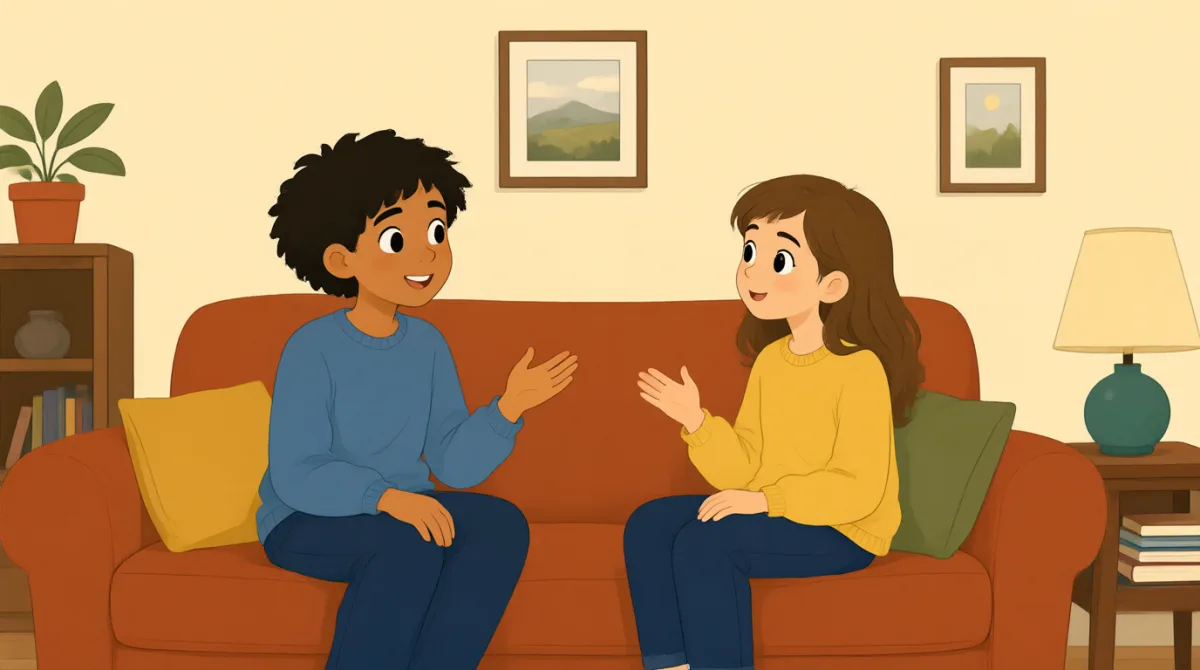

Mia, how would you describe yourself?
Mia, ¿cómo te describirías?

I think I’m calm and thoughtful. I like to listen to people.
Creo que soy tranquila y considerada. Me gusta escuchar a la gente.
That’s true. You’re also kind and easy to talk to.
Es verdad. También eres amable y es fácil hablar contigo.
Thanks! What about you? You’re cheerful and curious.
¡Gracias! ¿Y tú? Eres alegre y curiosa.
I’m friendly, but sometimes I talk too much when I’m excited.
Soy amigable, pero a veces hablo demasiado cuando me entusiasmo.
I can be shy in big groups. I want to speak up more.
A veces me da vergüenza hablar en grupos grandes. Quiero animarme a hablar más.
That’s a good goal. I want to slow down and listen more.
Es una buena meta. Quiero ir más despacio y escuchar más.
We both have good qualities, and we can keep improving.
Las dos tenemos buenas cualidades y podemos seguir mejorando.
Vocabulario8
- calmtranquilo
A calm person feels relaxed and does not get upset easily. Here, Mia uses it to describe her personality.
Una persona calmada se siente relajada y no se altera fácilmente. Aquí, Mia usa esta palabra para describir su personalidad.
- thoughtfulconsiderado
A thoughtful person cares about other people and thinks about their feelings. It is a positive way to describe yourself.
Una persona considerada se preocupa por los demás y tiene en cuenta sus sentimientos. Es una forma positiva de describirte.
- easy to talk tofácil de tratar
This describes someone who makes it comfortable to have a conversation with them. You can use it to compliment a friendly person.
Esta expresión describe a alguien con quien resulta cómodo conversar. Puedes usarla para elogiar a una persona amable.
- cheerfulalegre
A cheerful person is usually happy and positive. Use it to describe someone’s personality.
Una persona alegre suele estar feliz y tener una actitud positiva. Usa esta palabra para describir la personalidad de alguien.
- curiouscurioso
A curious person likes to learn or find out about things. You can use this word to describe an interest in the world.
A una persona curiosa le gusta aprender o descubrir cosas. Puedes usar esta palabra para describir el interés por el mundo.
- talk too muchhablar demasiado
This means to speak more than is needed. You can use it to talk about a habit you want to change.
Esto significa hablar más de lo necesario. Puedes usar esta expresión para hablar de un hábito que quieres cambiar.
- speak uphablar con más seguridad
To speak up means to speak more clearly or confidently, especially in a group. You can say, “I want to speak up more.”
“Speak up” significa hablar con más claridad o seguridad, especialmente en grupo. Puedes decir: “I want to speak up more.”
- slow downir más despacio
To slow down means to do something less quickly. Here, Emma wants to speak less quickly and listen more.
“Slow down” significa hacer algo con menos rapidez. Aquí, Emma quiere hablar menos rápido y escuchar más.
Frases clave8
- 1
How would you describe yourself?
¿Cómo te describirías?
Use this question to ask someone about their personality. You can also ask, “How would you describe your friend?”
Usa esta pregunta para preguntarle a alguien cómo es su personalidad. También puedes preguntar: “How would you describe your friend?”
- 2
I think I’m calm and thoughtful.
Creo que soy tranquila y considerada.
This is a simple way to describe two qualities you have. Replace “calm and thoughtful” with other personality words.
Esta es una forma sencilla de describir dos cualidades que tienes. Sustituye “calm and thoughtful” por otras palabras que describan la personalidad.
- 3
I like to listen to people.
Me gusta escuchar a la gente.
Use this sentence to describe something you enjoy doing. You can change “listen to people” to another activity.
Usa esta frase para describir algo que disfrutas hacer. Puedes cambiar “listen to people” por otra actividad.
- 4
You’re also kind and easy to talk to.
También eres amable y es fácil hablar contigo.
This is a friendly way to compliment someone. Use “You’re also…” to add another positive quality.
Esta es una forma amable de elogiar a alguien. Usa “You’re also…” para añadir otra cualidad positiva.
- 5
Sometimes I talk too much when I’m excited.
A veces hablo demasiado cuando me entusiasmo.
This sentence describes a habit that happens in a particular situation. You can replace “when I’m excited” with another time or feeling.
Esta frase describe un hábito que aparece en una situación concreta. Puedes sustituir “when I’m excited” por otro momento o sentimiento.
- 6
I want to speak up more.
Quiero animarme a hablar más.
Use “I want to…” to talk about something you hope to improve. “Speak up more” means to speak more confidently or often.
Usa “I want to…” para hablar de algo que quieres mejorar. “Speak up more” significa hablar con más seguridad o más a menudo.
- 7
I want to slow down and listen more.
Quiero ir más despacio y escuchar más.
This sentence shares a personal goal using two simple actions. You can change the actions to describe what you want to improve.
Esta frase expresa una meta personal con dos acciones sencillas. Puedes cambiar las acciones para describir lo que quieres mejorar.
- 8
We both have good qualities, and we can keep improving.
Las dos tenemos buenas cualidades y podemos seguir mejorando.
This is an encouraging way to say that everyone has strengths and can grow. Use “We both…” to describe something true about two people.
Esta es una forma alentadora de decir que todos tenemos fortalezas y podemos seguir creciendo. Usa “We both…” para describir algo que es cierto para dos personas.