Finding the Police Station
Cómo llegar a la comisaría
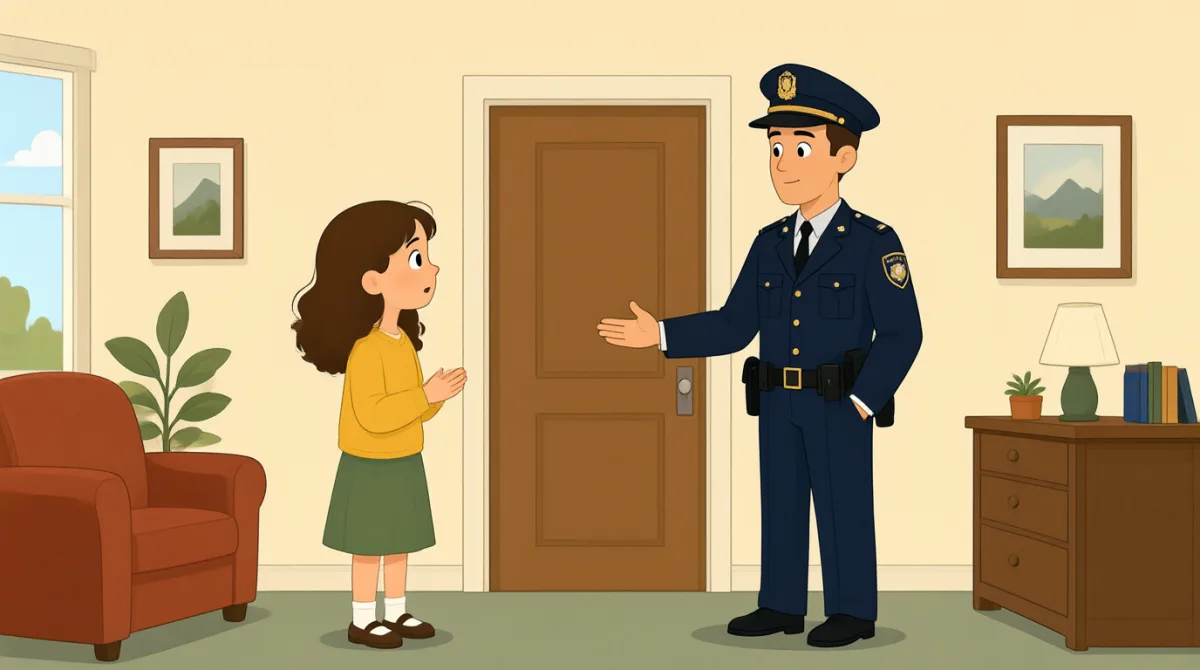
Emma asks Officer David where the police station is. He tells her how to get there on foot.
Emma le pregunta al oficial David dónde está la comisaría. Él le indica cómo llegar a pie.
Diálogo7

Excuse me, where is the police station?
Disculpe, ¿dónde está la comisaría?

It’s not far. Walk straight on this street.
No está lejos. Siga todo recto por esta calle.
How many blocks do I walk?
¿Cuántas cuadras tengo que caminar?
Walk two blocks, then turn left.
Camine dos cuadras y luego gire a la izquierda.
Is it near the bus stop?
¿Está cerca de la parada de autobús?
Yes. It’s next to the bus stop.
Sí. Está al lado de la parada de autobús.
Thank you. I can find it now.
Gracias. Ya puedo encontrarla.
Vocabulario8
- Excuse meDisculpe
Use this polite phrase to get someone's attention before asking a question.
Usa esta expresión cortés para llamar la atención de alguien antes de hacerle una pregunta.
- police stationcomisaría
This is a place where police officers work. You can ask where it is if you need help.
Es el lugar donde trabajan los policías. Si necesitas ayuda, puedes preguntar dónde está.
- not farno está lejos
This means a place is close by. You can use it to describe a short distance.
Significa que un lugar está cerca. Puedes usarlo para indicar que la distancia es corta.
- Walk straight on this street.Siga todo recto por esta calle.
This tells someone to keep walking forward on the same street. Use it to give simple directions.
Esta frase indica que alguien debe seguir caminando hacia delante por la misma calle. Úsala para dar indicaciones sencillas.
- blockscuadras
Blocks are sections of a street between two crossings. You can ask how many blocks to walk.
Las cuadras son los tramos de calle entre dos cruces. Puedes preguntar cuántas cuadras tienes que caminar.
- turn leftgire a la izquierda
This means to go in the direction on your left. Use it when giving or following directions.
Significa que hay que ir en la dirección de la izquierda. Úsalo para dar o seguir indicaciones.
- next toal lado de
This means beside or very close to something. Use it to say where a place is.
Significa que algo está junto a otra cosa o muy cerca de ella. Úsalo para indicar dónde está un lugar.
- bus stopparada de autobús
This is a place where people wait for a bus. It can help someone find a nearby location.
Es el lugar donde la gente espera el autobús. Puede servir como referencia para encontrar un sitio cercano.
Frases clave8
- 1
Excuse me, where is the police station?
Disculpe, ¿dónde está la comisaría?
Use this polite question to ask for the location of a police station. You can replace “the police station” with another place.
Usa esta pregunta cortés para preguntar dónde está una comisaría. Puedes sustituir “the police station” por otro lugar.
- 2
It’s not far.
No está lejos.
This is a short way to say that a place is close. You can use it to reassure someone about the distance.
Es una forma breve de decir que un lugar está cerca. Puedes usarla para tranquilizar a alguien sobre la distancia.
- 3
Walk straight on this street.
Siga todo recto por esta calle.
Use this sentence to give a simple direction. You can change “this street” to the name of another street.
Usa esta frase para dar una indicación sencilla. Puedes cambiar “this street” por el nombre de otra calle.
- 4
How many blocks do I walk?
¿Cuántas cuadras tengo que caminar?
Use this question to ask how far you should walk. You can replace “blocks” with another unit of distance.
Usa esta pregunta para saber cuánto tienes que caminar. Puedes sustituir “blocks” por otra unidad de distancia.
- 5
Walk two blocks, then turn left.
Camine dos cuadras y luego gire a la izquierda.
This gives two steps in a walking direction. Change “two” or “left” to give different directions.
Esta frase da dos indicaciones para llegar a pie. Cambia “two” o “left” para dar otras indicaciones.
- 6
Is it near the bus stop?
¿Está cerca de la parada de autobús?
Use this question to check whether a place is close to a landmark. You can replace “the bus stop” with another nearby place.
Usa esta pregunta para comprobar si un lugar está cerca de un punto de referencia. Puedes sustituir “the bus stop” por otro lugar cercano.
- 7
Yes. It’s next to the bus stop.
Sí. Está al lado de la parada de autobús.
This confirms the location and explains where it is. Replace “the bus stop” with another landmark.
Esta respuesta confirma dónde está el lugar y explica su ubicación. Sustituye “the bus stop” por otro punto de referencia.
- 8
Thank you. I can find it now.
Gracias. Ya puedo encontrarla.
Use this to thank someone and say you understand how to get there. You can change “it” to name the place.
Usa esta frase para dar las gracias y decir que ya sabes cómo llegar. Puedes cambiar “it” por el nombre del lugar.