Finding the Police Station
पुलिस स्टेशन का रास्ता पूछना
Emma asks Officer David where the police station is. He tells her how to get there on foot.
एमा अधिकारी डेविड से पूछती है कि पुलिस स्टेशन कहाँ है। वह उसे पैदल वहाँ पहुँचने का रास्ता बताता है।
संवाद7
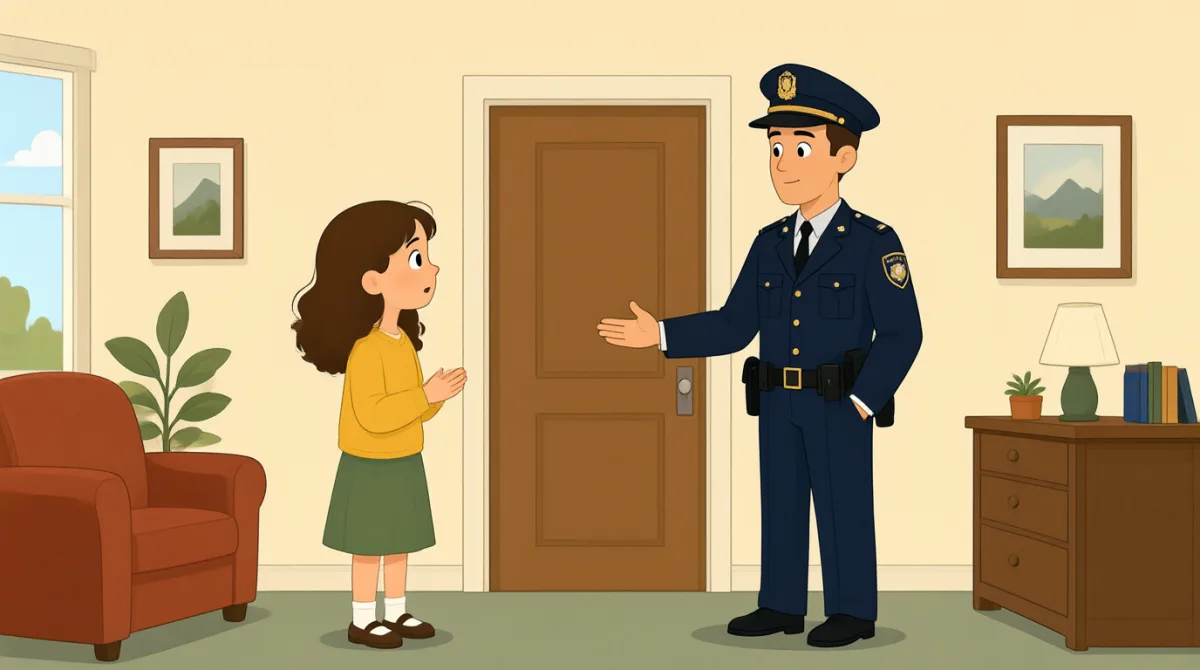

Excuse me, where is the police station?
माफ़ कीजिए, पुलिस स्टेशन कहाँ है?

It’s not far. Walk straight on this street.
ज़्यादा दूर नहीं है। इस सड़क पर सीधे चलते जाइए।
How many blocks do I walk?
मुझे कितने ब्लॉक तक चलना होगा?
Walk two blocks, then turn left.
दो ब्लॉक चलिए, फिर बाएँ मुड़ जाइए।
Is it near the bus stop?
क्या यह बस स्टॉप के पास है?
Yes. It’s next to the bus stop.
हाँ। यह बस स्टॉप के बगल में है।
Thank you. I can find it now.
धन्यवाद। अब मैं वहाँ पहुँच सकती हूँ।
शब्दावली8
- Excuse meमाफ़ कीजिए
Use this polite phrase to get someone's attention before asking a question.
कोई सवाल पूछने से पहले उसका ध्यान खींचने के लिए इस विनम्र वाक्यांश का इस्तेमाल करें।
- police stationपुलिस स्टेशन
This is a place where police officers work. You can ask where it is if you need help.
यह वह जगह है जहाँ पुलिस अधिकारी काम करते हैं। मदद की ज़रूरत हो, तो आप पूछ सकते हैं कि यह कहाँ है।
- not farज़्यादा दूर नहीं
This means a place is close by. You can use it to describe a short distance.
इसका मतलब है कि कोई जगह पास ही है। कम दूरी बताने के लिए आप इसका इस्तेमाल कर सकते हैं।
- Walk straight on this street.इस सड़क पर सीधे चलते जाइए।
This tells someone to keep walking forward on the same street. Use it to give simple directions.
इसका मतलब है कि उसी सड़क पर आगे चलते रहना है। रास्ता बताने के लिए इस आसान वाक्य का इस्तेमाल करें।
- blocksब्लॉक
Blocks are sections of a street between two crossings. You can ask how many blocks to walk.
ब्लॉक सड़क के वे हिस्से होते हैं जो दो चौराहों के बीच होते हैं। आप पूछ सकते हैं कि कितने ब्लॉक चलना है।
- turn leftबाएँ मुड़ना
This means to go in the direction on your left. Use it when giving or following directions.
इसका मतलब है बाईं ओर जाना। रास्ता बताते या समझते समय इसका इस्तेमाल करें।
- next toके बगल में
This means beside or very close to something. Use it to say where a place is.
इसका मतलब है किसी चीज़ के पास या उसके ठीक बगल में। किसी जगह का पता बताने के लिए इसका इस्तेमाल करें।
- bus stopबस स्टॉप
This is a place where people wait for a bus. It can help someone find a nearby location.
यह वह जगह है जहाँ लोग बस का इंतज़ार करते हैं। इससे किसी पास की जगह का पता बताने में मदद मिल सकती है।
मुख्य वाक्य8
- 1
Excuse me, where is the police station?
माफ़ कीजिए, पुलिस स्टेशन कहाँ है?
Use this polite question to ask for the location of a police station. You can replace “the police station” with another place.
पुलिस स्टेशन का पता पूछने के लिए इस विनम्र सवाल का इस्तेमाल करें। आप “the police station” की जगह किसी दूसरी जगह का नाम रख सकते हैं।
- 2
It’s not far.
ज़्यादा दूर नहीं है।
This is a short way to say that a place is close. You can use it to reassure someone about the distance.
किसी जगह के पास होने की बात संक्षेप में कहने का यह तरीका है। दूरी को लेकर किसी को आश्वस्त करने के लिए इसका इस्तेमाल कर सकते हैं।
- 3
Walk straight on this street.
इस सड़क पर सीधे चलते जाइए।
Use this sentence to give a simple direction. You can change “this street” to the name of another street.
रास्ता बताने के लिए इस आसान वाक्य का इस्तेमाल करें। आप “this street” की जगह किसी दूसरी सड़क का नाम रख सकते हैं।
- 4
How many blocks do I walk?
मुझे कितने ब्लॉक तक चलना होगा?
Use this question to ask how far you should walk. You can replace “blocks” with another unit of distance.
कितनी दूर चलना है, यह पूछने के लिए इस सवाल का इस्तेमाल करें। आप “blocks” की जगह दूरी की कोई दूसरी इकाई रख सकते हैं।
- 5
Walk two blocks, then turn left.
दो ब्लॉक चलिए, फिर बाएँ मुड़ जाइए।
This gives two steps in a walking direction. Change “two” or “left” to give different directions.
इस वाक्य में पैदल जाने के रास्ते के दो कदम बताए गए हैं। अलग रास्ता बताने के लिए “two” या “left” बदलें।
- 6
Is it near the bus stop?
क्या यह बस स्टॉप के पास है?
Use this question to check whether a place is close to a landmark. You can replace “the bus stop” with another nearby place.
किसी जगह के किसी पहचान की जगह के पास होने की पुष्टि करने के लिए यह सवाल पूछें। आप “the bus stop” की जगह पास की किसी दूसरी जगह का नाम रख सकते हैं।
- 7
Yes. It’s next to the bus stop.
हाँ। यह बस स्टॉप के बगल में है।
This confirms the location and explains where it is. Replace “the bus stop” with another landmark.
इससे जगह की पुष्टि होती है और उसका पता बताया जाता है। आप “the bus stop” की जगह किसी दूसरी पहचान की जगह का नाम रख सकते हैं।
- 8
Thank you. I can find it now.
धन्यवाद। अब मैं वहाँ पहुँच सकती हूँ।
Use this to thank someone and say you understand how to get there. You can change “it” to name the place.
किसी को धन्यवाद देने और यह बताने के लिए इसका इस्तेमाल करें कि अब आपको वहाँ पहुँचने का रास्ता समझ आ गया है। आप “it” की जगह उस जगह का नाम ले सकते हैं।