Payment and Farewell
支付與告別
The florist informs the customer of the total cost, processes the payment, and they exchange goodbyes.
花藝師告知顧客總價,處理付款,並互相告別。
對話9
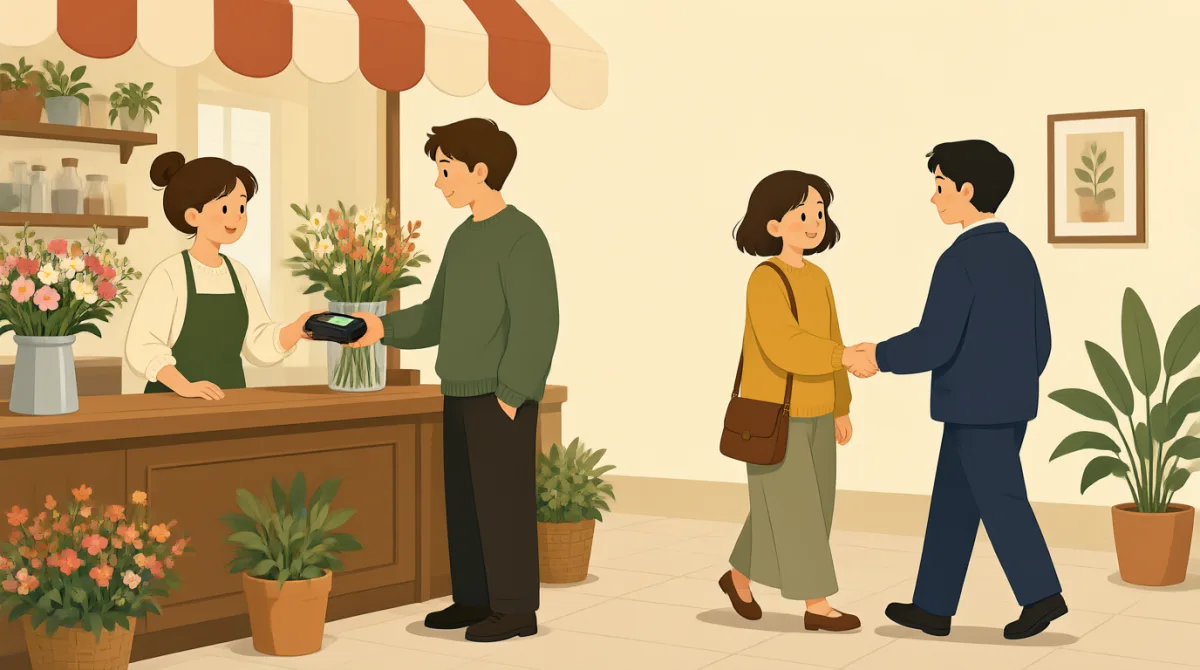

Alright, so that'll be two dozen roses and the lily arrangement. Your total comes to $85.50.
好的,那就是兩打玫瑰和百合花束。您的總費用是85.50美元。

Okay, sounds good. I'll pay with my card.
好的,沒問題。我用卡支付。
Great. Just insert your card here when you're ready. And remember, keep the roses in fresh water and trim the stems every couple of days.
好的。準備好了就把卡插這裡。記住,玫瑰要放在新鮮水裡,每隔幾天修剪一下莖。
Got it. Thanks for the reminder. This is for my wife's birthday, so I want them to last.
明白了。謝謝提醒。這是給我妻子生日用的,我希望它們能持久一些。
Perfect! I'm sure she'll love them. And the lilies should last a good week or so too, just keep them away from direct sunlight.
太棒了!我肯定她會喜歡的。百合花也應該能開一週左右,只要避開陽光直射就行。
Alright, direct sunlight, got it. Thanks again for all your help. You've been very helpful.
好的,陽光直射,明白了。再次感謝您的幫助。您幫了我很多。
You're very welcome! My pleasure. Enjoy the celebration!
不客氣!我的榮幸。祝您慶祝愉快!
I will! Have a great day!
會的!祝您有個美好的一天!
You too! Bye now!
您也一樣!再見!
詞彙11
- dozen打
A dozen means twelve items. In the dialogue, 'two dozen roses' means 24 roses. It's common in English to buy flowers or eggs by the dozen.
一打指十二件物品。在對話中,'two dozen roses' 指24朵玫瑰。在英語中,鮮花或雞蛋按打購買很常見。
- arrangement花藝作品
An arrangement is a decorative grouping of flowers, like a bouquet or display. Here, 'lily arrangement' refers to a pre-made bunch of lilies.
花藝作品是由鮮花組成的裝飾性組合,比如花束或展示品。這裡的'lily arrangement'指一束提前製作好的百合花。
- total總價
Total means the final amount after adding everything up. 'Your total comes to $85.50' is how shopkeepers announce the price to pay.
Total指把所有費用加起來後的最終金額。店員通常會說'Your total comes to $85.50.'來告知顧客需要支付的價格。
- insert插入
To insert means to put something into a slot or hole. In payments, 'insert your card' means slide the credit card into the machine to pay.
Insert指把某物放進插槽或孔中。在付款時,'insert your card'指把信用卡插入機器進行支付。
- trim修剪
To trim means to cut a small amount off something to make it neat or fresh. 'Trim the stems' means cut the ends of flower stems to help them absorb water better.
Trim指剪掉某物的一小部分,使它看起來整齊或保持新鮮。'Trim the stems'指剪掉花莖的末端,幫助花朵更好地吸收水分。
- stems花莖
Stems are the long, thin parts of plants that support the flowers or leaves. In flower care, you trim stems to keep flowers fresh longer.
Stems是植物中支撐花朵或葉子的細長部分。在養護鮮花時,修剪花莖可以讓花朵保持更長時間的新鮮。
- reminder提醒
A reminder is something that helps you remember important information. 'Thanks for the reminder' shows appreciation for helpful advice.
提醒是幫助你記住重要資訊的事物。'Thanks for the reminder'表示感謝對方提供了有用的建議。
- last保持新鮮
In this context, 'last' means to stay fresh or alive for a period of time. 'I want them to last' means the flowers should not wilt quickly.
在這個語境中,'last'指在一段時間內保持新鮮或存活。'I want them to last'表示希望這些花不要很快枯萎。
- direct sunlight直射陽光
Direct sunlight means strong, straight light from the sun without shade. Flowers like lilies should avoid it to prevent wilting.
Direct sunlight指沒有遮擋、直接照射下來的強烈陽光。像百合這樣的花應該避開直射陽光,以免枯萎。
- helpful有幫助的
Helpful means providing useful assistance. 'You've been very helpful' is a polite way to thank someone for good service.
Helpful表示能提供有用的幫助。'You've been very helpful'是感謝對方提供優質服務的一種禮貌說法。
- pleasure榮幸
Pleasure means enjoyment or happiness. 'My pleasure' is a friendly response to 'thank you,' meaning it was enjoyable to help.
Pleasure表示愉快或幸福。'My pleasure'是對'Thank you'的友好回應,意思是幫助對方是件令人愉快的事。
關鍵句10
- 1
Your total comes to $85.50.
您的總價是85.50美元。
This sentence is used by shopkeepers to tell the customer the final price. 'Comes to' is a common phrase for totaling amounts; it's useful in any shopping situation to confirm payment.
店員用這句話告知顧客最終價格。'Comes to'是表示金額合計時常用的短語。在任何購物場景中,你都可以用它來確認需要支付的金額。
- 2
I'll pay with my card.
我用卡支付。
This expresses the payment method. 'Pay with' is a key phrase for choosing how to pay, like cash or card; intermediate learners can use it in stores worldwide.
這句話用於表達付款方式。'Pay with'是選擇付款方式時的關鍵短語,比如用現金或刷卡支付。中級英語學習者在世界各地的商店裡都可以使用它。
- 3
Just insert your card here when you're ready.
您準備好後,就把卡插在這裡。
This gives a simple instruction for using a card machine. 'When you're ready' adds politeness; it's practical for everyday transactions and shows how to guide someone politely.
這句話是在指導對方使用刷卡機。'When you're ready'讓指示聽起來更禮貌。在日常交易中,這種說法很實用,也能體現如何禮貌地指導他人。
- 4
Keep the roses in fresh water and trim the stems every couple of days.
把玫瑰放在新鮮的水裡,每隔幾天修剪一下花莖。
This provides care advice using imperative verbs like 'keep' and 'trim.' 'Every couple of days' means approximately every two days; useful for explaining maintenance in service dialogues.
這句話使用'keep'和'trim'這樣的祈使動詞來提供養護建議。'Every couple of days'指大約每兩天一次,適合在服務對話中說明護理或維護方法。
- 5
Got it. Thanks for the reminder.
明白了。謝謝你的提醒。
'Got it' is informal for 'I understand,' and it pairs with thanks. This pattern is great for acknowledging advice quickly and politely in conversations.
'Got it'是'I understand'的非正式說法,常常和感謝的話一起使用。這個表達方式很適合在對話中快速而禮貌地表示你聽懂了建議。
- 6
This is for my wife's birthday, so I want them to last.
這是給我妻子過生日用的,所以我希望這些花能保持更久。
This explains the purpose and a desire. 'So' connects reason and result; it's a common structure for sharing why something matters, helpful in personal shopping talks.
這句話說明了購買的目的和願望。'So'連線原因和結果,是分享某件事為何重要時常用的結構,在個人購物對話中很有幫助。
- 7
Thanks again for all your help. You've been very helpful.
再次感謝你的幫助。你真的幫了我很多。
This shows repeated gratitude. 'Thanks again' emphasizes thanks; 'You've been' uses present perfect for ongoing actions. Use it to end service interactions positively.
這句話表達了再次感謝。'Thanks again'強調謝意;'You've been'使用現在完成時,表示持續到現在的幫助。在服務互動結束時,可以用這句話積極地表達感謝。
- 8
You're very welcome! My pleasure.
不用客氣!這是我的榮幸。
Standard polite responses to thanks. 'You're welcome' is basic, while 'My pleasure' is warmer; both are essential for courteous replies in customer service.
這是對感謝的標準禮貌回應。'You're welcome'是基本說法,而'My pleasure'語氣更溫暖;兩者都是客戶服務中禮貌回應時必備的表達。
- 9
Enjoy the celebration!
祝您慶祝愉快!
A well-wish for happy events. Imperative 'enjoy' makes it direct and friendly; use similar phrases like this for farewells in celebratory contexts.
這是一句對歡樂活動的祝福。祈使句'enjoy'讓表達直接而友好;在慶祝活動的告別場景中,可以使用類似的短語。
- 10
Have a great day!
祝您今天過得愉快!
A common goodbye. 'Have a' wishes something good; it's a simple, everyday farewell pattern that's polite and widely used in English-speaking countries.
這是常見的告別語。'Have a'用於祝願對方擁有美好的事物,是英語國家中禮貌且廣泛使用的日常告別句型。