Values and Character Formation
價值觀與品格培養
Friends are exploring how to instill certain values (e.g., honesty, empathy, independence) in their children. They share their own upbringing experiences and debate the most effective ways to model and teach these principles.
朋友們正在探討如何向孩子灌輸某些價值觀(例如,誠實、同理心、獨立性)。他們分享自己的成長經歷,並爭論最有效地示範和傳授這些原則的方法。
對話10
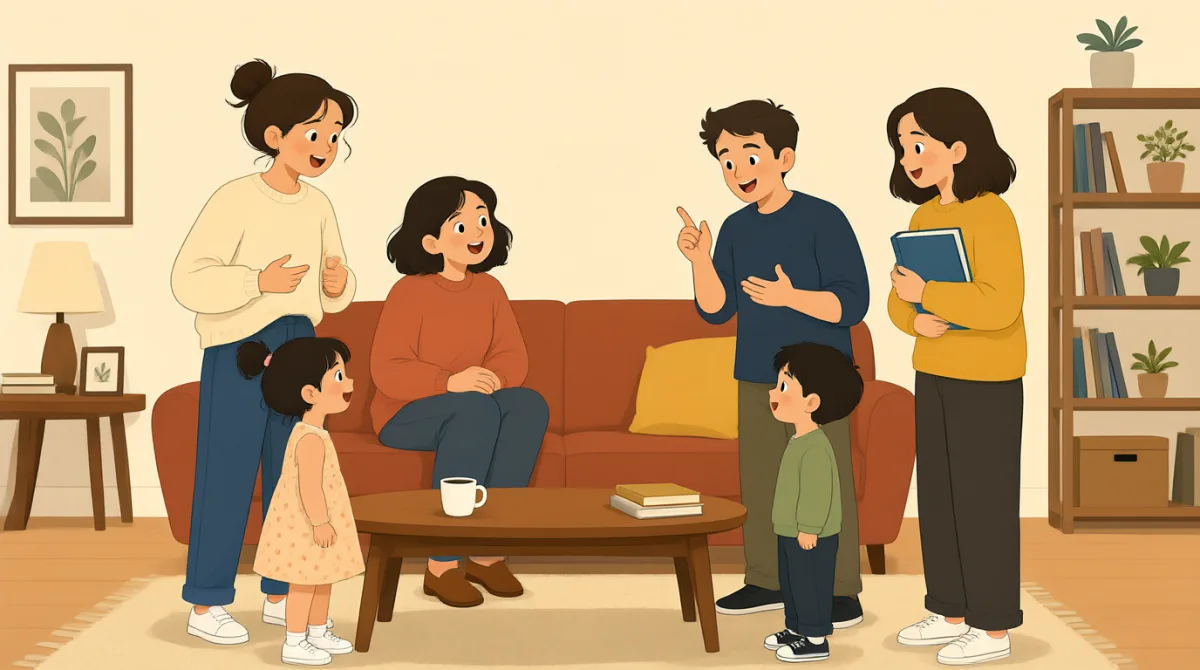

Hey Jack, I've been thinking a lot about how we instill certain values in our kids, like honesty and empathy. It feels like such a core part of parenting.
嘿,傑克,我一直在思考我們如何向孩子們灌輸某些價值觀,比如誠實和同理心。這似乎是育兒的核心部分。

Me too, Mia. Especially with all the external influences they encounter. I remember my parents always emphasized integrity, which was mainly through leading by example.
我也是,米婭。尤其是在他們遇到的所有外部影響下。我記得我的父母總是強調正直,主要是透過以身作則。
Right, modeling behavior is key. But what about when they're really young? How do you explicitly teach something like empathy beyond just saying, 'Be kind'?
沒錯,行為示範是關鍵。但當他們還很小的時候呢?你如何明確地教導同理心,而不僅僅是說“要善良”?
That's the tricky part. For empathy, I try to encourage perspective-taking. Like, if a sibling is upset, we ask, 'How do you think they're feeling right now?' and talk about it.
這正是棘手之處。對於同理心,我儘量鼓勵換位思考。比如,如果一個兄弟姐妹不開心,我們會問:“你覺得他們現在感覺怎麼樣?”然後談論這件事。
Oh, that's a good one. My parents were very big on independence, which I'm grateful for, but sometimes I wonder if I should be more hands-on with teaching specific values.
哦,這個不錯。我的父母非常重視獨立性,對此我很感激,但有時我懷疑我是否應該更親力親為地教授具體的價值觀。
It's a tough balance. My dad believed in letting us figure things out, which fostered independence, but there were times I wished for more direct guidance on ethical dilemmas.
這很難平衡。我爸爸相信讓我們自己解決問題,這培養了獨立性,但有時我希望在道德困境上能有更直接的指導。
Exactly! And how do we ensure they truly internalize these values, not just parrot them back to us? Especially with something like honesty, where the consequences can be immediate for them.
沒錯!我們如何確保他們真正內化這些價值觀,而不是僅僅鸚鵡學舌地回答我們?尤其是像誠實這樣的事情,後果對他們來說可能是立竿見影的。
I think consistency is vital. And talking through scenarios, like what happens if you're not honest, and connecting it to how it impacts others. It's an ongoing conversation, really.
我認為一致性至關重要。並且要透過情景來討論,比如不誠實會發生什麼,並將其與它如何影響他人聯絡起來。這真是一個持續的對話。
True. It's not a one-time lesson. Maybe it's less about strict teaching and more about creating a consistent environment where these values are seen, discussed, and lived.
確實。這不是一次性的課程。也許這與嚴格的教學無關,更多的是創造一個一致的環境,讓這些價值觀得以展現、討論和實踐。
Couldn't agree more. It's a continuous process of modeling, reflecting, and guiding. We're all just doing our best, trying to give them a solid foundation.
非常同意。這是一個持續的示範、反思和引導的過程。我們都只是盡力而為,努力為他們打下堅實的基礎。
詞彙8
- instill灌輸
To gradually put an idea or value into someone's mind, especially in children. Use it when talking about teaching important life lessons, like 'Parents instill good habits in their kids.'
指逐漸把一種想法或價值觀植入某人的心中,尤其常用於談論孩子。談到傳授重要的人生道理時可以用這個詞,比如 'Parents instill good habits in their kids.'(父母把良好的習慣灌輸給孩子。)
- empathy同理心
The ability to understand and share the feelings of others. It's a key value in parenting; say 'Teaching empathy helps children be kinder to friends.'
指理解並感受他人情緒的能力。這是育兒中很重要的一種價值觀;可以說 'Teaching empathy helps children be kinder to friends.'(教孩子培養同理心,能讓他們更友善地對待朋友。)
- integrity正直
Honesty and strong moral principles. Often used in discussions about character; for example, 'She has great integrity because she always tells the truth.'
指誠實並堅守道德原則。談論品格時經常會用到這個詞,例如 'She has great integrity because she always tells the truth.'(她非常正直,因為她總是說實話。)
- modeling示範
Showing behavior for others to copy, especially parents with children. In parenting talks, 'Modeling good behavior is more effective than just telling kids what to do.'
指透過自己的行為做出示範,讓別人效仿,尤其常用於談論父母如何引導孩子。在育兒話題中,'Modeling good behavior is more effective than just telling kids what to do.'(以身作則比光告訴孩子該怎麼做更有效。)
- perspective-taking換位思考
Trying to see things from another person's point of view. Useful for building empathy; 'Encourage perspective-taking by asking how others feel.'
指試著從另一個人的角度看問題。這有助於培養同理心;可以透過詢問他人的感受來鼓勵換位思考:'Encourage perspective-taking by asking how others feel.'(問問別人是什麼感受,以此鼓勵孩子換位思考。)
- internalize內化
To make an idea or value part of your own beliefs, not just remember it. In education, 'Children need to internalize values like honesty to live by them.'
指把一種想法或價值觀真正變成自己的信念,而不只是記住它。在教育中,'Children need to internalize values like honesty to live by them.'(孩子需要把誠實這樣的價值觀內化,才能在生活中踐行。)
- consistency一貫性
Being steady and reliable in actions or rules. Important in parenting; 'Consistency in discipline helps kids feel secure.'
指行為或規則始終如一、穩定可靠。這在育兒中很重要;'Consistency in discipline helps kids feel secure.'(管教方式始終如一,能讓孩子更有安全感。)
- vital至關重要的
Extremely important or necessary. Use in serious discussions; 'Consistency is vital for teaching values effectively.'
指極其重要或必不可少。適合用於嚴肅的討論;'Consistency is vital for teaching values effectively.'(始終如一對於有效地教導價值觀至關重要。)
關鍵句8
- 1
I've been thinking a lot about how we instill certain values in our kids.
我一直在認真思考,我們該如何向孩子灌輸某些價值觀。
This sentence uses present perfect continuous ('I've been thinking') to show ongoing thoughts. It's useful for starting conversations about personal reflections, especially in parenting or life topics. Practice it to express what you've been considering lately.
這句話用了現在完成進行時 ('I've been thinking'),表示思考一直持續到現在。它很適合用來開啟有關個人感悟的話題,尤其是育兒或生活方面的討論。你可以用它來表達最近一直在考慮的事情。
- 2
Leading by example.
以身作則。
A common phrase meaning to show behavior through actions rather than words. It's an idiom for parenting advice. Use it when discussing how to teach values, like 'Parents should lead by example to build trust.'
這是一個常見短語,意思是透過行動而不是言語來示範行為。這是談論育兒建議時常用的習語。討論如何教導價值觀時可以用它,比如 'Parents should lead by example to build trust.'(父母應該以身作則,才能建立信任。)
- 3
That's the tricky part.
這就是棘手的地方。
This expresses that something is difficult or challenging. 'Tricky' is informal for complicated situations. Great for casual talks about problems; it shows agreement and adds to the discussion naturally.
這句話表示某件事很難或很有挑戰性。'Tricky' 是比較口語化的說法,用來形容複雜的情況。它很適合在輕鬆的交談中討論問題,既能表示贊同,也能自然地接著展開討論。
- 4
How do you think they're feeling right now?
你覺得他們現在是什麼感受?
A question using 'how do you think' to encourage empathy and perspective-taking. The present continuous ('they're feeling') describes current emotions. Use this in conversations to help others understand feelings, especially with children.
這是一個用 'how do you think' 來引導同理心和換位思考的問題。現在進行時 ('they're feeling') 描述的是當下的情緒。你可以在交談中用這句話幫助他人理解別人的感受,尤其適合和孩子交流時使用。
- 5
It's a tough balance.
這很難把握平衡。
'Tough balance' is an idiom for finding the right middle ground between extremes. Useful in debates about choices, like work-life or parenting styles. It acknowledges difficulty while keeping the talk positive.
'Tough balance' 是一個習語,指在兩個極端之間找到合適的平衡點。討論工作與生活或育兒方式等選擇時都很實用。它既承認事情不容易,也能讓談話保持積極。
- 6
We need to ensure they truly internalize these values.
我們得確保他們真正把這些價值觀內化。
Uses 'ensure' (to make certain) and 'truly' for emphasis. The structure shows purpose with 'to' infinitive. Practical for discussing deep learning; say it when talking about making sure ideas stick, not just surface knowledge.
這句話用了 'ensure'(確保)和 'truly'(真正地)來加強語氣。句中的 'to' 不定式表達目的。討論深入學習時很實用;當你想強調要確保某個觀念真正記在心裡,而不只是停留在表面時,可以用這句話。
- 7
Consistency is vital.
始終如一至關重要。
A simple subject-verb-complement sentence stating importance. 'Vital' means essential. Use this short form to emphasize key points in advice-giving, like in parenting or habit-building talks.
這是一個簡單的“主語+動詞+補語”句式,用來說明某件事很重要。'Vital' 的意思是“至關重要的”。給出建議時,可以用這個簡短的句子強調重點,比如在育兒或培養習慣的話題中。
- 8
Couldn't agree more.
完全同意。
An idiomatic way to strongly agree with someone. It's informal and polite for conversations. Perfect for responding in discussions to show support, making dialogues smoother and friendlier.
這是一個表示強烈贊同的習語。它適用於輕鬆、友好的交談。討論中可以用它來表示支援,讓對話聽起來更自然、更親切。