Buying Drinks
Mua đồ uống
At the store, Emma and Jack choose drinks for the party. They compare a few options and check the prices.
Ở cửa hàng, Emma và Jack chọn đồ uống cho bữa tiệc. Họ so sánh một vài lựa chọn và xem giá.
Hội thoại8
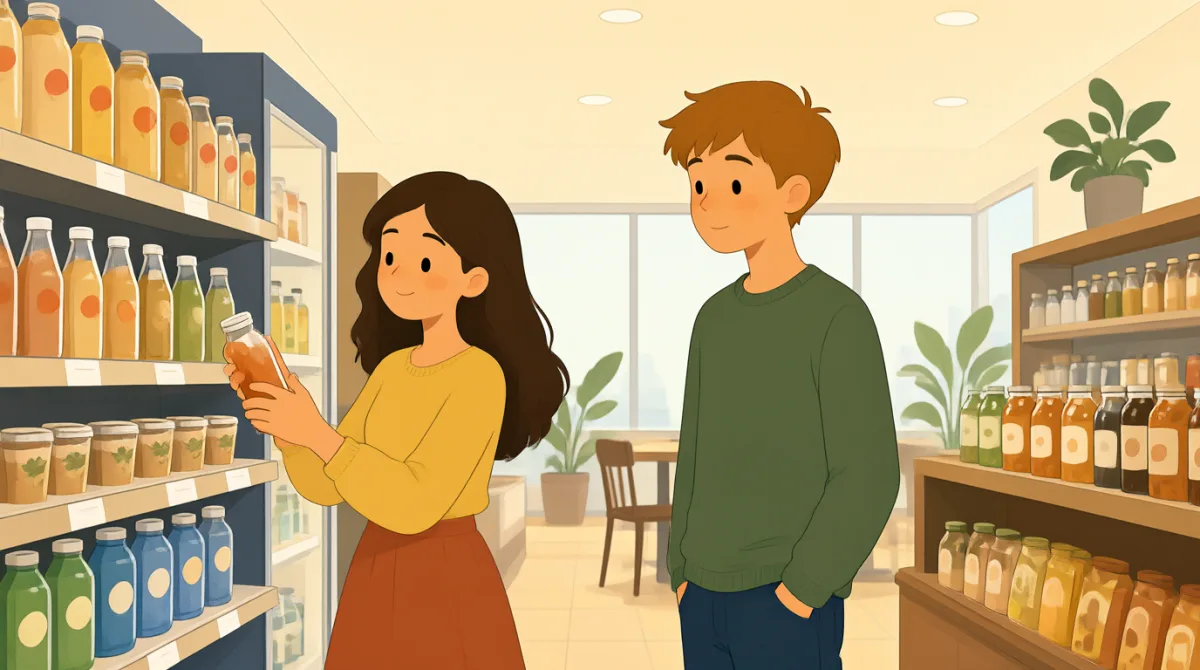

We need drinks for the party. What should we get?
Chúng ta cần đồ uống cho bữa tiệc. Mua gì nhỉ?

Let's get water, juice, and soda. How many people are coming?
Mua nước lọc, nước trái cây và nước ngọt đi. Có bao nhiêu người đến vậy?
About twelve. Maybe we need two bottles of juice and some soda.
Khoảng mười hai người. Có lẽ mình cần hai chai nước trái cây và một ít nước ngọt.
This big bottle is cheaper, but it has a lot of sugar.
Chai lớn này rẻ hơn, nhưng có nhiều đường lắm.
How much is the smaller one? I think people may like it better.
Chai nhỏ hơn giá bao nhiêu? Mình nghĩ mọi người có thể thích loại đó hơn.
It's three dollars. The big one is four dollars, so it's a better deal.
Ba đô la. Chai lớn giá bốn đô, vậy mua chai đó lợi hơn.
Let's get the big one, then. We can also buy sparkling water.
Vậy mua chai lớn đi. Mình cũng có thể mua nước có ga.
Good idea. I'll get two packs of water, and you can pick the juice.
Ý hay đấy. Tớ sẽ lấy hai lốc nước, còn cậu chọn nước trái cây nhé.
Từ vựng7
- What should we get?Mua gì nhỉ?
This is a way to ask what items to buy. You can use it when choosing things with someone.
Đây là cách hỏi nên mua món nào. Bạn có thể dùng câu này khi cùng ai đó chọn đồ.
- How many people are coming?Có bao nhiêu người đến vậy?
This question asks about the number of people who will attend. Use it to help decide how much food or drink to buy.
Câu hỏi này dùng để hỏi số người sẽ tham dự. Bạn có thể hỏi để quyết định nên mua bao nhiêu đồ ăn hoặc thức uống.
- a lot of sugarnhiều đường
This means a large amount of sugar. You can use it to talk about what is in food or drinks.
Cụm này có nghĩa là có một lượng đường lớn. Bạn có thể dùng để nói về thành phần trong thức ăn hoặc đồ uống.
- How much is the smaller one?Chai nhỏ hơn giá bao nhiêu?
This question asks for the price of a smaller item. Use it when comparing prices in a store.
Câu hỏi này dùng để hỏi giá của một món đồ nhỏ hơn. Hãy dùng khi so sánh giá ở cửa hàng.
- a better dealmua lợi hơn
This means a choice gives you more for your money. You can use it when comparing prices and sizes.
Cụm này có nghĩa là một lựa chọn giúp bạn nhận được nhiều hơn so với số tiền bỏ ra. Bạn có thể dùng khi so sánh giá cả và kích cỡ.
- Let's get the big one, then.Vậy mua chai lớn đi.
This is a way to make a choice after comparing options. You can replace “the big one” with another item.
Đây là cách đưa ra lựa chọn sau khi so sánh các phương án. Bạn có thể thay “the big one” bằng một món đồ khác.
- pick the juicechọn nước trái cây
Here, “pick” means choose. You can use “pick” when asking someone to choose an item.
Ở đây, “pick” có nghĩa là chọn. Bạn có thể dùng “pick” khi nhờ ai đó chọn một món đồ.
Câu trọng tâm8
- 1
We need drinks for the party.
Chúng ta cần đồ uống cho bữa tiệc.
This clearly explains what you need and why. You can replace “drinks” with another item, such as snacks or plates.
Câu này nói rõ bạn cần gì và vì sao. Bạn có thể thay “drinks” bằng một món khác, chẳng hạn như đồ ăn nhẹ hoặc đĩa.
- 2
How many people are coming?
Có bao nhiêu người đến vậy?
Use this question to find out how many people will attend. The answer can help you plan how much to buy.
Dùng câu hỏi này để biết sẽ có bao nhiêu người tham dự. Câu trả lời có thể giúp bạn tính xem nên mua bao nhiêu.
- 3
Maybe we need two bottles of juice and some soda.
Có lẽ mình cần hai chai nước trái cây và một ít nước ngọt.
This is a simple way to suggest an amount to buy. Use “Maybe we need” to make a suggestion without sounding too certain.
Đây là cách đơn giản để đề xuất số lượng cần mua. Dùng “Maybe we need” để đưa ra gợi ý mà không tỏ ra quá chắc chắn.
- 4
This big bottle is cheaper, but it has a lot of sugar.
Chai lớn này rẻ hơn, nhưng có nhiều đường lắm.
This sentence compares an item's price with another feature. You can use “cheaper, but…” to mention both an advantage and a concern.
Câu này so sánh giá của một món đồ với một đặc điểm khác. Bạn có thể dùng “cheaper, but…” để nêu cả ưu điểm lẫn điều khiến bạn băn khoăn.
- 5
How much is the smaller one?
Chai nhỏ hơn giá bao nhiêu?
This is a useful question for checking a price in a store. You can replace “the smaller one” with the item you want to ask about.
Đây là câu hỏi hữu ích để hỏi giá ở cửa hàng. Bạn có thể thay “the smaller one” bằng món đồ muốn hỏi giá.
- 6
It's three dollars.
Ba đô la.
This is a simple way to state a price. You can change the number and currency to give the price of another item.
Đây là cách đơn giản để nói giá tiền. Bạn có thể đổi con số và đơn vị tiền tệ để nêu giá của món đồ khác.
- 7
Let's get the big one, then.
Vậy mua chai lớn đi.
Use this to make a decision after discussing the options. Replace “the big one” with the item you choose.
Dùng câu này để đưa ra quyết định sau khi bàn về các lựa chọn. Hãy thay “the big one” bằng món đồ bạn chọn.
- 8
I'll get two packs of water, and you can pick the juice.
Tớ sẽ lấy hai lốc nước, còn cậu chọn nước trái cây nhé.
This sentence divides shopping tasks between two people. You can use “I'll get…” and “you can pick…” to say who will buy or choose each item.
Câu này chia việc mua sắm cho hai người. Bạn có thể dùng “I'll get…” và “you can pick…” để nói ai sẽ mua hoặc chọn từng món.