Saying No, Thank You
ปฏิเสธอย่างสุภาพ
Mia offers David her seat at the next stop. He says no, thank you, because he is getting off soon.
มีอาเสนอที่นั่งให้เดวิดที่ป้ายถัดไป เขาปฏิเสธอย่างสุภาพเพราะอีกไม่นานก็จะลงแล้ว
บทสนทนา7
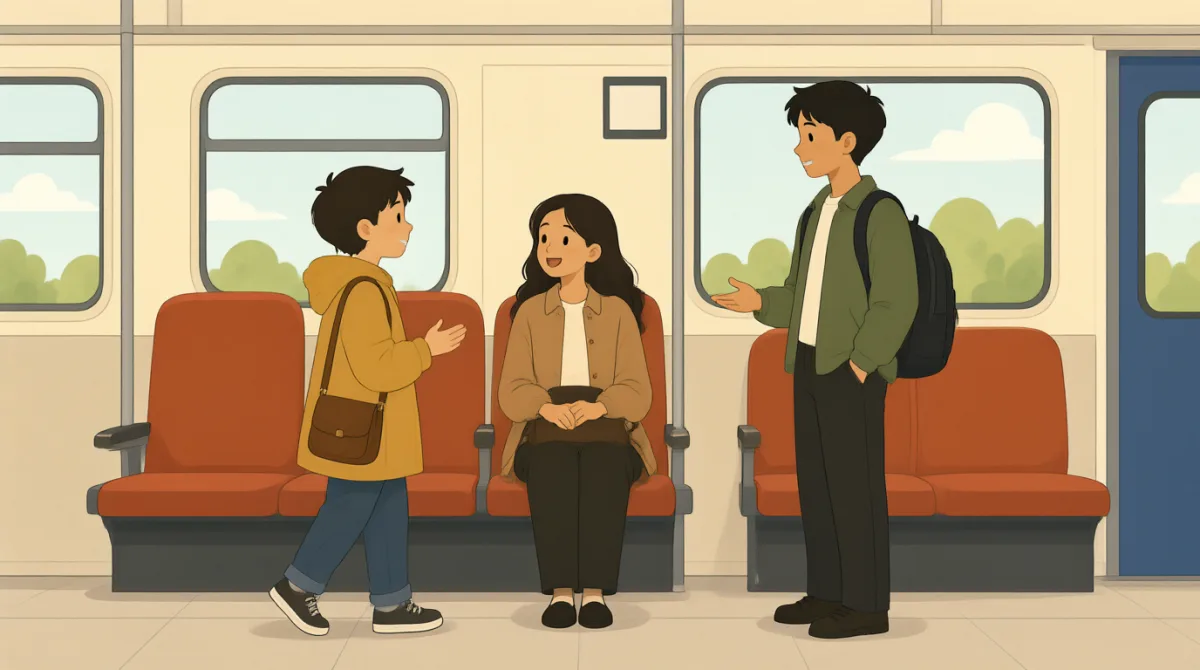

Would you like my seat, David?
เดวิด อยากนั่งที่นั่งของฉันไหม

No, thank you, Mia.
ไม่เป็นไร ขอบคุณนะ มีอา
I’m getting off soon.
อีกไม่นานฉันก็จะลงแล้ว
Are you sure?
แน่ใจนะ
Yes, my stop is next.
ใช่ ป้ายที่ฉันจะลงอยู่ป้ายถัดไปแล้ว
Okay. Have a nice day!
โอเค ขอให้วันนี้เป็นวันที่ดีนะ!
Thank you. You too!
ขอบคุณ เธอก็เหมือนกัน!
คำศัพท์8
- Would you like my seat?อยากนั่งที่นั่งของฉันไหม
This is a polite way to offer someone your seat. You can use “Would you like my ___?” to offer something else.
ประโยคนี้เป็นวิธีสุภาพในการเสนอที่นั่งให้ใครสักคน คุณใช้ “Would you like my ___?” เพื่อเสนอสิ่งอื่นได้ด้วย
- No, thank you.ไม่เป็นไร ขอบคุณ
This is a polite way to say no to an offer. You can use it when you do not need or want something.
ประโยคนี้เป็นวิธีสุภาพในการปฏิเสธข้อเสนอ ใช้ได้เมื่อคุณไม่จำเป็นต้องใช้หรือไม่ต้องการสิ่งนั้น
- getting offกำลังลงจากรถ
On a bus, “getting off” means leaving the bus. You can say “I’m getting off” when your stop is coming.
บนรถโดยสาร “getting off” หมายถึงการลงจากรถ คุณพูดว่า “I’m getting off” ได้เมื่อใกล้ถึงป้ายที่คุณจะลง
- soonอีกไม่นาน
“Soon” means in a short time. You can use it to talk about something that will happen shortly.
“Soon” หมายถึงในเวลาอันใกล้ ใช้พูดถึงสิ่งที่จะเกิดขึ้นในอีกไม่นานได้
- Are you sure?แน่ใจไหม
This is a way to check if someone feels certain. You can say it after someone says no or makes a choice.
ใช้ถามเพื่อเช็กว่าอีกฝ่ายมั่นใจหรือเปล่า คุณพูดประโยคนี้หลังจากมีคนปฏิเสธหรือเลือกอะไรบางอย่างได้
- my stop is nextป้ายที่ฉันจะลงอยู่ป้ายถัดไป
This means the bus will reach your stop after the current one. You can say it to explain why you are getting ready to leave.
หมายความว่ารถโดยสารจะถึงป้ายของคุณหลังจากป้ายปัจจุบัน คุณพูดประโยคนี้เพื่อบอกเหตุผลว่าทำไมคุณถึงกำลังเตรียมตัวลงได้
- Have a nice day!ขอให้วันนี้เป็นวันที่ดีนะ!
This is a friendly way to say goodbye. You can use it when you leave someone.
เป็นคำกล่าวลาอย่างเป็นมิตร ใช้ได้เมื่อคุณกำลังจะจากใครสักคนไป
- You too!เธอก็เหมือนกัน!
This means you wish the same thing to the other person. You can say it after someone says “Have a nice day!”
หมายถึงคุณขอให้อีกฝ่ายได้รับสิ่งเดียวกันด้วย พูดได้หลังจากมีคนพูดว่า “Have a nice day!”
ประโยคสำคัญ8
- 1
Would you like my seat, David?
เดวิด อยากนั่งที่นั่งของฉันไหม
Use this polite question to offer someone your seat. You can replace “my seat” with another thing you want to offer.
ใช้คำถามสุภาพนี้เพื่อเสนอที่นั่งให้ใครสักคน คุณเปลี่ยน “my seat” เป็นสิ่งอื่นที่อยากเสนอให้ได้
- 2
No, thank you, Mia.
ไม่เป็นไร ขอบคุณนะ มีอา
This is a polite way to refuse an offer. Say “No, thank you” when you do not want something.
นี่เป็นวิธีสุภาพในการปฏิเสธข้อเสนอ พูดว่า “No, thank you” เมื่อคุณไม่ต้องการสิ่งนั้น
- 3
I’m getting off soon.
อีกไม่นานฉันก็จะลงแล้ว
Use this sentence to explain that you will leave the bus shortly. You can also use “I’m getting off soon” in other situations where you are leaving a vehicle.
ใช้ประโยคนี้เพื่ออธิบายว่าคุณจะลงจากรถในอีกไม่นาน คุณยังใช้ “I’m getting off soon” ในสถานการณ์อื่นที่คุณกำลังจะลงจากยานพาหนะได้ด้วย
- 4
Are you sure?
แน่ใจนะ
Use this short question to check that someone really means what they said. It is useful when you want to offer help again.
ใช้คำถามสั้น ๆ นี้เพื่อตรวจสอบว่าอีกฝ่ายหมายความตามที่พูดจริงหรือไม่ เหมาะเมื่อคุณอยากเสนอความช่วยเหลืออีกครั้ง
- 5
Yes, my stop is next.
ใช่ ป้ายที่ฉันจะลงอยู่ป้ายถัดไปแล้ว
This sentence explains that your bus stop is coming up. You can use “My stop is next” to tell someone why you are getting ready to leave.
ประโยคนี้อธิบายว่าป้ายที่คุณจะลงกำลังจะมาถึง คุณใช้ “My stop is next” เพื่อบอกใครสักคนว่าทำไมคุณถึงกำลังเตรียมตัวลงได้
- 6
Okay.
โอเค
Use this simple word to show that you understand or accept what someone said. It works in many everyday conversations.
ใช้คำง่าย ๆ นี้เพื่อแสดงว่าคุณเข้าใจหรือยอมรับสิ่งที่อีกฝ่ายพูด ใช้ได้ในบทสนทนาทั่วไปหลายสถานการณ์
- 7
Have a nice day!
ขอให้วันนี้เป็นวันที่ดีนะ!
This is a friendly way to say goodbye. You can use it when ending a conversation during the day.
เป็นคำกล่าวลาอย่างเป็นมิตร ใช้ได้เมื่อจบบทสนทนาระหว่างวัน
- 8
Thank you. You too!
ขอบคุณ เธอก็เหมือนกัน!
Use “Thank you” to show appreciation, and “You too” to return a kind wish. It is a natural response to “Have a nice day!”
ใช้ “Thank you” เพื่อแสดงความขอบคุณ และใช้ “You too” เพื่อตอบรับคำอวยพรดี ๆ เป็นคำตอบที่เป็นธรรมชาติเมื่อมีคนพูดว่า “Have a nice day!”