Saying No, Thank You
礼貌地婉拒
Mia offers David her seat at the next stop. He says no, thank you, because he is getting off soon.
下一站时,Mia把座位让给David。他说不用了,谢谢,因为他很快就要下车。
对话7
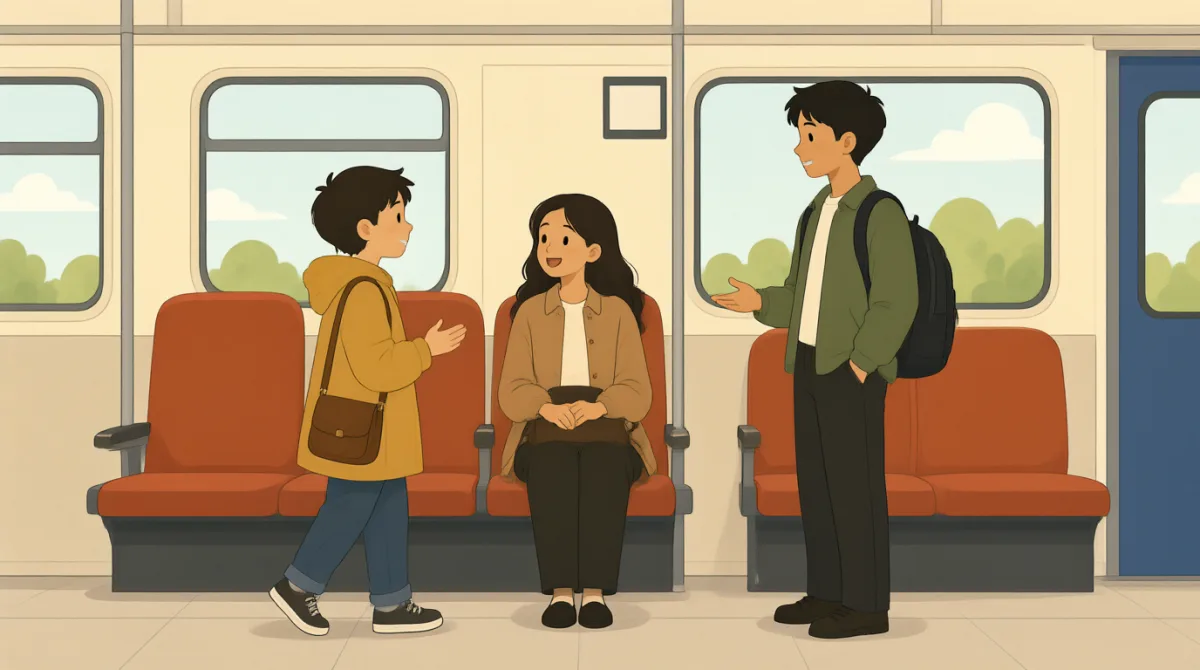

Would you like my seat, David?
David,你想坐我的座位吗?

No, thank you, Mia.
不用了,谢谢你,Mia。
I’m getting off soon.
我很快就下车。
Are you sure?
你确定吗?
Yes, my stop is next.
是的,下一站就是我要下车的站。
Okay. Have a nice day!
好的。祝你今天愉快!
Thank you. You too!
谢谢。你也一样!
词汇8
- Would you like my seat?你想坐我的座位吗?
This is a polite way to offer someone your seat. You can use “Would you like my ___?” to offer something else.
这是礼貌地把座位让给别人的说法。你也可以用“Would you like my ___?”来提出把别的东西让给对方。
- No, thank you.不用了,谢谢。
This is a polite way to say no to an offer. You can use it when you do not need or want something.
这是礼貌地拒绝别人好意的说法。不需要或不想要某样东西时,可以这样说。
- getting off下车
On a bus, “getting off” means leaving the bus. You can say “I’m getting off” when your stop is coming.
在公交车上,“getting off”是指下车。快到你要下车的站时,可以说“I’m getting off”。
- soon很快
“Soon” means in a short time. You can use it to talk about something that will happen shortly.
“Soon”是指过不了多久。你可以用它来谈论即将发生的事。
- Are you sure?你确定吗?
This is a way to check if someone feels certain. You can say it after someone says no or makes a choice.
这是确认对方是否确定的说法。对方拒绝或做出选择后,你可以这样问。
- my stop is next下一站就是我要下车的站
This means the bus will reach your stop after the current one. You can say it to explain why you are getting ready to leave.
这表示公交车过了当前这一站后,就会到你要下车的站。你可以这样解释自己为什么要准备下车。
- Have a nice day!祝你今天愉快!
This is a friendly way to say goodbye. You can use it when you leave someone.
这是友好地道别的说法。离开某人时可以这样说。
- You too!你也一样!
This means you wish the same thing to the other person. You can say it after someone says “Have a nice day!”
这表示你也把同样的祝福送给对方。别人说“Have a nice day!”后,你可以这样回应。
重点句子8
- 1
Would you like my seat, David?
大卫,你想坐我的座位吗?
Use this polite question to offer someone your seat. You can replace “my seat” with another thing you want to offer.
用这个礼貌的问句把座位让给别人。你可以把“my seat”换成其他想让给对方的东西。
- 2
No, thank you, Mia.
不用了,谢谢你,米娅。
This is a polite way to refuse an offer. Say “No, thank you” when you do not want something.
这是礼貌地拒绝别人好意的说法。不想要某样东西时,可以说“No, thank you”。
- 3
I’m getting off soon.
我很快就要下车了。
Use this sentence to explain that you will leave the bus shortly. You can also use “I’m getting off soon” in other situations where you are leaving a vehicle.
用这句话说明你过一会儿就要下公交车。离开其他交通工具时,也可以说“I’m getting off soon”。
- 4
Are you sure?
你确定吗?
Use this short question to check that someone really means what they said. It is useful when you want to offer help again.
用这个简短的问句确认对方是不是真的这么想。想再次表示愿意帮忙时,这句话很实用。
- 5
Yes, my stop is next.
是的,下一站就是我要下车的站。
This sentence explains that your bus stop is coming up. You can use “My stop is next” to tell someone why you are getting ready to leave.
这句话说明你快要到站了。你可以说“My stop is next”来告诉别人你为什么要准备下车。
- 6
Okay.
好的。
Use this simple word to show that you understand or accept what someone said. It works in many everyday conversations.
用这个简单的词表示你理解或接受了对方的话。日常对话中很多场合都适用。
- 7
Have a nice day!
祝你今天愉快!
This is a friendly way to say goodbye. You can use it when ending a conversation during the day.
这是友好地道别的说法。白天结束交谈时可以这样说。
- 8
Thank you. You too!
谢谢。你也一样!
Use “Thank you” to show appreciation, and “You too” to return a kind wish. It is a natural response to “Have a nice day!”
用“Thank you”表示感谢,用“You too”把美好的祝愿送还给对方。别人说“Have a nice day!”时,这样回应很自然。