Requesting a Specific Barber Service
ขอบริการตัดผมแบบที่ต้องการ
A customer at a barbershop clearly explains their desired haircut, beard trim, or other specific services to the barber.
ลูกค้าอธิบายให้ช่างตัดผมฟังอย่างชัดเจนว่าต้องการตัดผม เล็มหนวดเครา หรือรับบริการอื่นแบบไหน
บทสนทนา7
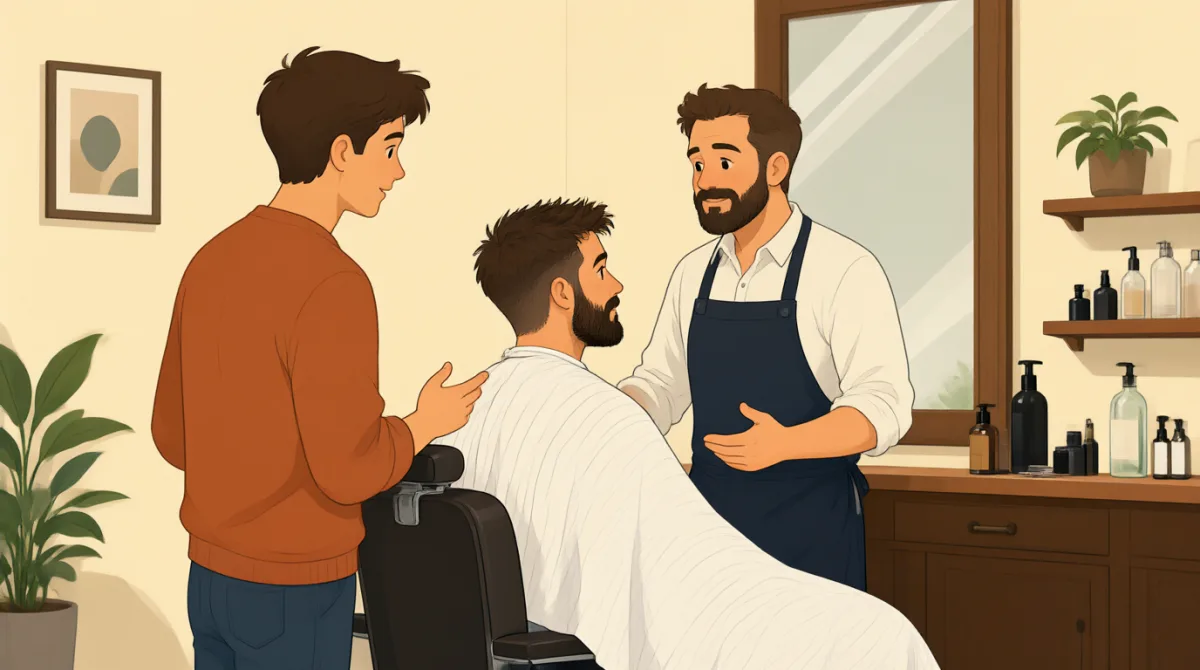

Hi there! I'm here for a haircut and a beard trim.
สวัสดีครับ ผมมาตัดผมแล้วก็เล็มหนวดเคราครับ

Welcome! So, what are you thinking for your haircut today?
ยินดีต้อนรับครับ วันนี้อยากตัดผมทรงไหนดีครับ
I'd like a classic taper on the sides and back, not too short, maybe a number 3 or 4. And just a little off the top to clean it up.
ผมอยากไล่ระดับแบบคลาสสิกตรงด้านข้างกับด้านหลังครับ ไม่ต้องสั้นมาก ใช้หวีรองเบอร์ 3 หรือ 4 ก็ได้ แล้วก็เล็มด้านบนออกนิดหน่อยให้ดูเรียบร้อยครับ
Okay, a classic taper with a 3 or 4 on the sides. Got it. And for the beard?
ได้ครับ ไล่ระดับแบบคลาสสิก ใช้เบอร์ 3 หรือ 4 ด้านข้าง เข้าใจแล้วครับ แล้วหนวดเคราล่ะครับ
For the beard, I just want to clean up the edges and trim it down a bit to keep it neat, but still keep some length. Don't take too much off.
ส่วนหนวดเครา ผมแค่อยากเก็บขอบแล้วก็เล็มให้สั้นลงนิดหน่อยให้ดูเรียบร้อย แต่ยังอยากให้เหลือความยาวไว้นะครับ อย่าเล็มออกเยอะเกินไปครับ

So, just a tidy-up on the beard, not a major trim. Okay, I think I have a clear idea. Anything else you'd like to mention?
งั้นเก็บทรงหนวดเครานิดหน่อย ไม่ได้เล็มออกเยอะ เข้าใจแล้วครับ มีอะไรอยากบอกเพิ่มเติมไหมครับ
Nope, that's it! Thanks.
ไม่มีแล้วครับ ขอบคุณครับ
คำศัพท์7
- haircutการตัดผม
A service where a barber or stylist cuts and styles your hair to make it look neat and fresh. It's a common request at barbershops.
บริการที่ช่างตัดผมหรือช่างทำผมตัดและจัดทรงผมให้ดูเรียบร้อยสดใหม่ เป็นบริการที่ลูกค้ามักขอที่ร้านตัดผม
- beard trimการเล็มหนวดเครา
To shorten or shape facial hair, like a beard, to keep it tidy without changing the style much. Useful for maintaining a neat appearance.
การตัดหรือจัดทรงหนวดเคราให้สั้นลงและดูเรียบร้อย โดยไม่เปลี่ยนทรงมาก เหมาะสำหรับดูแลให้รูปลักษณ์ดูเนี้ยบอยู่เสมอ
- taperการไล่ระดับ
A haircut style where the hair gets gradually shorter from the top to the sides and back, creating a smooth fade. Popular for classic men's styles.
ทรงผมที่ค่อย ๆ ตัดให้สั้นลงจากด้านบนไปยังด้านข้างและด้านหลัง ทำให้รอยต่อดูกลมกลืน เป็นทรงยอดนิยมสำหรับทรงผมผู้ชายแบบคลาสสิก
- clean upเก็บทรงให้เรียบร้อย
To trim or adjust hair or beard slightly to make it neater, without cutting a lot. It's a way to say you want minor changes for a fresh look.
เล็มหรือปรับผมหรือหนวดเคราเล็กน้อยให้ดูเรียบร้อยขึ้น โดยไม่ตัดออกมาก ใช้บอกว่าต้องการปรับเพียงเล็กน้อยเพื่อให้ดูสดใหม่
- edgesขอบแนวผม
The outline or borders of the beard or hairline, like around the cheeks or neck. Trimming edges makes the shape sharp and defined.
แนวขอบหรือเส้นกรอบของหนวดเคราหรือแนวผม เช่น บริเวณแก้มหรือลำคอ การเล็มขอบช่วยให้รูปทรงคมชัดและได้สัดส่วน
- tidy-upการเก็บทรงเล็กน้อย
A light trim to organize and neaten hair or beard, not a big change. It's informal and used for small maintenance services.
การเล็มผมหรือหนวดเคราเล็กน้อยให้ดูเป็นระเบียบ ไม่ได้เปลี่ยนทรงมาก เป็นคำไม่เป็นทางการที่ใช้กับบริการดูแลทรงผมเล็ก ๆ น้อย ๆ
- neatเรียบร้อย
Clean, orderly, and well-groomed in appearance. In grooming, it means looking sharp and put-together after a service.
สะอาด เป็นระเบียบ และได้รับการดูแลอย่างดี ในเรื่องการดูแลตัวเอง หมายถึงดูเนี้ยบและดูดีหลังรับบริการ
ประโยคสำคัญ6
- 1
Hi there! I'm here for a haircut and a beard trim.
สวัสดีครับ ผมมาตัดผมแล้วก็เล็มหนวดเคราครับ
This is a polite greeting and clear statement of what service you want. Use it to start a conversation at a barbershop. The structure 'I'm here for [service]' is simple and direct for booking or requesting help.
ประโยคนี้ใช้ทักทายอย่างสุภาพและบอกชัดเจนว่าต้องการบริการอะไร ใช้เริ่มบทสนทนาที่ร้านตัดผมได้ โครงสร้าง 'I'm here for [service]' หมายถึงมาที่นี่เพื่อรับบริการนั้น เป็นวิธีพูดที่ง่ายและตรงไปตรงมาเมื่อต้องการจองหรือขอรับบริการ
- 2
What are you thinking for your haircut today?
วันนี้อยากตัดผมทรงไหนดีครับ
A friendly question to ask about a customer's preferences. 'What are you thinking' is casual and invites details. Useful for service providers to understand needs; the word 'today' specifies the current visit.
เป็นคำถามเป็นกันเองที่ใช้ถามความต้องการของลูกค้า 'What are you thinking' เป็นสำนวนสบาย ๆ ที่ชวนให้อธิบายรายละเอียด ผู้ให้บริการใช้ถามเพื่อให้เข้าใจความต้องการ ส่วนคำว่า 'today' ระบุว่าหมายถึงการมารับบริการครั้งนี้
- 3
I'd like a classic taper on the sides and back, not too short, maybe a number 3 or 4.
ผมอยากไล่ระดับแบบคลาสสิกตรงด้านข้างกับด้านหลังครับ ไม่ต้องสั้นมาก ใช้หวีรองเบอร์ 3 หรือ 4 ก็ได้
This describes a specific haircut request politely with 'I'd like.' It uses details like 'sides and back' for location and 'number 3 or 4' for clipper length. Great for intermediate learners to specify styles clearly; practice adding 'not too [adjective]' for preferences.
ประโยคนี้บอกความต้องการตัดผมอย่างสุภาพด้วย 'I'd like' โดยระบุตำแหน่งด้วย 'sides and back' และบอกความยาวของหวีรองด้วย 'number 3 or 4' เหมาะสำหรับผู้เรียนระดับกลางที่ต้องการอธิบายทรงผมให้ชัดเจน ลองฝึกเติม 'not too [adjective]' เพื่อบอกว่าไม่ต้องการให้เป็นอย่างไรจนเกินไป
- 4
For the beard, I just want to clean up the edges and trim it down a bit to keep it neat.
ส่วนหนวดเครา ผมแค่อยากเก็บขอบแล้วก็เล็มให้สั้นลงนิดหน่อยให้ดูเรียบร้อยครับ
This explains a minor beard adjustment using 'just want to' for modesty. 'Clean up' and 'trim down a bit' show small changes; 'to keep it neat' gives the purpose. Useful in services to avoid over-cutting; note the infinitive 'to keep' for reasons.
ประโยคนี้อธิบายว่าต้องการปรับหนวดเคราเพียงเล็กน้อย โดยใช้ 'just want to' เพื่อบอกว่าเป็นความต้องการเล็กน้อย 'Clean up' และ 'trim down a bit' สื่อถึงการปรับเพียงนิดหน่อย ส่วน 'to keep it neat' บอกจุดประสงค์ ประโยคนี้มีประโยชน์เมื่อขอรับบริการเพื่อป้องกันไม่ให้ตัดออกมากเกินไป สังเกตว่าใช้ infinitive 'to keep' เพื่อบอกเหตุผล
- 5
So, just a tidy-up on the beard, not a major trim.
งั้นก็แค่เก็บทรงหนวดเครานิดหน่อย ไม่ได้เล็มออกเยอะ
This summarizes the request to confirm understanding. 'Just a [noun]' emphasizes minimal work, and 'not a major [noun]' contrasts with bigger changes. Helpful for barbers to repeat back; it's a pattern for clarification in conversations.
ประโยคนี้สรุปคำขอเพื่อยืนยันว่าเข้าใจตรงกัน 'Just a [noun]' เน้นว่าต้องการทำเพียงเล็กน้อย ส่วน 'not a major [noun]' ใช้เปรียบเทียบกับการเปลี่ยนแปลงครั้งใหญ่ ช่างตัดผมใช้พูดทวนสิ่งที่ลูกค้าขอได้ และเป็นรูปแบบที่ช่วยยืนยันความเข้าใจในการสนทนา
- 6
Nope, that's it! Thanks.
ไม่มีแล้วครับ ขอบคุณครับ
A casual way to end the discussion, meaning 'no more' or 'nothing else.' 'Nope' is informal for 'no,' and 'that's it' wraps up. Use this politely at the end of requests; it's simple and shows satisfaction.
เป็นวิธีพูดสบาย ๆ เพื่อจบบทสนทนา หมายถึงไม่มีอะไรเพิ่มเติมแล้ว 'Nope' เป็นรูปไม่เป็นทางการของ 'no' และ 'that's it' ใช้สรุปว่าจบแล้ว ใช้ตอบอย่างสุภาพเมื่อจบการขอรับบริการได้ เป็นประโยคสั้น ๆ ที่แสดงว่าพอใจ