Requesting a Specific Barber Service
Prośba o konkretną usługę barberską
A customer at a barbershop clearly explains their desired haircut, beard trim, or other specific services to the barber.
Klient w barbershopie jasno wyjaśnia barberowi, jaką fryzurę, przycięcie brody lub inną konkretną usługę chce zamówić.
Dialog7
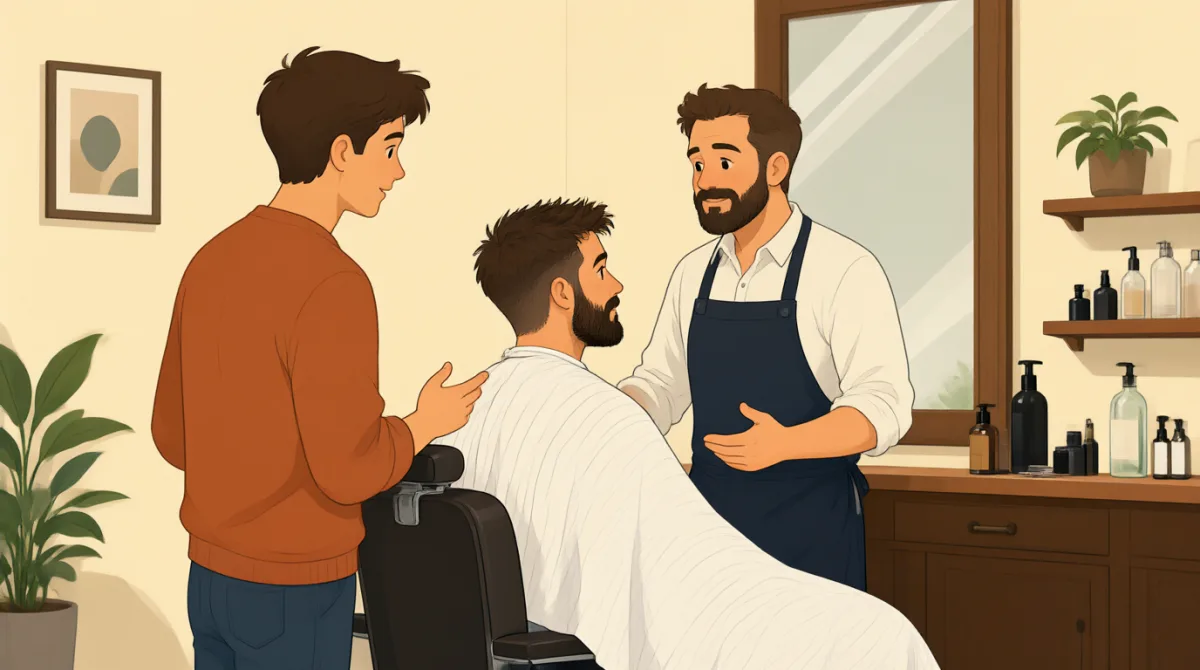

Hi there! I'm here for a haircut and a beard trim.
Cześć! Przyszedłem obciąć włosy i przyciąć brodę.

Welcome! So, what are you thinking for your haircut today?
Witam! Jak chciałbyś dziś obciąć włosy?
I'd like a classic taper on the sides and back, not too short, maybe a number 3 or 4. And just a little off the top to clean it up.
Chciałbym klasyczne cieniowanie po bokach i z tyłu, niezbyt krótko, może na 3 albo 4. A na górze tylko trochę skrócić, żeby wyglądały schludnie.
Okay, a classic taper with a 3 or 4 on the sides. Got it. And for the beard?
Dobrze, klasyczne cieniowanie z długością 3 albo 4 po bokach. Jasne. A co z brodą?
For the beard, I just want to clean up the edges and trim it down a bit to keep it neat, but still keep some length. Don't take too much off.
Jeśli chodzi o brodę, chciałbym tylko wyrównać kontury i trochę ją skrócić, żeby wyglądała schludnie, ale zachować jej długość. Proszę nie skracać jej za bardzo.

So, just a tidy-up on the beard, not a major trim. Okay, I think I have a clear idea. Anything else you'd like to mention?
Czyli tylko lekkie uporządkowanie brody, bez większego skracania. Dobrze, chyba wszystko jasne. Czy chciałbyś jeszcze o czymś wspomnieć?
Nope, that's it! Thanks.
Nie, to wszystko! Dzięki.
Słownictwo7
- haircutstrzyżenie
A service where a barber or stylist cuts and styles your hair to make it look neat and fresh. It's a common request at barbershops.
Usługa, podczas której barber lub fryzjer strzyże i układa włosy, żeby wyglądały schludnie i świeżo. To częsta prośba w barbershopie.
- beard trimprzycięcie brody
To shorten or shape facial hair, like a beard, to keep it tidy without changing the style much. Useful for maintaining a neat appearance.
Skrócenie lub wymodelowanie zarostu, na przykład brody, żeby wyglądał schludnie, bez dużej zmiany stylu. Przydaje się, gdy chcesz zadbać o zadbany wygląd.
- tapercieniowanie
A haircut style where the hair gets gradually shorter from the top to the sides and back, creating a smooth fade. Popular for classic men's styles.
Fryzura, w której włosy stopniowo stają się krótsze od góry ku bokom i tyłowi, tworząc płynne przejście. Popularny element klasycznych męskich fryzur.
- clean upuporządkować, podciąć
To trim or adjust hair or beard slightly to make it neater, without cutting a lot. It's a way to say you want minor changes for a fresh look.
Lekko podciąć lub poprawić włosy albo brodę, żeby wyglądały schludniej, nie skracając ich znacznie. Tak można powiedzieć, że chcesz tylko niewielkiej zmiany i odświeżenia wyglądu.
- edgeskontury
The outline or borders of the beard or hairline, like around the cheeks or neck. Trimming edges makes the shape sharp and defined.
Linia brzegowa brody lub linia włosów, na przykład przy policzkach albo szyi. Przycięcie konturów sprawia, że kształt jest wyraźny i precyzyjny.
- tidy-uplekkie uporządkowanie
A light trim to organize and neaten hair or beard, not a big change. It's informal and used for small maintenance services.
Lekkie podcięcie włosów lub brody, żeby nadać im schludny wygląd, bez dużej zmiany. To nieformalne określenie niewielkiej usługi pielęgnacyjnej.
- neatschludny
Clean, orderly, and well-groomed in appearance. In grooming, it means looking sharp and put-together after a service.
Czysty, uporządkowany i zadbany wygląd. W kontekście pielęgnacji oznacza, że po usłudze wyglądasz elegancko i starannie.
Kluczowe zdania6
- 1
Hi there! I'm here for a haircut and a beard trim.
Cześć! Przyszedłem obciąć włosy i przyciąć brodę.
This is a polite greeting and clear statement of what service you want. Use it to start a conversation at a barbershop. The structure 'I'm here for [service]' is simple and direct for booking or requesting help.
To uprzejme powitanie i jasne określenie, jakiej usługi chcesz. Użyj tego zdania, żeby rozpocząć rozmowę w barbershopie. Konstrukcja 'I'm here for [service]' („Przyszedłem na [usługę]”) jest prostym i bezpośrednim sposobem na umówienie się lub poproszenie o pomoc.
- 2
What are you thinking for your haircut today?
Jak chciałbyś dziś obciąć włosy?
A friendly question to ask about a customer's preferences. 'What are you thinking' is casual and invites details. Useful for service providers to understand needs; the word 'today' specifies the current visit.
To przyjazne pytanie o preferencje klienta. 'What are you thinking' („Co masz na myśli?”) brzmi swobodnie i zachęca do podania szczegółów. Przydaje się osobom świadczącym usługi, by dowiedzieć się, czego potrzebujesz; słowo 'today' („dziś”) odnosi się do obecnej wizyty.
- 3
I'd like a classic taper on the sides and back, not too short, maybe a number 3 or 4.
Chciałbym klasyczne cieniowanie po bokach i z tyłu, niezbyt krótko, może na 3 albo 4.
This describes a specific haircut request politely with 'I'd like.' It uses details like 'sides and back' for location and 'number 3 or 4' for clipper length. Great for intermediate learners to specify styles clearly; practice adding 'not too [adjective]' for preferences.
To uprzejma prośba o konkretną fryzurę, wyrażona za pomocą 'I'd like' („Chciałbym”). Określenia takie jak 'sides and back' („boki i tył”) wskazują miejsce, a 'number 3 or 4' („numer 3 albo 4”) określa długość ustawienia maszynki. To dobry sposób, by jasno opisać fryzurę. Możesz też dodawać 'not too [adjective]' („niezbyt [przymiotnik]”), by wyrazić swoje preferencje.
- 4
For the beard, I just want to clean up the edges and trim it down a bit to keep it neat.
Jeśli chodzi o brodę, chciałbym tylko wyrównać kontury i trochę ją skrócić, żeby wyglądała schludnie.
This explains a minor beard adjustment using 'just want to' for modesty. 'Clean up' and 'trim down a bit' show small changes; 'to keep it neat' gives the purpose. Useful in services to avoid over-cutting; note the infinitive 'to keep' for reasons.
To prośba o niewielką zmianę w wyglądzie brody. Wyrażenie 'just want to' („chcę tylko”) pokazuje, że chodzi o skromną zmianę. 'Clean up' („uporządkować”) i 'trim down a bit' („trochę skrócić”) oznaczają niewielkie poprawki, a 'to keep it neat' („żeby wyglądała schludnie”) podaje ich cel. Takie sformułowania pomagają uniknąć zbyt mocnego skrócenia; zwróć uwagę, że bezokolicznik 'to keep' wskazuje powód.
- 5
So, just a tidy-up on the beard, not a major trim.
Czyli tylko lekkie uporządkowanie brody, bez większego skracania.
This summarizes the request to confirm understanding. 'Just a [noun]' emphasizes minimal work, and 'not a major [noun]' contrasts with bigger changes. Helpful for barbers to repeat back; it's a pattern for clarification in conversations.
To podsumowanie prośby, które pozwala upewnić się, że została dobrze zrozumiana. 'Just a [noun]' („tylko [rzeczownik]”) podkreśla, że chodzi o niewielką usługę, a 'not a major [noun]' („bez większego [rzeczownika]”) przeciwstawia ją poważniejszej zmianie. Barber może powtórzyć w ten sposób prośbę klienta; to przydatny wzór do doprecyzowania ustaleń w rozmowie.
- 6
Nope, that's it! Thanks.
Nie, to wszystko! Dzięki.
A casual way to end the discussion, meaning 'no more' or 'nothing else.' 'Nope' is informal for 'no,' and 'that's it' wraps up. Use this politely at the end of requests; it's simple and shows satisfaction.
To swobodny sposób na zakończenie rozmowy, który oznacza „nic więcej” lub „nic innego”. 'Nope' to nieformalne „nie”, a 'that's it' zamyka temat. Możesz użyć tego uprzejmie na końcu prośby; to proste sformułowanie, które pokazuje, że wszystko ci odpowiada.