School Pickup Conversation
學校接送對話
Parents are picking up their children from school or daycare, having brief exchanges with teachers or other parents about the child's day.
家長從學校或託兒所接孩子,與老師或其他家長就孩子一天的表現進行簡短交流。
對話8
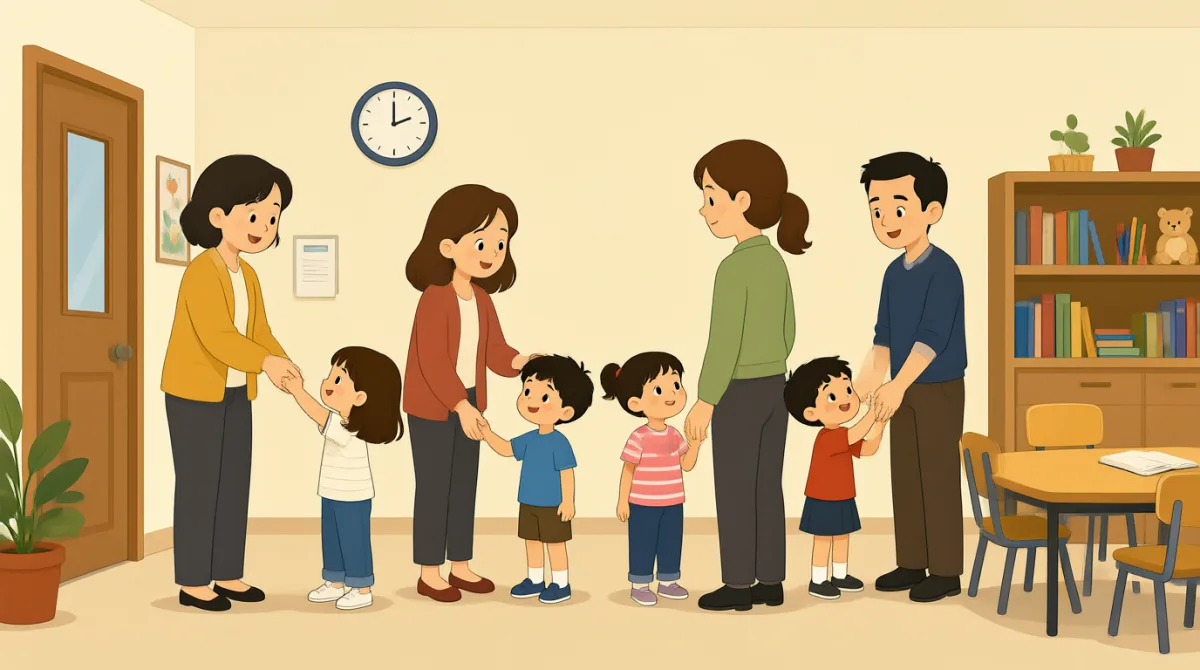

Hi Mia! How was your day? Just picking up Maya.
嗨,米婭!你今天過得怎麼樣?我來接瑪雅。

Hey Emma! My day was good, thanks. How about you? Oh, Maya was great today. She really enjoyed arts and crafts.
嗨,艾瑪!我今天過得不錯,謝謝。你呢?哦,瑪雅今天很棒。她很喜歡美術和手工。
That's lovely to hear! She loves drawing. Did she finish her science project?
聽到這個真好!她喜歡畫畫。她完成科學專案了嗎?
Yes, she did! She worked really well with James on it. They make a good team.
是的,她完成了!她和詹姆斯合作得非常好。他們是個不錯的團隊。
Oh, that's wonderful! I'll have to ask her all about it on the way home.
哦,那太棒了!我得在回家的路上問她所有細節。
She was quite proud of it. And she ate all her vegetables at lunch today, which is always a bonus!
她對此感到很自豪。而且她今天午餐把所有蔬菜都吃了,這總是一個額外的驚喜!
Haha, that's definitely a bonus! Thanks for the update, Mia. See you tomorrow!
哈哈,那絕對是個驚喜!謝謝你的最新訊息,米婭。明天見!
You're welcome, Emma! Have a great evening with Maya. Bye!
不客氣,艾瑪!祝你和瑪雅有個愉快的夜晚。再見!
詞彙8
- picking up接(孩子)
This phrase means collecting or fetching someone, like a child from school. It's commonly used in childcare situations to talk about getting kids after school or activities.
這個短語表示去接某人,比如放學後去接孩子。在托兒場景中,常用它來談論放學或活動結束後接孩子。
- arts and crafts美術和手工
This refers to creative activities like drawing, painting, or making things with paper and glue. It's a fun way to describe children's playtime or school lessons.
這個短語指畫畫、塗色,或用紙和膠水做東西等創意活動。它是描述孩子們的遊戲時間或學校課程的有趣說法。
- enjoyed喜歡;玩得開心
Past tense of 'enjoy,' meaning to like something and have fun doing it. Use it to talk about positive experiences, like 'I enjoyed the movie.'
這是動詞 “enjoy” 的過去式,表示喜歡某件事並從中獲得樂趣。可以用它來談論愉快的經歷,比如 “I enjoyed the movie.”(我很喜歡那部電影。)
- science project科學專案
A school assignment where children do experiments or build models related to science. It's practical for discussing kids' homework or classwork.
這是孩子們在學校完成的作業,比如做科學實驗或製作相關模型。聊孩子的家庭作業或課堂作業時,這個詞很實用。
- team團隊
A group of people working together towards a goal. In this context, it describes children collaborating on a task, like 'They make a good team.'
指為了實現某個目標而一起合作的一群人。這裡用來形容孩子們合作完成一項任務,比如 “They make a good team.”(他們配合得很好。)
- bonus額外的驚喜
Something extra and positive that you didn't expect, like a reward. Parents often use it for good behavior, such as 'Eating vegetables is a bonus!'
指意料之外的好事,就像額外的獎勵。家長常用它來形容孩子的好表現,比如 “Eating vegetables is a bonus!”(把蔬菜吃完真是個額外的驚喜!)
- update最新情況;近況
The latest information about something. In conversations with teachers or parents, say 'Thanks for the update' to show appreciation for news about your child.
指關於某件事的最新訊息。和老師或其他家長交談時,可以說 “Thanks for the update”(謝謝你告訴我最新情況),表達對孩子近況訊息的感謝。
- proud自豪的
Feeling happy and satisfied about an achievement. Use it to describe emotions, like 'She was proud of her drawing,' in family or school talks.
指因某項成就而感到高興和滿足。可以用它描述一個人的心情,比如在家長或學校的交談中說 “She was proud of her drawing.”(她為自己的畫感到自豪。)
關鍵句8
- 1
Hi Mia! How was your day? Just picking up Maya.
嗨,米婭!你今天過得怎麼樣?我來接瑪雅。
This is a friendly greeting combined with a casual explanation of your purpose. It's useful for starting conversations at school pickups. The question 'How was your day?' is a common way to show interest in someone.
這句話把友好的問候和隨口說明來意結合在一起,適合在學校接孩子時開啟交談。“How was your day?” 是很常見的問法,用來表達對對方的關心。
- 2
My day was good, thanks. How about you?
我今天過得不錯,謝謝。你呢?
A polite response to a greeting question, followed by returning the question. 'How about you?' is a simple pattern to keep the conversation going. Use this in everyday chats with friends or parents.
這是對問候的友好回應,接著也問問對方。“How about you?” 是讓對話繼續下去的簡單說法,可以用在和朋友或其他家長的日常交談中。
- 3
She really enjoyed arts and crafts.
她特別喜歡美術和手工。
This shares positive news about a child's activity using 'really' for emphasis. It's great for updating parents on school fun. The past tense 'enjoyed' describes completed actions.
這句話用 “really” 加強語氣,分享孩子喜歡某項活動的好訊息。告訴家長孩子在學校玩得很開心時,可以這樣說。過去式 “enjoyed” 用來描述已經發生的事情。
- 4
That's lovely to hear! She loves drawing.
聽到這個真好!她很喜歡畫畫。
An appreciative response showing happiness. 'That's lovely to hear' is a warm expression for good news. 'Loves' uses present simple for habits or preferences, useful in parenting talks.
這是表達開心和讚許的回應。“That's lovely to hear” 是聽到好訊息時溫暖又自然的說法。“Loves” 用一般現在時談論習慣或喜好,在聊孩子時很實用。
- 5
Did she finish her science project?
她完成科學專案了嗎?
A yes/no question using past tense 'did...finish' to ask about completion. It's practical for checking on homework. Questions like this help gather details in school conversations.
這是一個用過去時 “did...finish” 詢問事情是否完成的一般疑問句。詢問作業完成情況時很實用。在學校的交談中,這樣的問題能幫你瞭解更多情況。
- 6
They make a good team.
他們配合得很好。
This praises group work in present simple tense, meaning they cooperate well. Use it to highlight positive social skills in children during playdates or school reports.
這句話用一般現在時稱讚團隊合作,意思是他們合作得很順利。孩子一起玩或老師反饋情況時,可以用它來肯定孩子的社交能力。
- 7
Thanks for the update, Mia. See you tomorrow!
謝謝你告訴我最新情況,米婭。明天見!
A thankful closing with a future goodbye. 'Thanks for the update' expresses gratitude for information. 'See you tomorrow' is a common farewell for daily routines like school pickups.
這句話表達感謝,並用一句關於明天的告別語結束交談。“Thanks for the update” 是感謝對方提供訊息的說法。“See you tomorrow” 則是日常告別的常用表達,很適合每天接孩子時使用。
- 8
You're welcome, Emma! Have a great evening with Maya. Bye!
不客氣,艾瑪!祝你和瑪雅今晚過得愉快。再見!
A polite reply to thanks, plus a well-wish. 'You're welcome' is standard after 'thanks.' 'Have a great evening' is a friendly way to end chats, showing care in childcare scenarios.
這句話先回應對方的感謝,再送上美好祝願。“You're welcome” 是回應 “thanks” 的常用說法。“Have a great evening” 是友好地結束交談、表達關心的方式,在托兒相關的場景中很合適。