School Pickup Conversation
حديث عند اصطحاب الأطفال من المدرسة
Parents are picking up their children from school or daycare, having brief exchanges with teachers or other parents about the child's day.
يصطحب الآباء أطفالهم من المدرسة أو الحضانة، ويتبادلون أحاديث قصيرة مع المعلمين أو أولياء أمور آخرين عن يوم الطفل.
حوار8
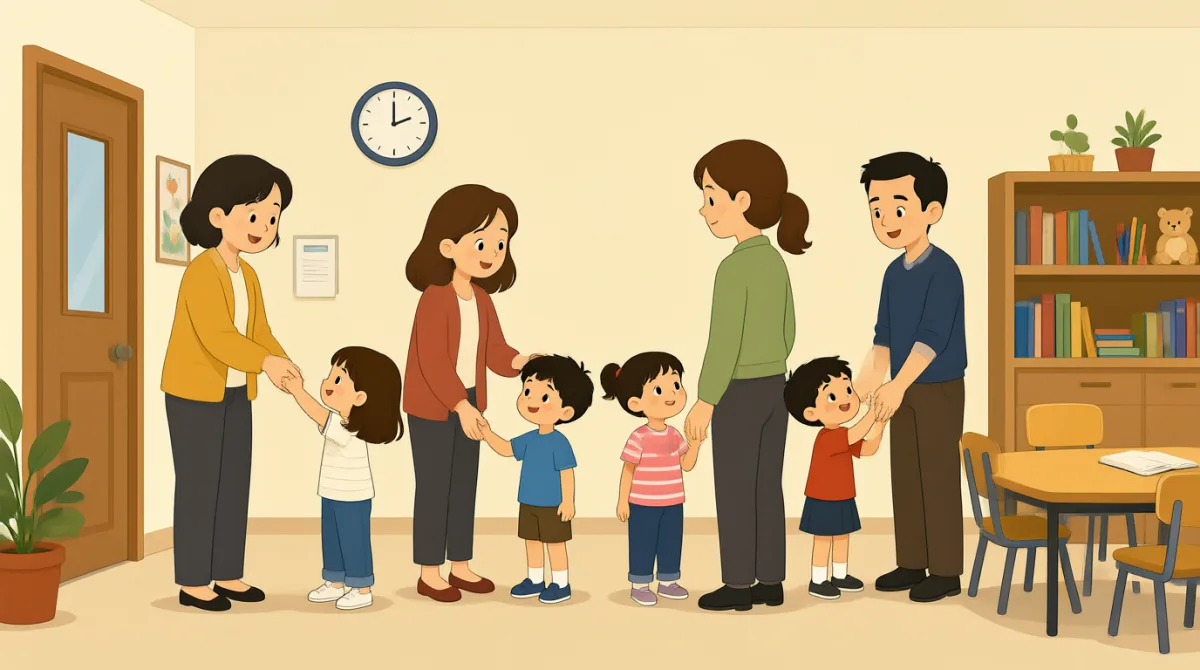

Hi Mia! How was your day? Just picking up Maya.
مرحبًا يا ميا! كيف كان يومك؟ جئت لاصطحاب مايا فحسب.

Hey Emma! My day was good, thanks. How about you? Oh, Maya was great today. She really enjoyed arts and crafts.
أهلًا يا إيما! كان يومي جيدًا، شكرًا. وأنتِ؟ أوه، كان يوم مايا رائعًا اليوم. استمتعت كثيرًا بالأنشطة الفنية والحرف اليدوية.
That's lovely to hear! She loves drawing. Did she finish her science project?
يسعدني سماع ذلك! إنها تحب الرسم. هل أنهت مشروع العلوم؟
Yes, she did! She worked really well with James on it. They make a good team.
نعم، أنهته! عملت جيدًا جدًا مع جيمس عليه. إنهما يشكّلان فريقًا رائعًا.
Oh, that's wonderful! I'll have to ask her all about it on the way home.
رائع! عليّ أن أسألها عن كل شيء في طريق العودة إلى البيت.
She was quite proud of it. And she ate all her vegetables at lunch today, which is always a bonus!
كانت فخورة به جدًا. وأكلت كل الخضروات في غداء اليوم، وهذا مكسب إضافي دائمًا!
Haha, that's definitely a bonus! Thanks for the update, Mia. See you tomorrow!
هاها، هذا مكسب إضافي بالتأكيد! شكرًا على إخباري بآخر المستجدات يا ميا. أراكِ غدًا!
You're welcome, Emma! Have a great evening with Maya. Bye!
على الرحب والسعة يا إيما! أتمنى لكِ أمسية رائعة مع مايا. إلى اللقاء!
المفردات8
- picking upاصطحاب
This phrase means collecting or fetching someone, like a child from school. It's commonly used in childcare situations to talk about getting kids after school or activities.
تعني هذه العبارة اصطحاب شخص أو الذهاب لإحضاره، مثل طفل من المدرسة. وتشيع في سياق رعاية الأطفال للحديث عن إحضارهم بعد المدرسة أو الأنشطة.
- arts and craftsالأنشطة الفنية والحرف اليدوية
This refers to creative activities like drawing, painting, or making things with paper and glue. It's a fun way to describe children's playtime or school lessons.
تشير هذه العبارة إلى أنشطة إبداعية مثل الرسم والتلوين وصنع أشياء بالورق والغراء. وهي طريقة لطيفة لوصف أوقات لعب الأطفال أو دروسهم المدرسية.
- enjoyedاستمتع
Past tense of 'enjoy,' meaning to like something and have fun doing it. Use it to talk about positive experiences, like 'I enjoyed the movie.'
الماضي من 'enjoy'، وتعني الاستمتاع بشيء والإحساس بالمتعة أثناء القيام به. استخدمها للحديث عن تجارب إيجابية، مثل 'I enjoyed the movie.' (استمتعت بالفيلم.)
- science projectمشروع علوم
A school assignment where children do experiments or build models related to science. It's practical for discussing kids' homework or classwork.
واجب مدرسي يجري فيه الأطفال تجارب أو يصنعون نماذج مرتبطة بالعلوم. يفيد هذا التعبير عند الحديث عن واجبات الأطفال أو أعمالهم الصفية.
- teamفريق
A group of people working together towards a goal. In this context, it describes children collaborating on a task, like 'They make a good team.'
مجموعة من الأشخاص يعملون معًا لتحقيق هدف. في هذا السياق، تصف تعاون الأطفال لإنجاز مهمة، مثل 'They make a good team.' (إنهما يشكّلان فريقًا رائعًا.)
- bonusمكسب إضافي
Something extra and positive that you didn't expect, like a reward. Parents often use it for good behavior, such as 'Eating vegetables is a bonus!'
شيء إيجابي إضافي لم تكن تتوقعه، مثل مكافأة. كثيرًا ما يستخدمه الآباء عند الحديث عن السلوك الجيد، مثل 'Eating vegetables is a bonus!' (أكل الخضروات مكسب إضافي!)
- updateآخر المستجدات
The latest information about something. In conversations with teachers or parents, say 'Thanks for the update' to show appreciation for news about your child.
أحدث المعلومات عن شيء ما. في الحديث مع المعلمين أو أولياء الأمور، يمكنك قول 'Thanks for the update' (شكرًا على إخباري بآخر المستجدات) للتعبير عن تقديرك للأخبار المتعلقة بطفلك.
- proudفخور
Feeling happy and satisfied about an achievement. Use it to describe emotions, like 'She was proud of her drawing,' in family or school talks.
الشعور بالسعادة والرضا بسبب إنجاز ما. استخدمها لوصف المشاعر، مثل 'She was proud of her drawing,' (كانت فخورة برسمتها.) في الأحاديث العائلية أو المدرسية.
الجمل الأساسية8
- 1
Hi Mia! How was your day? Just picking up Maya.
مرحبًا يا ميا! كيف كان يومك؟ جئت لاصطحاب مايا فحسب.
This is a friendly greeting combined with a casual explanation of your purpose. It's useful for starting conversations at school pickups. The question 'How was your day?' is a common way to show interest in someone.
يجمع هذا التعبير بين تحية ودية وشرح بسيط لسبب وجودك. وهو مفيد لبدء الأحاديث عند اصطحاب الأطفال من المدرسة. والسؤال 'How was your day?' (كيف كان يومك؟) طريقة شائعة لإظهار اهتمامك بشخص ما.
- 2
My day was good, thanks. How about you?
كان يومي جيدًا، شكرًا. وأنت؟
A polite response to a greeting question, followed by returning the question. 'How about you?' is a simple pattern to keep the conversation going. Use this in everyday chats with friends or parents.
رد مهذب على سؤال عن الحال، يتبعه رد السؤال إلى الطرف الآخر. وعبارة 'How about you?' (وأنت؟) صيغة بسيطة لمواصلة الحديث. استخدمها في الأحاديث اليومية مع الأصدقاء أو أولياء الأمور.
- 3
She really enjoyed arts and crafts.
استمتعت كثيرًا بالأنشطة الفنية والحرف اليدوية.
This shares positive news about a child's activity using 'really' for emphasis. It's great for updating parents on school fun. The past tense 'enjoyed' describes completed actions.
تنقل هذه الجملة خبرًا سارًا عن نشاط قام به طفل، وتستخدم 'really' للتوكيد. وهي مناسبة لإخبار أولياء الأمور عن الأنشطة الممتعة في المدرسة. ويصف الماضي في 'enjoyed' أفعالًا اكتملت.
- 4
That's lovely to hear! She loves drawing.
يسعدني سماع ذلك! إنها تحب الرسم.
An appreciative response showing happiness. 'That's lovely to hear' is a warm expression for good news. 'Loves' uses present simple for habits or preferences, useful in parenting talks.
رد يعبّر عن التقدير والسعادة. وعبارة 'That's lovely to hear' تعبير دافئ عن تلقي خبر سار. أما 'Loves' فتستخدم المضارع البسيط للحديث عن العادات أو التفضيلات، وهو مفيد في أحاديث الأهل عن أطفالهم.
- 5
Did she finish her science project?
هل أنهت مشروع العلوم؟
A yes/no question using past tense 'did...finish' to ask about completion. It's practical for checking on homework. Questions like this help gather details in school conversations.
سؤال إجابته نعم أو لا، يستخدم صيغة الماضي 'did...finish' للسؤال عما إذا كان العمل قد اكتمل. وهو عملي للاستفسار عن الواجبات. وتساعد أسئلة كهذه على معرفة التفاصيل في الأحاديث المدرسية.
- 6
They make a good team.
إنهما يشكّلان فريقًا رائعًا.
This praises group work in present simple tense, meaning they cooperate well. Use it to highlight positive social skills in children during playdates or school reports.
تمدح هذه الجملة العمل الجماعي باستخدام المضارع البسيط، ومعناها أن أفراده يتعاونون جيدًا. استخدمها للإشارة إلى مهارات الأطفال الاجتماعية الإيجابية أثناء اللعب أو عند الحديث عن أدائهم في المدرسة.
- 7
Thanks for the update, Mia. See you tomorrow!
شكرًا على إخباري بآخر المستجدات يا ميا. أراكِ غدًا!
A thankful closing with a future goodbye. 'Thanks for the update' expresses gratitude for information. 'See you tomorrow' is a common farewell for daily routines like school pickups.
ختام يتضمن الشكر وتوديعًا للقاء في المستقبل. وعبارة 'Thanks for the update' تعبّر عن الامتنان للمعلومات. أما 'See you tomorrow' فهي طريقة شائعة للتوديع في الروتين اليومي، مثل وقت اصطحاب الأطفال من المدرسة.
- 8
You're welcome, Emma! Have a great evening with Maya. Bye!
على الرحب والسعة يا إيما! أتمنى لكِ أمسية رائعة مع مايا. إلى اللقاء!
A polite reply to thanks, plus a well-wish. 'You're welcome' is standard after 'thanks.' 'Have a great evening' is a friendly way to end chats, showing care in childcare scenarios.
رد مهذب على الشكر، يتبعه تمني الخير. وعبارة 'You're welcome' هي الرد المعتاد على 'thanks.' أما 'Have a great evening' فهي طريقة ودية لإنهاء الحديث وإظهار الاهتمام في مواقف رعاية الأطفال.