Initial Introduction and Small Talk
التعارف الأول والحديث العابر
Two parents meet for the first time while watching their children play, engaging in light conversation about their kids and the park.
يلتقي والدان للمرة الأولى بينما يشاهدان طفليهما وهما يلعبان، ويتبادلان حديثًا خفيفًا عن أطفالهما والحديقة.
حوار8
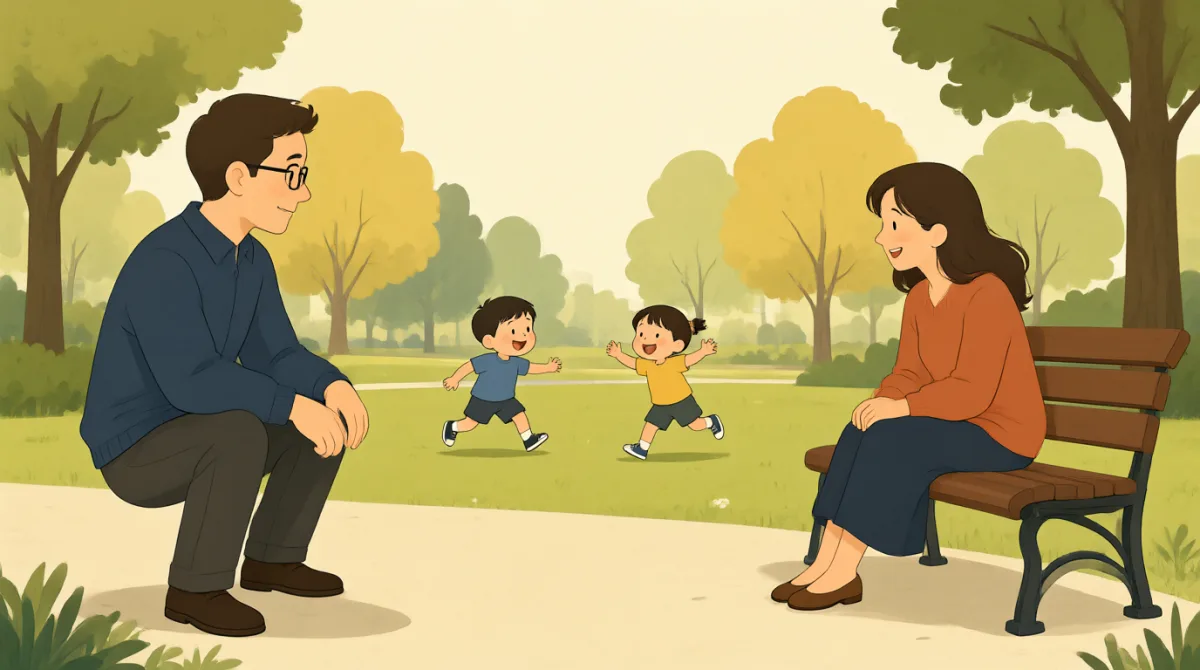

Hi there! Your little one has so much energy. Mine's the one in the blue shirt, climbing the jungle gym like a monkey.
مرحبًا! يبدو أن طفلك الصغير مليء بالطاقة. طفلي يرتدي القميص الأزرق، ويتسلق لعبة التسلق كأنه قرد.

Oh, hi! Thanks! He definitely keeps me on my toes. And yes, your son looks like he's having a blast up there. This is our first time at this park, actually.
أوه، أهلًا! شكرًا! إنه يبقيني متيقظًا طوال الوقت بالتأكيد. وابنك يبدو مستمتعًا جدًا هناك في الأعلى. في الواقع، هذه أول مرة نأتي فيها إلى هذه الحديقة.
Really? It's a great park, especially for this age group. I'm Emma, by the way. And that's Leo.
حقًا؟ إنها حديقة رائعة، خصوصًا لهذه الفئة العمرية. بالمناسبة، أنا إيما، وهذا ليو.
Nice to meet you, Emma and Leo! I'm Jack, and this whirlwind is Ben. How old is Leo?
سعيد بلقائكما يا إيما وليو! أنا جاك، وهذا الصغير المشاغب هو بن. كم عمر ليو؟
Leo just turned four last month. He's really into anything with climbing right now. How about Ben?
أتمّ ليو الرابعة الشهر الماضي. إنه مولع جدًا بكل ما يتضمن التسلق هذه الأيام. وماذا عن بن؟
Ben is three and a half. He loves the slides, especially the big one. It's tough keeping up sometimes!
بن عمره ثلاث سنوات ونصف. يحب الزلاقات، وخصوصًا الكبيرة. من الصعب أحيانًا أن أواكبه!
I know the feeling! It's great to see them burn off some energy, though. We usually come here a couple of times a week.
أعرف هذا الشعور! من الرائع أن نراهم يفرغون بعض طاقتهم، على أي حال. نأتي إلى هنا عادةً مرتين في الأسبوع.
Good to know! We're new to the neighborhood, so we're still exploring. Maybe we'll see you around more often.
من الجيد أن أعرف ذلك! نحن جدد في الحي، وما زلنا نستكشفه. ربما سنلتقي بكم هنا كثيرًا.
المفردات7
- energyالطاقة
Energy means physical or mental strength and activity. In the dialogue, 'so much energy' describes a child's active and lively behavior, common when talking about kids playing.
تعني كلمة 'energy' القوة والنشاط الجسدي أو الذهني. وفي الحوار، تصف عبارة 'so much energy' سلوك الطفل النشيط والحيوي، وهو وصف شائع للأطفال أثناء اللعب.
- jungle gymلعبة تسلّق
A jungle gym is a playground structure with bars and ladders for climbing. It's used here to describe where the child is playing, a fun way to name playground equipment.
'Jungle gym' هي لعبة في الملعب تتكون من قضبان وسلالم مخصصة للتسلق. تُستخدم هنا لوصف المكان الذي يلعب فيه الطفل، وهي طريقة شائعة للإشارة إلى ألعاب التسلق في الحدائق.
- keeps me on my toesيبقيني متيقظًا طوال الوقت
This idiom means something or someone makes you stay alert and busy. Jack uses it to show how his energetic child requires constant attention, useful for expressing parenting challenges.
هذا التعبير الاصطلاحي يعني أن شيئًا أو شخصًا يجعلك متيقظًا ومشغولًا. يستخدمه جاك ليقول إن طفله النشيط يحتاج إلى انتباه دائم، وهو تعبير مفيد للحديث عن تحديات تربية الأطفال.
- having a blastيستمتع كثيرًا
Having a blast is an informal phrase meaning enjoying something very much. Emma's son is 'having a blast' climbing, a casual way to say someone is having fun.
'Having a blast' عبارة غير رسمية تعني الاستمتاع بشيء كثيرًا. يقول الحوار إن ابن إيما يستمتع كثيرًا بالتسلق؛ وهي طريقة عفوية للتعبير عن استمتاع شخص ما.
- whirlwindدوّامة من النشاط
Whirlwind describes someone very energetic and fast-moving, like a storm. Jack calls his child a 'whirlwind' to highlight Ben's lively personality in a playful way.
تصف كلمة 'whirlwind' شخصًا شديد النشاط وسريع الحركة، كأنه عاصفة. يصف جاك طفله بأنه 'whirlwind' ليبرز حيويته بطريقة مرحة.
- burn offيفرغ
Burn off means to use up energy through activity. It's used in 'burn off some energy' to explain how playing helps kids release their excess energy, practical for parenting talks.
تعني 'burn off' استهلاك الطاقة من خلال النشاط. وتُستخدم في عبارة 'burn off some energy' لتوضيح كيف يساعد اللعب الأطفال على تفريغ طاقتهم الزائدة، وهي عبارة مفيدة في الحديث عن تربية الأطفال.
- neighborhoodالحيّ
Neighborhood refers to the area around where you live, including nearby houses and parks. Jack mentions being new to the neighborhood when discussing exploring local spots.
تشير كلمة 'neighborhood' إلى المنطقة التي تعيش فيها، بما فيها المنازل والحدائق القريبة. يذكر جاك أنه جديد في الحي عندما يتحدث عن استكشاف الأماكن المحلية.
الجمل الأساسية8
- 1
Hi there! Your little one has so much energy.
مرحبًا! يبدو أن طفلك الصغير مليء بالطاقة.
This is a friendly greeting and compliment to start a conversation. 'Little one' is a warm term for a young child. Use it to break the ice when meeting other parents at a park; it's casual and positive for small talk.
هذه تحية ودودة ومجاملة لبدء الحديث. و'Little one' تعبير محبب للإشارة إلى طفل صغير. استخدمه لبدء الحديث وكسر الحاجز عند لقاء آباء وأمهات آخرين في الحديقة؛ فهو عفوي وإيجابي.
- 2
He definitely keeps me on my toes.
إنه يبقيني متيقظًا طوال الوقت بالتأكيد.
This responds to a compliment about a child's energy, using an idiom to agree humorously. 'Definitely' adds emphasis. It's useful for sharing parenting experiences lightly, showing agreement in conversations.
يأتي هذا الرد على مجاملة بشأن نشاط الطفل، ويستخدم تعبيرًا اصطلاحيًا للموافقة بروح مرحة. تضيف كلمة 'Definitely' تأكيدًا. يفيد هذا التعبير في مشاركة تجارب تربية الأطفال بخفة وإظهار التفاهم في الحديث.
- 3
Nice to meet you, Emma and Leo!
سعيد بلقائكما يا إيما وليو!
This is a standard polite response during introductions, addressing both the parent and child. Use it after someone shares their name to build rapport; the grammar is simple present tense for greetings.
هذه عبارة مهذبة وشائعة للرد أثناء التعارف، وتوجّه الكلام إلى الوالد والطفل معًا. استخدمها بعد أن يخبرك شخص باسمه لبناء الألفة. تركيبها بسيط ويُستخدم للتحية.
- 4
Leo just turned four last month.
أتمّ ليو الرابعة الشهر الماضي.
This shares a child's age using 'just turned' for recent events and 'last month' for time reference. It's a common pattern for talking about kids' ages; practice it to ask or answer about children's development in parent chats.
تذكر هذه الجملة عمر الطفل باستخدام 'just turned' للإشارة إلى أن بلوغه هذا العمر حدث مؤخرًا، و'last month' لتحديد الوقت. هذا تركيب شائع للحديث عن أعمار الأطفال؛ تدرّب عليه عندما تسأل عن أعمارهم أو تجيب عن ذلك في أحاديث الآباء.
- 5
He's really into anything with climbing right now.
إنه مولع جدًا بكل ما يتضمن التسلق هذه الأيام.
'Really into' means very interested in something, with 'right now' showing current phase. This sentence describes a child's current hobby; use it to discuss what kids enjoy at certain ages, helpful for bonding over shared experiences.
تعني عبارة 'Really into' أن الشخص مهتم بشيء كثيرًا، بينما تشير 'right now' إلى المرحلة الحالية. تصف الجملة هواية الطفل في هذه الفترة؛ استخدمها للحديث عما يستمتع به الأطفال في أعمار معينة وللتقارب عبر التجارب المشتركة.
- 6
It's tough keeping up sometimes!
من الصعب أحيانًا أن أواكبه!
This expresses a challenge in parenting using 'tough' for difficult and 'keeping up' for matching someone's pace. The exclamation adds emotion. Use it to relate to other parents about the demands of active children.
تعبر هذه الجملة عن أحد تحديات تربية الأطفال؛ فكلمة 'tough' تعني صعب، و'keeping up' تعني مواكبة سرعة شخص ما. وتضيف علامة التعجب إحساسًا واضحًا. استخدمها للتعاطف مع الآباء الآخرين بشأن متطلبات الأطفال كثيري النشاط.
- 7
We usually come here a couple of times a week.
نأتي إلى هنا عادةً مرتين في الأسبوع.
This shares a routine with 'usually' for habits and 'a couple of times' meaning two or a few. Present simple tense for regular actions. It's practical for suggesting future meetings or sharing local tips in casual talks.
تتحدث هذه الجملة عن عادة؛ فكلمة 'usually' تدل على ما يحدث عادةً، و'a couple of times' تعني مرتين أو بضع مرات. ويُستخدم المضارع البسيط للأفعال المعتادة. تفيد العبارة في اقتراح لقاءات مستقبلية أو مشاركة نصائح عن الأماكن المحلية في حديث عفوي.
- 8
Maybe we'll see you around more often.
ربما سنلتقي بكم هنا كثيرًا.
This is a friendly way to end by suggesting future encounters, using 'maybe' for possibility and 'see you around' informally. It's useful for closing small talk positively, implying interest in more interactions without commitment.
هذه طريقة ودودة لإنهاء الحديث مع الإيحاء بإمكانية اللقاء مستقبلًا؛ فكلمة 'maybe' تعبر عن الاحتمال، و'see you around' تعبير غير رسمي عن اللقاء مجددًا. استخدمها لإنهاء حديث عابر بإيجابية وإظهار رغبتك في التواصل من دون التزام.