Initial Introduction and Small Talk
初次介紹和閒聊
Two parents meet for the first time while watching their children play, engaging in light conversation about their kids and the park.
兩位家長在看孩子玩耍時初次相遇,進行關於孩子和公園的輕鬆閒聊。
對話8
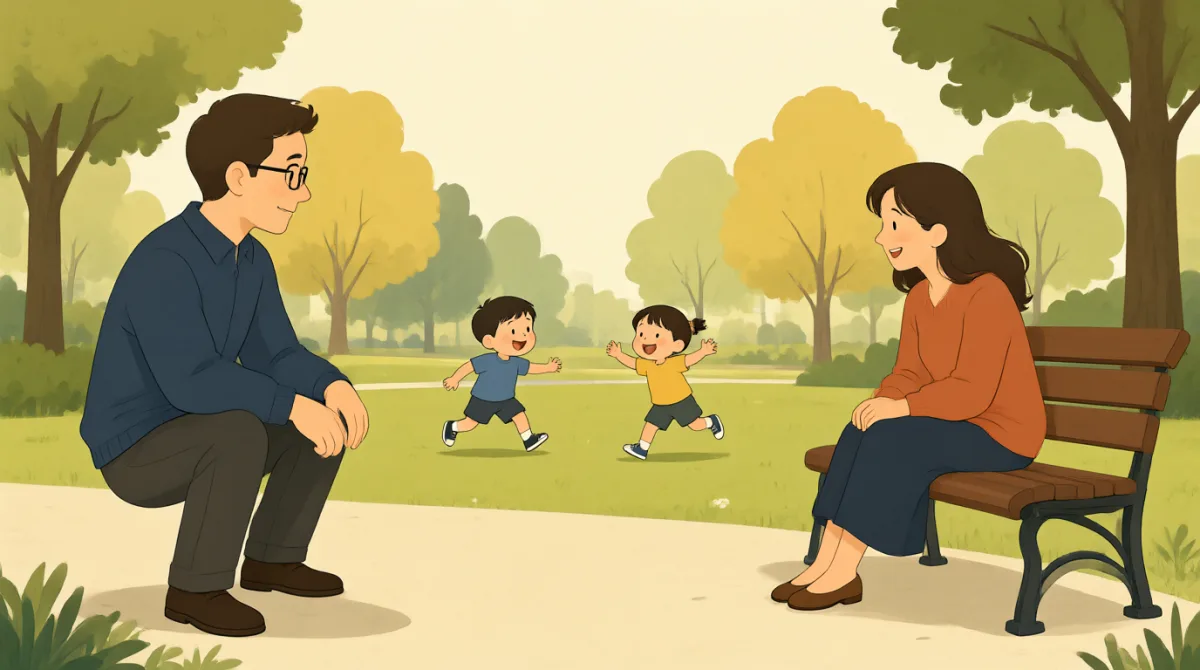

Hi there! Your little one has so much energy. Mine's the one in the blue shirt, climbing the jungle gym like a monkey.
你好!你的小傢伙真是活力四射。我家那個穿藍色襯衫的,正像猴子一樣爬著攀爬架呢。

Oh, hi! Thanks! He definitely keeps me on my toes. And yes, your son looks like he's having a blast up there. This is our first time at this park, actually.
哦,你好!謝謝!他確實讓我很忙。是的,你兒子看起來玩得很開心。這其實是我們第一次來這個公園。
Really? It's a great park, especially for this age group. I'm Emma, by the way. And that's Leo.
真的嗎?這是個很棒的公園,特別是對這個年齡段的孩子來說。順便說一下,我是艾瑪。那是我家利奧。
Nice to meet you, Emma and Leo! I'm Jack, and this whirlwind is Ben. How old is Leo?
很高興認識你,艾瑪和利奧!我是傑克,這個小旋風是本。利奧多大了?
Leo just turned four last month. He's really into anything with climbing right now. How about Ben?
利奧上個月剛滿四歲。他現在特別喜歡攀爬類的任何東西。本呢?
Ben is three and a half. He loves the slides, especially the big one. It's tough keeping up sometimes!
本三歲半。他喜歡滑梯,特別是那個大的。有時候要跟上他真不容易!
I know the feeling! It's great to see them burn off some energy, though. We usually come here a couple of times a week.
我懂這種感覺!不過看到他們能消耗一些精力真是太好了。我們通常一週來這裡幾次。
Good to know! We're new to the neighborhood, so we're still exploring. Maybe we'll see you around more often.
很高興知道!我們剛搬到這個街區,所以還在探索中。也許我們以後會更常見面。
詞彙7
- energy精力
Energy means physical or mental strength and activity. In the dialogue, 'so much energy' describes a child's active and lively behavior, common when talking about kids playing.
Energy 指體力或腦力,以及活動能力。在對話中,'so much energy' 用來形容孩子活潑好動;聊孩子玩耍時經常會這樣說。
- jungle gym攀爬架
A jungle gym is a playground structure with bars and ladders for climbing. It's used here to describe where the child is playing, a fun way to name playground equipment.
Jungle gym 指遊樂場裡供孩子攀爬的架子,通常有橫杆和梯子。這裡用它來說明孩子正在玩的設施,是一種有趣的遊樂設施說法。
- keeps me on my toes讓我時刻保持警覺、忙個不停
This idiom means something or someone makes you stay alert and busy. Jack uses it to show how his energetic child requires constant attention, useful for expressing parenting challenges.
這個習語表示某人或某事讓你必須時刻留心、忙個不停。傑克用它來形容精力旺盛的孩子需要他不斷照看。這種說法很適合輕鬆地聊聊育兒中的挑戰。
- having a blast玩得很開心
Having a blast is an informal phrase meaning enjoying something very much. Emma's son is 'having a blast' climbing, a casual way to say someone is having fun.
Having a blast 是一種非正式說法,意思是玩得非常開心。艾瑪說她兒子攀爬時 'having a blast',這是一種隨意表達別人玩得很開心的方式。
- whirlwind精力充沛、像一陣風似的孩子
Whirlwind describes someone very energetic and fast-moving, like a storm. Jack calls his child a 'whirlwind' to highlight Ben's lively personality in a playful way.
Whirlwind 用來形容一個人精力旺盛、行動飛快,就像一陣風暴。傑克用 'whirlwind' 來突出本活潑好動的性格,語氣帶著幾分玩笑。
- burn off消耗
Burn off means to use up energy through activity. It's used in 'burn off some energy' to explain how playing helps kids release their excess energy, practical for parenting talks.
Burn off 指透過活動消耗掉精力。短語 'burn off some energy' 用來說明玩耍能幫助孩子釋放多餘的精力,聊育兒時很實用。
- neighborhood街區;附近一帶
Neighborhood refers to the area around where you live, including nearby houses and parks. Jack mentions being new to the neighborhood when discussing exploring local spots.
Neighborhood 指住處周圍的區域,包括附近的房子和公園。傑克說自己剛搬來這個街區,是在聊探索附近的地方。
關鍵句8
- 1
Hi there! Your little one has so much energy.
你好!你家孩子真是精力充沛。
This is a friendly greeting and compliment to start a conversation. 'Little one' is a warm term for a young child. Use it to break the ice when meeting other parents at a park; it's casual and positive for small talk.
這句話用友好的問候和誇獎開啟對話。'Little one' 是對年幼孩子的親切稱呼。在公園遇到其他家長時,可以用這句話打破沉默;語氣輕鬆又積極,很適合閒聊。
- 2
He definitely keeps me on my toes.
他確實讓我時刻閒不下來。
This responds to a compliment about a child's energy, using an idiom to agree humorously. 'Definitely' adds emphasis. It's useful for sharing parenting experiences lightly, showing agreement in conversations.
這句話用一個習語回應別人對孩子精力旺盛的誇獎,幽默地表示贊同。'Definitely' 起強調作用。和其他家長輕鬆分享育兒經歷時,可以用這句話表達共鳴。
- 3
Nice to meet you, Emma and Leo!
很高興認識你,艾瑪和利奧!
This is a standard polite response during introductions, addressing both the parent and child. Use it after someone shares their name to build rapport; the grammar is simple present tense for greetings.
這是介紹時常見的禮貌回應,同時問候家長和孩子。對方說出名字後,可以這樣回應來拉近距離;句子用一般現在時,結構簡單,適合打招呼。
- 4
Leo just turned four last month.
利奧上個月剛滿四歲。
This shares a child's age using 'just turned' for recent events and 'last month' for time reference. It's a common pattern for talking about kids' ages; practice it to ask or answer about children's development in parent chats.
這句話用 'just turned' 表示最近剛達到某個年齡,用 'last month' 說明時間。聊孩子年齡時經常會用到這個句型;練習它,就能在家長閒聊中談孩子的年齡和成長情況。
- 5
He's really into anything with climbing right now.
他最近特別喜歡各種攀爬活動。
'Really into' means very interested in something, with 'right now' showing current phase. This sentence describes a child's current hobby; use it to discuss what kids enjoy at certain ages, helpful for bonding over shared experiences.
'Really into' 意思是對某件事很感興趣,'right now' 則表示現階段。這句話用來描述孩子最近的興趣;聊孩子在不同年齡喜歡做什麼時,可以用它來分享共同經歷、增進交流。
- 6
It's tough keeping up sometimes!
有時候真不容易跟上他的節奏!
This expresses a challenge in parenting using 'tough' for difficult and 'keeping up' for matching someone's pace. The exclamation adds emotion. Use it to relate to other parents about the demands of active children.
這句話用 'tough' 表示困難,用 'keeping up' 表示跟上某人的速度,以此表達育兒中的不容易。感嘆號讓語氣更有感情。孩子精力旺盛、需要時刻照看時,可以用它和其他家長聊聊自己的感受。
- 7
We usually come here a couple of times a week.
我們通常一週來這裡兩三次。
This shares a routine with 'usually' for habits and 'a couple of times' meaning two or a few. Present simple tense for regular actions. It's practical for suggesting future meetings or sharing local tips in casual talks.
'Usually' 表示習慣性的情況,'a couple of times' 指兩次或幾次。一般現在時用於描述經常發生的事情。這句話可以用來分享日常安排,也方便聊聊以後約著見面或交流附近的好去處。
- 8
Maybe we'll see you around more often.
說不定以後我們會常碰到。
This is a friendly way to end by suggesting future encounters, using 'maybe' for possibility and 'see you around' informally. It's useful for closing small talk positively, implying interest in more interactions without commitment.
這是一種友好的告別方式,暗示以後可能還會見面。'Maybe' 表示可能,'see you around' 是非正式說法,意思是以後在附近再見。結束閒聊時可以用它表達友好,又不會讓人覺得是在做出承諾。