At a Friend's House
ที่บ้านเพื่อน
You're visiting a friend and want to connect to their Wi-Fi to use your phone or laptop. You politely ask them for the password.
คุณมาเยี่ยมเพื่อนและอยากต่อ Wi-Fi เพื่อใช้โทรศัพท์หรือแล็ปท็อป จึงถามรหัสผ่านอย่างสุภาพ
บทสนทนา6
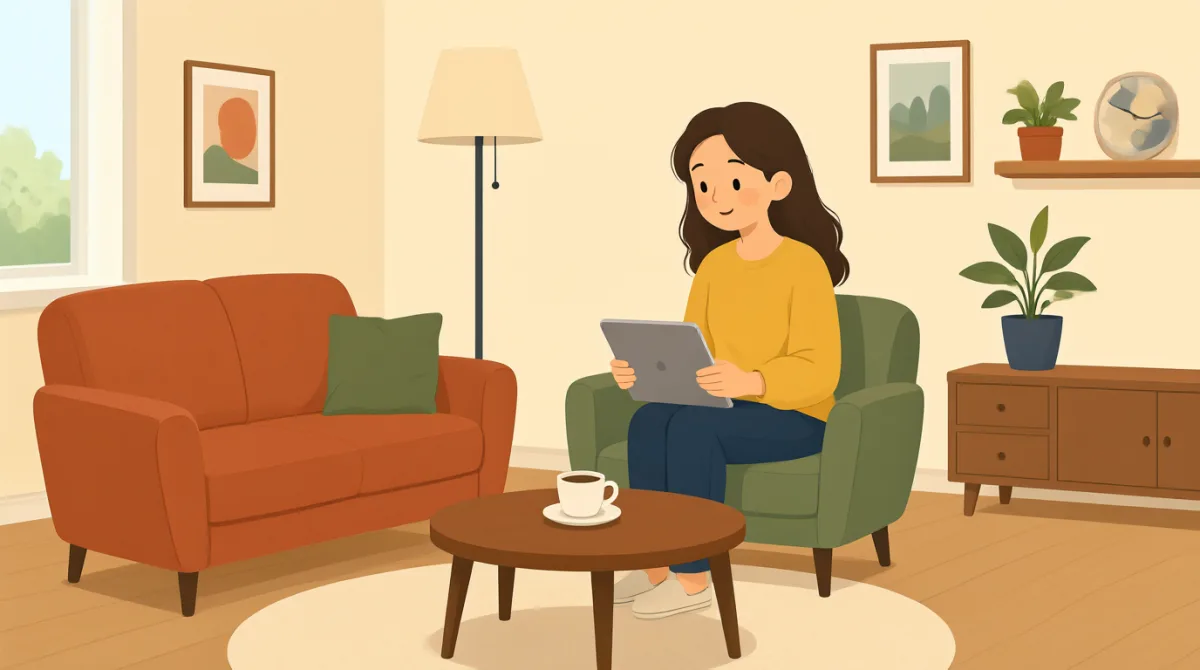

Hey Jack, thanks for having me over! Your place is great.
เฮ้ แจ็ก ขอบคุณที่ชวนเรามานะ! บ้านนายดีจัง

No problem at all, Emma! Glad you could make it. Make yourself at home.
ไม่เป็นไรเลย เอ็มมา! ดีใจที่เธอมาได้ เชิญตามสบายเลยนะ
Thanks! By the way, would you mind sharing your Wi-Fi password? I just need to quickly check something on my laptop.
ขอบใจนะ! เออจริงสิ ขอรหัส Wi-Fi หน่อยได้ไหม พอดีเราอยากเช็กอะไรในแล็ปท็อปแป๊บหนึ่ง
Oh, sure, no problem! It's 'GuestConnect123'. All one word, capital G and C.
อ๋อ ได้สิ ไม่มีปัญหา! รหัสคือ 'GuestConnect123' ติดกันคำเดียวนะ ตัว G กับ C เป็นตัวใหญ่
Got it. 'GuestConnect123'. Thanks a lot!
ได้แล้ว 'GuestConnect123' ขอบใจมากนะ!
You're welcome. Let me know if you have any trouble connecting.
ยินดีเลย ถ้าต่อไม่ได้ก็บอกเรานะ
คำศัพท์6
- Wi-Fi passwordรหัสผ่าน Wi-Fi
The secret code you need to enter to connect to a wireless internet network. It's essential for using the internet on your devices in places like homes or cafes.
รหัสลับที่ต้องกรอกเพื่อเชื่อมต่อกับเครือข่ายอินเทอร์เน็ตไร้สาย จำเป็นต้องใช้รหัสนี้เพื่อใช้อินเทอร์เน็ตบนอุปกรณ์ต่าง ๆ ตามบ้านหรือร้านกาแฟ
- make yourself at homeเชิญตามสบาย
An idiom meaning to relax and feel comfortable, as if you are in your own house. Use it to welcome guests politely.
สำนวนที่หมายถึงทำตัวผ่อนคลายและรู้สึกสบายเหมือนอยู่บ้านตัวเอง ใช้ต้อนรับแขกอย่างเป็นกันเองได้
- by the wayเออจริงสิ
A phrase used to introduce a new topic casually in conversation. It's like saying 'incidentally' or 'speaking of which' in Chinese.
วลีที่ใช้เปลี่ยนไปพูดเรื่องใหม่อย่างเป็นกันเองในบทสนทนา คล้ายกับการพูดว่า “อ้อ แล้วก็...” หรือ “พูดถึงเรื่องนี้...” ในภาษาไทย
- would you mindขอ...ได้ไหม
A polite way to ask for permission or a favor. It softens requests, making them more courteous, similar to 'do you mind if I...' in everyday English.
วิธีขออนุญาตหรือขอความช่วยเหลืออย่างสุภาพ ช่วยให้คำขอฟังดูนุ่มนวลและเกรงใจมากขึ้น คล้ายกับการถามว่า “จะว่าอะไรไหมถ้าฉัน...” ในภาษาอังกฤษทั่วไป
- capitalตัวใหญ่
Refers to uppercase letters in writing, like 'A' instead of 'a'. In passwords, it's important to specify which letters are big for correct entry.
หมายถึงตัวอักษรพิมพ์ใหญ่ เช่น 'A' แทน 'a' เวลาบอกรหัสผ่าน การระบุว่าตัวไหนเป็นตัวใหญ่เป็นเรื่องสำคัญเพื่อให้กรอกได้ถูกต้อง
- Got itเข้าใจแล้ว
A casual expression meaning 'I understand' or 'Okay, I have it'. It's commonly used to confirm information quickly in conversations.
คำพูดไม่เป็นทางการที่หมายถึง “เข้าใจแล้ว” หรือ “โอเค ได้ข้อมูลแล้ว” มักใช้ยืนยันว่าเข้าใจข้อมูลอย่างรวดเร็วในการสนทนา
ประโยคสำคัญ6
- 1
Thanks for having me over!
ขอบคุณที่ชวนเรามานะ!
This is a polite way to thank someone for inviting you to their home. It's useful for starting conversations at a friend's house. Note the preposition 'over' means visiting.
ประโยคนี้ใช้ขอบคุณใครสักคนที่ชวนเราไปบ้าน เป็นประโยคที่เหมาะสำหรับเริ่มบทสนทนาเมื่อไปบ้านเพื่อน สังเกตว่า 'over' ในที่นี้หมายถึงการแวะไปเยี่ยม
- 2
Make yourself at home.
เชิญตามสบายเลยนะ
A welcoming phrase to tell guests to relax. It's an imperative sentence using the reflexive pronoun 'yourself' to make it personal and friendly. Use it when hosting.
วลีต้อนรับที่บอกให้แขกรู้สึกผ่อนคลาย ประโยคนี้เป็นคำสั่งที่ใช้สรรพนามสะท้อนกลับ 'yourself' เพื่อให้ฟังดูเป็นกันเองและใส่ใจ ใช้ได้เวลาต้อนรับแขก
- 3
By the way, would you mind sharing your Wi-Fi password?
เออจริงสิ ขอรหัสผ่าน Wi-Fi หน่อยได้ไหม
This politely asks for the Wi-Fi code using 'by the way' to transition and 'would you mind' for courtesy. It's a key pattern for making requests without being direct. Great for cafes or hotels too.
ประโยคนี้ใช้ขอรหัส Wi-Fi อย่างสุภาพ โดยใช้ 'by the way' เพื่อเปลี่ยนเรื่อง และใช้ 'would you mind' เพื่อแสดงความเกรงใจ เป็นรูปแบบสำคัญในการขออะไรโดยไม่พูดตรงเกินไป ใช้ได้ดีที่ร้านกาแฟหรือโรงแรมด้วย
- 4
Oh, sure, no problem! It's 'GuestConnect123'.
อ๋อ ได้สิ ไม่มีปัญหา! รหัสคือ 'GuestConnect123'
A positive response to a request, with 'no problem' meaning it's easy to help. The sentence shares information clearly. Useful when giving details like passwords; repeat it slowly for clarity.
'no problem' ในประโยคนี้หมายถึงการยินดีช่วย ไม่ใช่เรื่องยุ่งยาก เป็นคำตอบรับคำขอในเชิงบวก และประโยคก็บอกข้อมูลอย่างชัดเจน ใช้ได้เวลาบอกรายละเอียดอย่างรหัสผ่าน โดยพูดซ้ำช้า ๆ เพื่อให้เข้าใจง่าย
- 5
Got it. Thanks a lot!
เข้าใจแล้ว ขอบใจมากนะ!
Confirms understanding and expresses strong thanks. 'Got it' is informal for 'I understand,' and 'thanks a lot' emphasizes gratitude. Use this to end requests politely.
ประโยคนี้ยืนยันว่าเข้าใจแล้วและแสดงความขอบคุณอย่างมาก 'Got it' เป็นคำพูดไม่เป็นทางการที่หมายถึง 'I understand' ส่วน 'thanks a lot' ช่วยเน้นความรู้สึกขอบคุณ ใช้ปิดท้ายเวลาขออะไรอย่างสุภาพได้
- 6
You're welcome. Let me know if you have any trouble connecting.
ยินดีเลย ถ้าต่อไม่ได้ก็บอกเรานะ
Standard reply to thanks, followed by an offer of help. 'Let me know' is a conditional offer using 'if' for possible problems. It's helpful for showing care in conversations.
เป็นคำตอบมาตรฐานเมื่อมีคนขอบคุณ ตามด้วยการเสนอตัวช่วย 'Let me know' เป็นการเสนอตัวช่วยโดยใช้ 'if' พูดถึงปัญหาที่อาจเกิดขึ้น ประโยคนี้ช่วยแสดงความใส่ใจในการสนทนา