Gift Presentation and Opening
การมอบและเปิดของขวัญ
Guests giving gifts to the birthday person, and the birthday person opening them.
แขกมอบของขวัญให้เจ้าของวันเกิด แล้วเจ้าของวันเกิดก็เปิดของขวัญ
บทสนทนา7
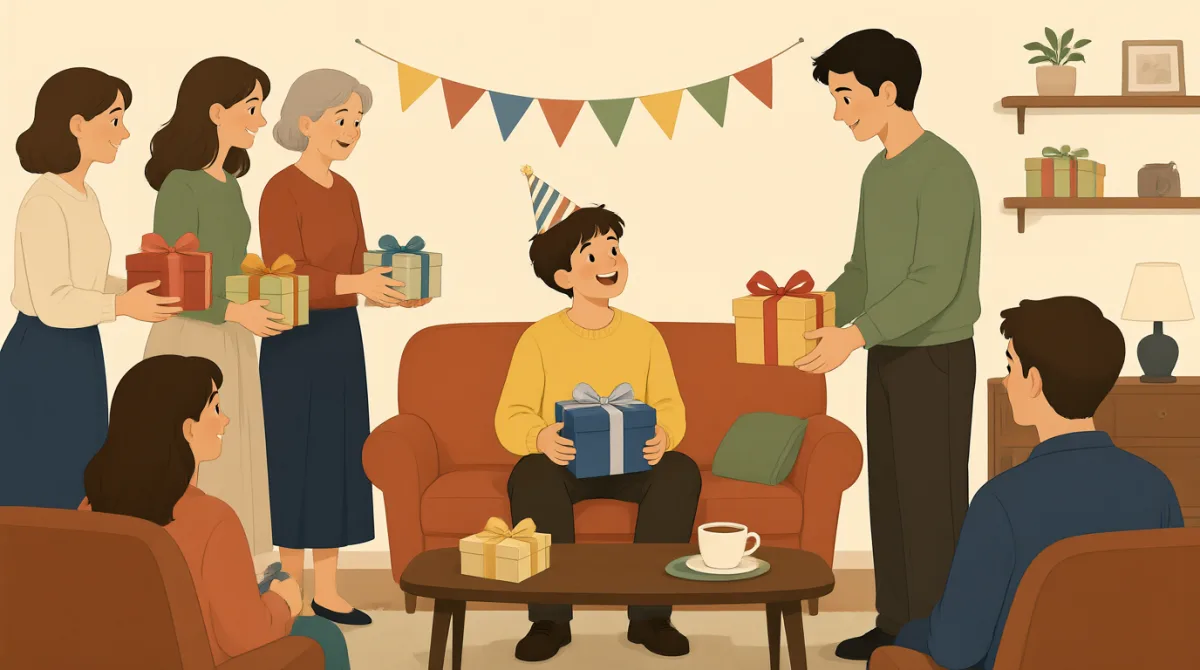

Happy birthday, Emma! Here's a little something for you.
สุขสันต์วันเกิดนะ เอ็มมา! นี่ของขวัญเล็ก ๆ น้อย ๆ สำหรับเธอ

Oh, thank you so much, Jack! You shouldn't have.
โอ้ ขอบคุณมากนะ แจ็ก! ไม่เห็นต้องลำบากเลย

Go on, open it! We're all curious.
เปิดเลยสิ! พวกเราอยากรู้กันจะแย่แล้ว
Alright, alright! Let's see... Oh, wow! It's a scarf! And it's exactly the color I wanted! How did you know?
โอเค ๆ มาดูกัน... โอ้โห! ผ้าพันคอนี่นา! แถมยังเป็นสีที่ฉันอยากได้พอดีเลย! รู้ได้ยังไงเนี่ย?
Just a lucky guess, I suppose. I'm glad you like it.
แค่เดาถูกโดยบังเอิญมั้ง ดีใจนะที่เธอชอบ
I don't just like it, I love it! It'll be perfect for winter. Thank you, both of you!
ฉันไม่ได้แค่ชอบนะ ฉันรักเลย! ใส่หน้าหนาวต้องเหมาะมากแน่ ๆ ขอบคุณทั้งสองคนเลยนะ!
You're very welcome, Emma. Enjoy your special day!
ยินดีมากเลย เอ็มมา ขอให้สนุกกับวันพิเศษของเธอนะ!
คำศัพท์7
- scarfผ้าพันคอ
A scarf is a long piece of cloth worn around the neck to keep warm, especially in cold weather. It's a common gift item.
ผ้าพันคอคือผ้าผืนยาวที่พันรอบคอเพื่อให้ความอบอุ่น โดยเฉพาะเวลาอากาศหนาว เป็นของขวัญที่คนนิยมให้กัน
- curiousอยากรู้
Curious means wanting to know or see something because it interests you. Use it when people are eager to find out about a surprise.
Curious หมายถึงอยากรู้หรืออยากเห็นอะไรบางอย่างเพราะสนใจ ใช้เมื่อคนกำลังลุ้นและอยากรู้ว่าเซอร์ไพรส์คืออะไร
- lucky guessเดาถูกโดยบังเอิญ
A lucky guess is when you correctly guess something by chance, not because you knew it for sure. It's a humble way to explain good luck.
Lucky guess คือการเดาถูกโดยบังเอิญ ไม่ใช่เพราะรู้แน่ ๆ เป็นวิธีพูดถ่อมตัวเมื่อโชคดีทายถูก
- supposeคิดว่า; คงจะ
Suppose means to think or believe something is probably true. In casual talk, 'I suppose' softens a statement, like 'I think so.'
Suppose หมายถึงคิดหรือเชื่อว่าบางอย่างน่าจะเป็นจริง ในบทสนทนาสบาย ๆ วลี 'I suppose' ช่วยทำให้คำพูดฟังดูไม่หนักแน่นเกินไป คล้ายกับ 'ฉันคิดว่านะ'
- gladดีใจ
Glad means happy or pleased about something good happening. Say 'I'm glad' to show positive feelings about a situation.
Glad หมายถึงมีความสุขหรือพอใจกับเรื่องดี ๆ ที่เกิดขึ้น พูดว่า 'I'm glad' เพื่อแสดงความรู้สึกดีต่อสถานการณ์นั้น
- perfectเหมาะมาก; สมบูรณ์แบบ
Perfect means exactly right or suitable for a purpose. Use it to describe something that fits your needs ideally, like a gift.
Perfect หมายถึงถูกต้องหรือเหมาะกับจุดประสงค์อย่างพอดี ใช้บรรยายสิ่งที่ตอบโจทย์ได้ดีเยี่ยม เช่น ของขวัญชิ้นหนึ่ง
- very welcomeยินดีมาก
'You're very welcome' is a polite response to 'thank you,' meaning you're happy to give or help without expecting anything back.
'You're very welcome' เป็นคำตอบอย่างสุภาพเมื่อมีคนพูดว่า 'ขอบคุณ' หมายถึงยินดีที่ได้ให้หรือช่วย โดยไม่ได้หวังสิ่งตอบแทน
ประโยคสำคัญ7
- 1
Happy birthday, Emma! Here's a little something for you.
สุขสันต์วันเกิดนะ เอ็มมา! นี่ของขวัญเล็ก ๆ น้อย ๆ สำหรับเธอ
This is a warm greeting for someone's birthday, followed by giving a gift. 'A little something' is a casual way to refer to a small present. Use it at parties to start interactions politely.
นี่เป็นคำอวยพรวันเกิดที่อบอุ่น ตามด้วยการมอบของขวัญ 'A little something' เป็นวิธีพูดสบาย ๆ ถึงของขวัญชิ้นเล็ก ๆ ใช้เริ่มบทสนทนาในงานเลี้ยงได้อย่างเป็นกันเอง
- 2
You shouldn't have.
ไม่เห็นต้องลำบากเลย
This polite expression means 'You didn't need to do this for me,' showing appreciation while implying the gift is special or unnecessary. It's useful in social situations to respond humbly to gifts.
สำนวนสุภาพนี้หมายถึง 'ไม่จำเป็นต้องทำแบบนี้ให้ฉันก็ได้' ใช้แสดงความซาบซึ้งและบอกเป็นนัยว่าของขวัญชิ้นนี้พิเศษหรือไม่จำเป็นต้องให้ เหมาะสำหรับตอบรับของขวัญอย่างถ่อมตัวในสถานการณ์ทางสังคม
- 3
Go on, open it! We're all curious.
เปิดเลยสิ! พวกเราอยากรู้กันจะแย่แล้ว
'Go on' encourages action, like opening a gift, and 'curious' explains why. This sentence builds excitement in groups. Use it to urge someone during fun events; note the exclamation for enthusiasm.
'Go on' เป็นคำชวนให้ลงมือทำ เช่น เปิดของขวัญ ส่วน 'curious' บอกเหตุผลว่าทำไมถึงอยากให้เปิด ประโยคนี้ช่วยสร้างความตื่นเต้นในกลุ่ม ใช้เร่งให้ใครสักคนทำอะไรในงานสนุก ๆ เครื่องหมายอัศเจรีย์ช่วยเน้นความกระตือรือร้น
- 4
Oh, wow! It's a scarf! And it's exactly the color I wanted!
โอ้โห! ผ้าพันคอนี่นา! แถมยังเป็นสีที่ฉันอยากได้พอดีเลย!
'Oh, wow' shows surprise and delight. 'Exactly' emphasizes perfect match. This pattern expresses strong positive reaction to a gift. Useful for reacting naturally; the structure uses short exclamations for emotion.
'Oh, wow' แสดงความประหลาดใจและดีใจ ส่วน 'Exactly' เน้นว่าตรงใจพอดี รูปแบบนี้ใช้แสดงปฏิกิริยาเชิงบวกอย่างมากต่อของขวัญ เหมาะสำหรับพูดตอบอย่างเป็นธรรมชาติ โดยใช้คำอุทานสั้น ๆ เพื่อสื่ออารมณ์
- 5
Just a lucky guess, I suppose. I'm glad you like it.
แค่เดาถูกโดยบังเอิญมั้ง ดีใจนะที่เธอชอบ
'Just a lucky guess' humbly attributes success to chance, and 'I suppose' adds uncertainty. 'I'm glad' shows relief and happiness. Use this to respond modestly when complimented on knowing someone's preference.
'Just a lucky guess' เป็นการถ่อมตัวโดยบอกว่าที่ทายถูกเป็นเพราะโชค ส่วน 'I suppose' เพิ่มความไม่แน่ใจเล็กน้อย 'I'm glad' แสดงความโล่งใจและดีใจ ใช้ตอบอย่างถ่อมตัวเมื่อมีคนชมว่ารู้ใจหรือรู้ว่าเขาชอบอะไร
- 6
I don't just like it, I love it! It'll be perfect for winter.
ฉันไม่ได้แค่ชอบนะ ฉันรักเลย! ใส่หน้าหนาวต้องเหมาะมากแน่ ๆ
This intensifies emotion from 'like' to 'love' for emphasis. 'It'll be' is future 'will be,' predicting usefulness. Great for showing enthusiasm about gifts; the contrast highlights strong feelings.
ประโยคนี้เน้นความรู้สึกให้มากขึ้นจาก 'like' เป็น 'love' ส่วน 'It'll be' เป็นรูปอนาคตของ 'will be' ใช้คาดการณ์ว่าจะมีประโยชน์ เหมาะสำหรับแสดงความตื่นเต้นกับของขวัญ โดยการเปรียบเทียบช่วยเน้นความรู้สึกที่ชัดเจน
- 7
You're very welcome, Emma. Enjoy your special day!
ยินดีมากเลย เอ็มมา ขอให้สนุกกับวันพิเศษของเธอนะ!
'You're very welcome' politely acknowledges thanks. 'Special day' refers to the birthday. Use this to end a gift exchange warmly; it's a common, friendly close in celebrations.
'You're very welcome' เป็นการตอบรับคำขอบคุณอย่างสุภาพ ส่วน 'Special day' หมายถึงวันเกิด ใช้ปิดท้ายช่วงมอบของขวัญอย่างอบอุ่น เป็นคำพูดที่เป็นกันเองและใช้กันทั่วไปในงานฉลอง