Gift Presentation and Opening
उपहार देना और खोलना
Guests giving gifts to the birthday person, and the birthday person opening them.
मेहमान जन्मदिन मना रहे व्यक्ति को उपहार देते हैं और वह उन्हें खोलता है।
संवाद7
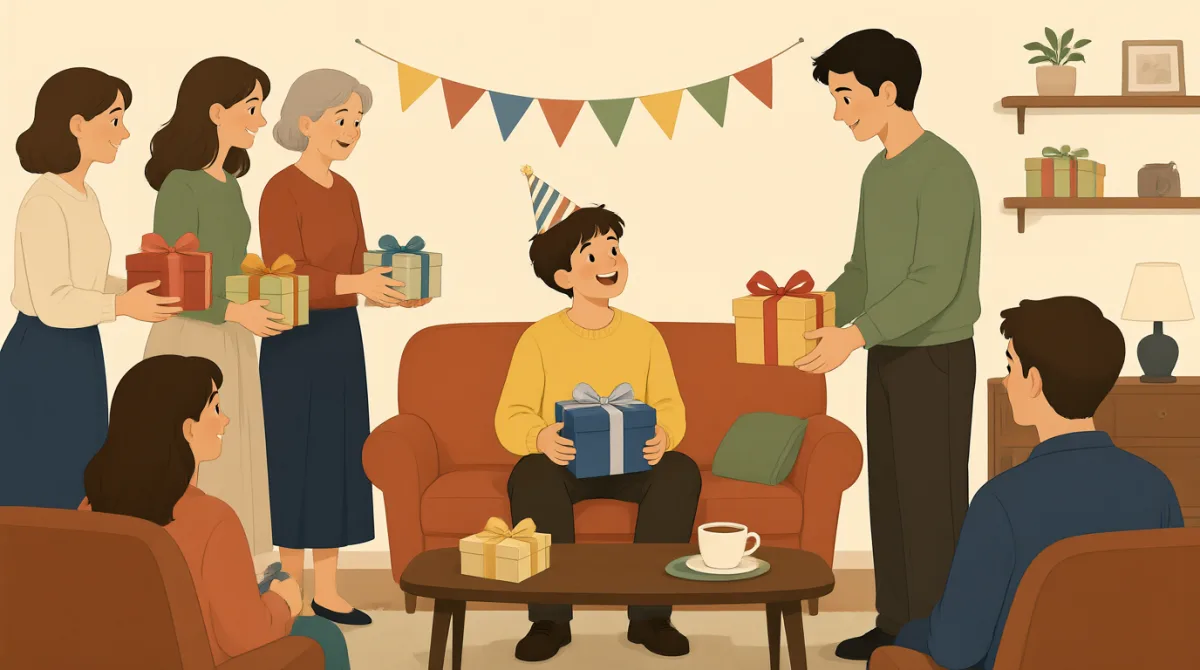

Happy birthday, Emma! Here's a little something for you.
जन्मदिन मुबारक हो, एम्मा! तुम्हारे लिए एक छोटा-सा तोहफ़ा है।

Oh, thank you so much, Jack! You shouldn't have.
अरे, बहुत-बहुत धन्यवाद, जैक! इसकी कोई ज़रूरत नहीं थी।

Go on, open it! We're all curious.
खोलो ना! हम सब जानने के लिए उत्सुक हैं।
Alright, alright! Let's see... Oh, wow! It's a scarf! And it's exactly the color I wanted! How did you know?
अच्छा, अच्छा! देखते हैं... अरे, वाह! यह तो स्कार्फ़ है! और इसका रंग बिल्कुल वही है जो मुझे चाहिए था! तुम्हें कैसे पता चला?
Just a lucky guess, I suppose. I'm glad you like it.
बस तुक्का लग गया, शायद। अच्छा लगा कि तुम्हें पसंद आया।
I don't just like it, I love it! It'll be perfect for winter. Thank you, both of you!
मुझे यह बस पसंद ही नहीं, बहुत पसंद है! सर्दियों के लिए एकदम सही रहेगा। तुम दोनों को धन्यवाद!
You're very welcome, Emma. Enjoy your special day!
कोई बात नहीं, एम्मा। अपना यह ख़ास दिन ख़ुशी से मनाओ!
शब्दावली7
- scarfस्कार्फ़
A scarf is a long piece of cloth worn around the neck to keep warm, especially in cold weather. It's a common gift item.
स्कार्फ़ कपड़े का एक लंबा टुकड़ा होता है, जिसे ठंड से बचने के लिए गले में लपेटते हैं। यह उपहार में देने की आम चीज़ है।
- curiousउत्सुक
Curious means wanting to know or see something because it interests you. Use it when people are eager to find out about a surprise.
'Curious' का मतलब है किसी चीज़ में दिलचस्पी होने के कारण उसे जानने या देखने की इच्छा होना। किसी सरप्राइज़ के बारे में जानने को बेताब लोगों के लिए यह शब्द इस्तेमाल करें।
- lucky guessतुक्का
A lucky guess is when you correctly guess something by chance, not because you knew it for sure. It's a humble way to explain good luck.
'Lucky guess' का मतलब है कि आपने बिना पक्की जानकारी के, संयोग से सही अंदाज़ा लगा लिया। अच्छी किस्मत का ज़िक्र विनम्रता से करने का यह एक तरीका है।
- supposeमानना
Suppose means to think or believe something is probably true. In casual talk, 'I suppose' softens a statement, like 'I think so.'
'Suppose' का मतलब है किसी बात को शायद सच मानना या सोचना। आम बातचीत में 'I suppose' कहने से बात थोड़ी नरम पड़ जाती है, जैसे 'I think so' (मुझे ऐसा लगता है)।
- gladख़ुश
Glad means happy or pleased about something good happening. Say 'I'm glad' to show positive feelings about a situation.
'Glad' का मतलब है किसी अच्छी बात के होने पर ख़ुश या प्रसन्न होना। किसी स्थिति के बारे में अपनी ख़ुशी जताने के लिए 'I'm glad' कहें।
- perfectएकदम सही
Perfect means exactly right or suitable for a purpose. Use it to describe something that fits your needs ideally, like a gift.
'Perfect' का मतलब है किसी काम के लिए बिल्कुल सही या उपयुक्त। जब कोई चीज़ आपकी ज़रूरत के मुताबिक़ हो, जैसे कोई उपहार, तो उसका वर्णन करने के लिए यह शब्द इस्तेमाल करें।
- very welcomeकोई बात नहीं
'You're very welcome' is a polite response to 'thank you,' meaning you're happy to give or help without expecting anything back.
'You're very welcome' धन्यवाद के जवाब में कहा जाता है। इसका मतलब है कि आपको कुछ देने या मदद करने में ख़ुशी हुई और आप बदले में कुछ पाने की उम्मीद नहीं रखते।
मुख्य वाक्य7
- 1
Happy birthday, Emma! Here's a little something for you.
जन्मदिन मुबारक हो, एम्मा! तुम्हारे लिए एक छोटा-सा तोहफ़ा है।
This is a warm greeting for someone's birthday, followed by giving a gift. 'A little something' is a casual way to refer to a small present. Use it at parties to start interactions politely.
यह किसी को जन्मदिन की मुबारकबाद देने के बाद उपहार देने का गर्मजोशी भरा तरीका है। 'A little something' किसी छोटे-से तोहफ़े के लिए अनौपचारिक ढंग से कहा जाता है। पार्टियों में बातचीत शुरू करने के लिए इसका इस्तेमाल करें।
- 2
You shouldn't have.
इसकी कोई ज़रूरत नहीं थी।
This polite expression means 'You didn't need to do this for me,' showing appreciation while implying the gift is special or unnecessary. It's useful in social situations to respond humbly to gifts.
'You shouldn't have.' का मतलब है, 'तुम्हें मेरे लिए यह करने की ज़रूरत नहीं थी।' यह कहकर आप आभार जताते हैं और साथ ही बताते हैं कि उपहार ख़ास है या देना ज़रूरी नहीं था। उपहार मिलने पर विनम्रता से जवाब देने के लिए यह काम का वाक्य है।
- 3
Go on, open it! We're all curious.
खोलो ना! हम सब जानने के लिए उत्सुक हैं।
'Go on' encourages action, like opening a gift, and 'curious' explains why. This sentence builds excitement in groups. Use it to urge someone during fun events; note the exclamation for enthusiasm.
'Go on' किसी को कोई काम करने के लिए प्रोत्साहित करता है, जैसे उपहार खोलना। 'Curious' बताता है कि वे ऐसा क्यों कह रहे हैं। यह वाक्य सबके बीच उत्सुकता और रोमांच बढ़ाता है। किसी मज़ेदार मौके पर किसी को ऐसा करने के लिए कहें; विस्मयादिबोधक चिह्न उत्साह दिखाता है।
- 4
Oh, wow! It's a scarf! And it's exactly the color I wanted!
अरे, वाह! यह तो स्कार्फ़ है! और इसका रंग बिल्कुल वही है जो मुझे चाहिए था!
'Oh, wow' shows surprise and delight. 'Exactly' emphasizes perfect match. This pattern expresses strong positive reaction to a gift. Useful for reacting naturally; the structure uses short exclamations for emotion.
'Oh, wow' हैरानी और ख़ुशी दिखाता है। 'Exactly' इस बात पर ज़ोर देता है कि चीज़ बिल्कुल सही है। उपहार पर ज़ोरदार सकारात्मक प्रतिक्रिया देने के लिए इस तरह का वाक्य इस्तेमाल करें। सहज प्रतिक्रिया में भावनाएँ दिखाने के लिए छोटे विस्मयादिबोधक वाक्य उपयोगी हैं।
- 5
Just a lucky guess, I suppose. I'm glad you like it.
बस तुक्का लग गया, शायद। अच्छा लगा कि तुम्हें पसंद आया।
'Just a lucky guess' humbly attributes success to chance, and 'I suppose' adds uncertainty. 'I'm glad' shows relief and happiness. Use this to respond modestly when complimented on knowing someone's preference.
'Just a lucky guess' सफलता का श्रेय विनम्रता से संयोग को देता है, और 'I suppose' थोड़ी अनिश्चितता जोड़ता है। 'I'm glad' राहत और ख़ुशी जताता है। जब कोई आपकी किसी की पसंद जानने की तारीफ़ करे, तो विनम्रता से जवाब देने के लिए इसका इस्तेमाल करें।
- 6
I don't just like it, I love it! It'll be perfect for winter.
मुझे यह बस पसंद ही नहीं, बहुत पसंद है! सर्दियों के लिए एकदम सही रहेगा।
This intensifies emotion from 'like' to 'love' for emphasis. 'It'll be' is future 'will be,' predicting usefulness. Great for showing enthusiasm about gifts; the contrast highlights strong feelings.
यहाँ 'like' से 'love' तक जाकर भावना को ज़ोरदार बनाया गया है। 'It'll be' भविष्य के 'will be' का छोटा रूप है और आगे इसकी उपयोगिता का अंदाज़ा जताता है। उपहार को लेकर उत्साह दिखाने के लिए यह बढ़िया वाक्य है; दोनों भावों का अंतर गहरी पसंद को उभारता है।
- 7
You're very welcome, Emma. Enjoy your special day!
कोई बात नहीं, एम्मा। अपना यह ख़ास दिन ख़ुशी से मनाओ!
'You're very welcome' politely acknowledges thanks. 'Special day' refers to the birthday. Use this to end a gift exchange warmly; it's a common, friendly close in celebrations.
'You're very welcome' धन्यवाद का विनम्र जवाब है। 'Special day' से जन्मदिन का मतलब है। उपहारों का आदान-प्रदान प्यार से पूरा करने के लिए इसका इस्तेमाल करें; जश्न के मौकों पर यह एक आम और दोस्ताना विदाई है।