What To Bring
O que levar
Emma asks what she and her friend should bring for the day trip. Jack suggests comfortable shoes, water, and a light jacket.
Emma pergunta o que ela e a amiga devem levar para o passeio de um dia. Jack sugere calçados confortáveis, água e uma jaqueta leve.
Diálogo8
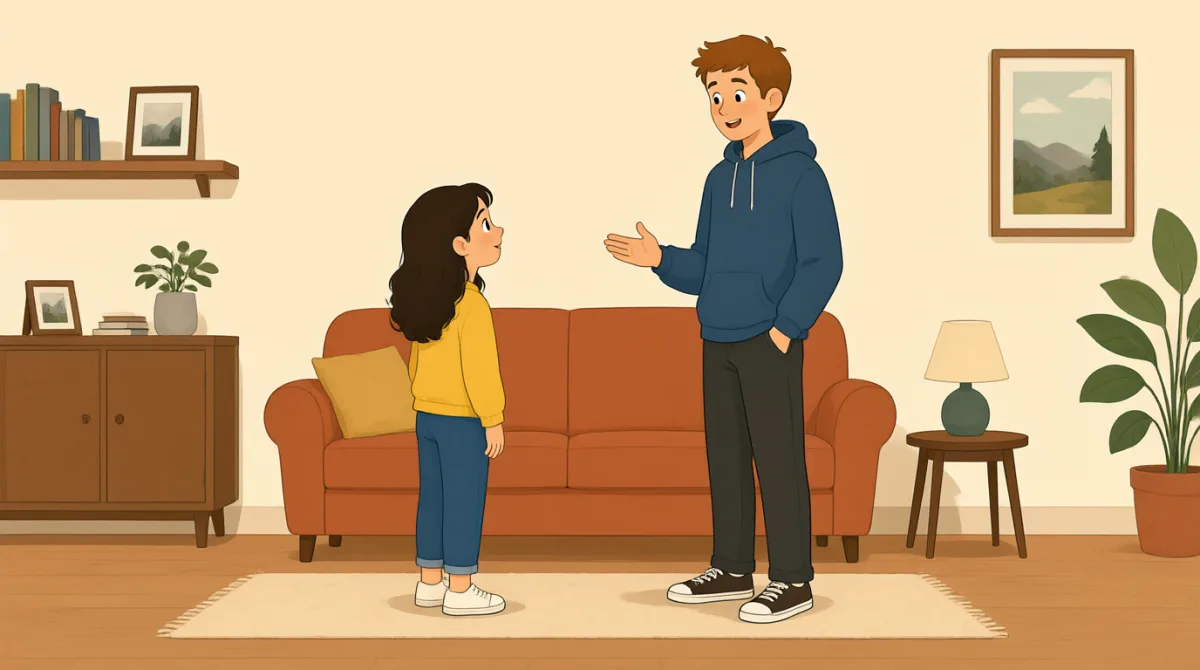

What should my friend and I bring for the day trip?
O que eu e minha amiga devemos levar para o passeio?

Wear comfortable shoes. You'll be walking around a lot.
Use calçados confortáveis. Vocês vão andar bastante.
Good idea. Should we bring water, too?
Boa ideia. Devemos levar água também?
Yes, bring a bottle of water for each of you.
Sim, levem uma garrafa de água para cada uma.
Will it be cold outside? Should I bring a jacket?
Vai fazer frio lá fora? Devo levar uma jaqueta?
Bring a light jacket. The weather can change during the day.
Leve uma jaqueta leve. O tempo pode mudar durante o dia.
Should we bring anything else, like snacks or sunscreen?
Devemos levar mais alguma coisa, como lanches ou protetor solar?
Sunscreen is a good idea. You can buy snacks along the way.
Protetor solar é uma boa ideia. Vocês podem comprar lanches pelo caminho.
Vocabulário7
- day trippasseio de um dia
A day trip is a short visit to a place that starts and ends on the same day. Use it when talking about a trip without an overnight stay.
Um “day trip” é um passeio curto a algum lugar, que começa e termina no mesmo dia. Use essa expressão para falar de um passeio sem pernoite.
- bringlevar
Here, “bring” means to take something with you on the trip. You can use it to ask what to pack or carry.
Aqui, “bring” significa levar algo com você para o passeio. Você pode usar essa palavra para perguntar o que deve colocar na mala ou carregar.
- comfortable shoescalçados confortáveis
These are shoes that feel good to wear, especially for a long time. They are useful when you expect to walk a lot.
São calçados confortáveis de usar, especialmente por bastante tempo. Eles são úteis quando você espera andar muito.
- walking aroundandar por aí
“Walking around” means moving on foot through an area, often to see different places. Use it to describe exploring a town or attraction.
“Walking around” significa se deslocar a pé por uma área, muitas vezes para conhecer lugares diferentes. Use essa expressão para descrever um passeio por uma cidade ou atração.
- a bottle of wateruma garrafa de água
This is a container filled with water to drink. You can use this phrase when asking what drinks to take with you.
É um recipiente com água para beber. Você pode usar essa expressão ao perguntar que bebidas levar.
- light jacketjaqueta leve
A light jacket is a jacket that is not very warm or heavy. It is useful when the weather may change.
Uma “light jacket” é uma jaqueta que não é muito quente nem pesada. Ela é útil quando o tempo pode mudar.
- along the waypelo caminho
“Along the way” means during a journey or while going somewhere. Use it when talking about things you can do or get during a trip.
“Along the way” significa durante uma viagem ou enquanto se vai a algum lugar. Use essa expressão para falar de coisas que você pode fazer ou comprar durante um passeio.
Frases-chave8
- 1
What should my friend and I bring for the day trip?
O que eu e minha amiga devemos levar para o passeio?
This is a useful way to ask what to take on an outing. You can replace “the day trip” with another event or destination.
Essa é uma forma útil de perguntar o que levar para um passeio. Você pode substituir “the day trip” por outro evento ou destino.
- 2
Wear comfortable shoes.
Use calçados confortáveis.
This is a simple suggestion about what someone should wear. Use “Wear” followed by a clothing item or accessory to give advice.
Essa é uma sugestão simples sobre o que alguém deve vestir. Use “Wear” seguido de uma peça de roupa ou acessório para dar um conselho.
- 3
You'll be walking around a lot.
Vocês vão andar bastante.
This explains why comfortable shoes are a good idea. Use “You'll be” plus an -ing verb to talk about an expected activity.
Essa frase explica por que calçados confortáveis são uma boa ideia. Use “You'll be” mais um verbo terminado em -ing para falar de uma atividade esperada.
- 4
Should we bring water, too?
Devemos levar água também?
This is a polite way to check whether something else is needed. Replace “water” with another item, such as snacks or a jacket.
Essa é uma forma educada de confirmar se mais alguma coisa é necessária. Substitua “water” por outro item, como lanches ou uma jaqueta.
- 5
Bring a bottle of water for each of you.
Leve uma garrafa de água para cada uma.
This gives a clear instruction and says how much to bring. Use “for each of you” when talking about one item per person.
Essa frase dá uma instrução clara e diz quanto levar. Use “for each of you” para indicar um item por pessoa.
- 6
Will it be cold outside?
Vai fazer frio lá fora?
This is a useful question about the weather. You can use “Will it be” to ask about a future condition.
Essa é uma pergunta útil sobre o tempo. Você pode usar “Will it be” para perguntar sobre uma condição futura.
- 7
Bring a light jacket.
Leve uma jaqueta leve.
This is a short, direct suggestion about what to pack. Replace “a light jacket” with another useful item.
Essa é uma sugestão curta e direta sobre o que levar. Substitua “a light jacket” por outro item útil.
- 8
You can buy snacks along the way.
Vocês podem comprar lanches pelo caminho.
This tells someone that snacks are available during the trip. Use “You can buy” to explain what people may get while traveling.
Essa frase avisa que há lanches disponíveis durante o passeio. Use “You can buy” para explicar o que as pessoas podem comprar enquanto viajam.