What To Bring
क्या साथ ले जाएँ
Emma asks what she and her friend should bring for the day trip. Jack suggests comfortable shoes, water, and a light jacket.
एमा पूछती है कि दिन की यात्रा पर उसे और उसके दोस्त को क्या साथ ले जाना चाहिए। जैक आरामदायक जूते, पानी और हल्की जैकेट ले जाने की सलाह देता है।
संवाद8
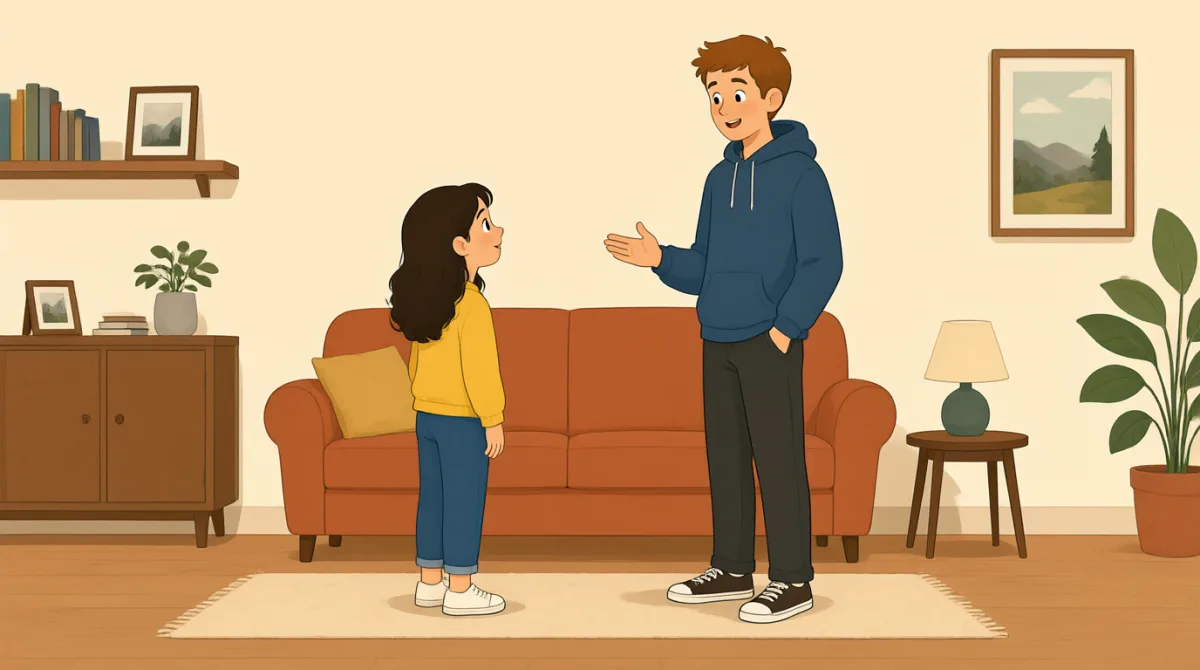

What should my friend and I bring for the day trip?
दिन की यात्रा पर मुझे और मेरे दोस्त को क्या साथ ले जाना चाहिए?

Wear comfortable shoes. You'll be walking around a lot.
आरामदायक जूते पहनना। तुम लोग काफ़ी पैदल घूमोगे।
Good idea. Should we bring water, too?
अच्छा सुझाव है। क्या हमें पानी भी ले जाना चाहिए?
Yes, bring a bottle of water for each of you.
हाँ, तुम दोनों में से हर एक के लिए पानी की एक बोतल ले जाना।
Will it be cold outside? Should I bring a jacket?
क्या बाहर ठंड होगी? क्या मुझे जैकेट ले जानी चाहिए?
Bring a light jacket. The weather can change during the day.
एक हल्की जैकेट ले जाना। दिन में मौसम बदल सकता है।
Should we bring anything else, like snacks or sunscreen?
क्या हमें कुछ और भी ले जाना चाहिए, जैसे नाश्ता या सनस्क्रीन?
Sunscreen is a good idea. You can buy snacks along the way.
सनस्क्रीन ले जाना अच्छा रहेगा। रास्ते में नाश्ता खरीद सकते हो।
शब्दावली7
- day tripदिन की यात्रा
A day trip is a short visit to a place that starts and ends on the same day. Use it when talking about a trip without an overnight stay.
“day trip” ऐसी छोटी यात्रा होती है जो एक ही दिन में शुरू होकर खत्म हो जाती है। रात भर रुकने वाली यात्रा की बात न हो, तो इस शब्द का इस्तेमाल करें।
- bringसाथ ले जाना
Here, “bring” means to take something with you on the trip. You can use it to ask what to pack or carry.
यहाँ “bring” का मतलब है यात्रा पर कोई चीज़ अपने साथ ले जाना। सामान बाँधने या साथ ले जाने के बारे में पूछते समय आप इसका इस्तेमाल कर सकते हैं।
- comfortable shoesआरामदायक जूते
These are shoes that feel good to wear, especially for a long time. They are useful when you expect to walk a lot.
ये ऐसे जूते होते हैं जिन्हें पहनने में अच्छा लगता है, खासकर लंबे समय तक। जब आपको बहुत पैदल चलना हो, तब ये काम आते हैं।
- walking aroundपैदल घूमना
“Walking around” means moving on foot through an area, often to see different places. Use it to describe exploring a town or attraction.
“Walking around” का मतलब है किसी इलाके में पैदल घूमना, अक्सर अलग-अलग जगहें देखने के लिए। किसी शहर या घूमने की जगह की सैर के बारे में बताते समय इसका इस्तेमाल करें।
- a bottle of waterपानी की एक बोतल
This is a container filled with water to drink. You can use this phrase when asking what drinks to take with you.
यह पानी से भरा हुआ ऐसा पात्र है जिसे पीने के लिए इस्तेमाल किया जाता है। साथ ले जाने वाले पेय के बारे में पूछते समय आप इस वाक्यांश का इस्तेमाल कर सकते हैं।
- light jacketहल्की जैकेट
A light jacket is a jacket that is not very warm or heavy. It is useful when the weather may change.
“Light jacket” ऐसी जैकेट होती है जो बहुत गर्म या भारी नहीं होती। मौसम बदलने की संभावना हो, तो यह काम आती है।
- along the wayरास्ते में
“Along the way” means during a journey or while going somewhere. Use it when talking about things you can do or get during a trip.
“Along the way” का मतलब है सफ़र के दौरान या कहीं जाते समय। यात्रा के दौरान की जा सकने वाली चीज़ों या खरीदी जा सकने वाली चीज़ों के बारे में बताते समय इसका इस्तेमाल करें।
मुख्य वाक्य8
- 1
What should my friend and I bring for the day trip?
दिन की यात्रा पर मुझे और मेरे दोस्त को क्या साथ ले जाना चाहिए?
This is a useful way to ask what to take on an outing. You can replace “the day trip” with another event or destination.
यह किसी सैर पर साथ ले जाने वाली चीज़ों के बारे में पूछने का एक उपयोगी तरीका है। आप “the day trip” की जगह किसी दूसरे आयोजन या जगह का नाम रख सकते हैं।
- 2
Wear comfortable shoes.
आरामदायक जूते पहनना।
This is a simple suggestion about what someone should wear. Use “Wear” followed by a clothing item or accessory to give advice.
यह किसी को क्या पहनना चाहिए, इस बारे में एक सीधा सुझाव है। सलाह देने के लिए “Wear” के बाद कपड़े या किसी सहायक चीज़ का नाम रखें।
- 3
You'll be walking around a lot.
तुम लोग काफ़ी पैदल घूमोगे।
This explains why comfortable shoes are a good idea. Use “You'll be” plus an -ing verb to talk about an expected activity.
यह बताता है कि आरामदायक जूते पहनना अच्छा विचार क्यों है। भविष्य में होने वाली गतिविधि के बारे में बात करने के लिए “You'll be” के बाद -ing वाली क्रिया लगाएँ।
- 4
Should we bring water, too?
क्या हमें पानी भी ले जाना चाहिए?
This is a polite way to check whether something else is needed. Replace “water” with another item, such as snacks or a jacket.
यह जाँचने का एक विनम्र तरीका है कि कोई और चीज़ भी चाहिए या नहीं। “water” की जगह कोई दूसरी चीज़, जैसे नाश्ता या जैकेट, रख सकते हैं।
- 5
Bring a bottle of water for each of you.
तुम दोनों में से हर एक के लिए पानी की एक बोतल ले जाना।
This gives a clear instruction and says how much to bring. Use “for each of you” when talking about one item per person.
यह साफ़ निर्देश देता है और बताता है कि कितनी चीज़ ले जानी है। हर व्यक्ति के लिए एक चीज़ की बात करते समय “for each of you” का इस्तेमाल करें।
- 6
Will it be cold outside?
क्या बाहर ठंड होगी?
This is a useful question about the weather. You can use “Will it be” to ask about a future condition.
मौसम के बारे में पूछने का यह एक उपयोगी सवाल है। भविष्य की स्थिति के बारे में पूछने के लिए “Will it be” का इस्तेमाल कर सकते हैं।
- 7
Bring a light jacket.
एक हल्की जैकेट ले जाना।
This is a short, direct suggestion about what to pack. Replace “a light jacket” with another useful item.
सामान में क्या रखना चाहिए, इस बारे में यह एक छोटा और सीधा सुझाव है। “a light jacket” की जगह किसी दूसरी काम की चीज़ का नाम रख सकते हैं।
- 8
You can buy snacks along the way.
रास्ते में नाश्ता खरीद सकते हो।
This tells someone that snacks are available during the trip. Use “You can buy” to explain what people may get while traveling.
इससे किसी को पता चलता है कि यात्रा के दौरान नाश्ता उपलब्ध है। सफ़र में लोग क्या खरीद सकते हैं, यह बताने के लिए “You can buy” का इस्तेमाल करें।