What To Bring
Qué llevar
Emma asks what she and her friend should bring for the day trip. Jack suggests comfortable shoes, water, and a light jacket.
Emma pregunta qué deberían llevar ella y su amiga para la excursión de un día. Jack les recomienda llevar calzado cómodo, agua y una chaqueta ligera.
Diálogo8
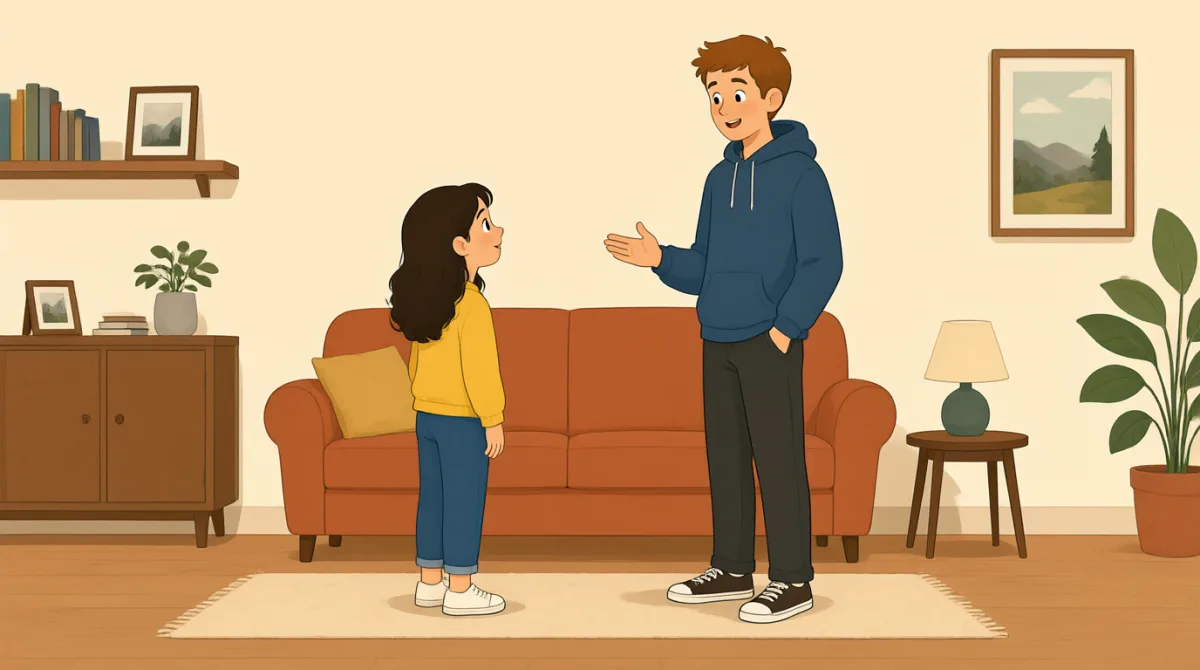

What should my friend and I bring for the day trip?
¿Qué deberíamos llevar mi amiga y yo para la excursión de un día?

Wear comfortable shoes. You'll be walking around a lot.
Ponte calzado cómodo. Van a caminar bastante.
Good idea. Should we bring water, too?
Buena idea. ¿También deberíamos llevar agua?
Yes, bring a bottle of water for each of you.
Sí, lleven una botella de agua cada una.
Will it be cold outside? Should I bring a jacket?
¿Hará frío afuera? ¿Debería llevar una chaqueta?
Bring a light jacket. The weather can change during the day.
Lleva una chaqueta ligera. El tiempo puede cambiar a lo largo del día.
Should we bring anything else, like snacks or sunscreen?
¿Deberíamos llevar algo más, como bocadillos o protector solar?
Sunscreen is a good idea. You can buy snacks along the way.
Es buena idea llevar protector solar. Pueden comprar bocadillos por el camino.
Vocabulario7
- day tripexcursión de un día
A day trip is a short visit to a place that starts and ends on the same day. Use it when talking about a trip without an overnight stay.
Una «excursión de un día» es una visita breve a un lugar que empieza y termina el mismo día. Usa esta expresión cuando hables de un viaje sin pasar la noche fuera.
- bringllevar
Here, “bring” means to take something with you on the trip. You can use it to ask what to pack or carry.
Aquí, “bring” significa llevar algo contigo en el viaje. Puedes usar esta palabra para preguntar qué empacar o llevar.
- comfortable shoescalzado cómodo
These are shoes that feel good to wear, especially for a long time. They are useful when you expect to walk a lot.
Es calzado que resulta cómodo, sobre todo si lo llevas puesto durante mucho tiempo. Es útil cuando esperas caminar bastante.
- walking aroundcaminar por ahí
“Walking around” means moving on foot through an area, often to see different places. Use it to describe exploring a town or attraction.
“Walking around” significa desplazarse a pie por una zona, a menudo para conocer distintos lugares. Úsalo para describir cómo exploras una ciudad o una atracción.
- a bottle of wateruna botella de agua
This is a container filled with water to drink. You can use this phrase when asking what drinks to take with you.
Es un recipiente con agua para beber. Puedes usar esta expresión cuando preguntes qué bebidas llevar contigo.
- light jacketchaqueta ligera
A light jacket is a jacket that is not very warm or heavy. It is useful when the weather may change.
Una “light jacket” es una chaqueta que no es muy abrigada ni pesada. Es útil cuando el tiempo puede cambiar.
- along the waypor el camino
“Along the way” means during a journey or while going somewhere. Use it when talking about things you can do or get during a trip.
“Along the way” significa durante un viaje o mientras vas a algún lugar. Úsalo para hablar de cosas que puedes hacer o conseguir durante un viaje.
Frases clave8
- 1
What should my friend and I bring for the day trip?
¿Qué deberíamos llevar mi amiga y yo para la excursión de un día?
This is a useful way to ask what to take on an outing. You can replace “the day trip” with another event or destination.
Esta es una forma útil de preguntar qué llevar para una salida. Puedes sustituir “the day trip” por otro evento o destino.
- 2
Wear comfortable shoes.
Ponte calzado cómodo.
This is a simple suggestion about what someone should wear. Use “Wear” followed by a clothing item or accessory to give advice.
Es una sugerencia sencilla sobre qué debería ponerse alguien. Usa “Wear” seguido de una prenda o un accesorio para dar un consejo.
- 3
You'll be walking around a lot.
Van a caminar bastante.
This explains why comfortable shoes are a good idea. Use “You'll be” plus an -ing verb to talk about an expected activity.
Esto explica por qué es buena idea llevar calzado cómodo. Usa “You'll be” seguido de un verbo terminado en -ing para hablar de una actividad prevista.
- 4
Should we bring water, too?
¿También deberíamos llevar agua?
This is a polite way to check whether something else is needed. Replace “water” with another item, such as snacks or a jacket.
Es una forma amable de confirmar si hace falta llevar algo más. Sustituye “water” por otro artículo, como bocadillos o una chaqueta.
- 5
Bring a bottle of water for each of you.
Lleva una botella de agua cada una.
This gives a clear instruction and says how much to bring. Use “for each of you” when talking about one item per person.
Esta frase da una indicación clara y especifica cuánto llevar. Usa “for each of you” cuando quieras decir que corresponde un artículo por persona.
- 6
Will it be cold outside?
¿Hará frío afuera?
This is a useful question about the weather. You can use “Will it be” to ask about a future condition.
Es una pregunta útil sobre el tiempo. Puedes usar “Will it be” para preguntar por una condición futura.
- 7
Bring a light jacket.
Lleva una chaqueta ligera.
This is a short, direct suggestion about what to pack. Replace “a light jacket” with another useful item.
Es una sugerencia breve y directa sobre qué empacar. Sustituye “a light jacket” por otro artículo útil.
- 8
You can buy snacks along the way.
Pueden comprar bocadillos por el camino.
This tells someone that snacks are available during the trip. Use “You can buy” to explain what people may get while traveling.
Esta frase le dice a alguien que podrá conseguir bocadillos durante el viaje. Usa “You can buy” para explicar qué pueden comprar las personas mientras viajan.