Confirming the Plan
Potwierdzenie planu
The conversation concludes with both friends briefly summarizing and confirming the agreed-upon weekend plan to ensure clarity.
Rozmowa kończy się krótkim podsumowaniem i potwierdzeniem wspólnego planu na weekend, żeby wszystko było jasne.
Dialog6
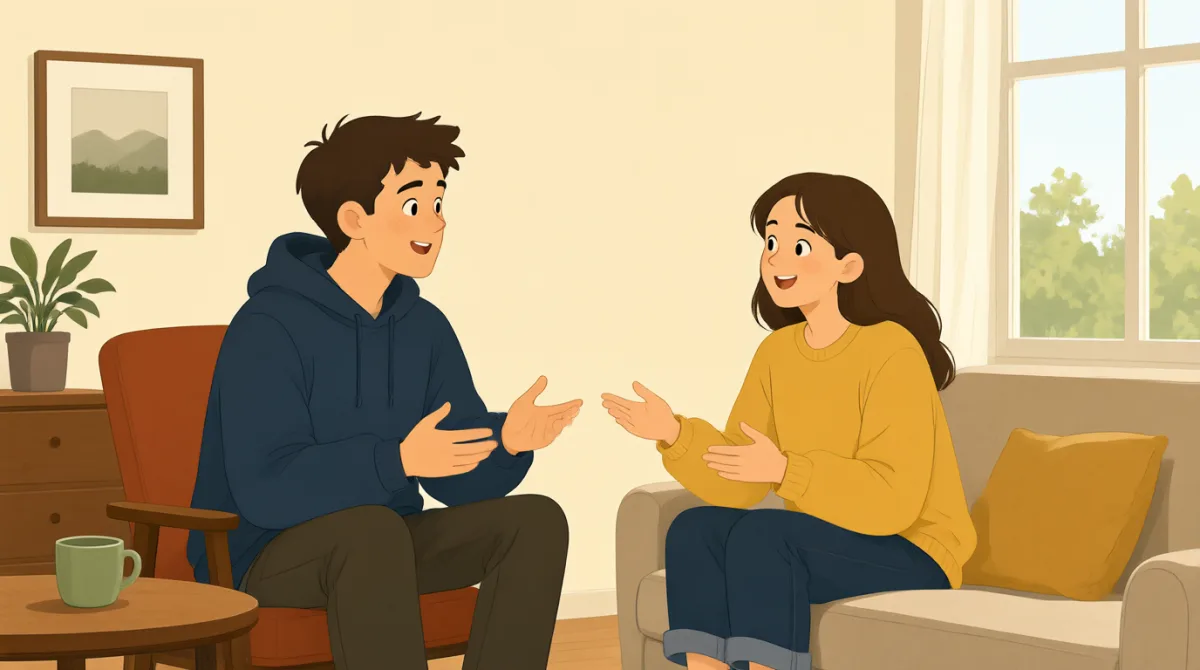

So, just to confirm, we're planning to meet at the Green Park entrance, right?
Czyli tylko potwierdzę: spotykamy się przy wejściu do Green Parku, tak?

Yep, Green Park entrance. And we're aiming for 10:30 AM to hit that brunch spot before the big rush.
Tak, przy wejściu do Green Parku. Celujemy w 10:30, żeby zdążyć do tej knajpki na brunch, zanim zrobi się tłoczno.
Perfect. And then after brunch, we'll head to the Natural History Museum?
Super. A po brunchu idziemy do Muzeum Historii Naturalnej?
That's the plan! Unless you'd rather go for a walk in the park first, but I feel like the museum will be more interesting if we're well-fed.
Tak jest! Chyba że wolisz najpierw pospacerować po parku, ale wydaje mi się, że muzeum będzie ciekawsze, jeśli najpierw porządnie zjemy.
Agreed, museum after brunch sounds good. So, 10:30 AM at Green Park entrance, then brunch, then the museum. Got it!
Zgoda, muzeum po brunchu brzmi dobrze. Czyli 10:30 przy wejściu do Green Parku, potem brunch, a na koniec muzeum. Jasne!
Sounds like we're all set. Looking forward to it!
Wygląda na to, że wszystko ustalone. Już się cieszę!
Słownictwo11
- confirmpotwierdzać
To confirm means to make sure that something is true or correct, often by asking or stating it again. It's useful when double-checking plans with friends.
Confirm znaczy upewnić się, że coś jest prawdą lub się zgadza, często przez ponowne zapytanie albo powtórzenie informacji. Przydaje się, gdy sprawdzasz z przyjaciółmi szczegóły planów.
- aiming forcelować w
Aiming for something means planning or targeting a specific time or goal. Use this phrase when suggesting a schedule, like 'aiming for 10 AM'.
Aiming for coś oznacza planować określoną godzinę albo dążyć do konkretnego celu. Użyj tego zwrotu, gdy proponujesz termin, na przykład 'aiming for 10 AM' (celujemy w 10:00).
- brunchbrunch
Brunch is a meal eaten in the late morning that combines breakfast and lunch. It's common in casual weekend plans in English-speaking countries.
Brunch to posiłek jedzony późnym rankiem, łączący śniadanie z lunchem. W krajach anglojęzycznych często pojawia się w swobodnych planach na weekend.
- rushtłok
Rush here refers to a large crowd or busy time when many people arrive. Say 'before the rush' to mean avoiding crowds.
Rush w tym kontekście oznacza porę, kiedy przychodzi dużo ludzi i robi się tłoczno. Wyrażenie 'before the rush' oznacza „zanim zrobi się tłoczno”.
- head toudać się do
Head to means to go towards or travel to a place. It's a casual way to say 'go to', like 'head to the museum after lunch'.
Head to znaczy udać się w jakieś miejsce lub pojechać tam. To swobodny sposób, by powiedzieć 'go to', na przykład 'head to the museum after lunch' (udać się do muzeum po lunchu).
- unlesschyba że
Unless means 'except if' or 'if not'. Use it to suggest an alternative, like 'unless you prefer something else'.
Unless znaczy „chyba że” albo „jeśli nie”. Użyj tego słowa, by zaproponować alternatywę, na przykład 'unless you prefer something else' (chyba że wolisz coś innego).
- ratherraczej; woleć
Rather means 'more preferably' or 'instead'. In questions, 'would rather' expresses a preference, like 'would you rather walk?'
Rather oznacza „raczej” lub „zamiast tego”. W pytaniu 'would rather' wyraża preferencję, na przykład 'would you rather walk?' (wolisz iść pieszo?).
- agreedzgoda
Agreed is a quick way to say you accept or are in agreement with an idea. It's informal and common in conversations to show consent.
Agreed to krótki sposób na powiedzenie, że akceptujesz pomysł albo się z nim zgadzasz. To nieformalny zwrot, często używany w rozmowie, by wyrazić zgodę.
- got itjasne; rozumiem
Got it means 'I understand' or 'okay, clear'. Use this casual phrase to confirm you've understood the plan.
Got it znaczy „rozumiem” albo „jasne, wszystko jasne”. Użyj tego swobodnego zwrotu, żeby potwierdzić, że rozumiesz plan.
- all setgotowy; wszystko ustalone
All set means everything is prepared or arranged. Say 'we're all set' at the end of planning to show readiness.
All set znaczy, że wszystko jest przygotowane lub ustalone. Na koniec planowania możesz powiedzieć 'we're all set', żeby pokazać, że wszystko gotowe.
- looking forward tonie móc się doczekać
Looking forward to means being excited about something in the future. It's a polite way to end plans, like 'looking forward to brunch!'
Looking forward to oznacza, że z niecierpliwością czekasz na coś, co wydarzy się w przyszłości. To miły sposób na zakończenie ustalania planów, na przykład 'looking forward to brunch!' (już nie mogę się doczekać brunchu!).
Kluczowe zdania6
- 1
So, just to confirm, we're planning to meet at the Green Park entrance, right?
Czyli tylko potwierdzę: spotykamy się przy wejściu do Green Parku, tak?
This sentence uses 'just to confirm' to politely double-check details, with 'right?' as a tag question for agreement. It's useful for ensuring clarity in plans; the grammar shows future planning with 'planning to'.
W tym zdaniu 'just to confirm' służy do uprzejmego upewnienia się co do szczegółów, a 'right?' na końcu zachęca do potwierdzenia. To przydatny sposób, by upewnić się, że plan jest jasny; konstrukcja 'planning to' mówi o planach na przyszłość.
- 2
Yep, Green Park entrance. And we're aiming for 10:30 AM to hit that brunch spot before the big rush.
Tak, przy wejściu do Green Parku. Celujemy w 10:30, żeby zdążyć do tej knajpki na brunch, zanim zrobi się tłoczno.
This is a casual confirmation using 'yep' for yes, and 'aiming for' with an infinitive purpose clause 'to hit... before...'. Practice this for suggesting times and reasons to avoid crowds.
To swobodne potwierdzenie: 'yep' oznacza „tak”, a 'aiming for' wskazuje planowaną godzinę. Konstrukcja 'to hit... before...' wyjaśnia cel: zdążyć gdzieś, zanim zrobi się tłoczno. Poćwicz ten wzór, gdy proponujesz godzinę i wyjaśniasz, jak uniknąć tłumów.
- 3
Perfect. And then after brunch, we'll head to the Natural History Museum?
Super. A po brunchu idziemy do Muzeum Historii Naturalnej?
Starts with 'perfect' to show approval, then sequences events with 'after' and future 'will'. The rising question tone seeks confirmation; great for outlining steps in a plan.
Zdanie zaczyna się od 'perfect', które wyraża aprobatę, a potem porządkuje wydarzenia za pomocą 'after' i czasu przyszłego z 'will'. Wznosząca intonacja pytania służy uzyskaniu potwierdzenia. To dobry sposób na przedstawienie kolejnych etapów planu.
- 4
That's the plan! Unless you'd rather go for a walk in the park first, but I feel like the museum will be more interesting if we're well-fed.
Tak jest! Chyba że wolisz najpierw pospacerować po parku, ale wydaje mi się, że muzeum będzie ciekawsze, jeśli najpierw porządnie zjemy.
'That's the plan!' confirms agreement casually. 'Unless' introduces an alternative with 'would rather', and 'if' clause for condition. Useful for flexible planning and giving opinions.
'That's the plan!' to swobodne potwierdzenie wspólnych ustaleń. 'Unless' wprowadza alternatywę, a 'would rather' wyraża preferencję; zdanie z 'if' podaje warunek. Te zwroty przydają się przy elastycznym planowaniu i wyrażaniu opinii.
- 5
Agreed, museum after brunch sounds good. So, 10:30 AM at Green Park entrance, then brunch, then the museum. Got it!
Zgoda, muzeum po brunchu brzmi dobrze. Czyli 10:30 przy wejściu do Green Parku, potem brunch, a na koniec muzeum. Jasne!
'Agreed' and 'sounds good' express consent. It summarizes the plan with 'then' for sequence and ends with 'got it' for understanding. This pattern helps recap to avoid misunderstandings.
'Agreed' i 'sounds good' wyrażają zgodę. Plan jest podsumowany za pomocą 'then', które wskazuje kolejność, a na końcu 'got it' potwierdza, że wszystko jest jasne. Taki wzór pomaga powtórzyć ustalenia i uniknąć nieporozumień.
- 6
Sounds like we're all set. Looking forward to it!
Wygląda na to, że wszystko ustalone. Już się cieszę!
'Sounds like' softens the statement, 'all set' means ready, and 'looking forward to it' shows excitement. Use this to positively close a conversation about plans.
'Sounds like' łagodzi wypowiedź, 'all set' oznacza, że wszystko jest gotowe, a 'looking forward to it' wyraża radość z czegoś, co dopiero nastąpi. Użyj tych zwrotów, by pozytywnie zakończyć rozmowę o planach.