Staying Focused When Emotions Rise
A disagreement about a missed handoff brings old grievances into the room, and both parents struggle to stay composed. Mia pauses the discussion and helps them separate their hurt from the immediate question of what arrangement would best support the children.
Dialogue12
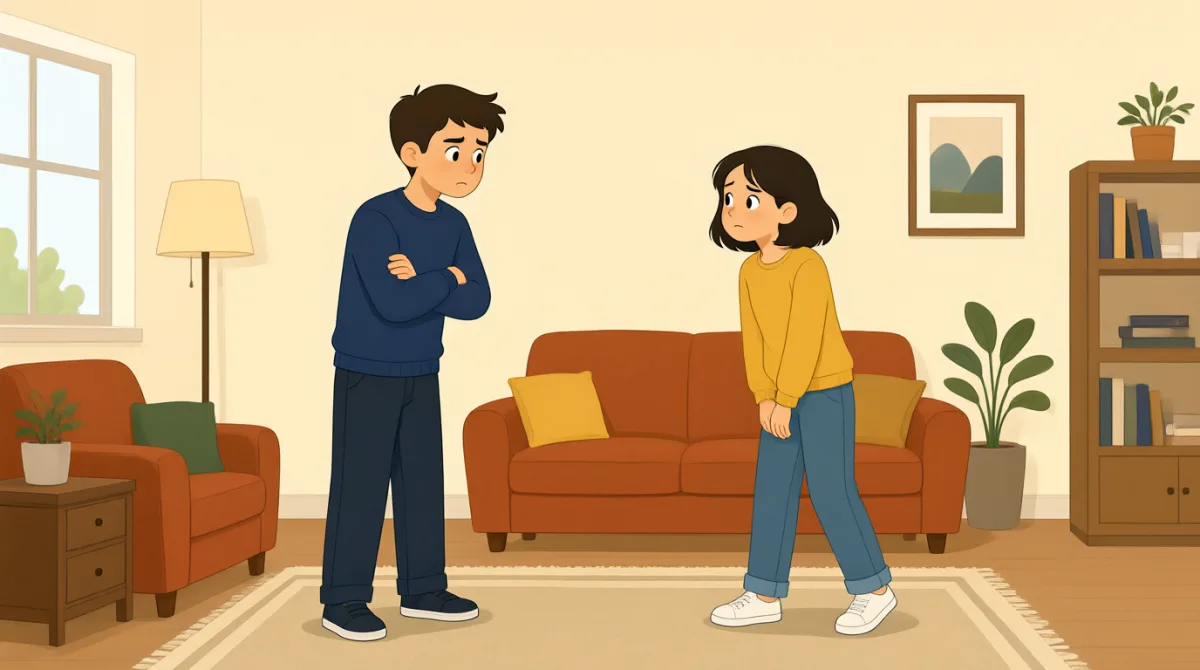

I want to address the missed handoff last Thursday. I waited outside the school for forty minutes, and the children were confused. This cannot keep happening.

I know I was late, Jack, and I regret that the children had to wait. But your message made it sound as if I had deliberately abandoned them. That was unfair.
I was angry because you did not tell me what was happening. And this is not the first time I have had to rearrange my afternoon at the last minute.
You are turning one late pickup into a verdict on my parenting. I have covered for you plenty of times, but I do not bring every mistake into mediation.

Let me pause you both. I hear a practical concern about reliability, and I also hear hurt about feeling judged. For a moment, let us separate those issues from the older grievances.
I can own that my message was sharper than it needed to be. What I need, though, is a way to know promptly if a handoff is going to be delayed.
That is reasonable. My phone was on silent during a meeting, but I should have sent an update as soon as I could. I do not want the children caught between us.
Then let us focus on what would help the children feel secure. Could you agree to notify each other as soon as a delay becomes likely, and give an estimated arrival time?
Yes. If there is no response after fifteen minutes, I would like us to have a backup contact method—not to escalate things, just to confirm the children are accounted for.
I can agree to that, provided the backup is used only for logistics and not as a way to reopen the argument. We should also tell the children the plan calmly, without assigning blame.
That sounds workable. Before we move on, is there anything either of you needs to acknowledge so this agreement is not simply covering over what happened?
I am sorry I made you feel accused rather than addressing the problem. I still need dependable communication, but I can raise that without making the children’s handoff a referendum on our past.
Vocabulary8
- missed handoff
A missed handoff is when a parent does not arrive as planned to transfer the children to the other parent. Here, it refers to the delayed pickup outside the school.
- at the last minute
This means with very little notice, just before something needs to happen. It describes how the schedule changes affect Jack's afternoon.
- a verdict on my parenting
A verdict is a judgment or decision about someone. Grace uses this phrase to say Jack is treating one mistake as proof that she is a bad parent.
- I can own that
This means “I can accept responsibility for that.” It is a useful way to acknowledge your part in a disagreement without giving up your other concerns.
- as soon as a delay becomes likely
This means to give notice when it seems probable that someone will be late, rather than waiting until the delay is certain. It can help people make practical plans.
- a backup contact method
This is an alternative way to get in touch if the usual method does not work. In this conversation, it is intended to confirm that the children are accounted for.
- covering over what happened
This means hiding or ignoring a problem instead of addressing it. Mia asks whether anything needs to be acknowledged so the agreement does not avoid the hurt caused by the incident.
- a referendum on our past
A referendum is usually a vote on an important issue; here, Jack uses it figuratively to mean a judgment on the history of their relationship. He says he can raise a current concern without turning it into a judgment about their past.
Key Sentences8
- 1
I hear a practical concern about reliability, and I also hear hurt about feeling judged.
This sentence acknowledges two sides of a disagreement without taking sides. You can reuse the structure “I hear [concern], and I also hear [feeling]” to show that you understand both the practical issue and its emotional impact.
- 2
For a moment, let us separate those issues from the older grievances.
This is a calm way to redirect a conversation that is becoming overwhelmed by past conflicts. “Let us separate [current issue] from [other concern]” helps people return to the matter they can address now.
- 3
I can own that my message was sharper than it needed to be.
This sentence takes responsibility for a specific action while leaving room to discuss the underlying problem. Reuse “I can own that…” to make a direct, measured acknowledgment.
- 4
What I need, though, is a way to know promptly if a handoff is going to be delayed.
This sentence shifts from an apology to a clear request about future communication. “What I need is a way to…” is useful for stating a practical need without making a personal accusation.
- 5
Could you agree to notify each other as soon as a delay becomes likely, and give an estimated arrival time?
This is a collaborative question that proposes specific actions rather than assigning blame. You can use “Could you agree to…” when seeking a clear, mutual commitment.
- 6
I can agree to that, provided the backup is used only for logistics and not as a way to reopen the argument.
This sentence accepts a proposal while setting a reasonable condition. “I can agree to that, provided…” is useful when you want to cooperate but clarify the limits of an agreement.
- 7
We should also tell the children the plan calmly, without assigning blame.
This sentence keeps the children’s needs central and recommends a neutral way to communicate. The phrase “without assigning blame” can help frame a discussion around solutions rather than fault.
- 8
I still need dependable communication, but I can raise that without making the children’s handoff a referendum on our past.
This sentence expresses an ongoing need while showing a commitment to address it constructively. “I still need…, but I can…” is a useful way to balance firmness with accountability.