Initial Approach: Gentle Request
पहली बात: विनम्र अनुरोध
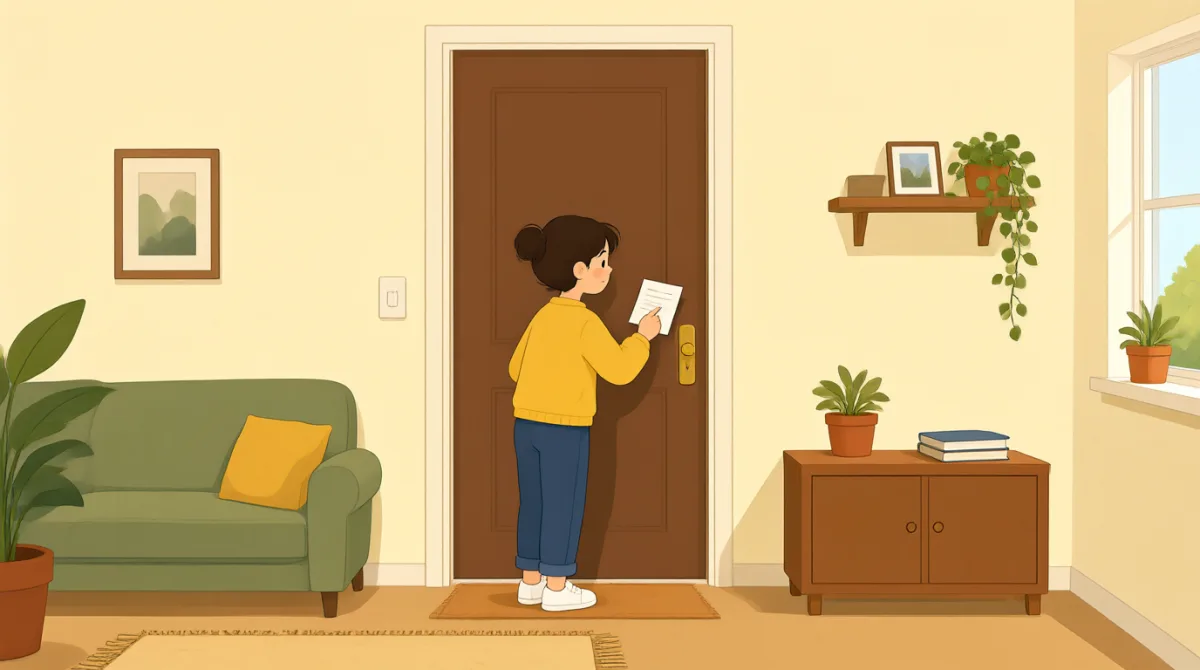
You notice persistent noise (e.g., loud music, stomping) from a neighbor and decide to politely knock on their door or leave a friendly note to ask them to keep the noise down.
आपको पड़ोसी के घर से लगातार शोर (जैसे तेज़ संगीत या ज़ोर से चलने की आवाज़) सुनाई देता है। आप विनम्रता से उनके दरवाज़े पर दस्तक देने या एक दोस्ताना नोट छोड़कर उनसे शोर कम करने का अनुरोध करने का फ़ैसला करते हैं।
संवाद8

Hi, I'm Emma, your neighbor from downstairs.
नमस्ते, मैं एमा हूँ, नीचे वाले फ़्लोर पर रहने वाली आपकी पड़ोसी।

Oh, hi Emma. Jack, nice to meet you. Is everything okay?
ओह, नमस्ते एमा। मैं जैक हूँ, आपसे मिलकर अच्छा लगा। सब ठीक है?
Yes, mostly. I just wanted to gently mention that for the past few evenings, there's been some rather loud music or stomping sounds coming from upstairs. It's making it a bit hard to relax.
हाँ, ज़्यादातर तो ठीक है। मैं बस विनम्रता से बताना चाहती थी कि पिछले कुछ दिनों से शाम को ऊपर से काफ़ी तेज़ संगीत या ज़ोर से चलने की आवाज़ें आ रही हैं। इससे आराम करना थोड़ा मुश्किल हो रहा है।
Oh, I'm so sorry! I had no idea it was bothering you. We've been trying to keep things down, but sometimes we get carried away. Is there a specific time it's worst?
ओह, मुझे बहुत अफ़सोस है! मुझे बिल्कुल अंदाज़ा नहीं था कि इससे आपको परेशानी हो रही है। हम शोर कम रखने की कोशिश कर रहे थे, लेकिन कभी-कभी जोश में बह जाते हैं। क्या कोई ख़ास समय है जब शोर सबसे ज़्यादा होता है?
It's usually been in the late evenings, around 9 or 10 PM. I understand things happen, but if you could just be a little more mindful during those hours, it would be a great help.
आमतौर पर देर शाम, करीब 9 या 10 बजे। मैं समझती हूँ कि कभी-कभी ऐसा हो जाता है, लेकिन अगर आप उन घंटों में थोड़ा और ध्यान रखें, तो बहुत मदद होगी।
Absolutely, I completely understand. We'll definitely try to be more careful, especially in the evenings. Thanks for letting me know directly instead of letting it build up.
बिल्कुल, मैं पूरी तरह समझता हूँ। हम ज़रूर ध्यान रखने की कोशिश करेंगे, ख़ासकर शाम को। बात बढ़ने देने के बजाय सीधे मुझे बताने के लिए शुक्रिया।
No problem! I appreciate your understanding. I just wanted to address it friendly.
कोई बात नहीं! आपकी समझदारी की मैं क़द्र करती हूँ। मैं बस इस बारे में दोस्ताना ढंग से बात करना चाहती थी।
Of course. Again, really sorry for the disturbance. We'll be more mindful from now on.
बिल्कुल। शोर से हुई परेशानी के लिए एक बार फिर सचमुच माफ़ी चाहता हूँ। अब से हम ज़्यादा ध्यान रखेंगे।
शब्दावली10
- neighborपड़ोसी
A person who lives next to you or in the same building. In English-speaking cultures, neighbors often communicate politely about shared issues like noise to keep good relations.
ऐसा व्यक्ति जो आपके बगल में या उसी इमारत में रहता है। अंग्रेज़ी-भाषी संस्कृतियों में, अच्छे संबंध बनाए रखने के लिए पड़ोसी अक्सर शोर जैसी साझा समस्याओं पर विनम्रता से बात करते हैं।
- downstairsनीचे की मंज़िल पर
On a lower floor in a building. Use this to describe your location relative to someone else's apartment, like 'the apartment downstairs' when noise comes from above.
किसी इमारत की निचली मंज़िल पर। किसी दूसरे के अपार्टमेंट के मुकाबले अपनी जगह बताने के लिए इसका इस्तेमाल करें। जैसे, ऊपर से शोर आने पर 'the apartment downstairs' कहा जा सकता है।
- gentlyविनम्रता से
In a soft, careful, or mild way, without being direct or rude. It's useful for starting a complaint politely to avoid conflict.
नरम, सावधान या सौम्य तरीके से, बिना रूखा या बहुत सीधा हुए। टकराव से बचने के लिए शिकायत की बात विनम्रता से शुरू करना उपयोगी है।
- mentionज़िक्र करना
To refer to something briefly or casually. In conversations, say 'I just wanted to mention' to bring up a problem without sounding accusatory.
किसी बात का संक्षेप में या सहज ढंग से उल्लेख करना। बातचीत में, किसी समस्या को आरोप लगाए बिना उठाने के लिए 'I just wanted to mention' कहें।
- stompingज़ोर से पैर पटकते हुए चलना
Walking heavily with loud steps that make noise. Common in apartment complaints; describe sounds like 'stomping sounds' to explain the issue clearly.
भारी कदमों से चलना, जिससे तेज़ आवाज़ होती है। अपार्टमेंट में शोर की शिकायतों में यह आम है। समस्या साफ़-साफ़ बताने के लिए 'stomping sounds' जैसे शब्दों से आवाज़ का वर्णन करें।
- relaxआराम करना
To rest and feel calm, especially after work. When complaining about noise, you can say it's hard to relax to show how it affects your daily life.
विश्राम करना और शांत महसूस करना, ख़ासकर काम के बाद। शोर की शिकायत करते हुए आप कह सकते हैं कि आराम करना मुश्किल है, ताकि बताया जा सके कि इसका रोज़मर्रा की ज़िंदगी पर क्या असर पड़ता है।
- botheringपरेशान करना
Causing annoyance or disturbance to someone. Use in apologies like 'I'm sorry it's bothering you' to show empathy in neighbor disputes.
किसी को खीझ या परेशानी पहुँचाना। पड़ोसियों के बीच किसी समस्या पर सहानुभूति दिखाने के लिए माफ़ी माँगते हुए 'I'm sorry it's bothering you' कहें।
- carried awayजोश में बह जाना
To become so excited or involved that you forget about others or time. It's a common idiom for explaining why noise happens, like during parties.
किसी काम में इतना उत्साहित या मग्न हो जाना कि दूसरों या समय का ध्यान न रहे। शोर होने की वजह बताने के लिए यह आम मुहावरा है, जैसे किसी पार्टी के दौरान।
- mindfulध्यान रखने वाला
Being careful and aware of your actions and their effects on others. Request someone to 'be more mindful' as a polite way to ask for quieter behavior.
अपने कामों और उनके दूसरों पर पड़ने वाले असर के प्रति सावधान और सजग होना। किसी से शोर कम करने की विनम्र गुज़ारिश करने के लिए 'be more mindful' कहें।
- disturbanceपरेशानी
An interruption or annoyance, like noise that bothers people. Formal but useful in complaints; say 'sorry for the disturbance' to apologize sincerely.
ऐसी रुकावट या खीझ, जैसे शोर से लोगों को होने वाली परेशानी। शिकायतों में यह थोड़ा औपचारिक, लेकिन उपयोगी शब्द है। दिल से माफ़ी माँगने के लिए 'sorry for the disturbance' कहें।
मुख्य वाक्य10
- 1
Hi, I'm Emma, your neighbor from downstairs.
नमस्ते, मैं एमा हूँ, नीचे वाले फ़्लोर पर रहने वाली आपकी पड़ोसी।
This is a polite introduction when approaching a neighbor. It uses 'your neighbor from downstairs' to specify location and build rapport. Useful for starting any neighborly conversation; practice simple self-introduction with location for clarity.
पड़ोसी से बात शुरू करते समय यह विनम्र परिचय है। 'your neighbor from downstairs' से आप अपनी जगह बताते हैं और अपनापन बनाते हैं। पड़ोसियों से किसी भी बातचीत की शुरुआत में यह काम आ सकता है। अपनी पहचान और जगह बताने का अभ्यास करें, ताकि बात साफ़ रहे।
- 2
I just wanted to gently mention that...
मैं बस विनम्रता से यह बताना चाहती थी कि...
A soft way to raise an issue without blame. 'Gently mention' softens the complaint, and the structure 'I just wanted to [verb]' expresses hesitation politely. Ideal for intermediate learners to handle sensitive topics like noise; note the adverb 'gently' for mild tone.
बिना दोष लगाए कोई समस्या उठाने का यह एक नरम तरीका है। 'Gently mention' शिकायत को हल्का बनाता है, और 'I just wanted to [verb]' वाला ढाँचा झिझक को विनम्रता से दिखाता है। शोर जैसे संवेदनशील मुद्दों पर बात करने के लिए यह उपयोगी है। सौम्य लहजे के लिए 'gently' पर ध्यान दें।
- 3
There's been some rather loud music or stomping sounds coming from upstairs.
ऊपर से काफ़ी तेज़ संगीत या ज़ोर से चलने की आवाज़ें आ रही हैं।
Describes the problem factually. 'Rather loud' means quite loud, and 'coming from upstairs' specifies the source. This sentence pattern is useful for reporting issues objectively; it uses present perfect 'has been' for ongoing actions over time.
यह समस्या को तथ्य के रूप में बताता है। 'Rather loud' का मतलब है काफ़ी तेज़, और 'coming from upstairs' से पता चलता है कि आवाज़ कहाँ से आ रही है। किसी समस्या को निष्पक्ष ढंग से बताने के लिए यह वाक्य-ढाँचा उपयोगी है। इसमें present perfect 'has been' का इस्तेमाल कुछ समय से जारी गतिविधि के लिए हुआ है।
- 4
It's making it a bit hard to relax.
इससे आराम करना थोड़ा मुश्किल हो रहा है।
Explains the impact on you. 'Making it hard to [verb]' shows cause and effect simply. 'A bit' softens the complaint. Great for expressing how noise affects daily life; teaches gerund 'relaxing' after 'hard to'.
इससे आप बताते हैं कि समस्या का आप पर क्या असर पड़ रहा है। 'Making it hard to [verb]' से कारण और असर को सरलता से बताया जाता है। 'A bit' शिकायत को थोड़ा नरम करता है। शोर के रोज़मर्रा की ज़िंदगी पर असर के बारे में बताने के लिए यह अच्छा वाक्य है। इसमें 'hard to' के बाद क्रिया का मूल रूप 'relax' आता है।
- 5
Oh, I'm so sorry! I had no idea it was bothering you.
ओह, मुझे बहुत अफ़सोस है! मुझे बिल्कुल अंदाज़ा नहीं था कि इससे आपको परेशानी हो रही है।
A standard apology response. 'I'm so sorry' expresses regret strongly, and 'I had no idea' shows surprise. Use this when someone points out your mistake; past perfect 'had no idea' indicates prior unawareness.
यह माफ़ी माँगने का एक आम जवाब है। 'I'm so sorry' से गहरा अफ़सोस ज़ाहिर होता है, और 'I had no idea' हैरानी दिखाता है। जब कोई आपकी गलती की ओर ध्यान दिलाए, तब इसका इस्तेमाल करें। past perfect 'had no idea' बताता है कि आपको पहले इस बात की जानकारी नहीं थी।
- 6
We've been trying to keep things down, but sometimes we get carried away.
हम शोर कम रखने की कोशिश कर रहे थे, लेकिन कभी-कभी जोश में बह जाते हैं।
Explains efforts and excuses mildly. 'Keep things down' means lower volume; 'get carried away' is an idiom for losing control. Useful for responding to complaints; present continuous 'we've been trying' shows ongoing effort.
यह अपनी कोशिश बताने के साथ-साथ हल्के ढंग से वजह भी समझाता है। 'Keep things down' का मतलब है आवाज़ कम रखना; 'get carried away' का मतलब है ख़ुद पर क़ाबू खो देना। शिकायत का जवाब देते समय यह उपयोगी है। present continuous 'we've been trying' जारी कोशिश को दिखाता है।
- 7
If you could just be a little more mindful during those hours, it would be a great help.
अगर आप उन घंटों में थोड़ा और ध्यान रखें, तो बहुत मदद होगी।
A conditional request for change. 'If you could [verb]' is polite for suggestions; 'a little more' means slightly increased. Perfect for neighbor solutions; teaches conditional 'would be' for hypothetical politeness.
यह बदलाव का विनम्र अनुरोध है। सुझाव देने के लिए 'If you could [verb]' एक विनम्र तरीका है; 'a little more' का मतलब है थोड़ा और। पड़ोसियों के बीच समाधान निकालने के लिए यह बहुत उपयोगी है। इसमें conditional 'would be' का इस्तेमाल विनम्रता दिखाने के लिए हुआ है।
- 8
Thanks for letting me know directly instead of letting it build up.
बात बढ़ने देने के बजाय सीधे मुझे बताने के लिए शुक्रिया।
Shows appreciation for communication. 'Letting me know directly' means telling face-to-face; 'build up' means worsen over time. Use to encourage open dialogue; gerund 'letting' after preposition 'for'.
यह खुलकर बात करने के लिए आभार जताता है। 'Letting me know directly' का मतलब है आमने-सामने बताना; 'build up' का मतलब है समय के साथ समस्या का बढ़ना। बातचीत को खुला रखने के लिए इसका इस्तेमाल करें। preposition 'for' के बाद gerund 'letting' आया है।
- 9
No problem! I appreciate your understanding.
कोई बात नहीं! आपकी समझदारी की मैं क़द्र करता हूँ।
A friendly close to the talk. 'No problem' means it's okay; 'I appreciate' expresses thanks. Common in positive resolutions; teaches verb 'appreciate' with gerund 'your understanding' for gratitude.
बातचीत को दोस्ताना ढंग से समाप्त करने का तरीका। 'No problem' का मतलब है कि कोई बात नहीं; 'I appreciate' आभार जताने के लिए कहा जाता है। इसका इस्तेमाल आम तौर पर सकारात्मक नतीजे पर बातचीत खत्म करते समय होता है। इसमें आभार जताने के लिए क्रिया 'appreciate' के साथ gerund 'your understanding' का प्रयोग सिखाया गया है।
- 10
Again, really sorry for the disturbance. We'll be more mindful from now on.
शोर से हुई परेशानी के लिए एक बार फिर सचमुच माफ़ी चाहता हूँ। अब से हम ज़्यादा ध्यान रखेंगे।
Reiterates apology and promise. 'Again' emphasizes repetition; 'from now on' means starting immediately. Useful ending for complaints; future 'will be' for commitments, and 'mindful' reinforces awareness.
यह माफ़ी और वादा दोहराता है। 'Again' दोहराव पर ज़ोर देता है; 'from now on' का मतलब है अभी से। शिकायत पर बातचीत को समाप्त करने के लिए यह उपयोगी है। भविष्य के वादे के लिए 'will be' और दूसरों के प्रति सजगता जताने के लिए 'mindful' इस्तेमाल हुआ है।