Initial Approach: Gentle Request
การเริ่มต้นพูดคุย: ขอร้องอย่างสุภาพ
You notice persistent noise (e.g., loud music, stomping) from a neighbor and decide to politely knock on their door or leave a friendly note to ask them to keep the noise down.
คุณสังเกตเห็นว่าเพื่อนบ้านส่งเสียงดังต่อเนื่อง เช่น เปิดเพลงเสียงดังหรือเดินกระแทกเท้า จึงตัดสินใจเคาะประตูอย่างสุภาพหรือเขียนโน้ตเป็นมิตรเพื่อขอให้ลดเสียงลง
บทสนทนา8
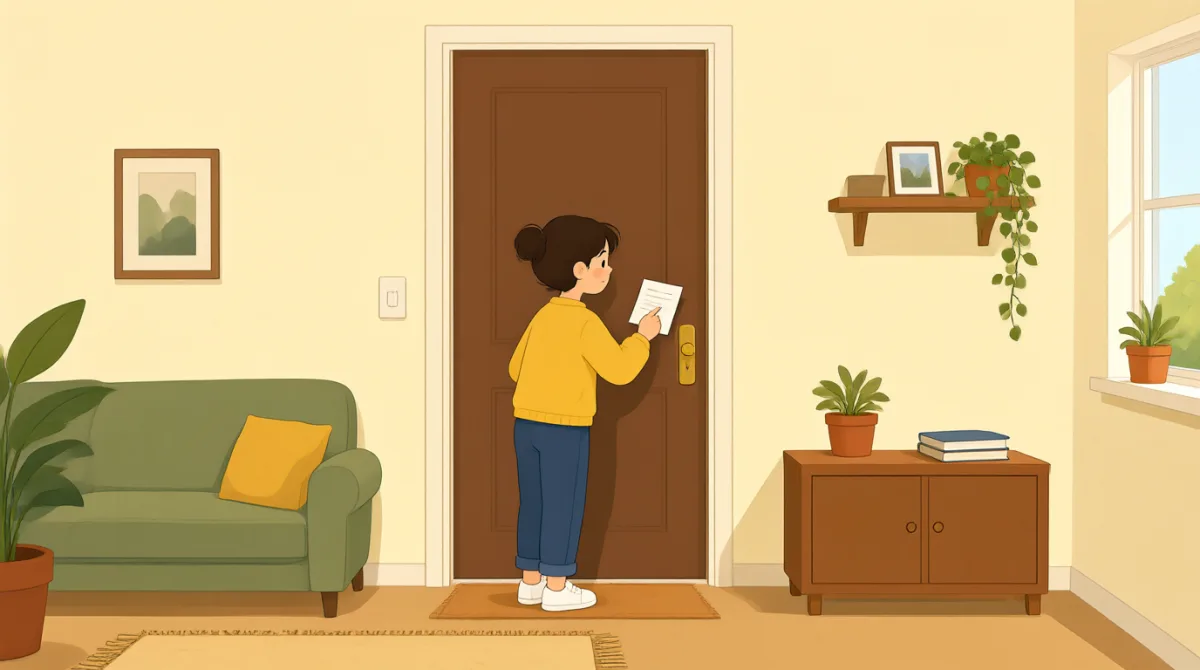

Hi, I'm Emma, your neighbor from downstairs.
สวัสดีค่ะ ฉันเอมมา เป็นเพื่อนบ้านห้องชั้นล่างค่ะ

Oh, hi Emma. Jack, nice to meet you. Is everything okay?
อ๋อ สวัสดีครับเอมมา ผมแจ็ก ยินดีที่ได้รู้จักครับ มีอะไรหรือเปล่าครับ
Yes, mostly. I just wanted to gently mention that for the past few evenings, there's been some rather loud music or stomping sounds coming from upstairs. It's making it a bit hard to relax.
ค่ะ โดยรวมก็ไม่มีอะไรค่ะ แค่อยากบอกอย่างสุภาพว่า ช่วงสองสามคืนที่ผ่านมา มีเสียงเพลงค่อนข้างดังหรือเสียงเดินกระแทกเท้าจากชั้นบนค่ะ ทำให้พักผ่อนได้ยากขึ้นนิดหน่อย
Oh, I'm so sorry! I had no idea it was bothering you. We've been trying to keep things down, but sometimes we get carried away. Is there a specific time it's worst?
โอ้ ขอโทษจริง ๆ ครับ! ผมไม่รู้เลยว่ามันรบกวนคุณ พวกเราพยายามลดเสียงกันแล้ว แต่บางทีก็เผลอเสียงดังไปหน่อย ช่วงเวลาไหนที่เสียงดังที่สุดครับ
It's usually been in the late evenings, around 9 or 10 PM. I understand things happen, but if you could just be a little more mindful during those hours, it would be a great help.
ส่วนใหญ่เป็นช่วงดึกค่ะ ประมาณสามทุ่มหรือสี่ทุ่ม ฉันเข้าใจว่าบางทีก็อาจมีเรื่องที่เลี่ยงไม่ได้ แต่ถ้าช่วยระวังเสียงในช่วงเวลานั้นอีกสักนิด ก็จะช่วยได้มากเลยค่ะ
Absolutely, I completely understand. We'll definitely try to be more careful, especially in the evenings. Thanks for letting me know directly instead of letting it build up.
ได้เลยครับ ผมเข้าใจดีครับ พวกเราจะพยายามระวังให้มากขึ้น โดยเฉพาะตอนเย็น ขอบคุณที่มาบอกผมตรง ๆ แทนที่จะปล่อยให้เรื่องบานปลายครับ
No problem! I appreciate your understanding. I just wanted to address it friendly.
ไม่เป็นไรค่ะ ขอบคุณที่เข้าใจนะคะ แค่อยากพูดถึงเรื่องนี้อย่างเป็นมิตรค่ะ
Of course. Again, really sorry for the disturbance. We'll be more mindful from now on.
แน่นอนครับ ต้องขอโทษอีกครั้งที่รบกวนนะครับ จากนี้ไปพวกเราจะระวังให้มากขึ้นครับ
คำศัพท์10
- neighborเพื่อนบ้าน
A person who lives next to you or in the same building. In English-speaking cultures, neighbors often communicate politely about shared issues like noise to keep good relations.
คนที่อาศัยอยู่ข้างบ้านหรือในอาคารเดียวกับคุณ ในวัฒนธรรมที่ใช้ภาษาอังกฤษ เพื่อนบ้านมักคุยกันอย่างสุภาพเกี่ยวกับเรื่องที่กระทบกัน เช่น เสียงดัง เพื่อรักษาความสัมพันธ์ที่ดี
- downstairsชั้นล่าง
On a lower floor in a building. Use this to describe your location relative to someone else's apartment, like 'the apartment downstairs' when noise comes from above.
อยู่บนชั้นที่ต่ำกว่าในอาคาร ใช้บอกตำแหน่งที่อยู่ของคุณเมื่อเทียบกับอพาร์ตเมนต์ของอีกคน เช่น 'the apartment downstairs' (อพาร์ตเมนต์ชั้นล่าง) เมื่อมีเสียงดังมาจากด้านบน
- gentlyอย่างนุ่มนวล
In a soft, careful, or mild way, without being direct or rude. It's useful for starting a complaint politely to avoid conflict.
ทำหรือพูดอย่างอ่อนโยน ระมัดระวัง หรือไม่รุนแรง โดยไม่พูดตรงจนดูหยาบคาย คำนี้มีประโยชน์เมื่อต้องเริ่มพูดถึงปัญหาอย่างสุภาพเพื่อหลีกเลี่ยงความขัดแย้ง
- mentionพูดถึง
To refer to something briefly or casually. In conversations, say 'I just wanted to mention' to bring up a problem without sounding accusatory.
กล่าวถึงบางสิ่งสั้น ๆ หรืออย่างไม่เป็นทางการ ในบทสนทนา คุณพูดว่า 'I just wanted to mention' เพื่อหยิบยกปัญหาขึ้นมาพูดโดยไม่ทำให้อีกฝ่ายรู้สึกว่าถูกกล่าวโทษ
- stompingเสียงเดินกระแทกเท้า
Walking heavily with loud steps that make noise. Common in apartment complaints; describe sounds like 'stomping sounds' to explain the issue clearly.
การเดินลงน้ำหนักแรงจนเกิดเสียงดัง มักใช้พูดถึงเรื่องร้องเรียนในอพาร์ตเมนต์ เช่น 'stomping sounds' (เสียงเดินกระแทกเท้า) เพื่ออธิบายปัญหาให้ชัดเจน
- relaxผ่อนคลาย
To rest and feel calm, especially after work. When complaining about noise, you can say it's hard to relax to show how it affects your daily life.
พักและรู้สึกสงบ โดยเฉพาะหลังเลิกงาน เวลาพูดถึงปัญหาเสียงดัง คุณบอกว่าเป็นเรื่องยากที่จะผ่อนคลาย เพื่อให้เห็นว่าเสียงดังส่งผลต่อชีวิตประจำวันอย่างไร
- botheringรบกวน
Causing annoyance or disturbance to someone. Use in apologies like 'I'm sorry it's bothering you' to show empathy in neighbor disputes.
ทำให้ใครบางคนรู้สึกรำคาญหรือถูกรบกวน ใช้ในคำขอโทษอย่าง 'I'm sorry it's bothering you' (ขอโทษที่มันรบกวนคุณ) เพื่อแสดงความเข้าใจเมื่อมีปัญหากับเพื่อนบ้าน
- carried awayเผลอทำอะไรเพลินจนเกินไป
To become so excited or involved that you forget about others or time. It's a common idiom for explaining why noise happens, like during parties.
ตื่นเต้นหรือมีส่วนร่วมกับบางสิ่งมากจนลืมนึกถึงคนอื่นหรือลืมเวลา เป็นสำนวนที่ใช้กันทั่วไปเพื่ออธิบายว่าทำไมถึงเสียงดัง เช่น ระหว่างงานเลี้ยง
- mindfulคำนึงถึง
Being careful and aware of your actions and their effects on others. Request someone to 'be more mindful' as a polite way to ask for quieter behavior.
ระมัดระวังและตระหนักว่าการกระทำของตัวเองส่งผลต่อผู้อื่นอย่างไร คุณขอให้ใครสักคน 'be more mindful' เพื่อขออย่างสุภาพให้เขาลดเสียงลง
- disturbanceการรบกวน
An interruption or annoyance, like noise that bothers people. Formal but useful in complaints; say 'sorry for the disturbance' to apologize sincerely.
การขัดจังหวะหรือทำให้รำคาญ เช่น เสียงดังที่รบกวนผู้อื่น เป็นคำค่อนข้างเป็นทางการแต่ใช้ได้ดีในการร้องเรียน คุณพูดว่า 'sorry for the disturbance' เพื่อขอโทษอย่างจริงใจ
ประโยคสำคัญ10
- 1
Hi, I'm Emma, your neighbor from downstairs.
สวัสดีค่ะ ฉันเอมมา เป็นเพื่อนบ้านห้องชั้นล่างค่ะ
This is a polite introduction when approaching a neighbor. It uses 'your neighbor from downstairs' to specify location and build rapport. Useful for starting any neighborly conversation; practice simple self-introduction with location for clarity.
นี่เป็นการแนะนำตัวอย่างสุภาพเมื่อต้องเข้าไปคุยกับเพื่อนบ้าน วลี 'your neighbor from downstairs' ระบุตำแหน่งที่อยู่และช่วยสร้างความคุ้นเคย เหมาะสำหรับเริ่มบทสนทนากับเพื่อนบ้าน ลองฝึกแนะนำตัวสั้น ๆ พร้อมบอกตำแหน่งที่อยู่เพื่อให้เข้าใจชัดเจน
- 2
I just wanted to gently mention that...
แค่อยากพูดถึงเรื่องนี้อย่างสุภาพว่า...
A soft way to raise an issue without blame. 'Gently mention' softens the complaint, and the structure 'I just wanted to [verb]' expresses hesitation politely. Ideal for intermediate learners to handle sensitive topics like noise; note the adverb 'gently' for mild tone.
เป็นวิธีพูดถึงปัญหาอย่างนุ่มนวลโดยไม่กล่าวโทษ วลี 'Gently mention' ช่วยทำให้คำร้องเรียนฟังดูเบาลง ส่วนโครงสร้าง 'I just wanted to [verb]' แสดงความเกรงใจอย่างสุภาพ เหมาะสำหรับผู้เรียนระดับกลางเมื่อต้องพูดถึงเรื่องละเอียดอ่อน เช่น เสียงดัง สังเกตว่าใช้คำกริยาวิเศษณ์ 'gently' เพื่อให้ประโยคฟังดูนุ่มนวล
- 3
There's been some rather loud music or stomping sounds coming from upstairs.
ช่วงนี้มีเสียงเพลงค่อนข้างดังหรือเสียงเดินกระแทกเท้ามาจากชั้นบนค่ะ
Describes the problem factually. 'Rather loud' means quite loud, and 'coming from upstairs' specifies the source. This sentence pattern is useful for reporting issues objectively; it uses present perfect 'has been' for ongoing actions over time.
ประโยคนี้อธิบายปัญหาตามข้อเท็จจริง 'Rather loud' หมายถึงค่อนข้างดัง และ 'coming from upstairs' ระบุว่าเสียงมาจากที่ไหน รูปแบบประโยคนี้มีประโยชน์เมื่อต้องรายงานปัญหาอย่างเป็นกลาง และใช้ present perfect 'has been' เพื่อพูดถึงสิ่งที่เกิดขึ้นต่อเนื่องมาเป็นระยะเวลาหนึ่ง
- 4
It's making it a bit hard to relax.
มันทำให้พักผ่อนได้ยากขึ้นนิดหน่อยค่ะ
Explains the impact on you. 'Making it hard to [verb]' shows cause and effect simply. 'A bit' softens the complaint. Great for expressing how noise affects daily life; teaches gerund 'relaxing' after 'hard to'.
ประโยคนี้อธิบายผลกระทบที่เกิดกับตัวคุณ 'Making it hard to [verb]' ใช้บอกเหตุและผลอย่างง่าย ๆ ส่วน 'a bit' ช่วยทำให้คำร้องเรียนฟังดูเบาลง เหมาะสำหรับบอกว่าเสียงดังส่งผลต่อชีวิตประจำวันอย่างไร และสอนการใช้คำกริยารูป 'relaxing' หลัง 'hard to'
- 5
Oh, I'm so sorry! I had no idea it was bothering you.
โอ้ ขอโทษจริง ๆ ครับ! ผมไม่รู้เลยว่ามันรบกวนคุณ
A standard apology response. 'I'm so sorry' expresses regret strongly, and 'I had no idea' shows surprise. Use this when someone points out your mistake; past perfect 'had no idea' indicates prior unawareness.
เป็นคำตอบขอโทษที่ใช้กันทั่วไป 'I'm so sorry' แสดงความเสียใจอย่างมาก และ 'I had no idea' แสดงความประหลาดใจ ใช้เมื่อมีคนบอกว่าคุณทำผิดพลาด ส่วน past perfect ใน 'had no idea' สื่อว่าก่อนหน้านี้ไม่รู้เรื่องนี้
- 6
We've been trying to keep things down, but sometimes we get carried away.
พวกเราพยายามลดเสียงกันแล้ว แต่บางทีก็เผลอทำอะไรเพลินจนเกินไปครับ
Explains efforts and excuses mildly. 'Keep things down' means lower volume; 'get carried away' is an idiom for losing control. Useful for responding to complaints; present continuous 'we've been trying' shows ongoing effort.
ประโยคนี้อธิบายความพยายามและให้เหตุผลอย่างไม่แข็งกร้าว 'Keep things down' หมายถึงลดระดับเสียง ส่วน 'get carried away' เป็นสำนวนที่หมายถึงควบคุมตัวเองไม่อยู่ มีประโยชน์เมื่อตอบรับคำร้องเรียน และ present perfect continuous ใน 'we've been trying' แสดงถึงความพยายามที่ดำเนินมาอย่างต่อเนื่อง
- 7
If you could just be a little more mindful during those hours, it would be a great help.
ถ้าช่วยระวังให้มากขึ้นอีกสักนิดในช่วงเวลาเหล่านั้น ก็จะช่วยได้มากเลยค่ะ
A conditional request for change. 'If you could [verb]' is polite for suggestions; 'a little more' means slightly increased. Perfect for neighbor solutions; teaches conditional 'would be' for hypothetical politeness.
นี่คือคำขอให้เปลี่ยนแปลงแบบมีเงื่อนไข 'If you could [verb]' เป็นวิธีพูดข้อเสนออย่างสุภาพ และ 'a little more' หมายถึงเพิ่มขึ้นอีกเล็กน้อย เหมาะสำหรับหาทางแก้ปัญหาร่วมกับเพื่อนบ้าน และสอนการใช้ conditional 'would be' เพื่อแสดงความสุภาพแบบสมมติ
- 8
Thanks for letting me know directly instead of letting it build up.
ขอบคุณที่มาบอกผมตรง ๆ แทนที่จะปล่อยให้เรื่องบานปลายครับ
Shows appreciation for communication. 'Letting me know directly' means telling face-to-face; 'build up' means worsen over time. Use to encourage open dialogue; gerund 'letting' after preposition 'for'.
ประโยคนี้แสดงความขอบคุณที่อีกฝ่ายสื่อสารกันตรงไปตรงมา 'Letting me know directly' หมายถึงมาบอกกันต่อหน้า ส่วน 'build up' หมายถึงแย่ลงเรื่อย ๆ ใช้ประโยคนี้เพื่อสนับสนุนให้พูดคุยกันอย่างเปิดอก และสังเกตการใช้ gerund 'letting' หลังคำบุพบท 'for'
- 9
No problem! I appreciate your understanding.
ไม่เป็นไรค่ะ ขอบคุณที่เข้าใจนะคะ
A friendly close to the talk. 'No problem' means it's okay; 'I appreciate' expresses thanks. Common in positive resolutions; teaches verb 'appreciate' with gerund 'your understanding' for gratitude.
เป็นวิธีจบบทสนทนาอย่างเป็นมิตร 'No problem' หมายถึงไม่เป็นไร และ 'I appreciate' ใช้แสดงความขอบคุณ พบได้บ่อยเมื่อจบปัญหากันด้วยดี และสอนการใช้คำกริยา 'appreciate' กับ gerund 'your understanding' เพื่อแสดงความขอบคุณ
- 10
Again, really sorry for the disturbance. We'll be more mindful from now on.
ต้องขอโทษอีกครั้งที่รบกวนนะครับ จากนี้ไปพวกเราจะระวังให้มากขึ้นครับ
Reiterates apology and promise. 'Again' emphasizes repetition; 'from now on' means starting immediately. Useful ending for complaints; future 'will be' for commitments, and 'mindful' reinforces awareness.
ประโยคนี้ย้ำคำขอโทษและให้คำมั่น 'Again' เน้นว่าขอโทษอีกครั้ง ส่วน 'from now on' หมายถึงเริ่มตั้งแต่ตอนนี้ เหมาะสำหรับใช้ปิดท้ายการพูดคุยเรื่องร้องเรียน ใช้ future 'will be' เพื่อให้คำมั่น และใช้ 'mindful' เพื่อย้ำถึงการใส่ใจ