Initial Approach: Gentle Request
初次交涉:禮貌性請求
You notice persistent noise (e.g., loud music, stomping) from a neighbor and decide to politely knock on their door or leave a friendly note to ask them to keep the noise down.
你注意到鄰居持續發出噪音(例如:響亮的音樂、跺腳聲),決定禮貌地敲門或留下一張友好的便條,請他們減小噪音。
對話8
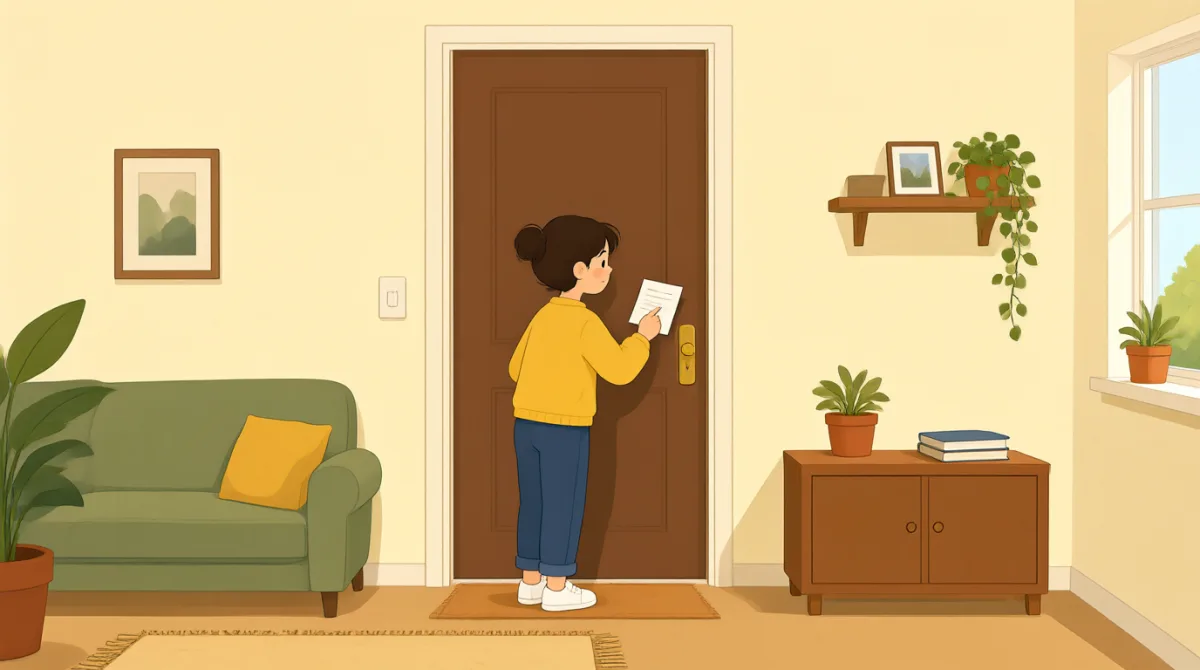

Hi, I'm Emma, your neighbor from downstairs.
你好,我是艾瑪,你樓下的鄰居。

Oh, hi Emma. Jack, nice to meet you. Is everything okay?
哦,你好艾瑪。我是傑克,很高興認識你。有什麼事嗎?
Yes, mostly. I just wanted to gently mention that for the past few evenings, there's been some rather loud music or stomping sounds coming from upstairs. It's making it a bit hard to relax.
嗯,差不多。我只是想提一下,過去幾個晚上,樓上一直有相當大的音樂聲或踩踏聲。這讓我有點難以放鬆。
Oh, I'm so sorry! I had no idea it was bothering you. We've been trying to keep things down, but sometimes we get carried away. Is there a specific time it's worst?
哦,真是抱歉!我完全不知道打擾到你了。我們一直在努力控制音量,但有時會忘乎所以。有沒有哪個具體的時間最吵?
It's usually been in the late evenings, around 9 or 10 PM. I understand things happen, but if you could just be a little more mindful during those hours, it would be a great help.
通常是在晚上九點或十點左右。我理解有些事情是難以避免的,但如果你們能在那些時間段多加留意,那將非常有幫助。
Absolutely, I completely understand. We'll definitely try to be more careful, especially in the evenings. Thanks for letting me know directly instead of letting it build up.
好的,我完全理解。我們一定會更加小心,尤其是在晚上。謝謝你直接告訴我,而不是讓問題積壓。
No problem! I appreciate your understanding. I just wanted to address it friendly.
沒問題!感謝你的理解。我只是想友好地解決這個問題。
Of course. Again, really sorry for the disturbance. We'll be more mindful from now on.
當然。再次為打擾你感到非常抱歉。從現在開始我們會更加註意。
詞彙10
- neighbor鄰居
A person who lives next to you or in the same building. In English-speaking cultures, neighbors often communicate politely about shared issues like noise to keep good relations.
住在你隔壁或同一棟樓裡的人。在英語國家,人們常會禮貌地和鄰居溝通噪音等共同問題,以保持良好的關係。
- downstairs樓下
On a lower floor in a building. Use this to describe your location relative to someone else's apartment, like 'the apartment downstairs' when noise comes from above.
在建築物較低的樓層。可以用這個詞說明你相對於別人住在哪裡,比如樓上有噪音時說“樓下的公寓”。
- gently輕聲地;委婉地
In a soft, careful, or mild way, without being direct or rude. It's useful for starting a complaint politely to avoid conflict.
用輕柔、謹慎或溫和的方式,不直接,也不失禮。禮貌地提出抱怨時,用這個詞能避免引起衝突。
- mention提及;提一下
To refer to something briefly or casually. In conversations, say 'I just wanted to mention' to bring up a problem without sounding accusatory.
簡短或隨意地說到某件事。在交談中,可以說 'I just wanted to mention',委婉地提出問題,又不會顯得在指責對方。
- stomping重重的腳步聲
Walking heavily with loud steps that make noise. Common in apartment complaints; describe sounds like 'stomping sounds' to explain the issue clearly.
走路時腳步很重,發出很大聲響。在公寓噪音投訴中很常見,可以用 'stomping sounds' 來清楚描述問題。
- relax放鬆
To rest and feel calm, especially after work. When complaining about noise, you can say it's hard to relax to show how it affects your daily life.
休息並讓自己平靜下來,尤其是在下班之後。抱怨噪音時,可以說自己很難放鬆,說明噪音對日常生活的影響。
- bothering打擾;使煩惱
Causing annoyance or disturbance to someone. Use in apologies like 'I'm sorry it's bothering you' to show empathy in neighbor disputes.
讓某人感到煩惱或受到干擾。在鄰里糾紛中道歉時,可以說 'I'm sorry it's bothering you',表達體諒。
- carried away忘乎所以;太投入
To become so excited or involved that you forget about others or time. It's a common idiom for explaining why noise happens, like during parties.
因為太興奮或太投入,忘了顧及別人或時間。這是一個常見習語,可以用來解釋派對等場合為什麼會吵鬧。
- mindful留意;注意
Being careful and aware of your actions and their effects on others. Request someone to 'be more mindful' as a polite way to ask for quieter behavior.
謹慎行事,並留意自己的行為會怎樣影響別人。禮貌地請對方 'be more mindful',就是請對方多注意些,儘量保持安靜。
- disturbance打擾;滋擾
An interruption or annoyance, like noise that bothers people. Formal but useful in complaints; say 'sorry for the disturbance' to apologize sincerely.
造成干擾或煩惱的事,比如影響他人的噪音。這個詞比較正式,但在投訴時很實用;可以說 'sorry for the disturbance',誠懇地表示歉意。
關鍵句10
- 1
Hi, I'm Emma, your neighbor from downstairs.
你好,我是艾瑪,住在你樓下。
This is a polite introduction when approaching a neighbor. It uses 'your neighbor from downstairs' to specify location and build rapport. Useful for starting any neighborly conversation; practice simple self-introduction with location for clarity.
這是上前和鄰居打招呼時的一種禮貌自我介紹。'your neighbor from downstairs'(住在你樓下的鄰居)說明了住處位置,也能拉近彼此距離。和鄰居交談時,可以先簡單介紹自己和住處,讓對方更容易瞭解情況。
- 2
I just wanted to gently mention that...
我只是想委婉地提一下……
A soft way to raise an issue without blame. 'Gently mention' softens the complaint, and the structure 'I just wanted to [verb]' expresses hesitation politely. Ideal for intermediate learners to handle sensitive topics like noise; note the adverb 'gently' for mild tone.
這是不帶責備地提出問題的一種委婉說法。'Gently mention' 能讓抱怨聽起來不那麼生硬;'I just wanted to [verb]' 則禮貌地表達了些許猶豫。和鄰居談噪音這類敏感問題時很適用。注意副詞 'gently' 能讓語氣更溫和。
- 3
There's been some rather loud music or stomping sounds coming from upstairs.
樓上一直傳來挺響的音樂聲或重重的腳步聲。
Describes the problem factually. 'Rather loud' means quite loud, and 'coming from upstairs' specifies the source. This sentence pattern is useful for reporting issues objectively; it uses present perfect 'has been' for ongoing actions over time.
這句話客觀地描述了問題。'Rather loud' 的意思是相當響;'coming from upstairs' 則說明聲音來自樓上。這個句型適合客觀地反映問題;其中的現在完成時 'has been' 用來表示一段時間內持續發生的情況。
- 4
It's making it a bit hard to relax.
這讓我有點難以放鬆。
Explains the impact on you. 'Making it hard to [verb]' shows cause and effect simply. 'A bit' softens the complaint. Great for expressing how noise affects daily life; teaches gerund 'relaxing' after 'hard to'.
'Making it hard to [verb]' 可以簡單地說明原因和結果。'A bit' 能讓抱怨聽起來更委婉。這種說法很適合表達噪音對日常生活的影響;注意 'hard to' 後面接動詞原形 'relax'。
- 5
Oh, I'm so sorry! I had no idea it was bothering you.
哦,真的很抱歉!我完全不知道這會打擾到你。
A standard apology response. 'I'm so sorry' expresses regret strongly, and 'I had no idea' shows surprise. Use this when someone points out your mistake; past perfect 'had no idea' indicates prior unawareness.
這是常見的道歉回應。'I'm so sorry' 強烈地表達歉意,'I had no idea' 則表示驚訝。別人指出你的疏忽時,可以這樣回應;'had no idea' 表示之前並不知情。
- 6
We've been trying to keep things down, but sometimes we get carried away.
我們一直在儘量控制音量,但有時會忘乎所以。
Explains efforts and excuses mildly. 'Keep things down' means lower volume; 'get carried away' is an idiom for losing control. Useful for responding to complaints; present continuous 'we've been trying' shows ongoing effort.
這句話溫和地說明了自己做出的努力,也解釋了情況。'Keep things down' 的意思是把音量調低;'get carried away' 是一個習語,表示忘乎所以。回應別人的投訴時可以用這句話;'we've been trying' 表示一直在努力。
- 7
If you could just be a little more mindful during those hours, it would be a great help.
如果你們在那幾個時間段能多注意一點,那就幫大忙了。
A conditional request for change. 'If you could [verb]' is polite for suggestions; 'a little more' means slightly increased. Perfect for neighbor solutions; teaches conditional 'would be' for hypothetical politeness.
這是一個委婉地請求對方改變做法的條件句。'If you could [verb]' 可以禮貌地提出建議;'a little more' 表示稍微多一些。和鄰居商量解決辦法時很適用;用 'would be' 構成假設語氣,聽起來更加客氣。
- 8
Thanks for letting me know directly instead of letting it build up.
謝謝你直接告訴我,而不是讓問題越積越大。
Shows appreciation for communication. 'Letting me know directly' means telling face-to-face; 'build up' means worsen over time. Use to encourage open dialogue; gerund 'letting' after preposition 'for'.
這句話表達了對坦誠溝通的感謝。'Letting me know directly' 是指直接告訴我;'build up' 則表示問題逐漸加重。可以用這句話鼓勵彼此開誠佈公;介詞 'for' 後面接動名詞 'letting'。
- 9
No problem! I appreciate your understanding.
沒關係!謝謝你的理解。
A friendly close to the talk. 'No problem' means it's okay; 'I appreciate' expresses thanks. Common in positive resolutions; teaches verb 'appreciate' with gerund 'your understanding' for gratitude.
這是友好結束談話的一種說法。'No problem' 意思是“沒關係”;'I appreciate' 用來表達感謝。在問題順利解決時很常用;表達感謝時,動詞 'appreciate' 後可以接動名詞短語 'your understanding'。
- 10
Again, really sorry for the disturbance. We'll be more mindful from now on.
再次為打擾你感到非常抱歉。從現在起,我們會多加註意。
Reiterates apology and promise. 'Again' emphasizes repetition; 'from now on' means starting immediately. Useful ending for complaints; future 'will be' for commitments, and 'mindful' reinforces awareness.
這句話再次表達歉意,並作出承諾。'Again' 強調再次道歉;'from now on' 意思是從現在開始。適合作為投訴對話的結束語;用將來時 'will be' 表示承諾,而 'mindful' 再次強調會留意自己的行為。