At a Public Venue/Event
در یک مکان یا رویداد عمومی
You are at a public venue (e.g., library, conference, airport lounge) and see a Wi-Fi network available. You are unsure how to connect or where to find the password and ask for help.
در یک مکان عمومی (مثلاً کتابخانه، همایش یا سالن انتظار فرودگاه) هستید و شبکهٔ وایفایای را میبینید که در دسترس است. نمیدانید چطور وصل شوید یا رمز را از کجا پیدا کنید، برای همین کمک میخواهید.
گفتوگو6
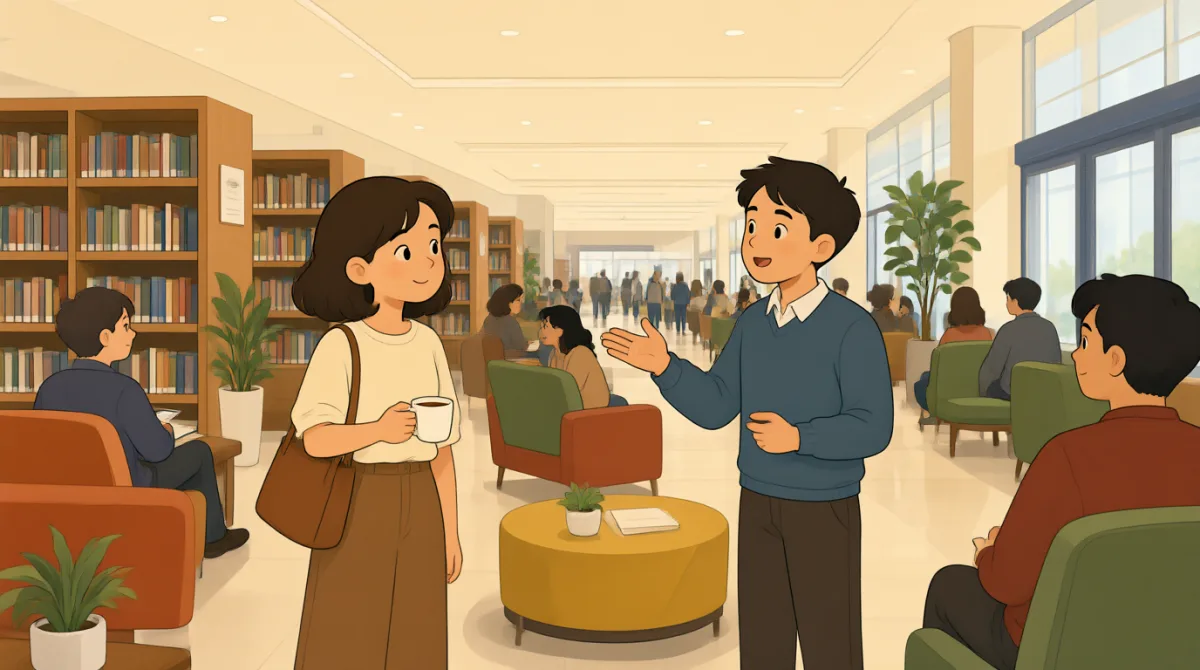

Excuse me, I'm trying to connect to the Wi-Fi here. Is there a password or specific instructions?
ببخشید، میخواهم به وایفای اینجا وصل شوم. رمز یا دستورالعمل خاصی دارد؟

Oh, sure. You're looking for the 'VenueGuest' network, right? The password should be displayed on a sign near the main entrance or at the information desk.
حتماً. دنبال شبکهٔ «VenueGuest» میگردید، درسته؟ رمز باید روی تابلویی نزدیک ورودی اصلی یا پیشخوان اطلاعات نوشته شده باشد.
Ah, okay. I only saw 'VenueGuest' and 'VenueStaff'. I'm guessing 'VenueGuest' is the one for visitors.
آها، باشه. فقط «VenueGuest» و «VenueStaff» رو دیدم. حدس میزنم «VenueGuest» برای مراجعهکنندههاست.
Exactly. If you can't find the sign, sometimes it's on a small card at the reception or checkout counter as well.
دقیقاً. اگر تابلو رو پیدا نکردید، گاهی یه کارت کوچیک هم در پذیرش یا کنار صندوق هست.
Got it. I'll check by the entrance again. Thanks for the help!
متوجه شدم. دوباره نزدیک ورودی رو نگاه میکنم. ممنون از کمکتون!
No problem! Let me know if you still have trouble.
خواهش میکنم! اگر باز هم مشکلی داشتید، بهم بگید.
واژگان8
- excuse meببخشید
A polite phrase used to get someone's attention or interrupt them gently, like starting a conversation in public.
عبارتی مؤدبانه برای جلب توجه کسی یا قطعکردن ملایم صحبت اوست؛ مثلاً برای شروع صحبت در یک مکان عمومی.
- connectوصل شدن
To join or link a device, such as a phone or laptop, to a Wi-Fi network for internet access.
یعنی دستگاهی مثل گوشی یا لپتاپ را به شبکهٔ وایفای متصل کنید تا به اینترنت دسترسی داشته باشید.
- passwordرمز عبور
A secret code or word needed to access something secure, like a Wi-Fi network.
کلمه یا کد محرمانهای که برای دسترسی به چیزی امن، مثل شبکهٔ وایفای، لازم است.
- networkشبکه
The name of a Wi-Fi signal or system that allows devices to connect to the internet, like 'VenueGuest'.
نام سیگنال یا سامانهٔ وایفایای که دستگاهها را به اینترنت وصل میکند؛ مثل «VenueGuest».
- signتابلو
A notice or board with written information, often placed in public places to display details like passwords.
اعلان یا صفحهای که اطلاعاتی روی آن نوشته شده است و معمولاً در مکانهای عمومی برای نمایش مواردی مثل رمز عبور قرار میگیرد.
- entranceورودی
The main door or way to enter a building or area, where signs or information might be located.
درِ اصلی یا راه ورود به ساختمان یا محوطه؛ ممکن است تابلوها یا اطلاعات را آنجا پیدا کنید.
- receptionپذیرش
The front desk or area in a building where visitors check in and get help or information.
پیشخوان یا بخشی در ورودی ساختمان که مراجعهکنندگان در آن ثبتنام میکنند و کمک یا اطلاعات میگیرند.
- troubleمشکل
A problem or difficulty, used here to offer more help if something goes wrong.
دردسر یا دشواری؛ اینجا برای پیشنهاد کمک بیشتر در صورت بروز مشکل به کار رفته است.
جملات کلیدی6
- 1
Excuse me, I'm trying to connect to the Wi-Fi here. Is there a password or specific instructions?
ببخشید، میخواهم به وایفای اینجا وصل شوم. رمز یا دستورالعمل خاصی دارد؟
This is a polite way to ask for help with Wi-Fi. It uses 'Excuse me' to start, present continuous 'I'm trying' for ongoing action, and a yes/no question to seek information. Useful for starting conversations in public places.
این جمله راهی مؤدبانه برای درخواست کمک دربارهٔ وایفای است. با عبارت «Excuse me» (ببخشید) شروع میشود، از حال استمراری «I'm trying» (دارم تلاش میکنم) برای بیان کاری که در جریان است استفاده میکند و در پایان با پرسش بله یا خیر، اطلاعات میخواهد. برای شروع صحبت در مکانهای عمومی کاربردی است.
- 2
You're looking for the 'VenueGuest' network, right?
دنبال شبکهٔ «VenueGuest» میگردید، درسته؟
This confirms what the person wants using a tag question 'right?' to check understanding. It's helpful for clarifying in helpful responses. The contraction 'You're' makes it natural and casual.
این جمله با پرسش تأییدی «right?» (درسته؟) بررسی میکند که درست متوجه شدهاید طرف مقابل دنبال چه چیزی است. برای روشنکردن منظور در پاسخهای کمککننده مفید است. شکل کوتاه «You're» باعث میشود جمله طبیعی و خودمانی باشد.
- 3
I'm guessing 'VenueGuest' is the one for visitors.
حدس میزنم «VenueGuest» برای مراجعهکنندههاست.
This expresses a logical assumption with 'I'm guessing' and 'is the one for' to explain purpose. It's useful when making educated guesses about options, like choosing the correct network.
با «I'm guessing» (حدس میزنم) فرضی منطقی را بیان میکنید و عبارت «is the one for» (همان موردِ مخصوصِ ... است) کاربرد چیزی را توضیح میدهد. این عبارتها هنگام حدسزدن دربارهٔ گزینهها، مثلاً انتخاب شبکهٔ درست، مفیدند.
- 4
If you can't find the sign, sometimes it's on a small card at the reception or checkout counter as well.
اگر تابلو را پیدا نکردید، گاهی یک کارت کوچک هم در پذیرش یا کنار صندوق هست.
This is a conditional sentence with 'If' for alternatives, and 'as well' meaning 'also'. It provides helpful options politely. Great for giving directions or suggestions in service situations.
این جملهٔ شرطی با «If» (اگر) گزینههای دیگری را مطرح میکند و «as well» یعنی «همچنین». جمله با لحنی مؤدبانه راهحلهای مفیدی پیشنهاد میدهد و برای راهنمایی یا پیشنهاد در موقعیتهای خدماتی مناسب است.
- 5
Got it. I'll check by the entrance again. Thanks for the help!
متوجه شدم. دوباره نزدیک ورودی را نگاه میکنم. ممنون از کمکتان!
'Got it' means 'I understand', followed by future 'I'll check' for planned action, and thanks to end positively. This pattern shows appreciation and closure in conversations.
«Got it» یعنی «متوجه شدم». بعد از آن، «I'll check» برای بیان کاری که تصمیم دارید انجام دهید به کار میرود و در پایان هم تشکر میکنید. این الگو برای نشاندادن قدردانی و پایاندادن مثبت به گفتگو مفید است.
- 6
No problem! Let me know if you still have trouble.
خواهش میکنم! اگر باز هم مشکلی داشتید، بهم بگید.
'No problem' is a casual way to say 'you're welcome', and 'Let me know' offers future help with a conditional 'if'. Useful for friendly, supportive responses in everyday interactions.
«No problem» روشی خودمانی برای گفتن «خواهش میکنم» است و «Let me know» با استفاده از شرط «if» پیشنهاد کمک در آینده میدهد. این عبارتها برای پاسخهای دوستانه و حمایتگرانه در گفتگوهای روزمره کاربرد دارند.