At a Public Venue/Event
জনসমাগমস্থল/অনুষ্ঠানে
You are at a public venue (e.g., library, conference, airport lounge) and see a Wi-Fi network available. You are unsure how to connect or where to find the password and ask for help.
আপনি কোনো জনসমাগমস্থলে (যেমন, লাইব্রেরি, সম্মেলন বা বিমানবন্দরের লাউঞ্জে) আছেন এবং একটি Wi-Fi নেটওয়ার্ক দেখতে পাচ্ছেন। কীভাবে সংযোগ করতে হয় বা পাসওয়ার্ড কোথায় পাবেন, তা বুঝতে না পেরে সাহায্য চাইছেন।
সংলাপ6
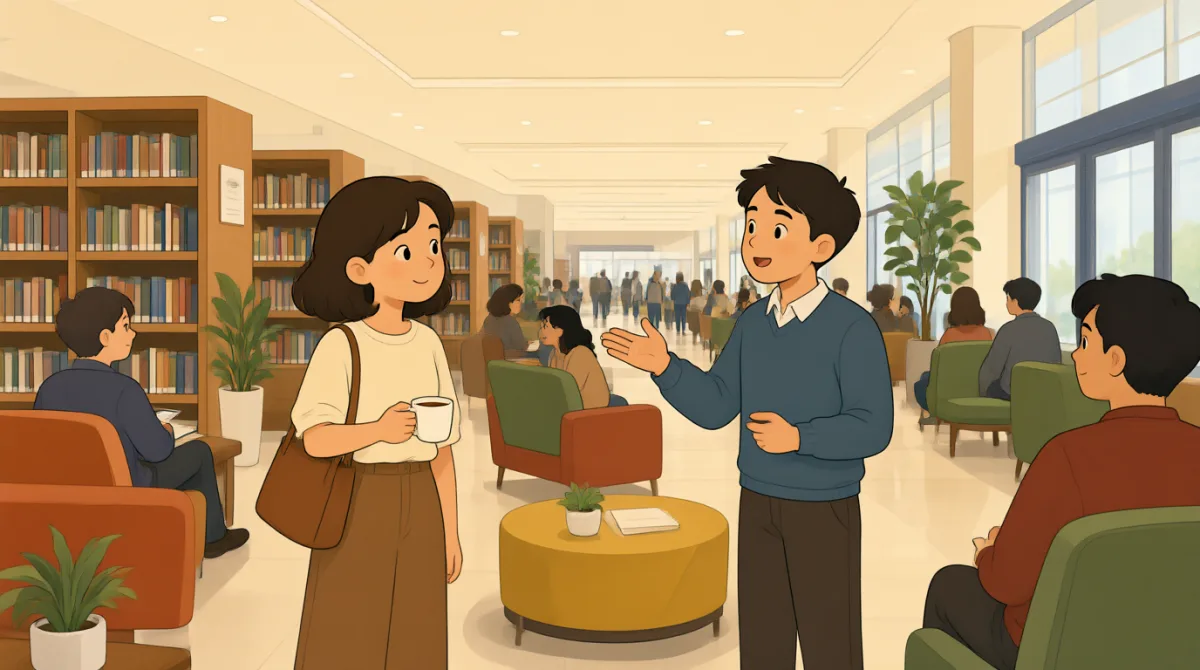

Excuse me, I'm trying to connect to the Wi-Fi here. Is there a password or specific instructions?
মাফ করবেন, আমি এখানকার Wi-Fi-তে সংযোগ করার চেষ্টা করছি। কোনো পাসওয়ার্ড বা নির্দিষ্ট নির্দেশনা আছে কি?

Oh, sure. You're looking for the 'VenueGuest' network, right? The password should be displayed on a sign near the main entrance or at the information desk.
ওহ, নিশ্চয়ই। আপনি ‘VenueGuest’ নেটওয়ার্কটি খুঁজছেন, তাই তো? পাসওয়ার্ডটি মূল প্রবেশপথের কাছে কোনো সাইনবোর্ডে অথবা তথ্যকেন্দ্রে লেখা থাকার কথা।
Ah, okay. I only saw 'VenueGuest' and 'VenueStaff'. I'm guessing 'VenueGuest' is the one for visitors.
আচ্ছা, বুঝলাম। আমি শুধু ‘VenueGuest’ আর ‘VenueStaff’ দেখেছি। আমার ধারণা, ‘VenueGuest’ দর্শনার্থীদের জন্য।
Exactly. If you can't find the sign, sometimes it's on a small card at the reception or checkout counter as well.
ঠিক তাই। সাইনবোর্ডটি খুঁজে না পেলে, কখনো কখনো অভ্যর্থনাকক্ষ বা বিল পরিশোধের কাউন্টারে রাখা ছোট কার্ডেও পাসওয়ার্ডটি থাকে।
Got it. I'll check by the entrance again. Thanks for the help!
বুঝেছি। আমি আবার প্রবেশপথের কাছে খুঁজে দেখব। সাহায্যের জন্য ধন্যবাদ!
No problem! Let me know if you still have trouble.
কোনো সমস্যা নেই! তারপরও অসুবিধা হলে আমাকে জানাবেন।
শব্দভান্ডার8
- excuse meমাফ করবেন
A polite phrase used to get someone's attention or interrupt them gently, like starting a conversation in public.
কারও দৃষ্টি আকর্ষণ করতে বা বিনয়ের সঙ্গে কথার মাঝে কথা বলতে এই ভদ্র বাক্যাংশটি ব্যবহার করা হয়—যেমন, জনসমাগমস্থলে আলাপ শুরু করার সময়।
- connectসংযোগ করা
To join or link a device, such as a phone or laptop, to a Wi-Fi network for internet access.
ইন্টারনেট ব্যবহারের জন্য ফোন বা ল্যাপটপের মতো কোনো যন্ত্রকে Wi-Fi নেটওয়ার্কের সঙ্গে যুক্ত করা।
- passwordপাসওয়ার্ড
A secret code or word needed to access something secure, like a Wi-Fi network.
নিরাপদ কোনো কিছুর প্রবেশাধিকার পেতে দরকারি গোপন সংকেত বা শব্দ—যেমন, Wi-Fi নেটওয়ার্কে ঢোকার জন্য।
- networkনেটওয়ার্ক
The name of a Wi-Fi signal or system that allows devices to connect to the internet, like 'VenueGuest'.
Wi-Fi সিগন্যাল বা ব্যবস্থার নাম, যার মাধ্যমে যন্ত্র ইন্টারনেটে যুক্ত হয়; যেমন, ‘VenueGuest’।
- signসাইনবোর্ড
A notice or board with written information, often placed in public places to display details like passwords.
লেখা তথ্যসহ কোনো নোটিশ বা বোর্ড, যা প্রায়ই জনসমাগমস্থলে পাসওয়ার্ডের মতো তথ্য জানানোর জন্য রাখা হয়।
- entranceপ্রবেশপথ
The main door or way to enter a building or area, where signs or information might be located.
কোনো ভবন বা এলাকায় ঢোকার প্রধান দরজা বা পথ। সেখানে সাইনবোর্ড বা তথ্য থাকতে পারে।
- receptionঅভ্যর্থনাকক্ষ
The front desk or area in a building where visitors check in and get help or information.
ভবনের প্রবেশমুখের সেই ডেস্ক বা এলাকা, যেখানে দর্শনার্থীরা নাম নথিভুক্ত করেন এবং সাহায্য বা তথ্য পান।
- troubleঅসুবিধা
A problem or difficulty, used here to offer more help if something goes wrong.
কোনো সমস্যা বা ঝামেলা। এখানে কিছু ঠিকমতো না হলে আরও সাহায্যের প্রস্তাব দিতে শব্দটি ব্যবহার করা হয়েছে।
গুরুত্বপূর্ণ বাক্য6
- 1
Excuse me, I'm trying to connect to the Wi-Fi here. Is there a password or specific instructions?
মাফ করবেন, আমি এখানকার Wi-Fi-তে সংযোগ করার চেষ্টা করছি। কোনো পাসওয়ার্ড বা নির্দিষ্ট নির্দেশনা আছে কি?
This is a polite way to ask for help with Wi-Fi. It uses 'Excuse me' to start, present continuous 'I'm trying' for ongoing action, and a yes/no question to seek information. Useful for starting conversations in public places.
Wi-Fi ব্যবহারে সাহায্য চাওয়ার এটি একটি ভদ্র উপায়। কথার শুরুতে 'Excuse me' (মাফ করবেন) এবং চলমান কাজ বোঝাতে 'I'm trying' (আমি চেষ্টা করছি) ব্যবহার করা হয়েছে। এরপর তথ্য জানতে হ্যাঁ-না প্রশ্ন করা হয়েছে। জনসমাগমস্থলে আলাপ শুরু করতে এটি কাজে লাগে।
- 2
You're looking for the 'VenueGuest' network, right?
আপনি ‘VenueGuest’ নেটওয়ার্কটি খুঁজছেন, তাই তো?
This confirms what the person wants using a tag question 'right?' to check understanding. It's helpful for clarifying in helpful responses. The contraction 'You're' makes it natural and casual.
'right?' দিয়ে শেষে ছোট একটি প্রশ্ন যোগ করে বক্তা নিশ্চিত হতে চাইছেন যে তিনি ঠিক বুঝেছেন কি না। সাহায্য করার সময় বিষয়টি পরিষ্কার করতে এটি কাজে লাগে। 'You're' হলো 'You are'-এর সংক্ষিপ্ত রূপ, যা কথাবার্তাকে স্বাভাবিক ও অনানুষ্ঠানিক শোনায়।
- 3
I'm guessing 'VenueGuest' is the one for visitors.
আমার ধারণা, ‘VenueGuest’ দর্শনার্থীদের জন্য।
This expresses a logical assumption with 'I'm guessing' and 'is the one for' to explain purpose. It's useful when making educated guesses about options, like choosing the correct network.
'I'm guessing' (আমার ধারণা) দিয়ে যুক্তিসংগত অনুমান বোঝানো হয়, আর 'is the one for' দিয়ে কোনো কিছুর উদ্দেশ্য ব্যাখ্যা করা হয়। সঠিক নেটওয়ার্ক বেছে নেওয়ার মতো বিকল্পের মধ্যে অনুমান করতে এই বাক্যাংশগুলো কাজে লাগে।
- 4
If you can't find the sign, sometimes it's on a small card at the reception or checkout counter as well.
সাইনবোর্ডটি খুঁজে না পেলে, কখনো কখনো অভ্যর্থনাকক্ষ বা বিল পরিশোধের কাউন্টারে রাখা ছোট কার্ডেও পাসওয়ার্ডটি থাকে।
This is a conditional sentence with 'If' for alternatives, and 'as well' meaning 'also'. It provides helpful options politely. Great for giving directions or suggestions in service situations.
'If' (যদি) দিয়ে বিকল্প পরিস্থিতি বোঝানো হয়েছে, আর 'as well' মানে 'এছাড়াও'। বাক্যটি ভদ্রভাবে আরও কিছু সম্ভাব্য জায়গার কথা জানায়। সেবামূলক পরিস্থিতিতে পথনির্দেশ বা পরামর্শ দিতে এটি বেশ কাজে লাগে।
- 5
Got it. I'll check by the entrance again. Thanks for the help!
বুঝেছি। আমি আবার প্রবেশপথের কাছে খুঁজে দেখব। সাহায্যের জন্য ধন্যবাদ!
'Got it' means 'I understand', followed by future 'I'll check' for planned action, and thanks to end positively. This pattern shows appreciation and closure in conversations.
'Got it' মানে 'বুঝেছি'। এরপর ভবিষ্যতে করার পরিকল্পনা বোঝাতে 'I'll check' (আমি খুঁজে দেখব) বলা হয়েছে, এবং ইতিবাচকভাবে কথা শেষ করতে ধন্যবাদ জানানো হয়েছে। কথোপকথনে কৃতজ্ঞতা প্রকাশ করে শেষ করার এই ধরনটি কাজে লাগে।
- 6
No problem! Let me know if you still have trouble.
কোনো সমস্যা নেই! তারপরও অসুবিধা হলে আমাকে জানাবেন।
'No problem' is a casual way to say 'you're welcome', and 'Let me know' offers future help with a conditional 'if'. Useful for friendly, supportive responses in everyday interactions.
'No problem' হলো 'আপনাকে স্বাগতম' বলার একটি অনানুষ্ঠানিক উপায়। আর 'Let me know' দিয়ে শর্তসাপেক্ষে ভবিষ্যতে সাহায্যের প্রস্তাব দেওয়া হয়—'if' মানে 'যদি'। দৈনন্দিন কথাবার্তায় বন্ধুত্বপূর্ণ ও সহায়কভাবে উত্তর দিতে এগুলো কাজে লাগে।