At a Public Venue/Event
सार्वजनिक स्थान/कार्यक्रम में
You are at a public venue (e.g., library, conference, airport lounge) and see a Wi-Fi network available. You are unsure how to connect or where to find the password and ask for help.
आप किसी सार्वजनिक स्थान (जैसे पुस्तकालय, सम्मेलन या हवाई अड्डे के लाउंज) में हैं और वहाँ उपलब्ध Wi-Fi नेटवर्क देखते हैं। आपको समझ नहीं आता कि उससे कैसे जुड़ें या पासवर्ड कहाँ मिलेगा, इसलिए आप मदद माँगते हैं।
संवाद6
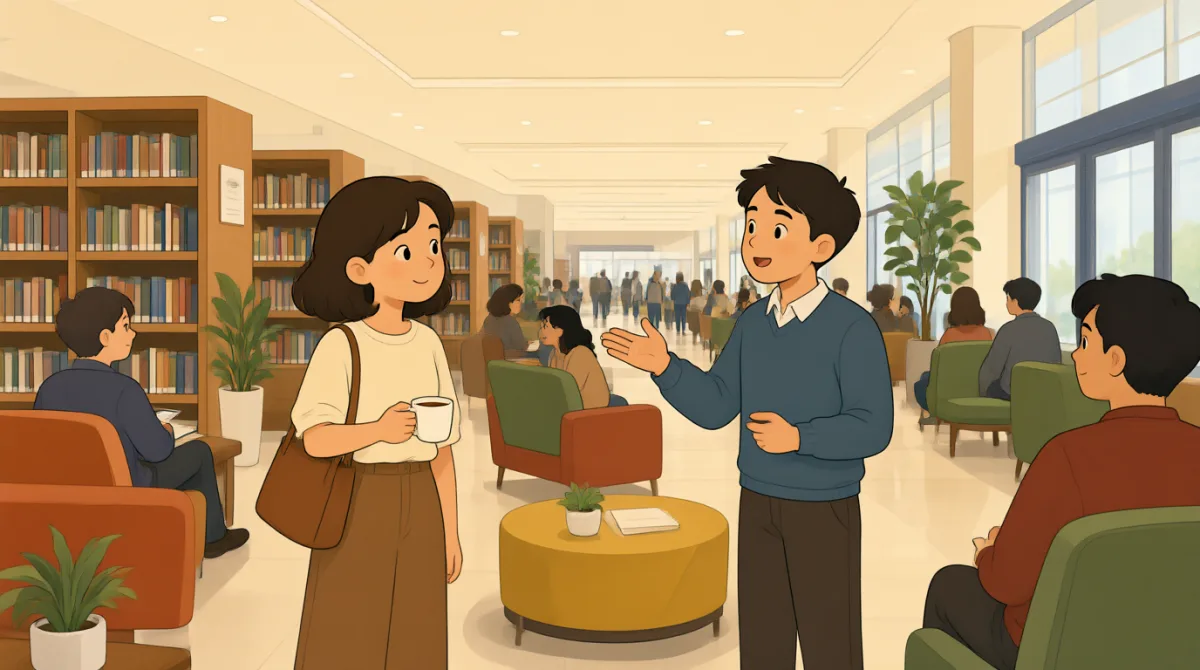

Excuse me, I'm trying to connect to the Wi-Fi here. Is there a password or specific instructions?
माफ़ कीजिए, मैं यहाँ के Wi-Fi से जुड़ने की कोशिश कर रही हूँ। क्या इसके लिए कोई पासवर्ड या खास निर्देश हैं?

Oh, sure. You're looking for the 'VenueGuest' network, right? The password should be displayed on a sign near the main entrance or at the information desk.
अरे, ज़रूर। आप 'VenueGuest' नेटवर्क ढूँढ़ रही हैं, है न? पासवर्ड मुख्य प्रवेश द्वार के पास या सूचना डेस्क पर लगे किसी बोर्ड पर लिखा होना चाहिए।
Ah, okay. I only saw 'VenueGuest' and 'VenueStaff'. I'm guessing 'VenueGuest' is the one for visitors.
अच्छा, ठीक है। मुझे सिर्फ़ 'VenueGuest' और 'VenueStaff' दिखे। मेरा अनुमान है कि 'VenueGuest' आगंतुकों के लिए है।
Exactly. If you can't find the sign, sometimes it's on a small card at the reception or checkout counter as well.
बिल्कुल। अगर आपको बोर्ड न मिले, तो कभी-कभी स्वागत कक्ष या भुगतान काउंटर पर एक छोटे कार्ड पर भी पासवर्ड लिखा होता है।
Got it. I'll check by the entrance again. Thanks for the help!
समझ गई। मैं फिर से प्रवेश द्वार के पास देखूँगी। मदद के लिए धन्यवाद!
No problem! Let me know if you still have trouble.
कोई बात नहीं! अगर फिर भी परेशानी हो, तो मुझे बताइएगा।
शब्दावली8
- excuse meमाफ़ कीजिए
A polite phrase used to get someone's attention or interrupt them gently, like starting a conversation in public.
किसी का ध्यान खींचने या विनम्रता से बीच में बोलने के लिए कहा जाने वाला वाक्यांश। सार्वजनिक जगह पर बातचीत शुरू करते समय इसका इस्तेमाल किया जा सकता है।
- connectजुड़ना
To join or link a device, such as a phone or laptop, to a Wi-Fi network for internet access.
इंटरनेट इस्तेमाल करने के लिए किसी डिवाइस, जैसे फ़ोन या लैपटॉप, को Wi-Fi नेटवर्क से जोड़ना।
- passwordपासवर्ड
A secret code or word needed to access something secure, like a Wi-Fi network.
किसी सुरक्षित चीज़ तक पहुँचने के लिए ज़रूरी गुप्त शब्द या कोड, जैसे Wi-Fi नेटवर्क का पासवर्ड।
- networkनेटवर्क
The name of a Wi-Fi signal or system that allows devices to connect to the internet, like 'VenueGuest'.
Wi-Fi सिग्नल या सिस्टम का नाम, जिससे डिवाइस इंटरनेट से जुड़ते हैं, जैसे 'VenueGuest'।
- signसूचना-पट्ट
A notice or board with written information, often placed in public places to display details like passwords.
लिखी हुई जानकारी वाला बोर्ड या नोटिस। सार्वजनिक जगहों पर इस पर पासवर्ड जैसी जानकारी लिखी हो सकती है।
- entranceप्रवेश द्वार
The main door or way to enter a building or area, where signs or information might be located.
किसी इमारत या जगह में आने का मुख्य दरवाज़ा या रास्ता। वहाँ बोर्ड या दूसरी जानकारी लगी हो सकती है।
- receptionस्वागत कक्ष
The front desk or area in a building where visitors check in and get help or information.
किसी इमारत का सामने वाला डेस्क या क्षेत्र, जहाँ आगंतुक अपना नाम दर्ज कराते हैं और मदद या जानकारी लेते हैं।
- troubleपरेशानी
A problem or difficulty, used here to offer more help if something goes wrong.
कोई समस्या या कठिनाई। यहाँ इसका इस्तेमाल यह कहने के लिए किया गया है कि कुछ गड़बड़ होने पर और मदद मिल सकती है।
मुख्य वाक्य6
- 1
Excuse me, I'm trying to connect to the Wi-Fi here. Is there a password or specific instructions?
माफ़ कीजिए, मैं यहाँ के Wi-Fi से जुड़ने की कोशिश कर रही हूँ। क्या इसके लिए कोई पासवर्ड या खास निर्देश हैं?
This is a polite way to ask for help with Wi-Fi. It uses 'Excuse me' to start, present continuous 'I'm trying' for ongoing action, and a yes/no question to seek information. Useful for starting conversations in public places.
यह Wi-Fi के बारे में मदद माँगने का विनम्र तरीका है। बातचीत शुरू करने के लिए इसमें 'Excuse me' (माफ़ कीजिए), जारी कोशिश बताने के लिए वर्तमान जारी काल 'I'm trying' और जानकारी माँगने के लिए हाँ-या-नहीं वाला सवाल इस्तेमाल किया गया है। सार्वजनिक जगहों पर बातचीत शुरू करने के लिए यह उपयोगी है।
- 2
You're looking for the 'VenueGuest' network, right?
आप 'VenueGuest' नेटवर्क ढूँढ़ रही हैं, है न?
This confirms what the person wants using a tag question 'right?' to check understanding. It's helpful for clarifying in helpful responses. The contraction 'You're' makes it natural and casual.
इस वाक्य में 'right?' जोड़कर आप पुष्टि करती हैं कि सामने वाला क्या ढूँढ़ रहा है और जाँचती हैं कि आपने सही समझा है या नहीं। मददगार जवाब देते समय यह काम आता है। छोटा रूप 'You're' वाक्य को स्वाभाविक और अनौपचारिक बनाता है।
- 3
I'm guessing 'VenueGuest' is the one for visitors.
मेरा अनुमान है कि 'VenueGuest' आगंतुकों के लिए है।
This expresses a logical assumption with 'I'm guessing' and 'is the one for' to explain purpose. It's useful when making educated guesses about options, like choosing the correct network.
'I'm guessing' (मेरा अनुमान है) से आप तर्क के आधार पर अपनी धारणा बताती हैं। 'is the one for' का इस्तेमाल यह बताने के लिए होता है कि कोई विकल्प किस काम के लिए है। सही नेटवर्क चुनने जैसी स्थिति में यह उपयोगी है।
- 4
If you can't find the sign, sometimes it's on a small card at the reception or checkout counter as well.
अगर आपको बोर्ड न मिले, तो कभी-कभी स्वागत कक्ष या भुगतान काउंटर पर एक छोटे कार्ड पर भी पासवर्ड लिखा होता है।
This is a conditional sentence with 'If' for alternatives, and 'as well' meaning 'also'. It provides helpful options politely. Great for giving directions or suggestions in service situations.
इस वाक्य में 'If' का इस्तेमाल एक शर्त और दूसरे विकल्प बताने के लिए किया गया है, जबकि 'as well' का मतलब 'भी' होता है। यह विनम्रता से उपयोगी विकल्प बताता है। सेवा से जुड़ी बातचीत में रास्ता बताने या सुझाव देने के लिए यह अच्छा वाक्य है।
- 5
Got it. I'll check by the entrance again. Thanks for the help!
समझ गई। मैं फिर से प्रवेश द्वार के पास देखूँगी। मदद के लिए धन्यवाद!
'Got it' means 'I understand', followed by future 'I'll check' for planned action, and thanks to end positively. This pattern shows appreciation and closure in conversations.
'Got it' का मतलब 'मैं समझ गई' है। इसके बाद 'I'll check' से आगे की योजना बताई जाती है और अंत में धन्यवाद कहकर बातचीत सकारात्मक ढंग से पूरी की जाती है। यह तरीका बातचीत में आभार जताने और उसे अच्छे ढंग से समाप्त करने के लिए उपयोगी है।
- 6
No problem! Let me know if you still have trouble.
कोई बात नहीं! अगर फिर भी परेशानी हो, तो मुझे बताइएगा।
'No problem' is a casual way to say 'you're welcome', and 'Let me know' offers future help with a conditional 'if'. Useful for friendly, supportive responses in everyday interactions.
'No problem' किसी के धन्यवाद के जवाब में 'कोई बात नहीं' कहने का अनौपचारिक तरीका है। 'Let me know' और 'if' वाली शर्त से आप आगे मदद की पेशकश करते हैं। रोज़मर्रा की बातचीत में दोस्ताना ढंग से मदद का भरोसा दिलाने के लिए यह उपयोगी है।