The Party Day
El día de la fiesta
On the day of the party, Mia and Jack set out the food and decorations. They welcome the guests, play games, and bring out the cake.
El día de la fiesta, Mia y Jack ponen la comida y las decoraciones. Reciben a los invitados, juegan y sacan el pastel.
Diálogo8
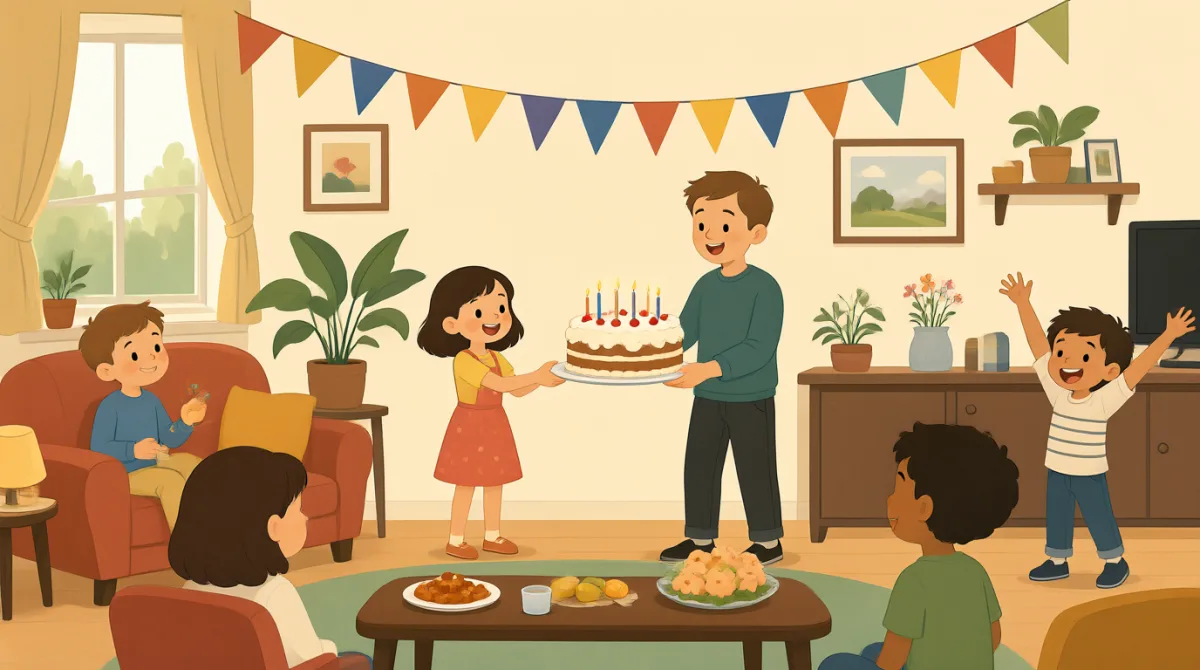

The food is ready, and the balloons look great. Are the games set up?
La comida está lista y los globos se ven geniales. ¿Ya están preparados los juegos?

Yes, the beanbag toss is by the fence. I put out the prizes, too.
Sí, el juego de lanzar saquitos está junto a la cerca. También puse los premios.

Great! The first guests are here. Let’s welcome them and show them where to play.
¡Genial! Ya llegaron los primeros invitados. Vamos a recibirlos y a enseñarles dónde pueden jugar.
Hi, everyone! Come on in. Snacks and drinks are on the table.
¡Hola a todos! Pasen. Hay bocadillos y bebidas en la mesa.
The kids are having fun. Should we start the games now?
Los niños se están divirtiendo. ¿Empezamos los juegos ya?
Yes! Let’s play musical chairs first, then have the beanbag toss.
¡Sí! Primero juguemos a las sillas musicales y después lancemos los saquitos.
That was fun! Now it’s time for the cake. Can you bring it out?
¡Qué divertido! Ahora toca el pastel. ¿Puedes sacarlo?
Here it is! Let’s sing happy birthday before we cut it.
¡Aquí está! Cantemos «Feliz cumpleaños» antes de cortarlo.
Vocabulario7
- set uppreparar
To prepare something so it is ready to use. Here, the games are ready for the children.
Dejar algo listo para usar. Aquí, los juegos están preparados para los niños.
- put outponer
To place things where people can see or use them. Jack placed the prizes out for the guests.
Colocar cosas donde la gente pueda verlas o usarlas. Jack puso los premios para los invitados.
- Come on in.Pasen.
A friendly way to invite someone to enter a place. You can say this when guests arrive at your home.
Una forma amable de invitar a alguien a entrar. Puedes decirlo cuando llegan invitados a tu casa.
- having fundivirtiéndose
Enjoying an activity. You can use this phrase to say that people are enjoying themselves.
Disfrutando de una actividad. Puedes usar esta expresión para decir que la gente lo está pasando bien.
- musical chairssillas musicales
A party game where players walk around chairs while music plays. When the music stops, everyone tries to sit down.
Un juego de fiesta en el que los participantes caminan alrededor de unas sillas mientras suena música. Cuando la música se detiene, todos intentan sentarse.
- bring it outsacarlo
To carry something from inside and show or serve it. Here, Jack brings the cake to the guests.
Llevar algo desde dentro y mostrarlo o servirlo. Aquí, Jack lleva el pastel para mostrárselo a los invitados.
- cut itcortarlo
To use a knife to divide something into pieces. At a party, people often cut the cake to share it.
Usar un cuchillo para dividir algo en trozos. En una fiesta, la gente suele cortar el pastel para compartirlo.
Frases clave8
- 1
The food is ready, and the balloons look great.
La comida está lista y los globos se ven geniales.
Use this to say that preparations are finished and something looks nice. You can replace “the food” and “the balloons” with other things you have prepared.
Usa esta frase para decir que los preparativos terminaron y que algo se ve bonito. Puedes reemplazar “the food” y “the balloons” por otras cosas que hayas preparado.
- 2
Are the games set up?
¿Ya están preparados los juegos?
This is a simple way to ask if something is ready to use. Replace “the games” with another activity or item.
Esta es una forma sencilla de preguntar si algo está listo para usarse. Reemplaza “the games” por otra actividad o cosa.
- 3
I put out the prizes, too.
También puse los premios.
Use this to say that you placed something where people can see or use it. You can change “the prizes” to another item, such as snacks or plates.
Usa esta frase para decir que colocaste algo donde la gente pueda verlo o usarlo. Puedes cambiar “the prizes” por otra cosa, como bocadillos o platos.
- 4
Come on in.
Pasen.
This is a friendly invitation for someone to enter. It is useful when welcoming guests to your home.
Es una invitación amable para que alguien entre. Es útil para recibir invitados en tu casa.
- 5
Snacks and drinks are on the table.
Hay bocadillos y bebidas en la mesa.
Use this sentence to tell guests where they can find food and drinks. You can change “on the table” to another location.
Usa esta frase para decirles a los invitados dónde pueden encontrar comida y bebidas. Puedes cambiar “on the table” por otro lugar.
- 6
Should we start the games now?
¿Empezamos los juegos ya?
This is a polite way to suggest starting an activity and ask what others think. Replace “the games” with another activity.
Esta es una forma amable de proponer que empiecen una actividad y preguntar qué opinan los demás. Reemplaza “the games” por otra actividad.
- 7
Can you bring it out?
¿Puedes sacarlo?
Use this to ask someone to carry something out for others to see or use. Replace “it” with the item you need.
Usa esta frase para pedirle a alguien que saque algo para que los demás puedan verlo o usarlo. Reemplaza “it” por lo que necesitas.
- 8
Let’s sing happy birthday before we cut it.
Cantemos «Feliz cumpleaños» antes de cortarlo.
This suggests what to do before cutting the cake. You can use “Let’s” to make friendly suggestions for group activities.
Esta frase propone qué hacer antes de cortar el pastel. Puedes usar “Let’s” para hacer propuestas amables para actividades en grupo.