Using the Shared Kitchen
ใช้ห้องครัวส่วนกลาง
Emma meets Mia in the shared kitchen and asks how to use the fridge and cooking equipment. They make a simple meal.
เอมมาเจอมิอาในห้องครัวส่วนกลาง และถามวิธีใช้ตู้เย็นกับอุปกรณ์ทำอาหาร ทั้งคู่ทำอาหารง่าย ๆ ด้วยกัน
บทสนทนา8
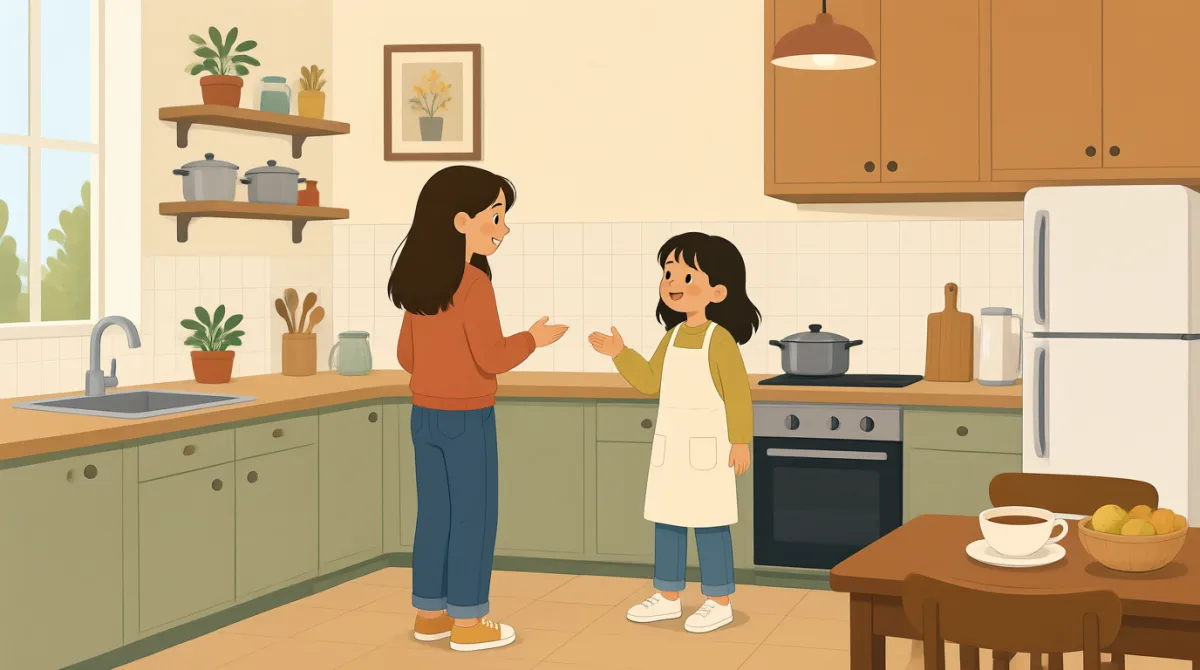

Hi, Mia. Is it okay if I use this fridge?
หวัดดี มิอา เราใช้ตู้เย็นนี้ได้ไหม?

Sure. Write your name and the date on your food.
ได้เลย เขียนชื่อกับวันที่ไว้บนอาหารด้วยนะ
Thanks. Where can I find a pan and some plates?
ขอบใจ แล้วกระทะกับจานอยู่ตรงไหนเหรอ?
The pans are in that cupboard. The plates are on the shelf.
กระทะอยู่ในตู้ใบนั้น ส่วนจานอยู่บนชั้นวาง
Great. I’m going to make some pasta. Do you want to join me?
ดีเลย เราว่าจะทำพาสต้า เธออยากทำด้วยกันไหม?
Sure! I can cut up some tomatoes while you cook.
ได้เลย! ระหว่างที่เธอทำอาหาร เราหั่นมะเขือเทศให้ได้นะ
Thanks! Should we wash the dishes when we’re done?
ขอบใจ! ทำเสร็จแล้วเราล้างจานกันไหม?
Yes, please. The sink is free, and there’s dish soap beside it.
ได้เลย อ่างล้างจานว่างอยู่ แล้วก็มีน้ำยาล้างจานวางอยู่ข้าง ๆ
คำศัพท์7
- Write your name and the dateเขียนชื่อกับวันที่
This tells you what to put on your food so people know it belongs to you.
ข้อความนี้บอกให้เขียนอะไรไว้บนอาหาร เพื่อให้คนอื่นรู้ว่าอาหารนั้นเป็นของเธอ
- cupboardตู้เก็บของ
A place with doors or shelves where you keep things like pans.
ที่เก็บของที่มีประตูหรือชั้นวาง เช่น ใช้เก็บกระทะ
- shelfชั้นวาง
A flat surface where you can put or store things, such as plates.
พื้นราบที่ใช้วางหรือเก็บของ เช่น จาน
- join meมาร่วมทำด้วยกัน
This means to come and do an activity with someone. You can say, “Do you want to join me?” to invite someone.
หมายถึงมาทำกิจกรรมร่วมกับใครสักคน เธอใช้ประโยค “Do you want to join me?” เพื่อชวนใครสักคนได้
- cut upหั่น
To cut food into smaller pieces. For example, you can cut up tomatoes before cooking.
ตัดอาหารให้เป็นชิ้นเล็กลง เช่น หั่นมะเขือเทศก่อนทำอาหาร
- when we’re doneเมื่อเราทำเสร็จแล้ว
This means after we have finished something. You can use it to talk about what to do afterward.
หมายถึงหลังจากที่เราทำบางอย่างเสร็จแล้ว ใช้พูดถึงสิ่งที่จะทำต่อได้
- dish soapน้ำยาล้างจาน
Liquid soap used for washing dishes.
สบู่เหลวที่ใช้ล้างจาน
ประโยคสำคัญ8
- 1
Is it okay if I use this fridge?
เราใช้ตู้เย็นนี้ได้ไหม?
A polite way to ask permission to use something. You can replace “this fridge” with another item, such as “this chair” or “your phone.”
ใช้ถามขออนุญาตใช้สิ่งของอย่างสุภาพ เธอเปลี่ยน “this fridge” เป็นสิ่งของอื่นได้ เช่น “this chair” หรือ “your phone”
- 2
Write your name and the date on your food.
เขียนชื่อกับวันที่ไว้บนอาหารด้วยนะ
This is a simple instruction for labeling food. You can use the same pattern to tell someone what information to write on an item.
นี่เป็นคำสั่งง่าย ๆ สำหรับติดป้ายอาหาร เธอใช้รูปแบบเดียวกันเพื่อบอกให้ใครเขียนข้อมูลอะไรลงบนสิ่งของก็ได้
- 3
Where can I find a pan and some plates?
กระทะกับจานอยู่ตรงไหนเหรอ?
A useful question when you need to find things in a shared space. Replace the items with what you are looking for.
เป็นคำถามที่มีประโยชน์เมื่อเธอต้องหาของในพื้นที่ส่วนกลาง เปลี่ยนชื่อสิ่งของเป็นสิ่งที่เธอกำลังหาได้เลย
- 4
I’m going to make some pasta.
เราว่าจะทำพาสต้า
Use “I’m going to” to say what you plan to do soon. You can replace “make some pasta” with another activity.
ใช้ “I’m going to” เพื่อบอกสิ่งที่เธอวางแผนจะทำในเร็ว ๆ นี้ เธอเปลี่ยน “make some pasta” เป็นกิจกรรมอื่นได้
- 5
Do you want to join me?
เธออยากทำด้วยกันไหม?
A friendly way to invite someone to do something with you. You can use it after saying what you plan to do.
เป็นวิธีชวนใครสักคนมาทำอะไรด้วยกันอย่างเป็นกันเอง เธอใช้ประโยคนี้หลังจากบอกสิ่งที่วางแผนจะทำได้
- 6
I can cut up some tomatoes while you cook.
ระหว่างที่เธอทำอาหาร เราหั่นมะเขือเทศให้ได้นะ
This offers help and explains what you can do at the same time as another person. Use “while” to connect two activities happening together.
ประโยคนี้ใช้เสนอตัวช่วย พร้อมบอกว่าเธอทำอะไรไปพร้อมกับอีกคนได้ ใช้ “while” เพื่อเชื่อมกิจกรรมสองอย่างที่เกิดขึ้นพร้อมกัน
- 7
Should we wash the dishes when we’re done?
ทำเสร็จแล้วเราล้างจานกันไหม?
A polite way to suggest what you and another person should do after an activity. You can replace “wash the dishes” with another task.
เป็นวิธีสุภาพในการเสนอว่าเธอกับอีกคนควรทำอะไรหลังจากทำกิจกรรมเสร็จแล้ว เธอเปลี่ยน “wash the dishes” เป็นงานอื่นได้
- 8
The sink is free, and there’s dish soap beside it.
อ่างล้างจานว่างอยู่ แล้วก็มีน้ำยาล้างจานวางอยู่ข้าง ๆ
This tells someone that the sink is available and where to find soap. Use “beside it” to describe the location of something near a place or object.
ประโยคนี้บอกอีกคนว่าอ่างล้างจานว่างและน้ำยาอยู่ตรงไหน ใช้ “beside it” เพื่อบอกตำแหน่งของสิ่งที่อยู่ใกล้สถานที่หรือสิ่งของนั้น