Using the Shared Kitchen
공용 주방 이용하기
Emma meets Mia in the shared kitchen and asks how to use the fridge and cooking equipment. They make a simple meal.
에마는 공용 주방에서 미아를 만나 냉장고와 조리 도구를 어떻게 사용하는지 물어봐요. 두 사람은 간단한 음식을 만들어요.
대화8
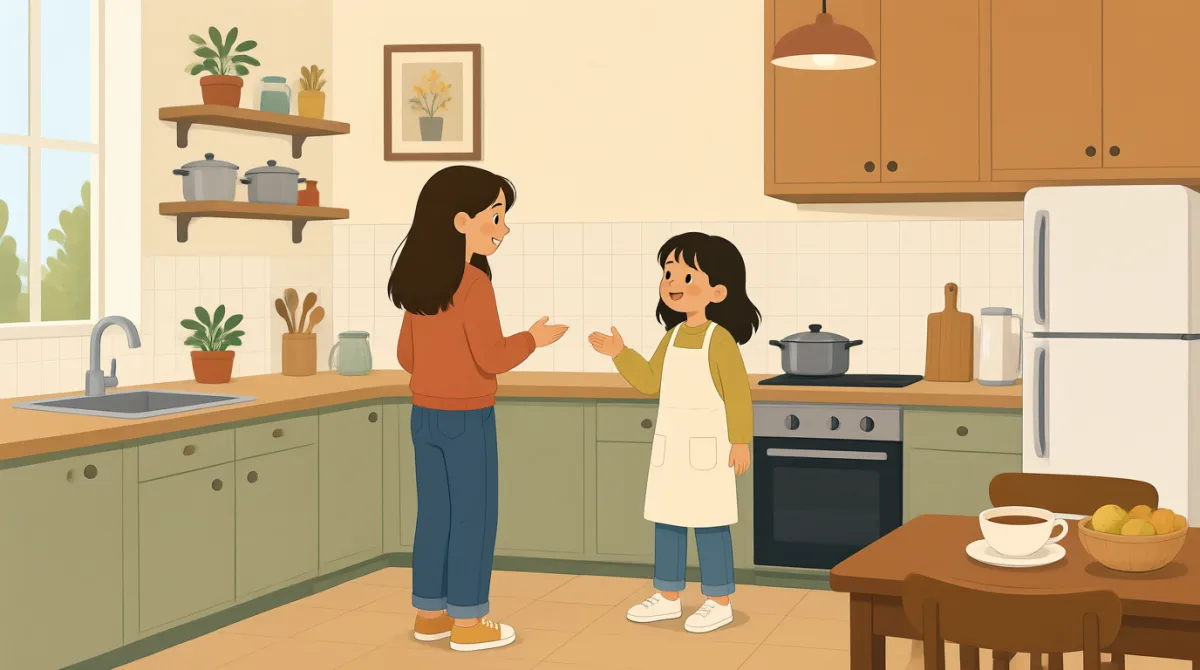

Hi, Mia. Is it okay if I use this fridge?
안녕, 미아. 이 냉장고 써도 돼?

Sure. Write your name and the date on your food.
물론이지. 음식에 네 이름이랑 날짜를 적어 둬.
Thanks. Where can I find a pan and some plates?
고마워. 프라이팬이랑 접시는 어디서 찾을 수 있어?
The pans are in that cupboard. The plates are on the shelf.
프라이팬은 저 찬장에 있어. 접시는 선반 위에 있고.
Great. I’m going to make some pasta. Do you want to join me?
좋아. 나 파스타 만들려고 하는데, 같이 할래?
Sure! I can cut up some tomatoes while you cook.
좋아! 네가 요리하는 동안 내가 토마토를 썰게.
Thanks! Should we wash the dishes when we’re done?
고마워! 다 먹고 나면 설거지할까?
Yes, please. The sink is free, and there’s dish soap beside it.
응, 부탁해. 싱크대는 비어 있고, 옆에 주방 세제가 있어.
어휘7
- Write your name and the date이름과 날짜를 적어 둬
This tells you what to put on your food so people know it belongs to you.
다른 사람들이 음식이 네 것인지 알 수 있도록 음식에 무엇을 적어야 하는지 알려 주는 표현이에요.
- cupboard찬장
A place with doors or shelves where you keep things like pans.
프라이팬 같은 물건을 보관하는 문이나 선반이 있는 곳이에요.
- shelf선반
A flat surface where you can put or store things, such as plates.
접시 같은 물건을 올려놓거나 보관할 수 있는 평평한 곳이에요.
- join mejoin me (나와 함께하다)
This means to come and do an activity with someone. You can say, “Do you want to join me?” to invite someone.
누군가와 함께 와서 어떤 활동을 한다는 뜻이에요. 누군가를 초대할 때 “Do you want to join me?”(나랑 같이 할래?)라고 말할 수 있어요.
- cut upcut up (잘게 썰다)
To cut food into smaller pieces. For example, you can cut up tomatoes before cooking.
음식을 더 작은 조각으로 자르는 거예요. 예를 들어 요리하기 전에 토마토를 잘게 썰 수 있어요.
- when we’re donewhen we’re done (우리가 다 하고 나면)
This means after we have finished something. You can use it to talk about what to do afterward.
어떤 일을 끝낸 뒤라는 뜻이에요. 그다음에 무엇을 할지 이야기할 때 쓸 수 있어요.
- dish soap주방 세제
Liquid soap used for washing dishes.
그릇을 씻을 때 쓰는 액체 세제예요.
핵심 문장8
- 1
Is it okay if I use this fridge?
이 냉장고 써도 돼?
A polite way to ask permission to use something. You can replace “this fridge” with another item, such as “this chair” or “your phone.”
무언가를 사용해도 되는지 정중하게 허락을 구하는 표현이에요. “this fridge” 대신 “this chair”나 “your phone”처럼 다른 물건을 넣어 말할 수 있어요.
- 2
Write your name and the date on your food.
음식에 네 이름이랑 날짜를 적어 둬.
This is a simple instruction for labeling food. You can use the same pattern to tell someone what information to write on an item.
음식에 표시를 하라고 간단히 안내하는 표현이에요. 같은 패턴으로 물건에 어떤 정보를 적어야 하는지 알려 줄 수 있어요.
- 3
Where can I find a pan and some plates?
프라이팬이랑 접시는 어디서 찾을 수 있어?
A useful question when you need to find things in a shared space. Replace the items with what you are looking for.
공용 공간에서 필요한 물건을 찾을 때 유용한 질문이에요. 찾고 있는 물건으로 바꿔 말하면 돼요.
- 4
I’m going to make some pasta.
나 파스타 만들려고 해.
Use “I’m going to” to say what you plan to do soon. You can replace “make some pasta” with another activity.
“I’m going to”는 곧 할 계획인 일을 말할 때 써요. “make some pasta”를 다른 활동으로 바꿔 말할 수 있어요.
- 5
Do you want to join me?
나랑 같이 할래?
A friendly way to invite someone to do something with you. You can use it after saying what you plan to do.
누군가를 함께 무언가 하자고 친근하게 초대하는 표현이에요. 자신이 하려는 일을 말한 뒤에 쓸 수 있어요.
- 6
I can cut up some tomatoes while you cook.
네가 요리하는 동안 내가 토마토를 썰게.
This offers help and explains what you can do at the same time as another person. Use “while” to connect two activities happening together.
도움을 제안하면서 상대방이 하는 일과 동시에 자신이 할 수 있는 일을 말하는 표현이에요. “while”은 동시에 일어나는 두 가지 활동을 연결해요.
- 7
Should we wash the dishes when we’re done?
다 하고 나면 설거지할까?
A polite way to suggest what you and another person should do after an activity. You can replace “wash the dishes” with another task.
어떤 활동이 끝난 뒤에 함께 무엇을 할지 정중하게 제안하는 표현이에요. “wash the dishes”를 다른 일로 바꿔 말할 수 있어요.
- 8
The sink is free, and there’s dish soap beside it.
싱크대는 비어 있고, 옆에 주방 세제가 있어.
This tells someone that the sink is available and where to find soap. Use “beside it” to describe the location of something near a place or object.
싱크대를 사용할 수 있고 세제가 어디 있는지 알려 주는 문장이에요. “beside it”은 어떤 장소나 물건 가까이에 있는 위치를 설명할 때 써요.