Using the Shared Kitchen
साझा रसोई का इस्तेमाल करना
Emma meets Mia in the shared kitchen and asks how to use the fridge and cooking equipment. They make a simple meal.
एम्मा साझा रसोई में मिया से मिलती है और पूछती है कि फ्रिज और खाना पकाने के उपकरण कैसे इस्तेमाल करें। दोनों मिलकर एक सादा खाना बनाती हैं।
संवाद8
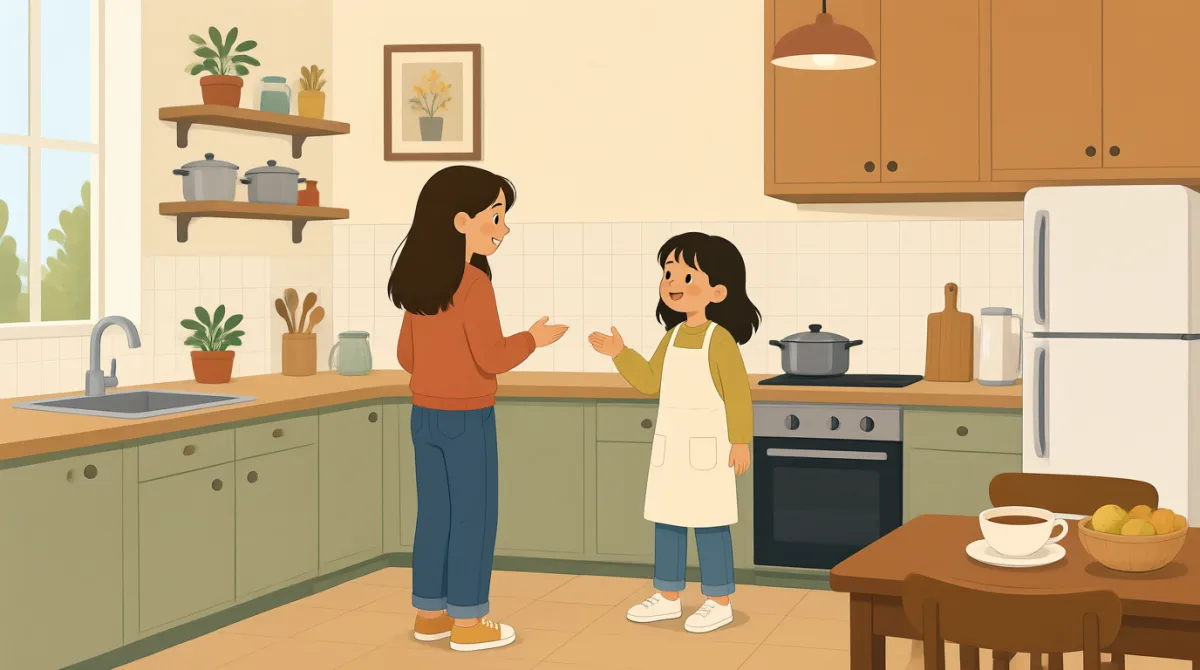

Hi, Mia. Is it okay if I use this fridge?
हाय, मिया। क्या मैं यह फ्रिज इस्तेमाल कर सकती हूँ?

Sure. Write your name and the date on your food.
हाँ, बिल्कुल। अपने खाने पर अपना नाम और तारीख लिख देना।
Thanks. Where can I find a pan and some plates?
शुक्रिया। पैन और कुछ प्लेटें कहाँ मिलेंगी?
The pans are in that cupboard. The plates are on the shelf.
पैन उस अलमारी में हैं। प्लेटें शेल्फ़ पर हैं।
Great. I’m going to make some pasta. Do you want to join me?
बढ़िया। मैं पास्ता बनाने वाली हूँ। क्या तुम मेरे साथ खाना बनाना चाहोगी?
Sure! I can cut up some tomatoes while you cook.
ज़रूर! जब तक तुम खाना बनाओगी, मैं कुछ टमाटर काट देती हूँ।
Thanks! Should we wash the dishes when we’re done?
शुक्रिया! खाना हो जाने के बाद क्या हमें बर्तन धो लेने चाहिए?
Yes, please. The sink is free, and there’s dish soap beside it.
हाँ, ज़रूर। सिंक खाली है और उसके पास ही बर्तन धोने का साबुन रखा है।
शब्दावली7
- Write your name and the dateअपने नाम और तारीख लिखें
This tells you what to put on your food so people know it belongs to you.
इसका मतलब है कि खाने पर क्या लिखना है, ताकि लोगों को पता चले कि वह तुम्हारा है।
- cupboardअलमारी
A place with doors or shelves where you keep things like pans.
दरवाज़ों या शेल्फ़ वाली ऐसी जगह जहाँ पैन जैसी चीज़ें रखी जाती हैं।
- shelfशेल्फ़
A flat surface where you can put or store things, such as plates.
एक सपाट सतह, जिस पर चीज़ें रखी या जमा की जा सकती हैं, जैसे प्लेटें।
- join meमेरे साथ शामिल होना
This means to come and do an activity with someone. You can say, “Do you want to join me?” to invite someone.
इसका मतलब है किसी के साथ कोई गतिविधि करने आना। किसी को बुलाने के लिए तुम कह सकती हो, “Do you want to join me?” (क्या तुम मेरे साथ आना चाहोगी?)
- cut upछोटे टुकड़ों में काटना
To cut food into smaller pieces. For example, you can cut up tomatoes before cooking.
खाने की चीज़ को छोटे टुकड़ों में काटना। उदाहरण के लिए, खाना पकाने से पहले तुम टमाटर काट सकती हो।
- when we’re doneजब हमारा काम हो जाए
This means after we have finished something. You can use it to talk about what to do afterward.
इसका मतलब है किसी काम को पूरा करने के बाद। इसके बाद क्या करना है, यह बताने के लिए तुम इसका इस्तेमाल कर सकती हो।
- dish soapबर्तन धोने का साबुन
Liquid soap used for washing dishes.
बर्तन धोने के लिए इस्तेमाल होने वाला तरल साबुन।
मुख्य वाक्य8
- 1
Is it okay if I use this fridge?
क्या मैं यह फ्रिज इस्तेमाल कर सकती हूँ?
A polite way to ask permission to use something. You can replace “this fridge” with another item, such as “this chair” or “your phone.”
किसी चीज़ का इस्तेमाल करने की अनुमति माँगने का यह एक विनम्र तरीका है। “this fridge” की जगह तुम किसी दूसरी चीज़ का नाम रख सकती हो, जैसे “this chair” या “your phone”।
- 2
Write your name and the date on your food.
अपने खाने पर अपना नाम और तारीख लिख देना।
This is a simple instruction for labeling food. You can use the same pattern to tell someone what information to write on an item.
खाने पर नाम और तारीख लिखने का यह एक आसान निर्देश है। किसी चीज़ पर कौन-सी जानकारी लिखनी है, यह बताने के लिए तुम इसी ढाँचे का इस्तेमाल कर सकती हो।
- 3
Where can I find a pan and some plates?
पैन और कुछ प्लेटें कहाँ मिलेंगी?
A useful question when you need to find things in a shared space. Replace the items with what you are looking for.
साझा जगह में कोई चीज़ ढूँढ़नी हो, तो यह सवाल काम आता है। जिन चीज़ों को तुम ढूँढ़ रही हो, उनके नाम यहाँ रख सकती हो।
- 4
I’m going to make some pasta.
मैं पास्ता बनाने वाली हूँ।
Use “I’m going to” to say what you plan to do soon. You can replace “make some pasta” with another activity.
जल्द ही क्या करने की योजना है, यह बताने के लिए “I’m going to” का इस्तेमाल करो। “make some pasta” की जगह किसी दूसरी गतिविधि का नाम रख सकती हो।
- 5
Do you want to join me?
क्या तुम मेरे साथ आना चाहोगी?
A friendly way to invite someone to do something with you. You can use it after saying what you plan to do.
किसी को अपने साथ कुछ करने के लिए बुलाने का यह दोस्ताना तरीका है। अपनी योजना बताने के बाद तुम इसका इस्तेमाल कर सकती हो।
- 6
I can cut up some tomatoes while you cook.
जब तक तुम खाना बनाओगी, मैं कुछ टमाटर काट देती हूँ।
This offers help and explains what you can do at the same time as another person. Use “while” to connect two activities happening together.
इस वाक्य में तुम मदद की पेशकश करती हो और बताती हो कि दूसरे व्यक्ति के काम करते समय तुम क्या कर सकती हो। एक साथ हो रही दो गतिविधियों को जोड़ने के लिए “while” का इस्तेमाल करो।
- 7
Should we wash the dishes when we’re done?
काम हो जाने के बाद क्या हमें बर्तन धो लेने चाहिए?
A polite way to suggest what you and another person should do after an activity. You can replace “wash the dishes” with another task.
किसी गतिविधि के बाद तुम और दूसरा व्यक्ति क्या कर सकते हैं, यह सुझाने का यह विनम्र तरीका है। “wash the dishes” की जगह कोई दूसरा काम रख सकती हो।
- 8
The sink is free, and there’s dish soap beside it.
सिंक खाली है और उसके पास ही बर्तन धोने का साबुन रखा है।
This tells someone that the sink is available and where to find soap. Use “beside it” to describe the location of something near a place or object.
इससे सामने वाले को पता चलता है कि सिंक खाली है और साबुन कहाँ रखा है। किसी जगह या चीज़ के पास कुछ होने की जगह बताने के लिए “beside it” का इस्तेमाल करो।