Inviting a Friend to Visit
ชวนเพื่อนมาเที่ยวที่ห้อง
Emma invites Mia to visit her apartment. They make a simple plan and talk about how to find the building.
เอมมาชวนมีอามาที่อพาร์ตเมนต์ของเธอ ทั้งคู่ตกลงนัดกันง่าย ๆ และคุยกันว่าจะหาอาคารเจอได้อย่างไร
บทสนทนา8
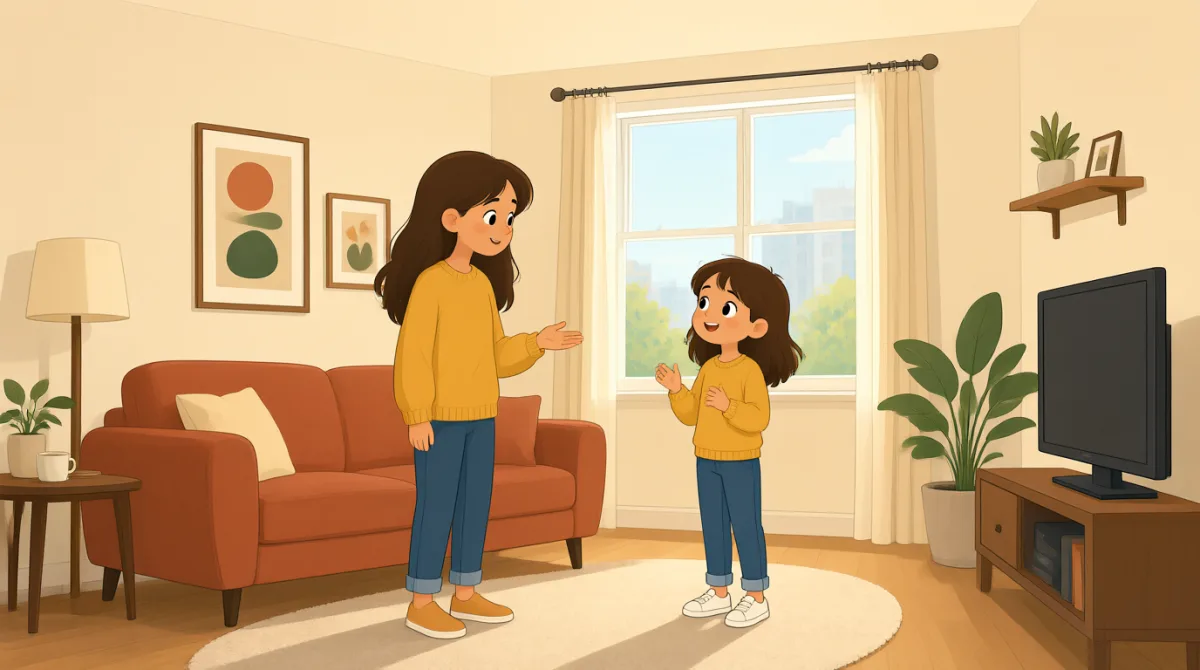

Mia, would you like to visit my apartment?
มีอา อยากมาเที่ยวอพาร์ตเมนต์ของเราไหม?

Sure! When can I come?
ได้เลย! เรามาได้เมื่อไหร่?
How about Saturday afternoon?
บ่ายวันเสาร์เป็นไง?
That works. How do I find your building?
ได้เลย แล้วเราจะหาอาคารของเธอเจอได้ยังไง?
It’s next to the blue bank on Pine Street.
อยู่ติดกับธนาคารสีน้ำเงินบนถนนไพน์น่ะ
Great. What time should I come?
เยี่ยมเลย เราควรไปกี่โมง?
Come at two. I’ll meet you outside.
มาบ่ายสองนะ เราจะไปรอรับข้างนอก
See you Saturday!
เจอกันวันเสาร์นะ!
คำศัพท์7
- would you like toอยากจะ...ไหม
This is a polite way to invite someone or offer something. You can say, “Would you like to come with me?”
นี่เป็นวิธีชวนใครสักคนหรือเสนออะไรให้แบบสุภาพ พูดได้ว่า “Would you like to come with me?” (อยากไปกับเราไหม?)
- Sure!ได้เลย! / แน่นอน!
This means “yes” and shows that you are happy to agree. You can use it to accept an invitation.
คำนี้หมายถึง “ใช่” และแสดงว่าเรายินดีตอบตกลง ใช้ตอบรับคำชวนได้
- How about Saturday afternoon?บ่ายวันเสาร์เป็นไง?
Use this phrase to suggest a time. You can change the day or time, as in “How about Sunday morning?”
ใช้วลีนี้เพื่อเสนอเวลา จะเปลี่ยนวันหรือเวลาก็ได้ เช่น “How about Sunday morning?” (เช้าวันอาทิตย์เป็นไง?)
- That works.ตกลงตามนั้น / เวลานั้นได้
This means that a suggested time or plan is good for you. You can use it to agree with a plan.
หมายความว่าเวลาหรือแผนที่อีกฝ่ายเสนอมาเหมาะกับเรา ใช้ตอบตกลงตามแผนได้
- next toติดกับ / อยู่ข้าง ๆ
This means beside or very close to something. You can use it to say where a place is.
หมายถึงอยู่ข้าง ๆ หรือใกล้กับบางสิ่ง ใช้บอกตำแหน่งของสถานที่ได้
- on Pine Streetบนถนนไพน์
This tells someone which street a place is on. Replace “Pine Street” with the name of another street.
ใช้บอกว่าสถานที่นั้นอยู่บนถนนสายไหน เปลี่ยน “Pine Street” เป็นชื่อถนนสายอื่นได้
- outsideข้างนอก
This means not inside a building. You can use it to say where you will wait for someone.
หมายถึงไม่ได้อยู่ข้างในอาคาร ใช้บอกได้ว่าจะไปรอใครที่ไหน
ประโยคสำคัญ8
- 1
Mia, would you like to visit my apartment?
มีอา อยากมาเที่ยวอพาร์ตเมนต์ของเราไหม?
This is a polite way to invite someone to your home. You can replace “my apartment” with another place.
นี่เป็นวิธีชวนใครสักคนมาที่บ้านแบบสุภาพ เปลี่ยน “my apartment” เป็นสถานที่อื่นได้
- 2
Sure! When can I come?
ได้เลย! เรามาได้เมื่อไหร่?
Use this to accept an invitation and ask about the time. You can also say, “When can I visit?”
ใช้ประโยคนี้ตอบรับคำชวนและถามเรื่องเวลา จะพูดว่า “When can I visit?” (เรามาเยี่ยมได้เมื่อไหร่?) ก็ได้
- 3
How about Saturday afternoon?
บ่ายวันเสาร์เป็นไง?
This is a simple way to suggest a time. Replace “Saturday afternoon” with a day and time that work for you.
นี่เป็นวิธีง่าย ๆ ในการเสนอเวลา เปลี่ยน “Saturday afternoon” เป็นวันและเวลาที่สะดวกสำหรับเราได้
- 4
How do I find your building?
แล้วเราจะหาอาคารของเธอเจอได้ยังไง?
Use this to ask for directions to a place. You can replace “your building” with a location, such as “the café.”
ใช้ประโยคนี้ถามทางไปสถานที่หนึ่ง เปลี่ยน “your building” เป็นสถานที่ เช่น “the café” (ร้านกาแฟ) ได้
- 5
It’s next to the blue bank on Pine Street.
อยู่ติดกับธนาคารสีน้ำเงินบนถนนไพน์น่ะ
This sentence gives a location using a nearby place and a street name. Replace the details to help someone find another building.
ประโยคนี้บอกตำแหน่งโดยอ้างถึงสถานที่ใกล้เคียงและชื่อถนน เปลี่ยนรายละเอียดเพื่อช่วยบอกทางไปอาคารอื่นได้
- 6
What time should I come?
เราควรไปกี่โมง?
Use this to ask what time to arrive. You can use it when making plans to visit someone.
ใช้ประโยคนี้ถามว่าควรไปถึงกี่โมง ใช้ได้เวลานัดไปเยี่ยมใครสักคน
- 7
I’ll meet you outside.
เราจะไปรอรับข้างนอก
This tells someone where you will meet them. Replace “outside” with another place, such as “at the front door.”
ประโยคนี้บอกอีกฝ่ายว่าจะไปเจอกันที่ไหน เปลี่ยน “outside” เป็นสถานที่อื่น เช่น “at the front door” (ที่หน้าประตู) ได้
- 8
See you Saturday!
เจอกันวันเสาร์นะ!
This is a friendly way to say goodbye when you have plans to meet. Replace “Saturday” with the day you will see the person.
นี่เป็นวิธีบอกลาอย่างเป็นกันเองเมื่อมีนัดเจอกัน เปลี่ยน “Saturday” เป็นวันที่จะเจอกันได้