Inviting a Friend to Visit
Zaproszenie do siebie
Emma invites Mia to visit her apartment. They make a simple plan and talk about how to find the building.
Emma zaprasza Mię do swojego mieszkania. Ustalają prosty plan i rozmawiają o tym, jak znaleźć budynek.
Dialog8
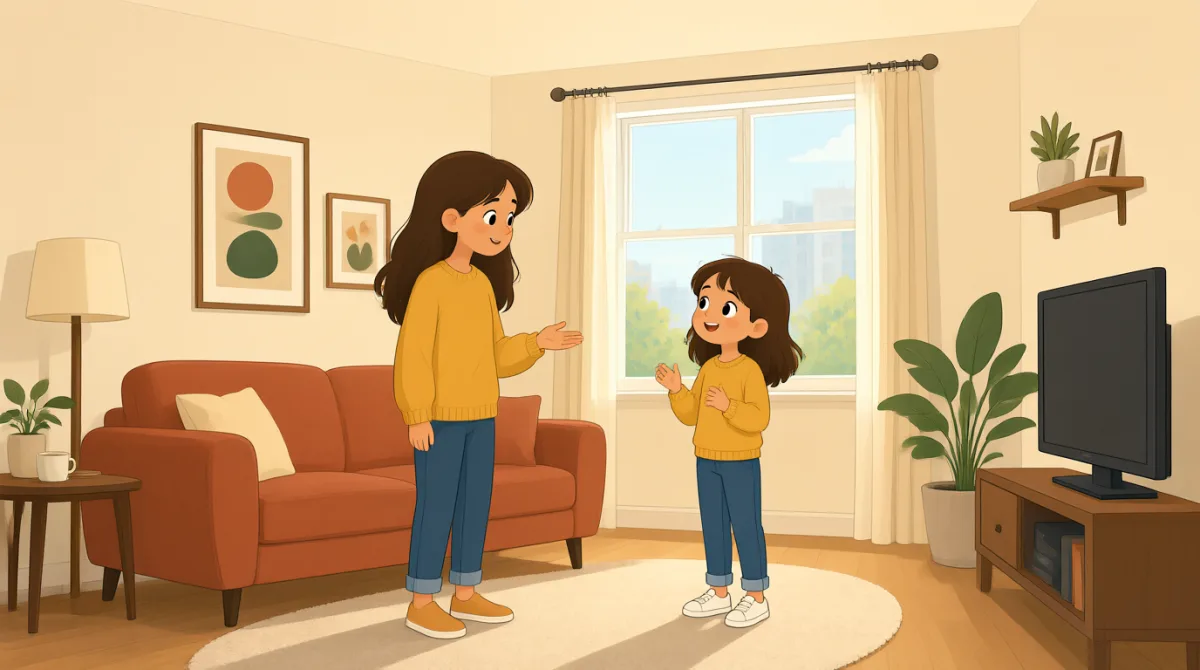

Mia, would you like to visit my apartment?
Mia, chcesz wpaść do mojego mieszkania?

Sure! When can I come?
Jasne! Kiedy mogę przyjść?
How about Saturday afternoon?
A może w sobotę po południu?
That works. How do I find your building?
Pasuje. Jak znaleźć twój budynek?
It’s next to the blue bank on Pine Street.
Jest obok niebieskiego banku przy ulicy Pine.
Great. What time should I come?
Świetnie. O której mam przyjść?
Come at two. I’ll meet you outside.
Przyjdź o drugiej. Spotkam się z tobą na zewnątrz.
See you Saturday!
Do zobaczenia w sobotę!
Słownictwo7
- would you like toczy chcesz
This is a polite way to invite someone or offer something. You can say, “Would you like to come with me?”
To uprzejmy sposób, by kogoś zaprosić albo coś zaproponować. Możesz powiedzieć: “Would you like to come with me?”
- Sure!Jasne!
This means “yes” and shows that you are happy to agree. You can use it to accept an invitation.
To znaczy „tak” i pokazuje, że chętnie się zgadzasz. Możesz tak odpowiedzieć na zaproszenie.
- How about Saturday afternoon?A może w sobotę po południu?
Use this phrase to suggest a time. You can change the day or time, as in “How about Sunday morning?”
Użyj tego zwrotu, żeby zaproponować termin. Możesz zmienić dzień lub porę, na przykład: “How about Sunday morning?”
- That works.Pasuje.
This means that a suggested time or plan is good for you. You can use it to agree with a plan.
To znaczy, że zaproponowany termin lub plan ci odpowiada. Możesz tak wyrazić zgodę na plan.
- next toobok
This means beside or very close to something. You can use it to say where a place is.
To znaczy, że coś znajduje się tuż przy czymś innym albo bardzo blisko. Możesz użyć tego zwrotu, żeby powiedzieć, gdzie jest dane miejsce.
- on Pine Streetprzy ulicy Pine
This tells someone which street a place is on. Replace “Pine Street” with the name of another street.
Ten zwrot informuje, przy której ulicy znajduje się dane miejsce. Zamiast “Pine Street” wpisz nazwę innej ulicy.
- outsidena zewnątrz
This means not inside a building. You can use it to say where you will wait for someone.
To znaczy, że coś znajduje się poza budynkiem. Możesz użyć tego słowa, żeby powiedzieć, gdzie będziesz na kogoś czekać.
Kluczowe zdania8
- 1
Mia, would you like to visit my apartment?
Mia, chcesz wpaść do mojego mieszkania?
This is a polite way to invite someone to your home. You can replace “my apartment” with another place.
To uprzejmy sposób, żeby zaprosić kogoś do siebie. Zamiast “my apartment” możesz podać inne miejsce.
- 2
Sure! When can I come?
Jasne! Kiedy mogę przyjść?
Use this to accept an invitation and ask about the time. You can also say, “When can I visit?”
Użyj tego, żeby przyjąć zaproszenie i zapytać o termin. Możesz też powiedzieć: “When can I visit?”
- 3
How about Saturday afternoon?
A może w sobotę po południu?
This is a simple way to suggest a time. Replace “Saturday afternoon” with a day and time that work for you.
To prosty sposób, żeby zaproponować termin. Zamiast “Saturday afternoon” podaj dzień i porę, które ci odpowiadają.
- 4
How do I find your building?
Jak znaleźć twój budynek?
Use this to ask for directions to a place. You can replace “your building” with a location, such as “the café.”
Użyj tego pytania, żeby poprosić o wskazówki, jak dotrzeć do danego miejsca. Zamiast “your building” możesz podać inne miejsce, na przykład “the café.”
- 5
It’s next to the blue bank on Pine Street.
Jest obok niebieskiego banku przy ulicy Pine.
This sentence gives a location using a nearby place and a street name. Replace the details to help someone find another building.
To zdanie wskazuje miejsce, podając pobliski punkt orientacyjny i nazwę ulicy. Zmień te informacje, żeby pomóc komuś znaleźć inny budynek.
- 6
What time should I come?
O której mam przyjść?
Use this to ask what time to arrive. You can use it when making plans to visit someone.
Użyj tego pytania, żeby dowiedzieć się, o której godzinie masz przybyć. Przyda się podczas planowania wizyty u kogoś.
- 7
I’ll meet you outside.
Spotkam się z tobą na zewnątrz.
This tells someone where you will meet them. Replace “outside” with another place, such as “at the front door.”
To zdanie informuje, gdzie się z kimś spotkasz. Zamiast “outside” możesz podać inne miejsce, na przykład “at the front door.”
- 8
See you Saturday!
Do zobaczenia w sobotę!
This is a friendly way to say goodbye when you have plans to meet. Replace “Saturday” with the day you will see the person.
To przyjazny sposób na pożegnanie, gdy umawiasz się z kimś na spotkanie. Zamiast “Saturday” podaj dzień, w którym się zobaczycie.