Asking for Directions
ถามทาง
Emma asks Officer David how to get to the train station. He gives her simple directions.
เอมมาถามเจ้าหน้าที่เดวิดว่าจะไปสถานีรถไฟได้อย่างไร เขาบอกทางง่าย ๆ ให้เธอ
บทสนทนา7
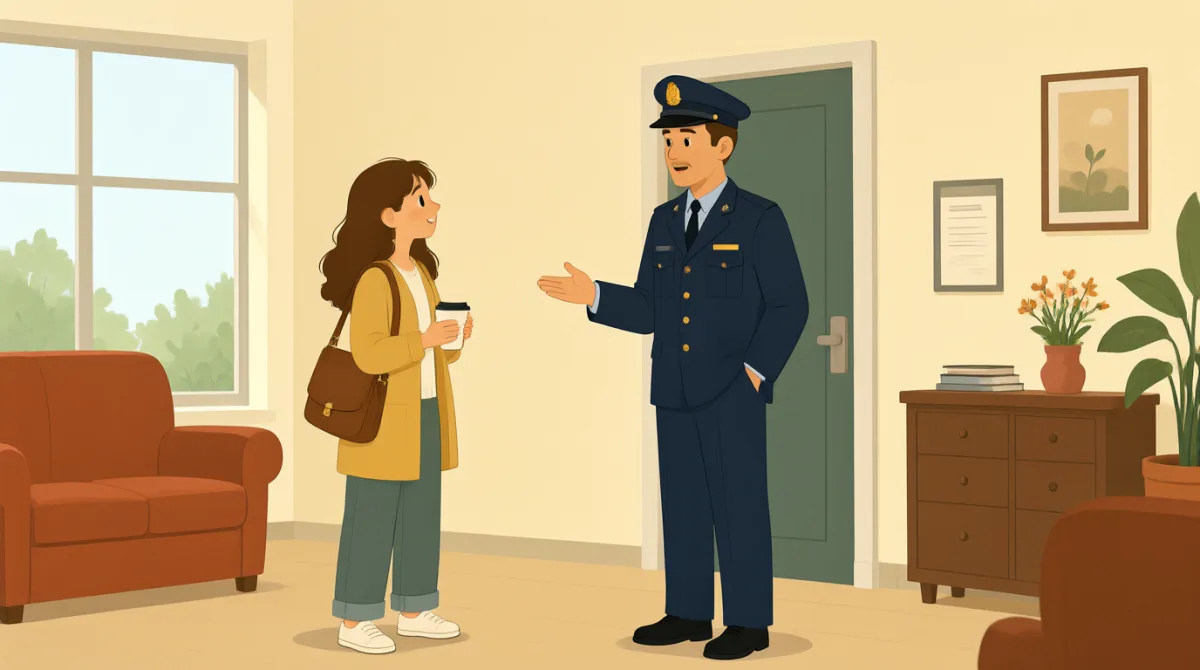

Excuse me, Officer. How do I get to the train station?
ขอโทษนะคะ คุณตำรวจ ไปสถานีรถไฟยังไงคะ

Go straight on this street.
เดินตรงไปตามถนนเส้นนี้ครับ
Is it far from here?
ไกลจากตรงนี้ไหมคะ
No. It is about five minutes away.
ไม่ไกลครับ เดินไปประมาณห้านาที
Do I turn left or right?
ต้องเลี้ยวซ้ายหรือขวาคะ
Turn right at the next street. The station is there.
เลี้ยวขวาที่ถนนข้างหน้าครับ สถานีอยู่ตรงนั้น
Thank you, Officer. That is easy.
ขอบคุณค่ะ คุณตำรวจ ง่ายจังเลย
คำศัพท์8
- Excuse meขอโทษนะคะ/ครับ
Use this polite phrase to get someone's attention before asking a question.
ใช้วลีสุภาพนี้เพื่อเรียกความสนใจของใครสักคนก่อนถามคำถาม
- How do I get to the train station?ไปสถานีรถไฟยังไง
Use this question to ask for directions to a place. You can replace “the train station” with another place.
ใช้คำถามนี้เพื่อถามทางไปสถานที่แห่งหนึ่ง คุณเปลี่ยน “the train station” เป็นชื่อสถานที่อื่นได้
- Go straightเดินตรงไป
This means to keep going forward without turning.
หมายถึงเดินไปข้างหน้าเรื่อย ๆ โดยไม่เลี้ยว
- far from hereไกลจากตรงนี้
This phrase asks if a place is a long distance from your current location.
วลีนี้ใช้ถามว่าสถานที่นั้นอยู่ห่างจากจุดที่คุณอยู่ตอนนี้มากไหม
- five minutes awayใช้เวลาเดินห้านาที
Use this phrase to say how long it takes to reach a place.
ใช้วลีนี้เพื่อบอกว่าใช้เวลาเดินทางไปถึงสถานที่หนึ่งนานแค่ไหน
- Turn rightเลี้ยวขวา
This tells someone to go in the direction on their right. You can say “Turn left” for the other direction.
ใช้บอกให้ใครสักคนไปทางขวามือ ถ้าจะบอกให้ไปอีกทาง ให้พูดว่า “Turn left”
- at the next streetที่ถนนข้างหน้า
This tells someone where to turn: when they reach the next street.
ใช้บอกจุดที่จะเลี้ยว คือเมื่อไปถึงถนนถัดไป
- Thank you, Officer.ขอบคุณค่ะ/ครับ คุณตำรวจ
Use this polite sentence to thank a police officer for help.
ใช้ประโยคสุภาพนี้เพื่อขอบคุณเจ้าหน้าที่ตำรวจที่ช่วยเหลือ
ประโยคสำคัญ8
- 1
Excuse me, Officer.
ขอโทษนะคะ/ครับ คุณตำรวจ
Use this polite sentence to get a police officer’s attention. You can replace “Officer” with another person’s title or name.
ใช้ประโยคสุภาพนี้เพื่อเรียกความสนใจของเจ้าหน้าที่ตำรวจ คุณเปลี่ยน “Officer” เป็นคำนำหน้าหรือชื่อของคนอื่นได้
- 2
How do I get to the train station?
ไปสถานีรถไฟยังไงคะ/ครับ
This is a useful way to ask for directions. Replace “the train station” with the place you want to visit.
นี่เป็นวิธีถามทางที่ใช้ได้ดี เปลี่ยน “the train station” เป็นสถานที่ที่คุณอยากไปได้
- 3
Go straight on this street.
เดินตรงไปตามถนนเส้นนี้
This gives a simple direction to continue forward. You can use it to tell someone how to start a route.
ประโยคนี้บอกทางง่าย ๆ ให้เดินต่อไปข้างหน้า ใช้บอกจุดเริ่มต้นของเส้นทางได้
- 4
Is it far from here?
ไกลจากตรงนี้ไหม
Use this question to ask whether a place is a long distance away. You can replace “it” with the place you are asking about.
ใช้คำถามนี้เพื่อถามว่าสถานที่นั้นอยู่ไกลไหม คุณเปลี่ยน “it” เป็นสถานที่ที่ต้องการถามถึงได้
- 5
It is about five minutes away.
ใช้เวลาประมาณห้านาที
This sentence gives an approximate travel time. Replace “five” with another number to give a different estimate.
ประโยคนี้บอกเวลาเดินทางโดยประมาณ เปลี่ยน “five” เป็นตัวเลขอื่นเพื่อบอกเวลาโดยประมาณที่ต่างออกไปได้
- 6
Do I turn left or right?
ต้องเลี้ยวซ้ายหรือขวา
Use this question when you need to know which direction to turn. You can ask it at a street or crossing.
ใช้คำถามนี้เมื่ออยากรู้ว่าควรเลี้ยวไปทางไหน คุณถามได้เมื่อถึงถนนหรือทางแยก
- 7
Turn right at the next street.
เลี้ยวขวาที่ถนนข้างหน้า
This gives a clear instruction about where and which way to turn. Replace “right” with “left” if needed.
ประโยคนี้บอกชัดเจนว่าต้องเลี้ยวที่ไหนและไปทางใด หากต้องการให้เลี้ยวอีกทาง ให้เปลี่ยน “right” เป็น “left”
- 8
Thank you, Officer.
ขอบคุณค่ะ/ครับ คุณตำรวจ
This is a polite way to thank a police officer for giving directions. You can replace “Officer” with the person’s name or title.
นี่เป็นวิธีสุภาพในการขอบคุณเจ้าหน้าที่ตำรวจที่บอกทาง คุณเปลี่ยน “Officer” เป็นชื่อหรือคำนำหน้าของคนนั้นได้