Learning About Food Storage and Preparation
เรียนรู้เรื่องการเก็บและเตรียมอาหาร
Two individuals are discussing best practices for storing leftovers safely, preventing cross-contamination in the kitchen, or proper cooking temperatures to ensure food safety.
คนสองคนคุยกันถึงวิธีเก็บอาหารที่เหลือให้ปลอดภัย ป้องกันการปนเปื้อนข้ามในครัว และอุณหภูมิที่เหมาะสมในการปรุงอาหารเพื่อความปลอดภัย
บทสนทนา10
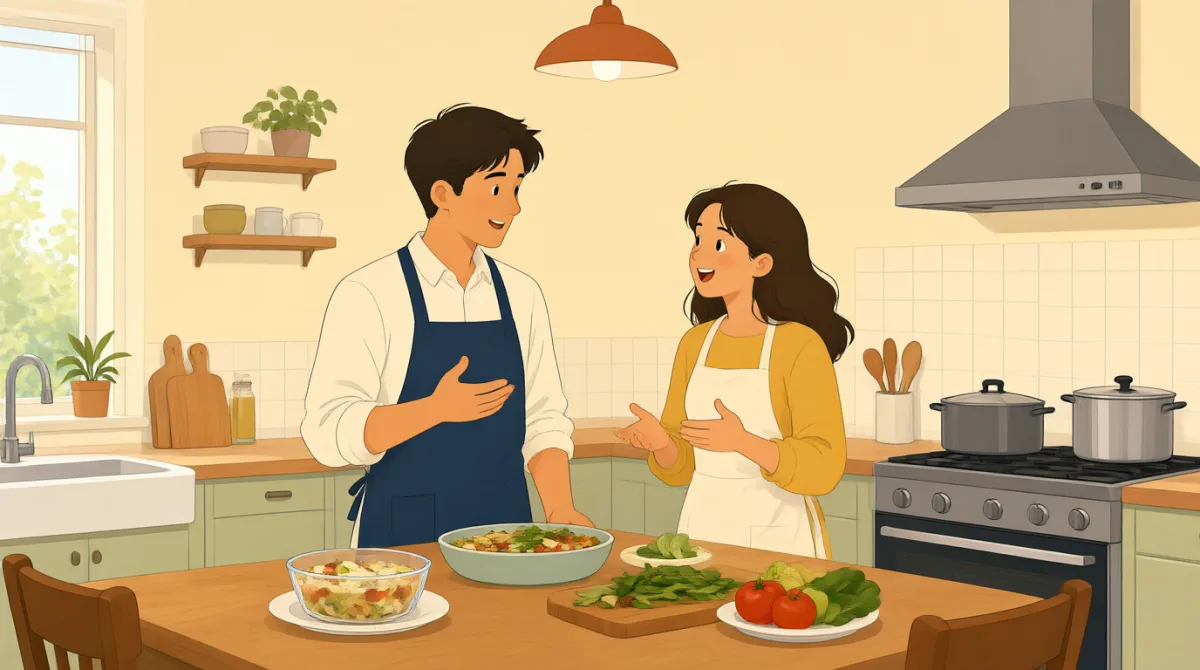

Hey Jack, I was just reading up on food safety for leftovers. It's surprising how many rules there are to avoid getting sick.
เฮ้ แจ็ก เมื่อกี้ฉันอ่านเรื่องความปลอดภัยในการเก็บอาหารที่เหลืออยู่น่ะ น่าแปลกใจนะว่ามีกฎเยอะขนาดไหนเพื่อป้องกันไม่ให้ป่วย

Oh yeah, it's definitely something you need to be careful with. What's one of the main things you learned?
อ๋อ ใช่ เรื่องนี้ต้องระวังจริง ๆ แล้วเธอได้เรียนรู้อะไรที่สำคัญบ้างล่ะ
Well, apparently, the 'two-hour rule' is super important. You shouldn't leave cooked food out at room temperature for more than two hours, or bacteria can grow rapidly.
คือเห็นว่า “กฎสองชั่วโมง” สำคัญมากเลยนะ ไม่ควรวางอาหารที่ปรุงสุกแล้วไว้ที่อุณหภูมิห้องนานเกินสองชั่วโมง ไม่อย่างนั้นแบคทีเรียอาจเพิ่มจำนวนอย่างรวดเร็ว
That's a good one to remember. And preventing cross-contamination is another big one, especially when handling raw meat. I always use separate cutting boards.
ข้อนี้ควรจำไว้เลย แล้วก็ต้องป้องกันการปนเปื้อนข้ามด้วย โดยเฉพาะเวลาจับเนื้อดิบ ฉันใช้เขียงแยกกันตลอด
Absolutely! And washing hands thoroughly after touching raw meat is a must. What about proper cooking temperatures? I always worry if chicken is cooked all the way through.
จริงเลย! แล้วก็ต้องล้างมือให้สะอาดหลังจับเนื้อดิบด้วย ว่าแต่เรื่องอุณหภูมิในการปรุงอาหารล่ะ ฉันกังวลเสมอว่าไก่จะสุกทั่วถึงหรือเปล่า
For chicken, it needs to reach 165°F (74°C) internally. A meat thermometer is your best friend for that. It takes out all the guesswork.
ไก่ต้องมีอุณหภูมิภายในถึง 165°F (74°C) เทอร์โมมิเตอร์วัดอุณหภูมิเนื้อช่วยได้ดีที่สุดเลย ไม่ต้องเดาเอา
That's a great tip! I've been meaning to get one. And for reheating leftovers, do they also need to reach a specific temperature?
เป็นคำแนะนำที่ดีมาก! ฉันกะว่าจะซื้อสักอันอยู่พอดี แล้วเวลาอุ่นอาหารที่เหลือ ต้องทำให้อุณหภูมิถึงระดับหนึ่งด้วยไหม
Yep, ideally they should be reheated to 165°F (74°C) as well, and make sure they're steaming hot all the way through. Don't just warm them up.
ใช่ ควรอุ่นให้ถึง 165°F (74°C) เหมือนกัน แล้วก็ต้องให้ร้อนจนมีไอขึ้นทั่วทั้งชิ้นด้วยนะ อย่าแค่อุ่นพอให้อุ่น ๆ
Got it. So, quickly refrigerate, prevent cross-contamination, cook to the right temperature, and reheat thoroughly. It all seems pretty manageable when you break it down.
เข้าใจแล้ว งั้นก็รีบแช่เย็น ป้องกันการปนเปื้อนข้าม ปรุงให้ได้อุณหภูมิที่เหมาะสม แล้วก็อุ่นให้ทั่วถึง พอแยกออกมาเป็นข้อ ๆ แล้วก็ดูทำตามได้ไม่ยากเลย
Exactly! Small changes make a big difference in food safety. Good chat!
ใช่เลย! เปลี่ยนแปลงเล็ก ๆ น้อย ๆ ก็ช่วยเพิ่มความปลอดภัยของอาหารได้มาก คุยกันสนุกดีนะ!
คำศัพท์8
- leftoversอาหารที่เหลือ
Food that remains after a meal and is saved for later eating. It's important in food safety to store them properly to avoid spoilage.
อาหารที่เหลือจากมื้อหนึ่งและเก็บไว้กินทีหลัง เรื่องความปลอดภัยของอาหารนั้นควรเก็บอาหารเหล่านี้ให้ถูกวิธีเพื่อป้องกันการเน่าเสีย
- bacteriaแบคทีเรีย
Tiny organisms that can cause food to spoil or make people sick if food is not handled safely. In this context, they grow quickly if food is left out too long.
สิ่งมีชีวิตขนาดเล็กที่อาจทำให้อาหารเน่าเสียหรือทำให้คนป่วยได้ หากจัดการอาหารไม่ปลอดภัย ในบริบทนี้ แบคทีเรียจะเพิ่มจำนวนอย่างรวดเร็วเมื่อวางอาหารทิ้งไว้นานเกินไป
- cross-contaminationการปนเปื้อนข้าม
The transfer of harmful bacteria from one food to another, like from raw meat to vegetables. Preventing it is key in the kitchen using separate tools.
การแพร่กระจายของแบคทีเรียที่เป็นอันตรายจากอาหารชนิดหนึ่งไปยังอีกชนิดหนึ่ง เช่น จากเนื้อดิบไปยังผัก การใช้เครื่องครัวแยกกันเป็นสิ่งสำคัญในการป้องกันเรื่องนี้
- thoroughlyอย่างทั่วถึง
Completely or carefully, without missing any part. For example, washing hands thoroughly means doing it well to remove all germs.
ทำอย่างครบถ้วนหรือระมัดระวัง โดยไม่ละเลยส่วนใดไป เช่น การล้างมืออย่างทั่วถึงหมายถึงการล้างให้สะอาดเพื่อกำจัดเชื้อโรคทั้งหมด
- meat thermometerเทอร์โมมิเตอร์วัดอุณหภูมิเนื้อ
A tool used to check the internal temperature of cooked meat to ensure it's safe to eat and fully cooked.
เครื่องมือที่ใช้วัดอุณหภูมิภายในเนื้อที่ปรุงสุก เพื่อให้แน่ใจว่าปลอดภัยและสุกทั่วถึงแล้ว
- reheatingการอุ่นซ้ำ
The process of heating food again before eating it, especially leftovers. It should be done to a high temperature to kill bacteria.
การนำอาหารมาให้ความร้อนอีกครั้งก่อนกิน โดยเฉพาะอาหารที่เหลือ ควรอุ่นให้ร้อนมากพอเพื่อฆ่าแบคทีเรีย
- refrigerateแช่เย็น
To keep food cold in a fridge to slow down bacterial growth and keep it fresh. Always do this quickly after cooking.
เก็บอาหารไว้ในตู้เย็นเพื่อชะลอการเพิ่มจำนวนของแบคทีเรียและรักษาความสด ควรรีบนำอาหารเข้าตู้เย็นหลังปรุงเสร็จ
- steaming hotร้อนจนมีไอขึ้น
Very hot, with steam rising from it, meaning the food is thoroughly heated and safe. Use this when reheating to ensure even cooking.
ร้อนมากจนมีไอลอยขึ้นมา หมายความว่าอาหารได้รับความร้อนทั่วถึงและปลอดภัย ควรอุ่นอาหารให้ร้อนแบบนี้เพื่อให้ร้อนสม่ำเสมอ
ประโยคสำคัญ7
- 1
You shouldn't leave cooked food out at room temperature for more than two hours, or bacteria can grow rapidly.
ไม่ควรวางอาหารที่ปรุงสุกแล้วไว้ที่อุณหภูมิห้องนานเกินสองชั่วโมง ไม่อย่างนั้นแบคทีเรียอาจเพิ่มจำนวนอย่างรวดเร็ว
This sentence explains the 'two-hour rule' for food safety. 'Shouldn't' is a contraction of 'should not' for advice against something. 'Or' connects a condition and consequence. Useful for warning about health risks in daily cooking conversations.
ประโยคนี้อธิบาย “กฎสองชั่วโมง” เพื่อความปลอดภัยของอาหาร “Shouldn't” เป็นรูปย่อของ “should not” ใช้ให้คำแนะนำว่าไม่ควรทำสิ่งใด ส่วน “or” ใช้เชื่อมเงื่อนไขกับผลที่ตามมา เป็นประโยคที่มีประโยชน์เวลาเตือนเรื่องความเสี่ยงต่อสุขภาพในการทำอาหารในชีวิตประจำวัน
- 2
Preventing cross-contamination is another big one, especially when handling raw meat.
การป้องกันการปนเปื้อนข้ามก็เป็นเรื่องสำคัญอีกอย่าง โดยเฉพาะเวลาจับเนื้อดิบ
Here, 'big one' is informal for an important point. 'Especially' adds emphasis on a specific case. This is useful for discussing kitchen hygiene; it shows how to prioritize safety steps.
ในที่นี้ “big one” เป็นภาษาพูดที่หมายถึงประเด็นสำคัญ ส่วน “especially” ใช้เน้นกรณีใดกรณีหนึ่งเป็นพิเศษ ประโยคนี้มีประโยชน์เวลาคุยเรื่องสุขอนามัยในครัว เพราะแสดงให้เห็นว่าควรให้ความสำคัญกับขั้นตอนความปลอดภัยข้อไหน
- 3
Washing hands thoroughly after touching raw meat is a must.
ต้องล้างมือให้สะอาดหลังจับเนื้อดิบ
'Is a must' means it's absolutely necessary. The gerund 'washing' acts as the subject. This sentence is practical for giving strong advice on personal hygiene in food preparation.
“Is a must” หมายถึงจำเป็นอย่างยิ่ง คำกริยาเติม -ing ใน “washing” ทำหน้าที่เป็นประธานของประโยค ประโยคนี้ใช้ให้คำแนะนำที่หนักแน่นเกี่ยวกับสุขอนามัยส่วนบุคคลในการเตรียมอาหารได้ดี
- 4
A meat thermometer is your best friend for that.
เทอร์โมมิเตอร์วัดอุณหภูมิเนื้อเป็นตัวช่วยที่ดีที่สุดของเธอในเรื่องนั้นเลย
This is a common idiom meaning a helpful tool you can rely on. 'For that' refers to checking cooking temperatures. Great for recommending gadgets in casual talks about cooking tips.
นี่เป็นสำนวนที่ใช้กันทั่วไป หมายถึงเครื่องมือที่มีประโยชน์และไว้ใจได้ “For that” หมายถึงการตรวจสอบอุณหภูมิในการปรุงอาหาร ใช้แนะนำอุปกรณ์ทำอาหารในบทสนทนาสบาย ๆ ได้ดี
- 5
Ideally they should be reheated to 165°F (74°C) as well.
ทางที่ดีควรอุ่นอาหารให้ถึง 165°F (74°C) ด้วยเหมือนกัน
'Ideally' suggests the best way to do something. 'As well' means 'also.' This sentence teaches giving ideal advice with specifics; use it when explaining reheating rules.
“Ideally” ใช้บอกวิธีที่ดีที่สุดในการทำสิ่งใดสิ่งหนึ่ง ส่วน “as well” หมายถึง “ด้วยเหมือนกัน” ประโยคนี้สอนวิธีให้คำแนะนำที่เหมาะที่สุดพร้อมรายละเอียดเฉพาะ ใช้เมื่อต้องอธิบายวิธีอุ่นอาหารให้ปลอดภัยได้
- 6
It all seems pretty manageable when you break it down.
พอแยกออกมาเป็นข้อ ๆ แล้ว ทุกอย่างก็ดูทำตามได้ไม่ยากเลย
'Break it down' means to divide into smaller parts to make it easier. 'Pretty manageable' is informal for 'quite easy to handle.' Useful for summarizing advice and encouraging others in learning new habits.
“Break it down” หมายถึงแบ่งเรื่องออกเป็นส่วนย่อย ๆ เพื่อให้เข้าใจหรือทำตามได้ง่ายขึ้น “Pretty manageable” เป็นภาษาพูด หมายถึงจัดการได้ค่อนข้างง่าย ใช้สรุปคำแนะนำและให้กำลังใจคนอื่นเวลาฝึกนิสัยใหม่ ๆ ได้ดี
- 7
Small changes make a big difference in food safety.
การเปลี่ยนแปลงเล็ก ๆ น้อย ๆ ช่วยเพิ่มความปลอดภัยของอาหารได้มาก
This proverb shows how minor actions have major impacts. Present simple tense for general truths. Perfect for ending discussions on health topics, motivating simple improvements.
ประโยคนี้สื่อว่าการกระทำเล็ก ๆ น้อย ๆ อาจส่งผลได้มาก ใช้รูป present simple เพื่อบอกข้อเท็จจริงทั่วไป เหมาะสำหรับปิดท้ายบทสนทนาเรื่องสุขภาพและกระตุ้นให้ปรับเปลี่ยนสิ่งต่าง ๆ ง่าย ๆ