Learning About Food Storage and Preparation
खाना सुरक्षित रखने और पकाने के बारे में सीखना
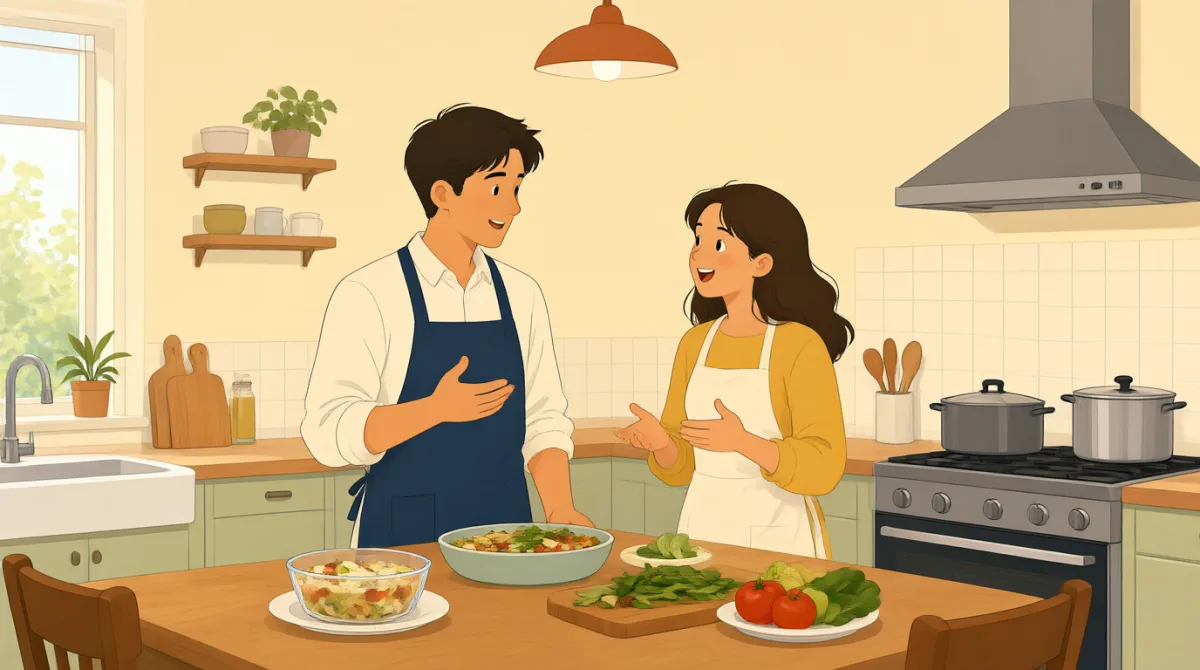
Two individuals are discussing best practices for storing leftovers safely, preventing cross-contamination in the kitchen, or proper cooking temperatures to ensure food safety.
दो लोग बचे हुए खाने को सुरक्षित रखने, रसोई में एक खाने से दूसरे में हानिकारक बैक्टीरिया फैलने से रोकने और खाने को सही तापमान पर पकाने के सबसे अच्छे तरीकों पर बात कर रहे हैं।
संवाद10

Hey Jack, I was just reading up on food safety for leftovers. It's surprising how many rules there are to avoid getting sick.
अरे जैक, मैं अभी बचे हुए खाने की सुरक्षा के बारे में पढ़ रही थी। बीमार पड़ने से बचने के लिए कितने नियम हैं, यह जानकर हैरानी होती है।

Oh yeah, it's definitely something you need to be careful with. What's one of the main things you learned?
हाँ, इस मामले में सचमुच सावधान रहना चाहिए। तुमने कौन-सी अहम बात सीखी?
Well, apparently, the 'two-hour rule' is super important. You shouldn't leave cooked food out at room temperature for more than two hours, or bacteria can grow rapidly.
खैर, पता चला कि ‘दो घंटे का नियम’ बहुत ज़रूरी है। पका हुआ खाना कमरे के तापमान पर दो घंटे से ज़्यादा बाहर नहीं छोड़ना चाहिए, वरना बैक्टीरिया तेज़ी से बढ़ सकते हैं।
That's a good one to remember. And preventing cross-contamination is another big one, especially when handling raw meat. I always use separate cutting boards.
यह बात याद रखने लायक है। और एक खाने से दूसरे में हानिकारक बैक्टीरिया फैलने से रोकना भी बहुत ज़रूरी है, खासकर कच्चा मांस संभालते समय। मैं हमेशा अलग-अलग कटिंग बोर्ड इस्तेमाल करता हूँ।
Absolutely! And washing hands thoroughly after touching raw meat is a must. What about proper cooking temperatures? I always worry if chicken is cooked all the way through.
बिलकुल! कच्चे मांस को छूने के बाद हाथ अच्छी तरह धोना भी ज़रूरी है। सही तापमान पर पकाने के बारे में क्या? मुझे हमेशा चिंता रहती है कि चिकन अंदर तक पका है या नहीं।
For chicken, it needs to reach 165°F (74°C) internally. A meat thermometer is your best friend for that. It takes out all the guesswork.
चिकन का अंदरूनी तापमान 165°F (74°C) तक पहुँचना चाहिए। इसके लिए मीट थर्मामीटर बहुत काम आता है। इससे अंदाज़ा लगाने की ज़रूरत नहीं पड़ती।
That's a great tip! I've been meaning to get one. And for reheating leftovers, do they also need to reach a specific temperature?
बहुत बढ़िया सलाह है! मैं एक लेने की सोच रही थी। और बचे हुए खाने को दोबारा गरम करते समय, क्या उसे भी किसी खास तापमान तक पहुँचाना चाहिए?
Yep, ideally they should be reheated to 165°F (74°C) as well, and make sure they're steaming hot all the way through. Don't just warm them up.
हाँ, बेहतर होगा कि उसे भी 165°F (74°C) तक गरम करो। यह भी पक्का कर लेना कि वह अंदर तक भाप छोड़ने जितना गरम हो। बस थोड़ा-सा गरम करके मत छोड़ना।
Got it. So, quickly refrigerate, prevent cross-contamination, cook to the right temperature, and reheat thoroughly. It all seems pretty manageable when you break it down.
समझ गई। तो, जल्दी फ्रिज में रखो, बैक्टीरिया का फैलाव रोको, सही तापमान पर पकाओ और अच्छी तरह दोबारा गरम करो। जब इसे हिस्सों में बाँटकर सोचते हैं, तो सब काफ़ी आसान लगता है।
Exactly! Small changes make a big difference in food safety. Good chat!
बिलकुल! छोटे-छोटे बदलाव खाने की सुरक्षा में बड़ा फ़र्क़ डालते हैं। अच्छी बातचीत रही!
शब्दावली8
- leftoversबचा हुआ खाना
Food that remains after a meal and is saved for later eating. It's important in food safety to store them properly to avoid spoilage.
खाने के बाद बचा हुआ भोजन, जिसे बाद में खाने के लिए रख लिया जाता है। इसे खराब होने से बचाने के लिए सही तरीके से रखना ज़रूरी है।
- bacteriaबैक्टीरिया
Tiny organisms that can cause food to spoil or make people sick if food is not handled safely. In this context, they grow quickly if food is left out too long.
बहुत सूक्ष्म जीव, जिनसे खाना खराब हो सकता है या लोग बीमार पड़ सकते हैं, अगर खाने को सुरक्षित तरीके से न संभाला जाए। इस संदर्भ में, खाना बहुत देर तक बाहर छोड़ने पर ये तेज़ी से बढ़ते हैं।
- cross-contaminationएक खाने से दूसरे में हानिकारक बैक्टीरिया का फैलाव
The transfer of harmful bacteria from one food to another, like from raw meat to vegetables. Preventing it is key in the kitchen using separate tools.
हानिकारक बैक्टीरिया का एक खाने से दूसरे खाने में पहुँचना, जैसे कच्चे मांस से सब्ज़ियों में। रसोई में अलग-अलग औज़ार इस्तेमाल करके इसे रोकना बहुत ज़रूरी है।
- thoroughlyअच्छी तरह
Completely or carefully, without missing any part. For example, washing hands thoroughly means doing it well to remove all germs.
पूरी सावधानी से, बिना किसी हिस्से को छोड़े। उदाहरण के लिए, हाथ अच्छी तरह धोने का मतलब है कि उन्हें इस तरह धोया जाए कि सारे कीटाणु हट जाएँ।
- meat thermometerमीट थर्मामीटर
A tool used to check the internal temperature of cooked meat to ensure it's safe to eat and fully cooked.
पके हुए मांस का अंदरूनी तापमान जाँचने का औज़ार, जिससे यह पक्का किया जा सके कि मांस अच्छी तरह पक गया है और खाने के लिए सुरक्षित है।
- reheatingदोबारा गरम करना
The process of heating food again before eating it, especially leftovers. It should be done to a high temperature to kill bacteria.
खाने से पहले भोजन को फिर से गरम करने की प्रक्रिया, खासकर बचे हुए खाने को। बैक्टीरिया मारने के लिए इसे अच्छी तरह गरम करना चाहिए।
- refrigerateफ्रिज में रखना
To keep food cold in a fridge to slow down bacterial growth and keep it fresh. Always do this quickly after cooking.
बैक्टीरिया की बढ़त धीमी करने और खाने को ताज़ा रखने के लिए उसे फ्रिज में ठंडा रखना। पकाने के बाद खाना जल्दी फ्रिज में रख दें।
- steaming hotभाप छोड़ने जितना गरम
Very hot, with steam rising from it, meaning the food is thoroughly heated and safe. Use this when reheating to ensure even cooking.
बहुत गरम, जिससे भाप निकल रही हो। इसका मतलब है कि खाना अच्छी तरह गरम हो चुका है और सुरक्षित है। दोबारा गरम करते समय इसका ध्यान रखें, ताकि खाना हर तरफ़ से गरम हो।
मुख्य वाक्य7
- 1
You shouldn't leave cooked food out at room temperature for more than two hours, or bacteria can grow rapidly.
पका हुआ खाना कमरे के तापमान पर दो घंटे से ज़्यादा बाहर नहीं छोड़ना चाहिए, वरना बैक्टीरिया तेज़ी से बढ़ सकते हैं।
This sentence explains the 'two-hour rule' for food safety. 'Shouldn't' is a contraction of 'should not' for advice against something. 'Or' connects a condition and consequence. Useful for warning about health risks in daily cooking conversations.
यह वाक्य खाने की सुरक्षा के ‘दो घंटे के नियम’ को समझाता है। 'Shouldn't' सलाह देता है कि कोई काम नहीं करना चाहिए; यह 'should not' का संक्षिप्त रूप है। 'Or' यहाँ किसी स्थिति और उसके नतीजे को जोड़ता है। रोज़मर्रा में खाना पकाने की बातचीत में स्वास्थ्य के ख़तरों के बारे में चेतावनी देने के लिए यह उपयोगी है।
- 2
Preventing cross-contamination is another big one, especially when handling raw meat.
एक खाने से दूसरे में हानिकारक बैक्टीरिया फैलने से रोकना भी बहुत ज़रूरी है, खासकर कच्चा मांस संभालते समय।
Here, 'big one' is informal for an important point. 'Especially' adds emphasis on a specific case. This is useful for discussing kitchen hygiene; it shows how to prioritize safety steps.
यहाँ 'big one' अनौपचारिक ढंग से किसी अहम बात के लिए इस्तेमाल हुआ है। 'Especially' किसी खास मामले पर ज़ोर देता है। रसोई की साफ़-सफ़ाई पर बात करते समय यह उपयोगी है, क्योंकि इससे सुरक्षा के ज़रूरी कदमों को प्राथमिकता देना सीखते हैं।
- 3
Washing hands thoroughly after touching raw meat is a must.
कच्चे मांस को छूने के बाद हाथ अच्छी तरह धोना ज़रूरी है।
'Is a must' means it's absolutely necessary. The gerund 'washing' acts as the subject. This sentence is practical for giving strong advice on personal hygiene in food preparation.
'Is a must' का मतलब है कि कोई काम करना बेहद ज़रूरी है। 'Washing' क्रिया का -ing रूप है और वाक्य में कर्ता के तौर पर काम करता है। खाना तैयार करते समय साफ़-सफ़ाई के बारे में पक्की सलाह देने के लिए यह वाक्य उपयोगी है।
- 4
A meat thermometer is your best friend for that.
इसके लिए मीट थर्मामीटर तुम्हारा सबसे अच्छा साथी है।
This is a common idiom meaning a helpful tool you can rely on. 'For that' refers to checking cooking temperatures. Great for recommending gadgets in casual talks about cooking tips.
यह एक आम मुहावरा है, जिसका मतलब है ऐसा उपयोगी औज़ार जिस पर आप भरोसा कर सकते हैं। 'For that' का मतलब यहाँ पकाने का तापमान जाँचना है। खाना पकाने की अनौपचारिक बातचीत में किसी उपकरण की सलाह देने के लिए यह बढ़िया वाक्य है।
- 5
Ideally they should be reheated to 165°F (74°C) as well.
बेहतर होगा कि उन्हें भी 165°F (74°C) तक गरम किया जाए।
'Ideally' suggests the best way to do something. 'As well' means 'also.' This sentence teaches giving ideal advice with specifics; use it when explaining reheating rules.
'Ideally' का मतलब है कि किसी काम को करने का सबसे अच्छा तरीका क्या होगा। 'As well' का मतलब है ‘भी’। यह वाक्य खास जानकारी के साथ बेहतर सलाह देना सिखाता है; दोबारा गरम करने के नियम समझाते समय इसका इस्तेमाल करें।
- 6
It all seems pretty manageable when you break it down.
जब इसे हिस्सों में बाँटकर सोचते हैं, तो सब काफ़ी आसान लगता है।
'Break it down' means to divide into smaller parts to make it easier. 'Pretty manageable' is informal for 'quite easy to handle.' Useful for summarizing advice and encouraging others in learning new habits.
'Break it down' का मतलब है किसी चीज़ को छोटे-छोटे हिस्सों में बाँटना, ताकि उसे समझना या करना आसान हो जाए। 'Pretty manageable' अनौपचारिक ढंग से कहता है कि किसी काम को संभालना काफ़ी आसान है। सलाह का सार बताने और नई आदतें सीखने में किसी का हौसला बढ़ाने के लिए यह उपयोगी है।
- 7
Small changes make a big difference in food safety.
छोटे-छोटे बदलाव खाने की सुरक्षा में बड़ा फ़र्क़ डालते हैं।
This proverb shows how minor actions have major impacts. Present simple tense for general truths. Perfect for ending discussions on health topics, motivating simple improvements.
यह कहावत बताती है कि छोटे-छोटे कामों का असर बड़ा हो सकता है। इसमें वर्तमान काल का इस्तेमाल एक आम सच बताने के लिए किया गया है। स्वास्थ्य से जुड़ी बातचीत का अंत करने और आसान सुधारों के लिए प्रेरित करने में यह वाक्य बढ़िया है।