Discussing Insurance Coverage Options
พูดคุยเกี่ยวกับตัวเลือกความคุ้มครองประกันภัย
The car rental agent explains the various insurance options available (e.g., CDW, SLI, PAI), their coverage, deductibles, and costs. The customer asks clarifying questions to decide which coverage to purchase.
พนักงานเช่ารถอธิบายตัวเลือกประกันภัยต่าง ๆ ที่มีให้ (เช่น CDW, SLI, PAI) รวมถึงความคุ้มครอง ค่าเสียหายส่วนแรก และค่าใช้จ่าย ลูกค้าถามรายละเอียดเพิ่มเติมเพื่อเลือกความคุ้มครองที่ต้องการซื้อ
บทสนทนา9
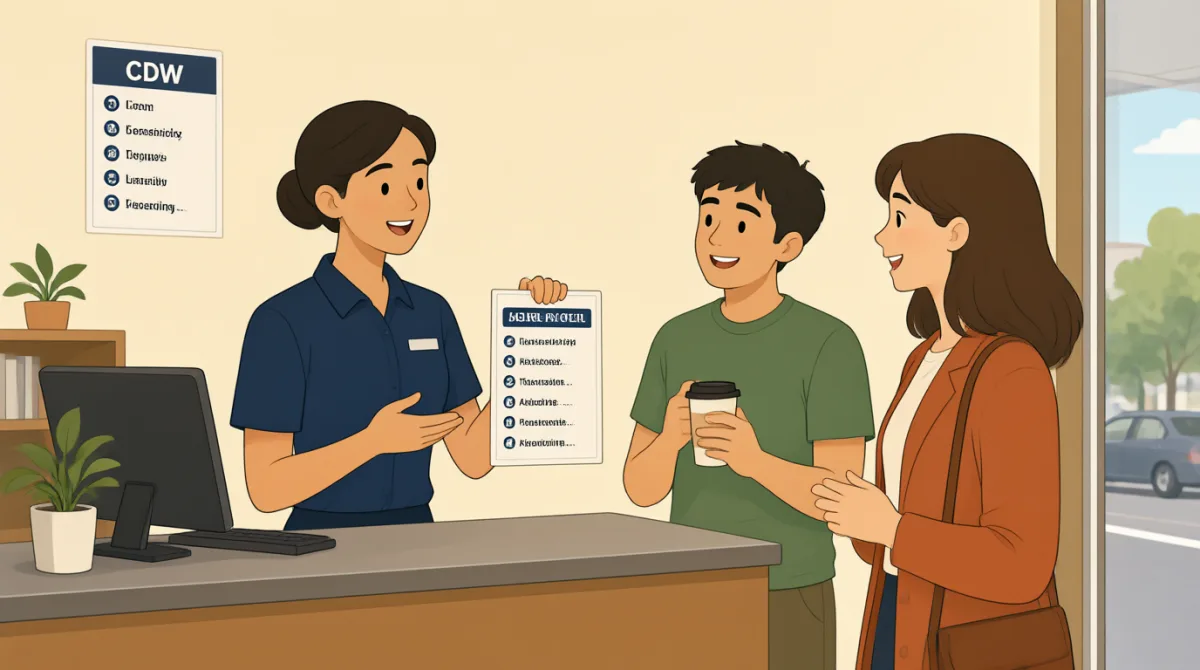

Alright, Mr. Miller, let's go over the insurance options for your rental. Our standard rental includes basic coverage, but we highly recommend considering additional protection.
เอาละค่ะ คุณ Miller เรามาดูตัวเลือกประกันภัยสำหรับรถเช่ากันนะคะ ค่าเช่ารถของเรารวมความคุ้มครองพื้นฐานไว้แล้ว แต่ขอแนะนำอย่างยิ่งให้พิจารณาความคุ้มครองเพิ่มเติมค่ะ

Okay, what are the main options? I want to make sure I'm adequately covered, but I don't want to overpay either.
ครับ มีตัวเลือกหลัก ๆ อะไรบ้างครับ ผมอยากแน่ใจว่ามีความคุ้มครองเพียงพอ แต่ก็ไม่อยากจ่ายแพงเกินไปครับ
Of course. The most common options are our Collision Damage Waiver, or CDW, which covers damage to our vehicle. Then there's Supplemental Liability Insurance, SLI, for third-party damages, and Personal Accident Insurance, PAI, for medical expenses in case of an accident.
ได้เลยค่ะ ตัวเลือกที่คนเลือกกันบ่อยที่สุดคือการยกเว้นความรับผิดต่อความเสียหายจากการชน หรือ CDW ซึ่งคุ้มครองความเสียหายที่เกิดกับรถของเราค่ะ อีกตัวเลือกคือประกันความรับผิดต่อบุคคลภายนอกเพิ่มเติม หรือ SLI สำหรับความเสียหายที่เกิดกับบุคคลอื่น และประกันอุบัติเหตุส่วนบุคคล หรือ PAI สำหรับค่ารักษาพยาบาลกรณีเกิดอุบัติเหตุค่ะ
So, the CDW covers my rental car. What kind of deductible does it have, and what's the daily cost for that?
งั้น CDW ก็คุ้มครองรถเช่าของผมใช่ไหมครับ แล้วมีค่าเสียหายส่วนแรกเท่าไหร่ และคิดค่าประกันต่อวันเท่าไหร่ครับ
With the full CDW, there's no deductible. It's an additional $25 per day. We also have a partial CDW with a $500 deductible for $15 daily.
ถ้าเป็น CDW แบบเต็ม จะไม่มีค่าเสียหายส่วนแรกค่ะ เพิ่มวันละ 25 ดอลลาร์ ส่วน CDW แบบบางส่วนมีค่าเสียหายส่วนแรก 500 ดอลลาร์ คิดวันละ 15 ดอลลาร์ค่ะ
No deductible sounds good. And the SLI? What does that typically cover and for how much?
ไม่มีค่าเสียหายส่วนแรกก็ดีนะครับ แล้ว SLI ล่ะครับ ปกติคุ้มครองอะไรบ้าง แล้วราคาเท่าไหร่ครับ
The SLI provides up to $1 million in coverage for damages or injuries you might cause to other people or their property. That's usually $18 a day, and it's highly recommended, especially if your personal auto insurance doesn't extend to rental cars.
SLI ให้ความคุ้มครองสูงสุด 1 ล้านดอลลาร์สำหรับความเสียหายหรือการบาดเจ็บที่คุณอาจทำให้ผู้อื่นหรือทรัพย์สินของพวกเขาค่ะ ปกติราคา 18 ดอลลาร์ต่อวัน และขอแนะนำอย่างยิ่ง โดยเฉพาะถ้าประกันรถยนต์ส่วนบุคคลของคุณไม่คุ้มครองรถเช่าค่ะ
Got it. So, if I take the full CDW and the SLI, that's $43 a day. And the PAI, that's for medical, right?
เข้าใจแล้วครับ ถ้าผมเลือก CDW แบบเต็มกับ SLI ก็วันละ 43 ดอลลาร์ แล้ว PAI คุ้มครองค่ารักษาพยาบาลใช่ไหมครับ
Exactly. PAI covers up to $10,000 in medical expenses for you and your passengers and also offers a small accidental death benefit. It's $8 a day, but many credit cards offer some form of travel accident insurance, so you might want to check if you're already covered.
ใช่ค่ะ PAI คุ้มครองค่ารักษาพยาบาลสูงสุด 10,000 ดอลลาร์สำหรับคุณและผู้โดยสาร รวมถึงมีเงินชดเชยเล็กน้อยกรณีเสียชีวิตจากอุบัติเหตุด้วยค่ะ ราคา 8 ดอลลาร์ต่อวัน แต่บัตรเครดิตหลายใบมีประกันอุบัติเหตุระหว่างเดินทางให้ คุณอาจลองตรวจสอบดูก่อนว่ามีความคุ้มครองอยู่แล้วหรือเปล่าค่ะ
คำศัพท์7
- coverageความคุ้มครอง
This means protection or insurance that pays for certain risks, like damage or accidents. In car rentals, it refers to what the insurance includes.
หมายถึงการคุ้มครองหรือประกันภัยที่ช่วยจ่ายค่าใช้จ่ายจากความเสี่ยงบางอย่าง เช่น ความเสียหายหรืออุบัติเหตุ ในการเช่ารถ หมายถึงสิ่งที่ประกันภัยครอบคลุมค่ะ
- deductibleค่าเสียหายส่วนแรก
The amount you must pay out of pocket before the insurance starts to pay. For example, a $500 deductible means you pay the first $500 of any claim.
จำนวนเงินที่คุณต้องจ่ายเองก่อนที่ประกันจะเริ่มจ่าย เช่น ค่าเสียหายส่วนแรก 500 ดอลลาร์ หมายความว่าคุณต้องจ่าย 500 ดอลลาร์แรกของการเรียกร้องสินไหมค่ะ
- waiverการยกเว้นความรับผิด
An agreement that gives up your right to sue or claim, often used in insurance like CDW to waive responsibility for damages.
ข้อตกลงที่สละสิทธิ์ในการฟ้องร้องหรือเรียกร้องค่าเสียหาย มักใช้กับประกันภัย เช่น CDW เพื่อยกเว้นความรับผิดชอบต่อความเสียหายค่ะ
- liabilityความรับผิด
Legal responsibility for damage or injury to others. In insurance, it covers costs if you're at fault in an accident.
ความรับผิดชอบตามกฎหมายต่อความเสียหายหรือการบาดเจ็บที่เกิดกับผู้อื่น ในด้านประกันภัย หมายถึงการคุ้มครองค่าใช้จ่ายเมื่อคุณเป็นฝ่ายผิดในอุบัติเหตุค่ะ
- supplementalเพิ่มเติม
Something added to basic coverage to provide extra protection. Like supplemental insurance that goes beyond standard policies.
สิ่งที่เพิ่มเข้ามาจากความคุ้มครองพื้นฐานเพื่อให้ได้รับการคุ้มครองมากขึ้น เช่น ประกันภัยเพิ่มเติมที่ให้ความคุ้มครองเกินกว่ากรมธรรม์มาตรฐานค่ะ
- partialบางส่วน
Not complete; only part of something. In insurance, partial coverage means it protects some but not all risks, often with a deductible.
ไม่ครบถ้วนหรือเป็นเพียงส่วนหนึ่ง ในเรื่องประกันภัย ความคุ้มครองบางส่วนหมายถึงคุ้มครองความเสี่ยงบางอย่างแต่ไม่ใช่ทั้งหมด และมักมีค่าเสียหายส่วนแรกค่ะ
- recommendแนะนำ
To suggest something as a good idea. Agents often recommend insurance options to help customers make safe choices.
เสนอว่าสิ่งใดเป็นความคิดที่ดี พนักงานมักแนะนำตัวเลือกประกันภัยเพื่อช่วยให้ลูกค้าตัดสินใจได้อย่างปลอดภัยค่ะ
ประโยคสำคัญ7
- 1
We highly recommend considering additional protection.
เราขอแนะนำอย่างยิ่งให้พิจารณาความคุ้มครองเพิ่มเติมค่ะ
This is a polite way to suggest something important. Use it in service situations to advise without pushing too hard. 'Highly recommend' emphasizes strong suggestion; 'considering' means thinking about it.
ประโยคนี้เป็นวิธีแนะนำสิ่งสำคัญอย่างสุภาพ ใช้ได้เมื่อต้องให้คำแนะนำในสถานการณ์บริการ โดยไม่กดดันอีกฝ่ายมากเกินไป 'Highly recommend' เน้นว่าแนะนำอย่างยิ่ง ส่วน 'considering' หมายถึงการลองพิจารณาดูค่ะ
- 2
I want to make sure I'm adequately covered, but I don't want to overpay either.
ผมอยากแน่ใจว่ามีความคุ้มครองเพียงพอ แต่ก็ไม่อยากจ่ายแพงเกินไปครับ
This shows balancing needs and costs. Useful for negotiations. 'Make sure' means to confirm; 'adequately covered' means properly protected; 'overpay' means pay too much. The 'but' connects contrasting ideas.
ประโยคนี้แสดงให้เห็นว่ากำลังชั่งน้ำหนักระหว่างความต้องการกับค่าใช้จ่าย มีประโยชน์เวลาต่อรอง 'Make sure' หมายถึงทำให้แน่ใจ 'adequately covered' หมายถึงได้รับความคุ้มครองอย่างเพียงพอ และ 'overpay' หมายถึงจ่ายแพงเกินไป ส่วน 'but' ใช้เชื่อมความคิดที่ขัดแย้งกันค่ะ
- 3
The most common options are our Collision Damage Waiver, or CDW, which covers damage to our vehicle.
ตัวเลือกที่คนเลือกกันบ่อยที่สุดคือการยกเว้นความรับผิดต่อความเสียหายจากการชน หรือ CDW ซึ่งคุ้มครองความเสียหายที่เกิดกับรถของเราค่ะ
This introduces options clearly. Good for explanations. 'Or CDW' is an abbreviation; 'which covers' is a relative clause explaining what it does. Use this pattern to define terms.
ประโยคนี้ใช้แนะนำตัวเลือกต่าง ๆ อย่างชัดเจน เหมาะกับการอธิบาย 'Or CDW' เป็นคำย่อ ส่วน 'which covers' เป็นอนุประโยคที่อธิบายว่าตัวเลือกนั้นคุ้มครองอะไร ใช้รูปแบบนี้เพื่ออธิบายความหมายของคำศัพท์ได้ค่ะ
- 4
With the full CDW, there's no deductible.
ถ้าเป็น CDW แบบเต็ม จะไม่มีค่าเสียหายส่วนแรกค่ะ
Simple statement of benefits. 'With the full CDW' specifies the type; 'there's no' is short for 'there is no,' common in spoken English. Useful for comparing insurance plans.
เป็นประโยคสั้น ๆ ที่บอกข้อดี 'With the full CDW' ระบุประเภทของประกัน ส่วน 'there's no' ย่อมาจาก 'there is no' ซึ่งพบได้บ่อยในภาษาอังกฤษที่ใช้พูด เหมาะสำหรับเปรียบเทียบแผนประกันค่ะ
- 5
It's highly recommended, especially if your personal auto insurance doesn't extend to rental cars.
ขอแนะนำอย่างยิ่ง โดยเฉพาะถ้าประกันรถยนต์ส่วนบุคคลของคุณไม่คุ้มครองรถเช่าค่ะ
Gives advice with a reason. 'Highly recommended' suggests strongly; 'especially if' introduces a condition; 'extend to' means apply to or cover. Use this to explain why something is needed.
ประโยคนี้ให้คำแนะนำพร้อมเหตุผล 'Highly recommended' หมายถึงแนะนำอย่างยิ่ง 'especially if' ใช้เกริ่นเงื่อนไข และ 'extend to' หมายถึงใช้ได้กับหรือให้ความคุ้มครองแก่ ใช้รูปแบบนี้เพื่ออธิบายว่าทำไมบางอย่างจึงจำเป็นค่ะ
- 6
So, if I take the full CDW and the SLI, that's $43 a day.
ถ้าผมเลือก CDW แบบเต็มกับ SLI ก็วันละ 43 ดอลลาร์ครับ
This calculates total cost. 'If I take' means if I choose; 'that's' is informal for 'that is.' Helpful for summarizing purchases. Practice adding costs with 'and' for multiple items.
ประโยคนี้ใช้สรุปค่าใช้จ่ายทั้งหมด 'If I take' หมายถึงถ้าผมเลือก ส่วน 'that's' เป็นรูปย่อแบบไม่เป็นทางการของ 'that is' เหมาะสำหรับสรุปรายการที่เลือก ลองฝึกบวกราคาของหลายรายการโดยใช้ 'and' ดูนะคะ
- 7
You might want to check if you're already covered.
คุณอาจลองตรวจสอบดูก่อนว่ามีความคุ้มครองอยู่แล้วหรือเปล่าค่ะ
Suggests verifying something. 'Might want to' is a soft suggestion; 'check if' means examine whether. Useful for giving helpful tips, like checking credit card benefits.
ประโยคนี้เป็นการเสนอแนะให้ตรวจสอบบางอย่าง 'Might want to' ใช้เสนอแนะอย่างนุ่มนวล ส่วน 'check if' หมายถึงตรวจดูว่า...หรือไม่ ใช้ได้เมื่อต้องการให้คำแนะนำที่เป็นประโยชน์ เช่น ลองตรวจสอบสิทธิประโยชน์จากบัตรเครดิตค่ะ