Deciphering the Instructions - The Language Barrier (of pictograms)
ถอดความคู่มือ – อุปสรรคทางภาษา (ของภาพสัญลักษณ์)
The couple struggles to understand a particularly confusing step in the purely pictorial IKEA instruction manual. They might argue over the interpretation of an illustration, leading to a discussion about what each symbol or arrow means, possibly having to re-read or look ahead for clues.
คู่รักพยายามทำความเข้าใจขั้นตอนที่ชวนสับสนเป็นพิเศษในคู่มือประกอบเฟอร์นิเจอร์ IKEA ซึ่งใช้แต่ภาพล้วน ทั้งคู่อาจเถียงกันว่าภาพประกอบหมายถึงอะไร ก่อนจะคุยกันว่าสัญลักษณ์หรือลูกศรแต่ละอันสื่อถึงอะไร และอาจต้องย้อนอ่านหรือดูหน้าถัดไปเพื่อหาเบาะแส
บทสนทนา8
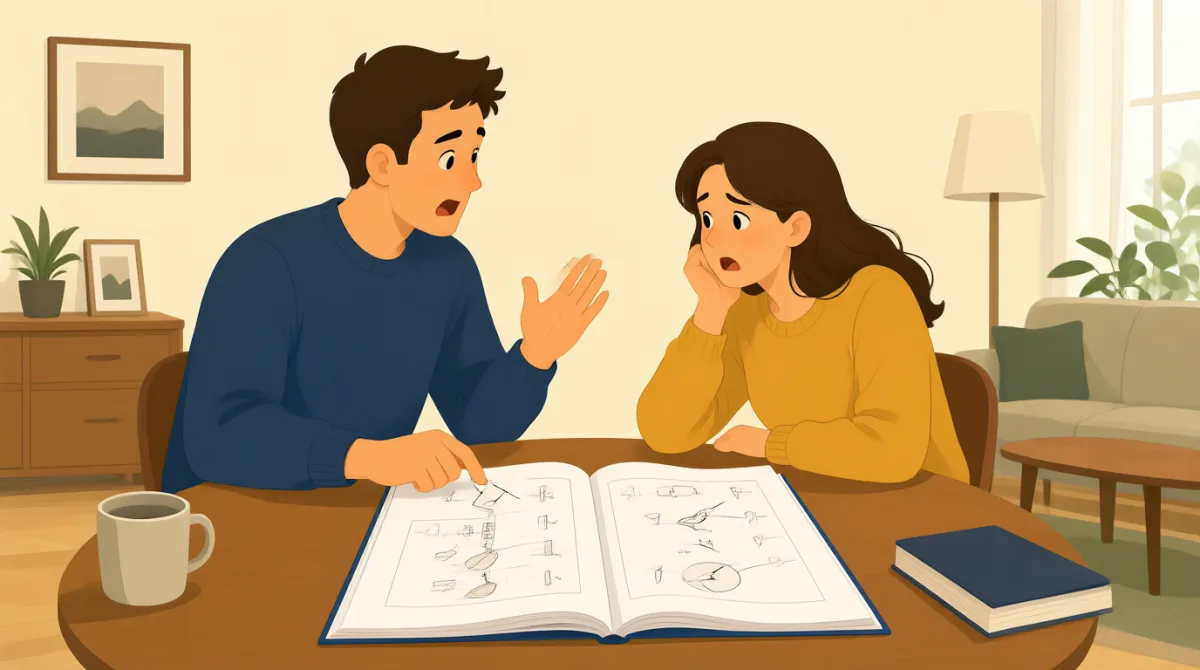

Okay, so we've got the side panels on, but this next step... I'm really scratching my head here.
โอเค ติดแผ่นข้างเรียบร้อยแล้ว แต่ขั้นตอนต่อไปนี่สิ... งงจนคิดไม่ออกเลย

Let me see. Is that an arrow pointing *through* the wood? Or is it showing us where to drill a hole?
ขอดูหน่อย ลูกศรนี่ชี้ทะลุเนื้อไม้ไปเลยเหรอ หรือบอกว่าต้องเจาะรูตรงไหนกันแน่
Exactly! It looks like it's going straight through. But there's no pre-drilled hole there. And this little symbol next to it... a circle with a cross?
นั่นแหละ ดูเหมือนมันชี้ทะลุไปตรง ๆ เลย แต่ตรงนั้นไม่มีรูที่เจาะไว้ก่อนด้วย แล้วสัญลักษณ์เล็ก ๆ ข้าง ๆ นี่... วงกลมมีกากบาทหมายความว่าไงนะ
Usually, that means 'don't do this' or 'not applicable'. But then what IS applicable? Maybe we need to look ahead to the next page for context.
ปกติก็หมายถึง “ห้ามทำแบบนี้” หรือ “ไม่เกี่ยวข้อง” แต่แล้วอะไรที่ต้องทำล่ะ? เราลองดูหน้าถัดไปเผื่อจะเข้าใจบริบทกันไหม
Good idea. Let's flip the page... Ah, wait! Look at this detail here on step seven. It shows a different type of screw going into *that* same spot.
ดีเลย พลิกหน้ากัน... อ๊ะ เดี๋ยวก่อน! ดูรายละเอียดตรงขั้นตอนที่เจ็ดสิ ใช้สกรูคนละแบบขันเข้าไปตรงจุดเดิมนี่เลย
So, the first illustration was a 'wrong way' example? That's so misleading! They should put a big 'X' over it or something.
งั้นภาพแรกก็เป็นตัวอย่าง “วิธีที่ผิด” เหรอ? ชวนให้เข้าใจผิดสุด ๆ! น่าจะกากบาท X ตัวใหญ่ ๆ ทับไว้หรืออะไรแบบนั้นนะ
Tell me about it. IKEA instructions, always an adventure. So, we're definitely using the 'cam lock and bolt' here, not the long screw.
เข้าใจเลย คู่มือ IKEA นี่มีเรื่องให้ลุ้นตลอด งั้นตรงนี้เราใช้ “ตัวล็อกแคมกับสลักเกลียว” แน่นอน ไม่ใช่สกรูตัวยาว
Right. Okay, that makes so much more sense. This pictogram language is a real test of our decoding skills, isn't it?
ใช่ โอเค แบบนี้เข้าใจขึ้นเยอะเลย ภาษาภาพสัญลักษณ์นี่ทดสอบทักษะถอดรหัสของเราจริง ๆ เลยเนอะ
คำศัพท์9
- scratching my headงงจนเกาหัว
An idiom meaning to be confused or puzzled about something, like trying to solve a difficult problem.
สำนวนที่หมายถึงกำลังสับสนหรืองุนงงกับบางอย่าง เหมือนตอนพยายามแก้ปัญหาที่ยาก
- arrowลูกศร
A straight line with a pointed end that shows direction, often used in diagrams or instructions to guide actions.
เส้นตรงที่มีปลายแหลม ใช้บอกทิศทาง มักปรากฏในแผนภาพหรือคำแนะนำเพื่อชี้ว่าต้องทำอะไร
- drill a holeเจาะรู
To use a tool called a drill to make a small opening in wood or another material, common in DIY tasks like furniture assembly.
ใช้เครื่องมือที่เรียกว่าสว่านทำช่องเล็ก ๆ ในไม้หรือวัสดุอื่น มักใช้ในงาน DIY อย่างการประกอบเฟอร์นิเจอร์
- pre-drilledเจาะรูไว้ล่วงหน้า
Describes a hole that has already been made in advance with a drill, so you don't need to make it yourself.
ใช้บอกว่ารูนั้นถูกเจาะเตรียมไว้แล้ว จึงไม่ต้องเจาะเอง
- symbolสัญลักษณ์
A simple picture or sign that represents an idea or instruction, like in manuals where words are not used.
รูปภาพหรือเครื่องหมายง่าย ๆ ที่ใช้แทนแนวคิดหรือคำสั่ง เช่น ในคู่มือที่ไม่ใช้ข้อความ
- misleadingชวนให้เข้าใจผิด
Something that causes confusion or leads you to the wrong conclusion, often used when instructions are unclear.
สิ่งที่ทำให้สับสนหรือทำให้เข้าใจไปผิดทาง มักใช้พูดถึงคำแนะนำที่ไม่ชัดเจน
- Tell me about itเข้าใจเลย
An informal expression to strongly agree with someone and show you share their frustration or experience.
สำนวนไม่เป็นทางการที่ใช้เห็นด้วยอย่างมาก และแสดงว่าเราก็รู้สึกหงุดหงิดหรือเคยเจอแบบเดียวกัน
- pictogramภาพสัญลักษณ์
A visual symbol or picture that communicates information without words, like icons in IKEA instructions.
ภาพหรือสัญลักษณ์ที่สื่อข้อมูลโดยไม่ใช้คำพูด เช่น ไอคอนในคู่มือ IKEA
- decodingการถอดรหัส
The process of figuring out or interpreting the meaning of something complex, like symbols or codes.
กระบวนการค้นหาหรือตีความความหมายของสิ่งที่ซับซ้อน เช่น สัญลักษณ์หรือรหัส
ประโยคสำคัญ7
- 1
I'm really scratching my head here.
ฉันงงจนคิดไม่ออกเลย
This is an idiomatic expression using 'scratching my head' to show confusion. It's useful for everyday situations when you're puzzled, and the adverb 'really' adds emphasis. Use it casually with friends or partners.
ประโยคนี้ใช้สำนวน 'scratching my head' เพื่อบอกว่ากำลังสับสน เหมาะกับสถานการณ์ทั่วไปเวลาคิดไม่ตก ส่วน 'really' ช่วยเน้นความรู้สึก ใช้พูดสบาย ๆ กับเพื่อนหรือคนรักได้
- 2
Is that an arrow pointing through the wood?
ลูกศรนั่นชี้ทะลุเนื้อไม้ไปเลยเหรอ
A yes/no question using 'is that' to seek clarification on a visual detail. The present continuous 'pointing' describes the action shown. Useful for describing diagrams or instructions in collaborative tasks.
คำถามตอบใช่หรือไม่ที่ใช้ 'is that' เพื่อขอความชัดเจนเกี่ยวกับรายละเอียดในภาพ ส่วน 'pointing' ที่เป็นรูป present continuous ใช้บรรยายการกระทำที่ภาพแสดง เหมาะกับการอธิบายแผนภาพหรือคำแนะนำเวลาทำงานร่วมกัน
- 3
Usually, that means 'don't do this' or 'not applicable'.
ปกติก็หมายถึง “ห้ามทำแบบนี้” หรือ “ไม่เกี่ยวข้อง”
This sentence explains the meaning of a symbol with 'usually' for general cases and quotes for examples. 'Not applicable' is a common phrase meaning something doesn't apply. Great for interpreting signs or rules.
ประโยคนี้อธิบายความหมายของสัญลักษณ์ โดยใช้ 'usually' เพื่อพูดถึงกรณีทั่วไป และยกตัวอย่างความหมายไว้ในเครื่องหมายคำพูด 'Not applicable' เป็นวลีที่ใช้บ่อย หมายถึงสิ่งนั้นใช้ไม่ได้หรือไม่เกี่ยวข้อง เหมาะกับการตีความป้ายหรือกฎต่าง ๆ
- 4
Maybe we need to look ahead to the next page for context.
บางทีเราน่าจะดูหน้าถัดไปเพื่อทำความเข้าใจบริบท
A suggestion starting with 'maybe' for possibility, using 'look ahead' meaning to check future parts. 'Context' refers to surrounding information for better understanding. Use this when instructions are unclear.
ประโยคนี้เสนอความเป็นไปได้โดยเริ่มด้วย 'maybe' และใช้ 'look ahead' ในความหมายว่าตรวจดูเนื้อหาส่วนถัดไป ส่วน 'context' หมายถึงข้อมูลแวดล้อมที่ช่วยให้เข้าใจได้ดีขึ้น ใช้พูดได้เมื่อคำแนะนำไม่ชัดเจน
- 5
That's so misleading!
ชวนให้เข้าใจผิดสุด ๆ!
An exclamation expressing frustration, with 'so' intensifying 'misleading' (causing confusion). Informal and emotional; use it to complain about confusing information like manuals or ads.
คำอุทานนี้แสดงความหงุดหงิด โดย 'so' ช่วยเน้นคำว่า 'misleading' ซึ่งหมายถึงชวนให้สับสน เป็นภาษาพูดที่แสดงอารมณ์ ใช้บ่นเรื่องข้อมูลที่ทำให้เข้าใจยาก เช่น คู่มือหรือโฆษณา
- 6
Tell me about it.
เข้าใจเลย
A short idiomatic response to agree emphatically, often with sarcasm or shared annoyance. No grammar complexity, but very common in casual conversations to show empathy.
คำตอบสั้น ๆ ที่เป็นสำนวน ใช้แสดงความเห็นด้วยอย่างหนักแน่น บางครั้งอาจมีน้ำเสียงประชดหรือแสดงความหงุดหงิดร่วมกัน แม้โครงสร้างจะไม่ซับซ้อน แต่พบบ่อยในการสนทนาสบาย ๆ เพื่อแสดงความเห็นอกเห็นใจ
- 7
This pictogram language is a real test of our decoding skills, isn't it?
ภาษาภาพสัญลักษณ์นี่ทดสอบทักษะถอดรหัสของเราจริง ๆ เลยเนอะ
A statement with a tag question 'isn't it?' to seek agreement. 'Real test' means a true challenge. Useful for discussing difficulties and involving the listener in reflective talks.
ประโยคนี้ลงท้ายด้วยคำถาม 'isn't it?' เพื่อชวนให้อีกฝ่ายเห็นด้วย 'Real test' หมายถึงความท้าทายจริง ๆ เหมาะกับการพูดถึงเรื่องยาก ๆ และชวนคู่สนทนามาร่วมคิดทบทวน