Deciphering the Instructions - The Language Barrier (of pictograms)
رمزگشایی از دستورالعملها؛ سد زبانیِ تصویرنگاشتها
The couple struggles to understand a particularly confusing step in the purely pictorial IKEA instruction manual. They might argue over the interpretation of an illustration, leading to a discussion about what each symbol or arrow means, possibly having to re-read or look ahead for clues.
این زوج در فهم یکی از مراحل گیجکنندهٔ دفترچهٔ تصویری ایکیا به مشکل برخوردهاند. ممکن است دربارهٔ برداشتشان از یک تصویر با هم بحث کنند و سعی کنند بفهمند هر نماد یا پیکان چه معنایی دارد؛ شاید هم لازم شود دوباره دستورالعمل را بخوانند یا برای یافتن سرنخ به صفحات بعد نگاه کنند.
گفتوگو8
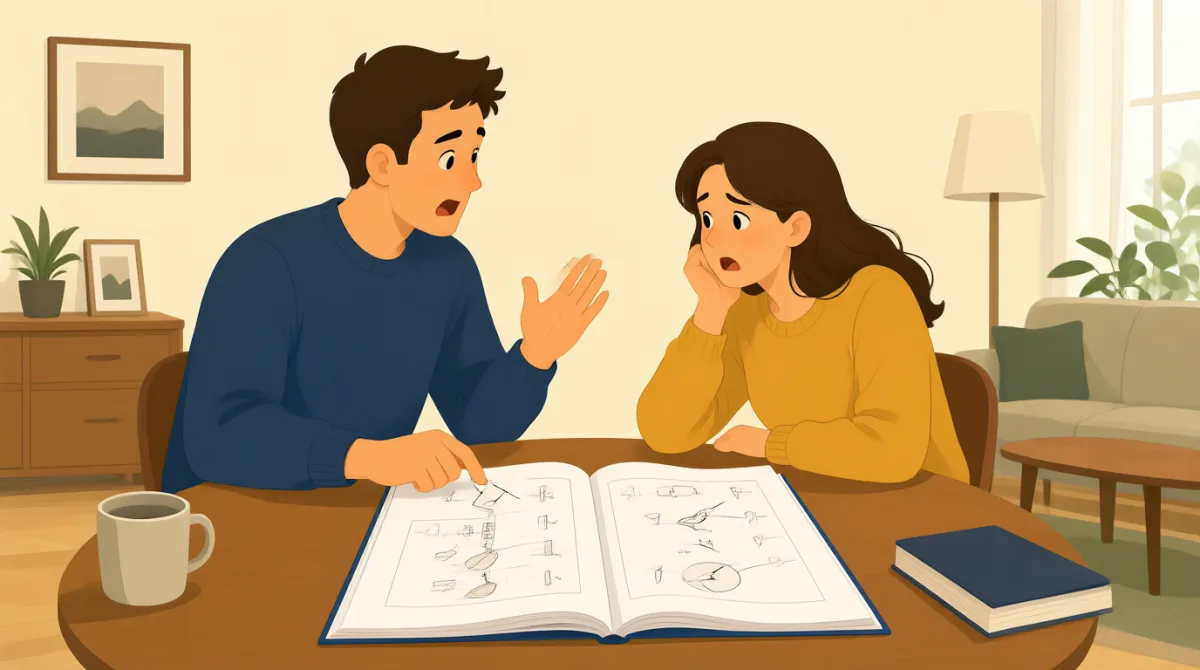

Okay, so we've got the side panels on, but this next step... I'm really scratching my head here.
خب، پنلهای کناری رو نصب کردیم، ولی این مرحلهٔ بعدی... واقعاً موندم باید چیکار کنیم.

Let me see. Is that an arrow pointing *through* the wood? Or is it showing us where to drill a hole?
بذار ببینم. این پیکان داره از توی چوب رد میشه؟ یا داره نشونمون میده کجا سوراخ کنیم؟
Exactly! It looks like it's going straight through. But there's no pre-drilled hole there. And this little symbol next to it... a circle with a cross?
دقیقاً! انگار مستقیم از چوب رد میشه. ولی اونجا هیچ سوراخی از قبل ایجاد نشده. این نماد کوچیک کنارش چی؟ یه دایره با ضربدر؟
Usually, that means 'don't do this' or 'not applicable'. But then what IS applicable? Maybe we need to look ahead to the next page for context.
معمولاً یعنی «این کار رو نکن» یا «کاربردی نداره». ولی پس کدوم روش کاربرد داره؟ شاید باید برای فهمیدن منظورش صفحهٔ بعد رو هم نگاه کنیم.
Good idea. Let's flip the page... Ah, wait! Look at this detail here on step seven. It shows a different type of screw going into *that* same spot.
فکر خوبیه. صفحه رو برگردونیم... آها، صبر کن! این جزئیات رو توی مرحلهٔ هفت ببین. یه نوع پیچ متفاوت رو نشون میده که میره توی همون نقطه.
So, the first illustration was a 'wrong way' example? That's so misleading! They should put a big 'X' over it or something.
پس تصویر اول نمونهٔ «روش اشتباه» بود؟ خیلی گمراهکنندهست! باید یه ضربدر بزرگ روش میکشیدن یا یه همچین چیزی.
Tell me about it. IKEA instructions, always an adventure. So, we're definitely using the 'cam lock and bolt' here, not the long screw.
آره، واقعاً. دستورالعملهای ایکیا همیشه یه ماجرایی دارن. پس اینجا قطعاً باید از «قفل بادامی و پیچ اتصال» استفاده کنیم، نه پیچ بلند.
Right. Okay, that makes so much more sense. This pictogram language is a real test of our decoding skills, isn't it?
درسته. خب، حالا خیلی بیشتر با عقل جور درمیاد. این زبان تصویری واقعاً مهارت رمزگشاییمون رو به چالش میکشه، نه؟
واژگان9
- scratching my headگیج و سردرگم بودن
An idiom meaning to be confused or puzzled about something, like trying to solve a difficult problem.
اصطلاحی به معنی گیج یا سردرگم بودن دربارهٔ چیزی؛ مثل وقتی که سعی میکنید مسئلهای دشوار را حل کنید.
- arrowپیکان
A straight line with a pointed end that shows direction, often used in diagrams or instructions to guide actions.
خطی صاف با انتهایی نوکتیز که جهت را نشان میدهد و اغلب در نمودارها یا دستورالعملها برای راهنمایی به کار میرود.
- drill a holeسوراخ کردن
To use a tool called a drill to make a small opening in wood or another material, common in DIY tasks like furniture assembly.
استفاده از وسیلهای به نام دریل برای ایجاد سوراخی کوچک در چوب یا مادهای دیگر؛ کاری رایج در کارهای فنی خانگی مثل سرهمکردن مبلمان.
- pre-drilledاز قبل سوراخشده
Describes a hole that has already been made in advance with a drill, so you don't need to make it yourself.
برای توصیف سوراخی به کار میرود که قبلاً با دریل ایجاد شده و لازم نیست خودتان آن را ایجاد کنید.
- symbolنماد
A simple picture or sign that represents an idea or instruction, like in manuals where words are not used.
تصویر یا نشانهای ساده که یک مفهوم یا دستور را نشان میدهد؛ مثل تصاویر دفترچههایی که در آنها از کلمات استفاده نمیشود.
- misleadingگمراهکننده
Something that causes confusion or leads you to the wrong conclusion, often used when instructions are unclear.
چیزی که باعث سردرگمی میشود یا شما را به نتیجهگیری اشتباه میرساند؛ اغلب برای دستورالعملهای نامفهوم به کار میرود.
- Tell me about itTell me about it
An informal expression to strongly agree with someone and show you share their frustration or experience.
عبارتی غیررسمی برای موافقت کامل با کسی و نشاندادن اینکه شما هم همان تجربه یا کلافگی را دارید.
- pictogramتصویرنگاشت
A visual symbol or picture that communicates information without words, like icons in IKEA instructions.
نماد یا تصویری که بدون کلمات اطلاعاتی را منتقل میکند؛ مثل آیکونهای دستورالعملهای ایکیا.
- decodingرمزگشایی
The process of figuring out or interpreting the meaning of something complex, like symbols or codes.
فرایند فهمیدن یا تفسیر معنای چیزی پیچیده، مثل نمادها یا رمزها.
جملات کلیدی7
- 1
I'm really scratching my head here.
واقعاً موندم باید چیکار کنیم.
This is an idiomatic expression using 'scratching my head' to show confusion. It's useful for everyday situations when you're puzzled, and the adverb 'really' adds emphasis. Use it casually with friends or partners.
در این جمله، 'scratching my head' برای نشاندادن سردرگمی به کار میرود. در موقعیتهای روزمره که چیزی گیجتان کرده، عبارت مفیدی است و 'really' هم بر شدت سردرگمی تأکید میکند. آن را در گفتوگوهای خودمانی با دوستان یا شریک زندگیتان به کار ببرید.
- 2
Is that an arrow pointing through the wood?
این پیکان داره از توی چوب رد میشه؟
A yes/no question using 'is that' to seek clarification on a visual detail. The present continuous 'pointing' describes the action shown. Useful for describing diagrams or instructions in collaborative tasks.
این پرسش بله یا خیر با 'is that' برای روشنکردن جزئیات بصری به کار میرود. زمان حال استمراری در 'pointing' کاری را توصیف میکند که تصویر نشان میدهد. برای توصیف نمودارها یا دستورالعملها هنگام انجام کاری مشترک مفید است.
- 3
Usually, that means 'don't do this' or 'not applicable'.
معمولاً یعنی «این کار رو نکن» یا «کاربردی نداره».
This sentence explains the meaning of a symbol with 'usually' for general cases and quotes for examples. 'Not applicable' is a common phrase meaning something doesn't apply. Great for interpreting signs or rules.
این جمله معنای یک نماد را توضیح میدهد؛ 'usually' برای بیان حالتهای معمول است و عبارتهای داخل نقلقول نمونههایی از معنا هستند. 'Not applicable' عبارتی رایج به معنی «کاربردی ندارد» است. برای تفسیر نشانهها یا قوانین کاربرد دارد.
- 4
Maybe we need to look ahead to the next page for context.
شاید باید برای فهمیدن منظورش صفحهٔ بعد رو هم نگاه کنیم.
A suggestion starting with 'maybe' for possibility, using 'look ahead' meaning to check future parts. 'Context' refers to surrounding information for better understanding. Use this when instructions are unclear.
این پیشنهاد با 'maybe' احتمال را مطرح میکند و در آن 'look ahead' به معنی بررسی بخشهای بعدی است. 'Context' به اطلاعات پیرامونی گفته میشود که به درک بهتر کمک میکند. وقتی دستورالعملها واضح نیستند، میتوانید از این جمله استفاده کنید.
- 5
That's so misleading!
خیلی گمراهکنندهست!
An exclamation expressing frustration, with 'so' intensifying 'misleading' (causing confusion). Informal and emotional; use it to complain about confusing information like manuals or ads.
این جملهٔ تعجبی کلافگی را نشان میدهد و 'so' شدتِ 'misleading' (گمراهکننده) را بیشتر میکند. عبارتی خودمانی و احساسی است؛ وقتی اطلاعات گیجکنندهای مثل دفترچهٔ راهنما یا آگهی را نقد میکنید، به کار میآید.
- 6
Tell me about it.
آره، واقعاً.
A short idiomatic response to agree emphatically, often with sarcasm or shared annoyance. No grammar complexity, but very common in casual conversations to show empathy.
پاسخی اصطلاحی و کوتاه برای موافقت قاطعانه است و اغلب کنایه یا کلافگی مشترک را هم میرساند. از نظر دستوری پیچیده نیست، اما در گفتوگوهای خودمانی برای همدلی بسیار رایج است.
- 7
This pictogram language is a real test of our decoding skills, isn't it?
این زبان تصویری واقعاً مهارت رمزگشاییمون رو به چالش میکشه، نه؟
A statement with a tag question 'isn't it?' to seek agreement. 'Real test' means a true challenge. Useful for discussing difficulties and involving the listener in reflective talks.
این جمله با پرسش تأییدی 'isn't it?' برای گرفتن موافقت طرف مقابل همراه است. 'Real test' یعنی چالش واقعی. برای صحبت دربارهٔ دشواریها و جلب نظر شنونده در گفتوگوهای تأملبرانگیز مفید است.