Paying and Getting Change
Płacenie i wydawanie reszty
Emma pays for the fruit with cash. David gives her the change and a friendly goodbye.
Emma płaci gotówką za owoce. David wydaje jej resztę i życzliwie się żegna.
Dialog7
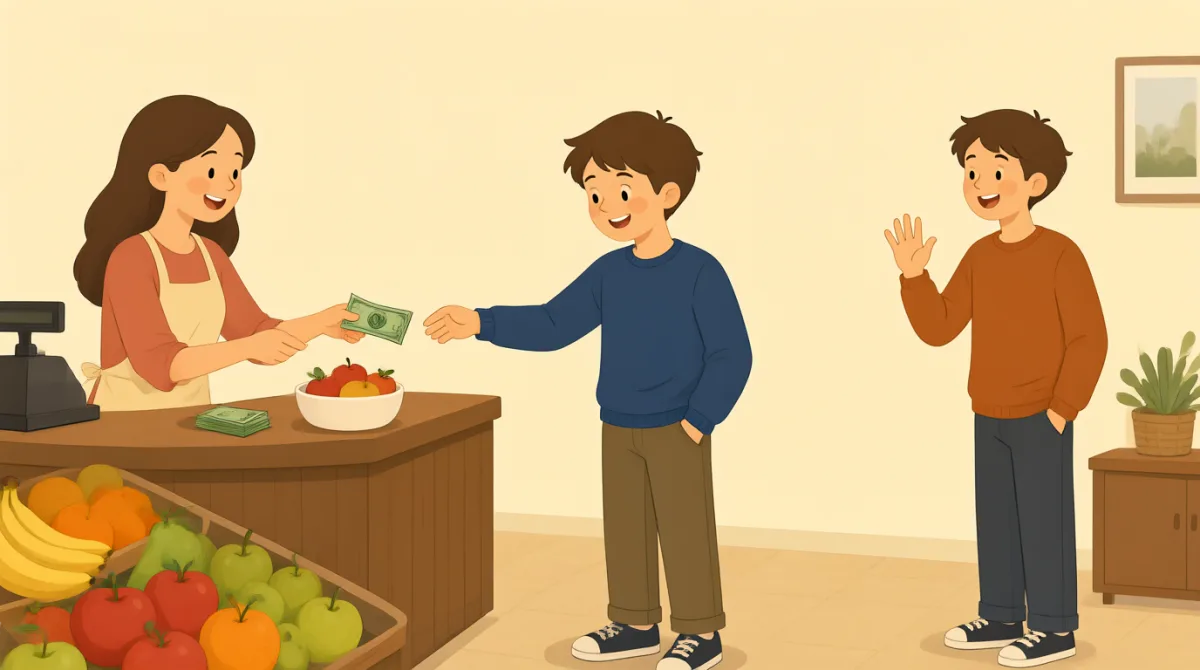

Here you go. Is this ten dollars?
Proszę. Czy to dziesięć dolarów?

Yes, it is. Your oranges are eight dollars.
Tak. Pomarańcze kosztują osiem dolarów.
I paid with a ten. How much change?
Zapłaciłam dziesięciodolarówką. Ile reszty?
Two dollars. Here you are.
Dwa dolary. Proszę bardzo.
Thanks! The oranges look so fresh.
Dziękuję! Pomarańcze wyglądają na takie świeże.
They are. Have a nice day!
Bo są. Miłego dnia!
You too. Goodbye!
Wzajemnie. Do widzenia!
Słownictwo6
- Here you go.Proszę.
Say this when you give someone something. Here, Emma gives David the money.
Tak mówimy, gdy coś komuś podajemy. W tej sytuacji Emma daje Davidowi pieniądze.
- changereszta
Change is the money you get back when you pay more than the price. Emma gets two dollars back.
Reszta to pieniądze, które dostajesz z powrotem, gdy płacisz więcej, niż wynosi cena. Emma dostaje dwa dolary reszty.
- Here you are.Proszę bardzo.
Say this when you give something to someone. David gives Emma her change.
Tak mówimy, gdy coś komuś podajemy. David wydaje Emmie resztę.
- freshświeży
Fresh means new and good to eat. Emma says the oranges look fresh.
„Świeży” znaczy, że coś jest niedawno zebrane lub przygotowane i nadaje się do jedzenia. Emma mówi, że pomarańcze wyglądają na świeże.
- Have a nice day!Miłego dnia!
This is a friendly way to say goodbye. You can use it with customers, friends, or other people.
To życzliwy sposób na pożegnanie. Możesz tak powiedzieć klientom, znajomym i innym osobom.
- You too.Wzajemnie.
Say this to wish the same good thing to another person. Emma says it after David wishes her a nice day.
Tak życzysz drugiej osobie tego samego. Emma odpowiada tak, gdy David życzy jej miłego dnia.
Kluczowe zdania8
- 1
Is this ten dollars?
Czy to dziesięć dolarów?
Use this question to check the value of money. You can change “ten dollars” to another amount.
Użyj tego pytania, by sprawdzić wartość pieniędzy. Możesz zastąpić „ten dollars” inną kwotą.
- 2
Your oranges are eight dollars.
Pomarańcze kosztują osiem dolarów.
Use this sentence to tell someone the price. Replace “oranges” with another item and say its cost.
Tego zdania użyj, by podać komuś cenę. Zastąp „oranges” nazwą innego produktu i podaj jego cenę.
- 3
I paid with a ten.
Zapłaciłam dziesięciodolarówką.
Use this to say you paid with a ten-dollar bill. You can replace “a ten” with another bill amount.
Tego zdania użyj, by powiedzieć, że zapłaciłaś banknotem dziesięciodolarowym. Możesz zastąpić „a ten” nazwą banknotu o innej wartości.
- 4
How much change?
Ile reszty?
Use this short question to ask how much money you will get back. It is useful when you pay with cash.
Tego krótkiego pytania użyj, by zapytać, ile pieniędzy dostaniesz z powrotem. Przydaje się, gdy płacisz gotówką.
- 5
Two dollars.
Dwa dolary.
Use this short answer to say the amount of money. You can replace “two dollars” with another amount.
Tą krótką odpowiedzią podajesz kwotę. Możesz zastąpić „two dollars” inną kwotą.
- 6
The oranges look so fresh.
Pomarańcze wyglądają na takie świeże.
Use this sentence to say that fruit or food looks very fresh. Replace “oranges” with another food.
Tego zdania użyj, by powiedzieć, że owoce lub jedzenie wyglądają na bardzo świeże. Zastąp „oranges” nazwą innego produktu spożywczego.
- 7
Have a nice day!
Miłego dnia!
Use this friendly phrase when saying goodbye. You can also say it to a cashier or a customer.
Użyj tego życzliwego zwrotu na pożegnanie. Możesz tak powiedzieć także kasjerowi lub klientowi.
- 8
You too.
Wzajemnie.
Use this short reply when you want to wish someone the same thing. For example, say it after someone says, “Have a nice day!”
Użyj tej krótkiej odpowiedzi, gdy chcesz życzyć komuś tego samego. Na przykład powiedz tak po „Have a nice day!”