Paying and Getting Change
支払いとおつり
Emma pays for the fruit with cash. David gives her the change and a friendly goodbye.
エマは現金で果物の代金を払います。デイビッドはおつりを渡し、親しみを込めて別れのあいさつをします。
会話7
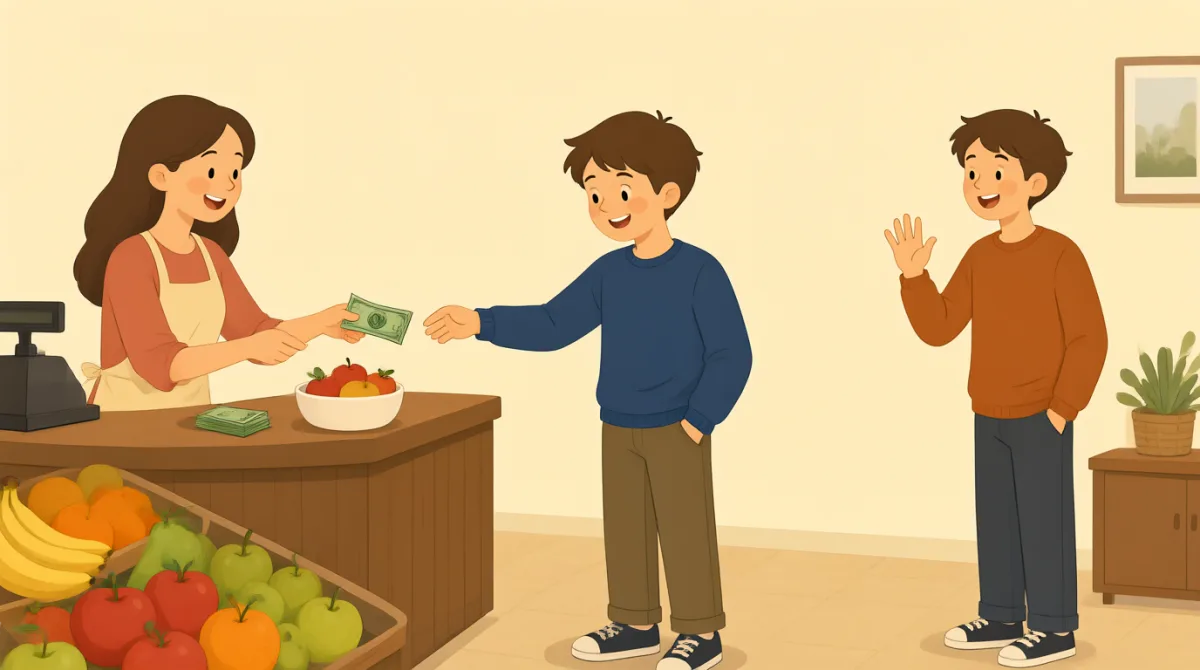

Here you go. Is this ten dollars?
はい、どうぞ。これ、10ドルですか?

Yes, it is. Your oranges are eight dollars.
はい、そうです。オレンジは8ドルです。
I paid with a ten. How much change?
10ドル札で払いました。おつりはいくらですか?
Two dollars. Here you are.
2ドルです。はい、どうぞ。
Thanks! The oranges look so fresh.
ありがとう!オレンジ、とても新鮮そうですね。
They are. Have a nice day!
そうなんです。よい一日を!
You too. Goodbye!
あなたも。さようなら!
語彙6
- Here you go.はい、どうぞ。
Say this when you give someone something. Here, Emma gives David the money.
誰かに何かを渡すときに使います。ここでは、エマがお金をデイビッドに渡しています。
- changeおつり
Change is the money you get back when you pay more than the price. Emma gets two dollars back.
change は、代金より多く払ったときに戻ってくるお金のことです。エマは2ドルのおつりを受け取ります。
- Here you are.はい、どうぞ。
Say this when you give something to someone. David gives Emma her change.
誰かに何かを渡すときに使います。デイビッドはエマにおつりを渡しています。
- fresh新鮮な
Fresh means new and good to eat. Emma says the oranges look fresh.
fresh は、新しくておいしく食べられるという意味です。エマはオレンジが新鮮そうだと言っています。
- Have a nice day!よい一日を!
This is a friendly way to say goodbye. You can use it with customers, friends, or other people.
別れ際に使う親しみのあるあいさつです。お客さんや友達など、いろいろな人に使えます。
- You too.あなたも。
Say this to wish the same good thing to another person. Emma says it after David wishes her a nice day.
相手にも同じようによいことがあるよう願うときに使います。デイビッドに「よい一日を」と言われたあと、エマが返しています。
重要な文8
- 1
Is this ten dollars?
これ、10ドルですか?
Use this question to check the value of money. You can change “ten dollars” to another amount.
お金の金額を確かめるときに使う質問です。“ten dollars” を別の金額に変えて使えます。
- 2
Your oranges are eight dollars.
オレンジは8ドルです。
Use this sentence to tell someone the price. Replace “oranges” with another item and say its cost.
値段を伝えるときに使う文です。“oranges” を別の商品に置き換え、その値段を言いましょう。
- 3
I paid with a ten.
10ドル札で払いました。
Use this to say you paid with a ten-dollar bill. You can replace “a ten” with another bill amount.
10ドル札で支払ったことを伝える表現です。“a ten” を別の紙幣の金額に置き換えられます。
- 4
How much change?
おつりはいくらですか?
Use this short question to ask how much money you will get back. It is useful when you pay with cash.
いくら戻ってくるかを尋ねる短い質問です。現金で払うときに便利です。
- 5
Two dollars.
2ドルです。
Use this short answer to say the amount of money. You can replace “two dollars” with another amount.
金額を伝える短い答えです。“two dollars” を別の金額に置き換えて使えます。
- 6
The oranges look so fresh.
オレンジ、とても新鮮そうですね。
Use this sentence to say that fruit or food looks very fresh. Replace “oranges” with another food.
果物や食べ物がとても新鮮そうだと言うときに使います。“oranges” を別の食べ物に置き換えられます。
- 7
Have a nice day!
よい一日を!
Use this friendly phrase when saying goodbye. You can also say it to a cashier or a customer.
別れ際に使う親しみのある表現です。レジ係やお客さんにも言えます。
- 8
You too.
あなたも。
Use this short reply when you want to wish someone the same thing. For example, say it after someone says, “Have a nice day!”
相手にも同じことを願うときに使う短い返事です。たとえば、誰かに “Have a nice day!” と言われたあとに使えます。