Paying and Getting Change
จ่ายเงินและรับเงินทอน
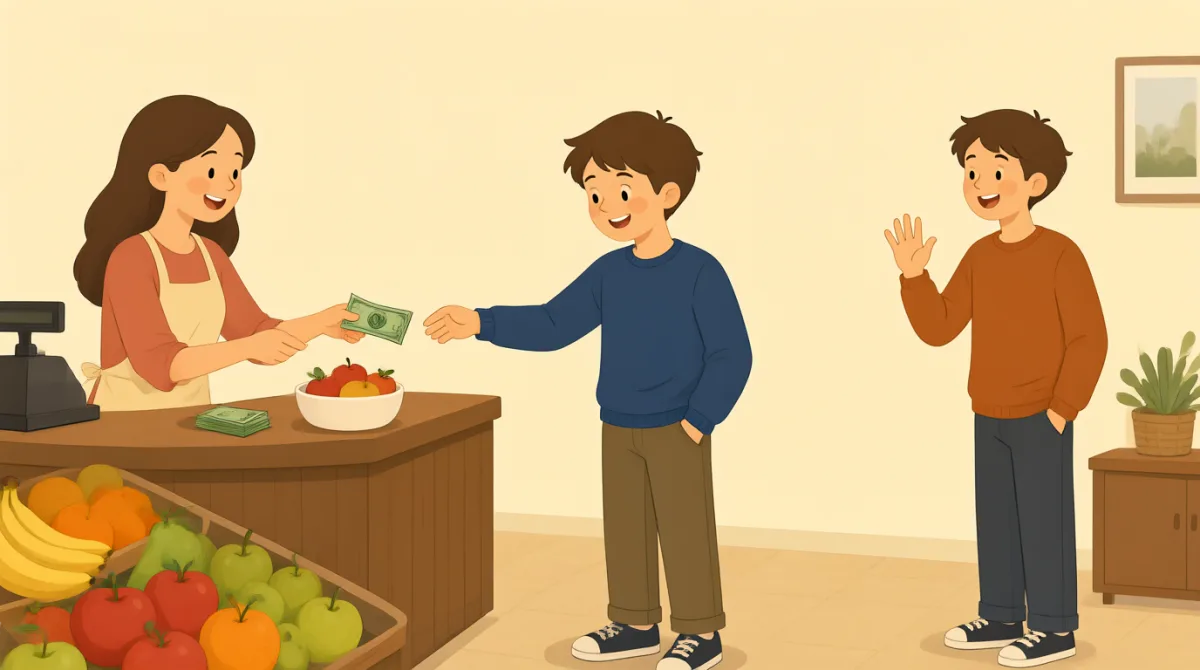
Emma pays for the fruit with cash. David gives her the change and a friendly goodbye.
เอ็มมาจ่ายเงินค่าผลไม้ด้วยเงินสด เดวิดทอนเงินให้เธอพร้อมกล่าวลาอย่างเป็นมิตร
บทสนทนา7

Here you go. Is this ten dollars?
นี่ค่ะ นี่สิบดอลลาร์ใช่ไหมคะ

Yes, it is. Your oranges are eight dollars.
ใช่ครับ ส้มของคุณราคาแปดดอลลาร์ครับ
I paid with a ten. How much change?
ฉันจ่ายแบงก์สิบค่ะ ได้เงินทอนเท่าไหร่คะ
Two dollars. Here you are.
สองดอลลาร์ครับ นี่ครับ
Thanks! The oranges look so fresh.
ขอบคุณค่ะ! ส้มดูสดมากเลยนะคะ
They are. Have a nice day!
สดจริงครับ ขอให้วันนี้เป็นวันที่ดีนะครับ!
You too. Goodbye!
เช่นกันค่ะ ลาก่อนนะคะ!
คำศัพท์6
- Here you go.นี่ค่ะ / นี่ครับ
Say this when you give someone something. Here, Emma gives David the money.
พูดว่า “Here you go.” ตอนยื่นของให้ใครสักคน ในที่นี้เอ็มมายื่นเงินให้เดวิด
- changeเงินทอน
Change is the money you get back when you pay more than the price. Emma gets two dollars back.
“Change” คือเงินที่ได้รับคืนเมื่อจ่ายเงินมากกว่าราคาสินค้า เอ็มมาได้เงินคืนมาสองดอลลาร์
- Here you are.นี่ค่ะ / นี่ครับ
Say this when you give something to someone. David gives Emma her change.
พูดว่า “Here you are.” ตอนยื่นของให้ใครสักคน เดวิดยื่นเงินทอนให้เอ็มมา
- freshสด
Fresh means new and good to eat. Emma says the oranges look fresh.
“Fresh” หมายถึงใหม่และเหมาะแก่การรับประทาน เอ็มมาบอกว่าส้มดูสด
- Have a nice day!ขอให้วันนี้เป็นวันที่ดีนะ!
This is a friendly way to say goodbye. You can use it with customers, friends, or other people.
“Have a nice day!” เป็นคำกล่าวลาอย่างเป็นมิตร ใช้พูดกับลูกค้า เพื่อน หรือคนอื่น ๆ ได้
- You too.เช่นกัน
Say this to wish the same good thing to another person. Emma says it after David wishes her a nice day.
พูดว่า “You too.” เพื่ออวยพรให้อีกฝ่ายได้รับสิ่งดี ๆ เช่นกัน เอ็มมาพูดคำนี้หลังจากเดวิดอวยพรให้เธอมีวันที่ดี
ประโยคสำคัญ8
- 1
Is this ten dollars?
นี่สิบดอลลาร์ใช่ไหมคะ
Use this question to check the value of money. You can change “ten dollars” to another amount.
ใช้คำถาม “Is this ten dollars?” เพื่อตรวจสอบจำนวนเงิน เปลี่ยน “ten dollars” เป็นจำนวนเงินอื่นได้
- 2
Your oranges are eight dollars.
ส้มของคุณราคาแปดดอลลาร์ครับ
Use this sentence to tell someone the price. Replace “oranges” with another item and say its cost.
ใช้ประโยค “Your oranges are eight dollars.” เพื่อบอกราคา เปลี่ยน “oranges” เป็นสินค้าอื่น แล้วบอกราคาของสินค้านั้น
- 3
I paid with a ten.
ฉันจ่ายแบงก์สิบค่ะ
Use this to say you paid with a ten-dollar bill. You can replace “a ten” with another bill amount.
ใช้ “I paid with a ten.” เพื่อบอกว่าจ่ายด้วยธนบัตรสิบดอลลาร์ เปลี่ยน “a ten” เป็นมูลค่าธนบัตรใบอื่นได้
- 4
How much change?
ได้เงินทอนเท่าไหร่คะ
Use this short question to ask how much money you will get back. It is useful when you pay with cash.
ใช้คำถามสั้น ๆ “How much change?” เพื่อถามว่าจะได้เงินคืนเท่าไหร่ มีประโยชน์เวลาเราจ่ายด้วยเงินสด
- 5
Two dollars.
สองดอลลาร์ครับ
Use this short answer to say the amount of money. You can replace “two dollars” with another amount.
ใช้คำตอบสั้น ๆ “Two dollars.” เพื่อบอกจำนวนเงิน เปลี่ยน “two dollars” เป็นจำนวนอื่นได้
- 6
The oranges look so fresh.
ส้มดูสดมากเลยนะคะ
Use this sentence to say that fruit or food looks very fresh. Replace “oranges” with another food.
ใช้ “The oranges look so fresh.” เพื่อบอกว่าผลไม้หรืออาหารดูสดมาก เปลี่ยน “oranges” เป็นอาหารชนิดอื่นได้
- 7
Have a nice day!
ขอให้วันนี้เป็นวันที่ดีนะครับ!
Use this friendly phrase when saying goodbye. You can also say it to a cashier or a customer.
ใช้ “Have a nice day!” กล่าวลาอย่างเป็นมิตร จะพูดกับพนักงานเก็บเงินหรือลูกค้าก็ได้
- 8
You too.
เช่นกันค่ะ
Use this short reply when you want to wish someone the same thing. For example, say it after someone says, “Have a nice day!”
ใช้ “You too.” ตอบกลับเมื่ออยากอวยพรให้อีกฝ่ายได้รับสิ่งเดียวกัน เช่น พูดหลังจากมีคนบอกว่า “Have a nice day!”