Going Home
Powrót do domu
Emma and Mia pack their things and leave the beach. They talk about the fun day and the bus ride home.
Emma i Mia pakują swoje rzeczy i opuszczają plażę. Rozmawiają o tym, jak miło spędziły dzień, i o powrocie autobusem do domu.
Dialog7
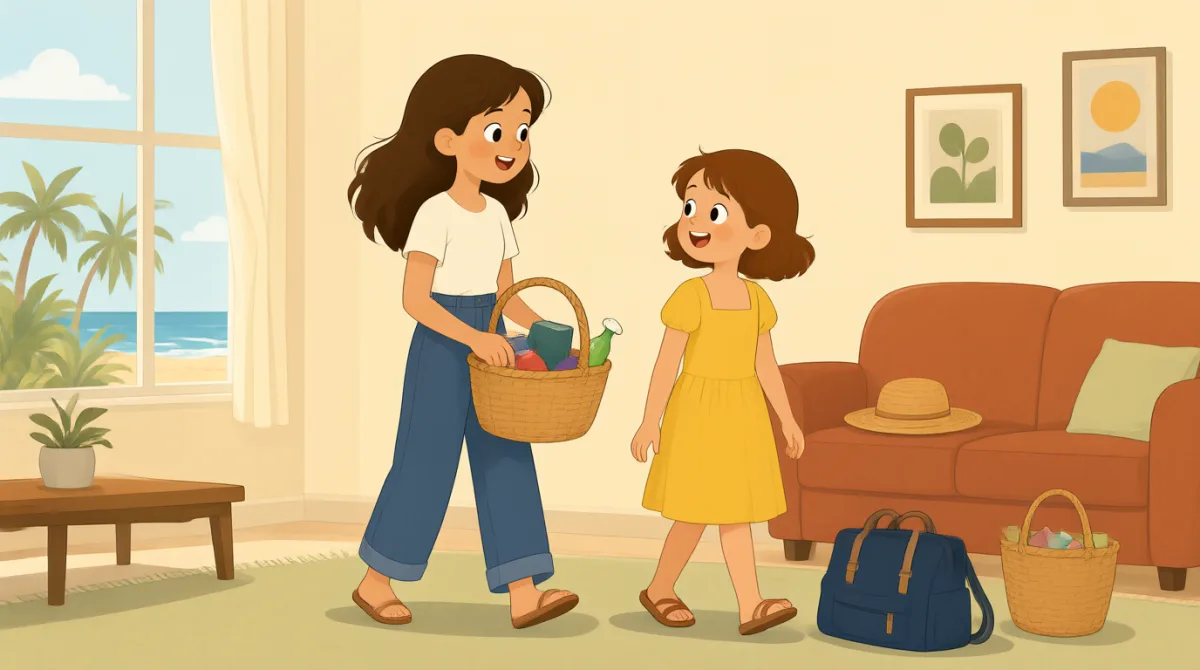

I have my towel and bag. Do you have everything?
Mam ręcznik i torbę. Masz wszystko?

Yes. I have my hat and water bottle.
Tak. Mam kapelusz i butelkę wody.
The beach was so much fun today.
Dzisiaj było super na plaży.
Yes, but I am a little tired now.
Tak, ale teraz jestem trochę zmęczona.
Let's take the bus home. Is the stop nearby?
Pojedźmy do domu autobusem. Czy przystanek jest blisko?
Yes, it's just across the street.
Tak, jest tuż po drugiej stronie ulicy.
Great! I can't wait to sit down.
Świetnie! Nie mogę się doczekać, aż usiądę.
Słownictwo7
- towelręcznik
A towel is a piece of cloth used to dry yourself. You can take it to the beach.
Ręcznik to kawałek materiału, którym można się wytrzeć. Możesz zabrać go na plażę.
- water bottlebutelka wody
A water bottle holds water to drink. You can bring one with you.
Butelka na wodę służy do przechowywania wody do picia. Możesz zabrać ją ze sobą.
- a little tiredtrochę zmęczony / trochę zmęczona
This means slightly tired, but not very tired. Use it to describe how you feel.
To znaczy, że jesteś lekko zmęczony lub zmęczona, ale nie bardzo. Użyj tego wyrażenia, żeby opisać, jak się czujesz.
- take the busjechać autobusem
This means to travel by bus. You can say, “I take the bus to school.”
To znaczy podróżować autobusem. Możesz powiedzieć: “I take the bus to school.”
- nearbyw pobliżu
Nearby means close to where you are. You can ask if a place is nearby.
Nearby znaczy, że coś znajduje się blisko miejsca, w którym jesteś. Możesz zapytać, czy jakieś miejsce jest w pobliżu.
- across the streetpo drugiej stronie ulicy
This means on the other side of the street. You can use it to tell someone where a place is.
To znaczy, że coś znajduje się po przeciwnej stronie ulicy. Możesz użyć tego wyrażenia, żeby powiedzieć komuś, gdzie jest jakieś miejsce.
- sit downusiąść
Sit down means to move into a sitting position. You can say this when you want to rest.
Sit down znaczy przyjąć pozycję siedzącą. Możesz tak powiedzieć, kiedy chcesz odpocząć.
Kluczowe zdania8
- 1
I have my towel and bag.
Mam ręcznik i torbę.
Use this sentence to say which things you have with you. You can replace “towel and bag” with other items.
Użyj tego zdania, żeby powiedzieć, jakie rzeczy masz ze sobą. Możesz zastąpić “towel and bag” innymi rzeczami.
- 2
Do you have everything?
Masz wszystko?
Use this question to check that someone has all their things. It is useful before leaving a place.
Użyj tego pytania, żeby sprawdzić, czy ktoś ma wszystkie swoje rzeczy. Przydaje się przed wyjściem z jakiegoś miejsca.
- 3
The beach was so much fun today.
Dzisiaj było super na plaży.
Use this sentence to say that an activity was very enjoyable. Replace “the beach” with another activity or place.
Użyj tego zdania, żeby powiedzieć, że coś było bardzo przyjemne. Zamiast “the beach” możesz podać inną aktywność lub miejsce.
- 4
I am a little tired now.
Teraz jestem trochę zmęczona.
Use this sentence to describe feeling slightly tired. You can replace “tired” with another feeling, such as “hungry.”
Użyj tego zdania, żeby powiedzieć, że jesteś lekko zmęczona. Możesz zastąpić “tired” innym odczuciem, na przykład “hungry.”
- 5
Let's take the bus home.
Pojedźmy do domu autobusem.
Use “Let’s” to suggest doing something together. You can replace “take the bus” with another way to travel.
Użyj “Let’s”, żeby zaproponować wspólne zrobienie czegoś. Możesz zastąpić “take the bus” innym sposobem podróżowania.
- 6
Is the stop nearby?
Czy przystanek jest blisko?
Use this question to ask if a stop or place is close. Replace “the stop” with another place.
Użyj tego pytania, żeby zapytać, czy przystanek lub inne miejsce znajduje się blisko. Zamiast “the stop” możesz podać inne miejsce.
- 7
Yes, it's just across the street.
Tak, jest tuż po drugiej stronie ulicy.
Use this sentence to explain that something is very close and on the other side of the street. Replace “it” with the place you mean.
Użyj tego zdania, żeby wyjaśnić, że coś jest bardzo blisko, po drugiej stronie ulicy. Zamiast “it” podaj miejsce, o które chodzi.
- 8
I can't wait to sit down.
Nie mogę się doczekać, aż usiądę.
Use “I can’t wait to” to show that you really want to do something soon. You can say, “I can’t wait to go home.”
Użyj “I can’t wait to”, żeby pokazać, że bardzo chcesz coś niedługo zrobić. Możesz powiedzieć: “I can’t wait to go home.”