Going Home
帰り道
Emma and Mia pack their things and leave the beach. They talk about the fun day and the bus ride home.
エマとミアは荷物をまとめて、ビーチを後にする。楽しかった一日や、バスでの帰り道について話す。
会話7
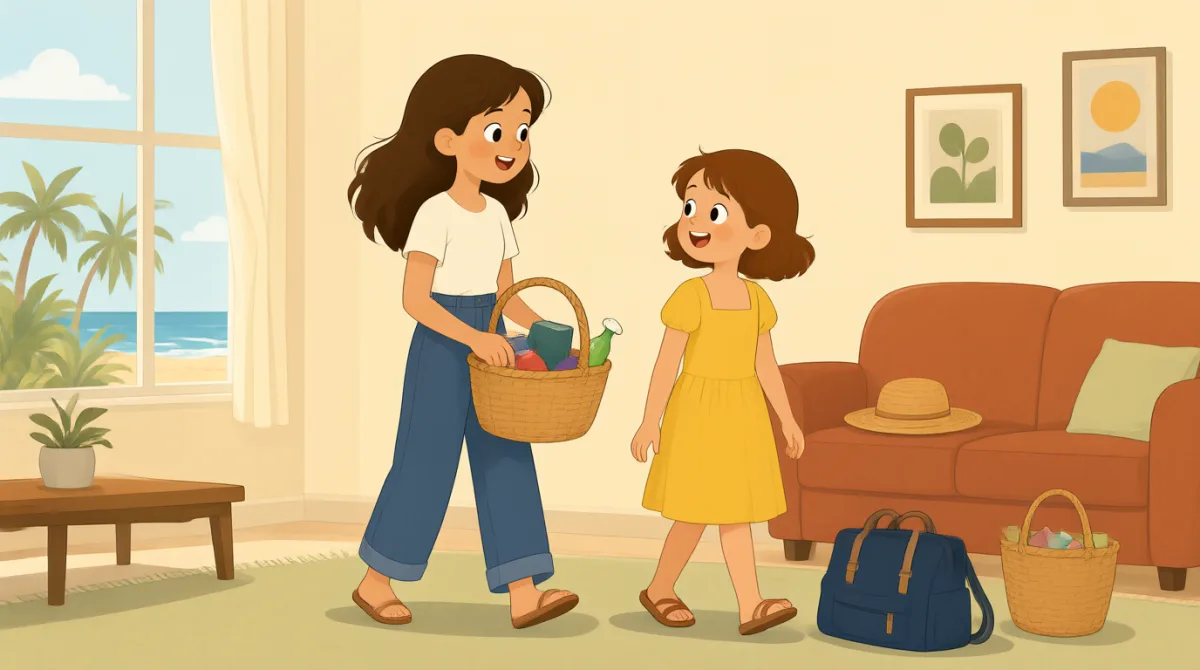

I have my towel and bag. Do you have everything?
タオルとバッグは持ったよ。忘れ物はない?

Yes. I have my hat and water bottle.
うん。帽子と水筒を持ったよ。
The beach was so much fun today.
今日はビーチですごく楽しかったね。
Yes, but I am a little tired now.
うん、でも今はちょっと疲れたよ。
Let's take the bus home. Is the stop nearby?
バスで帰ろう。バス停は近くにある?
Yes, it's just across the street.
うん、通りのすぐ向こうだよ。
Great! I can't wait to sit down.
よかった!早く座りたいな。
語彙7
- towelタオル
A towel is a piece of cloth used to dry yourself. You can take it to the beach.
タオルは、体を拭くための布です。ビーチに持っていくこともできます。
- water bottle水筒
A water bottle holds water to drink. You can bring one with you.
水筒は、飲み水を入れておくものです。持ち歩くことができます。
- a little tired少し疲れている
This means slightly tired, but not very tired. Use it to describe how you feel.
「少し疲れている」という意味で、とても疲れているわけではありません。自分の体調を表すときに使えます。
- take the busバスに乗る
This means to travel by bus. You can say, “I take the bus to school.”
バスで移動するという意味です。“I take the bus to school.”(学校へはバスで行きます。)のように言えます。
- nearby近くに
Nearby means close to where you are. You can ask if a place is nearby.
“nearby”は、今いる場所から近いという意味です。場所が近くにあるか尋ねるときに使えます。
- across the street通りの向こうに
This means on the other side of the street. You can use it to tell someone where a place is.
通りを挟んだ反対側にあるという意味です。場所がどこにあるか伝えるときに使えます。
- sit down座る
Sit down means to move into a sitting position. You can say this when you want to rest.
“sit down”は、座った姿勢になるという意味です。休みたいときに使える表現です。
重要な文8
- 1
I have my towel and bag.
タオルとバッグは持ってるよ。
Use this sentence to say which things you have with you. You can replace “towel and bag” with other items.
持っている物を伝えるときの文です。“towel and bag”をほかの持ち物に置き換えて使えます。
- 2
Do you have everything?
忘れ物はない?
Use this question to check that someone has all their things. It is useful before leaving a place.
相手が持ち物を全部持っているか確認するときの質問です。場所を出る前に便利な表現です。
- 3
The beach was so much fun today.
今日はビーチですごく楽しかったね。
Use this sentence to say that an activity was very enjoyable. Replace “the beach” with another activity or place.
何かがとても楽しかったと伝える文です。“the beach”を別の活動や場所に置き換えて使えます。
- 4
I am a little tired now.
今はちょっと疲れてるよ。
Use this sentence to describe feeling slightly tired. You can replace “tired” with another feeling, such as “hungry.”
少し疲れていることを伝える文です。“tired”を“hungry”(お腹がすいた)のような別の気分に置き換えることもできます。
- 5
Let's take the bus home.
バスで帰ろう。
Use “Let’s” to suggest doing something together. You can replace “take the bus” with another way to travel.
“Let’s”は、一緒に何かをしようと提案するときに使います。“take the bus”を別の移動手段に置き換えられます。
- 6
Is the stop nearby?
バス停は近くにある?
Use this question to ask if a stop or place is close. Replace “the stop” with another place.
バス停や場所が近くにあるか尋ねるときの質問です。“the stop”を別の場所に置き換えて使えます。
- 7
Yes, it's just across the street.
うん、通りのすぐ向こうだよ。
Use this sentence to explain that something is very close and on the other side of the street. Replace “it” with the place you mean.
何かがすぐ近くの、通りを挟んだ向こう側にあると説明する文です。“it”を、話題にしている場所に置き換えられます。
- 8
I can't wait to sit down.
早く座りたいな。
Use “I can’t wait to” to show that you really want to do something soon. You can say, “I can’t wait to go home.”
“I can’t wait to”は、すぐに何かをしたくてたまらない気持ちを表します。“I can’t wait to go home.”(早く家に帰りたいな。)のように言えます。